| |
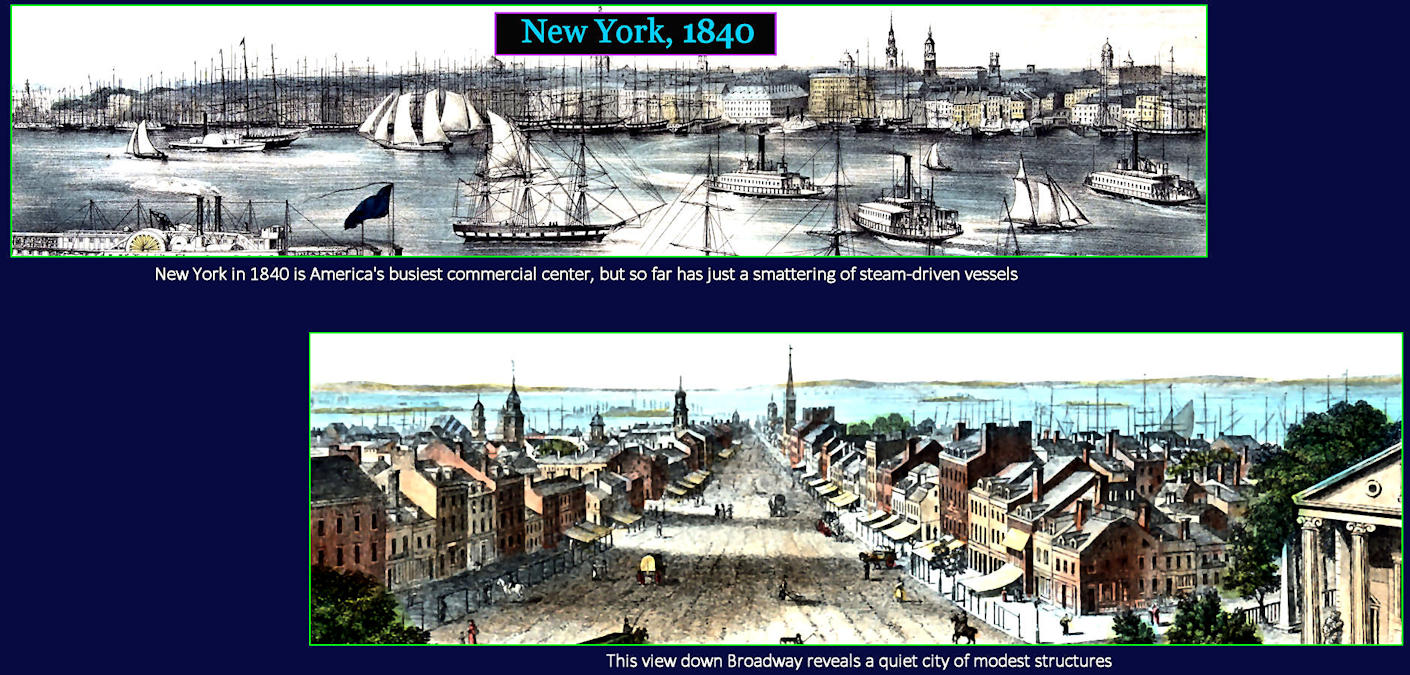
The Old New York This is New York in the relatively quiet days before the Civil War. A few steamboats are creeping into New York's harbor, but the streets still looks much as it did back when George Washington was president. Business still travels at the pace of a walking horse. |
| |||||||||
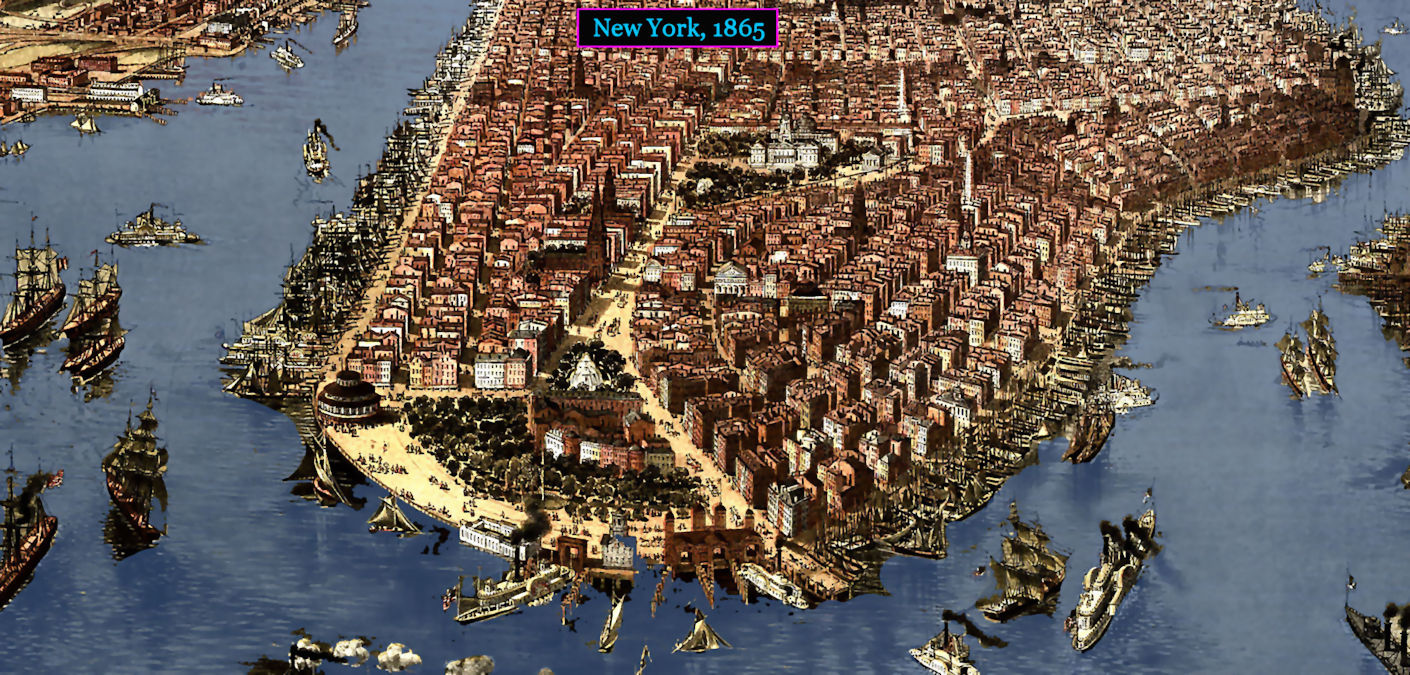
Change is Coming After the Civil War, New York is a beehive of small-scale business activity, driven largely by Civil-War demand. Manhattan is now the nation's manufacturing capital, with bustling commercial docks all around the lower portion of the island. (Try counting all the vessels.) Neighborhoods are sprinkled with literally thousands of small commercial shops, typically employing less than a dozen workers. The lack of smokestacks, however, indicates that almost none yet enjoy the benefits of steam-powered equipment. Few people realize that a tidal wave of technology upgrades is poised to burst suddenly upon America, turbocharging the economy on a scale never before imagined. | |||||||||
| |||||||||
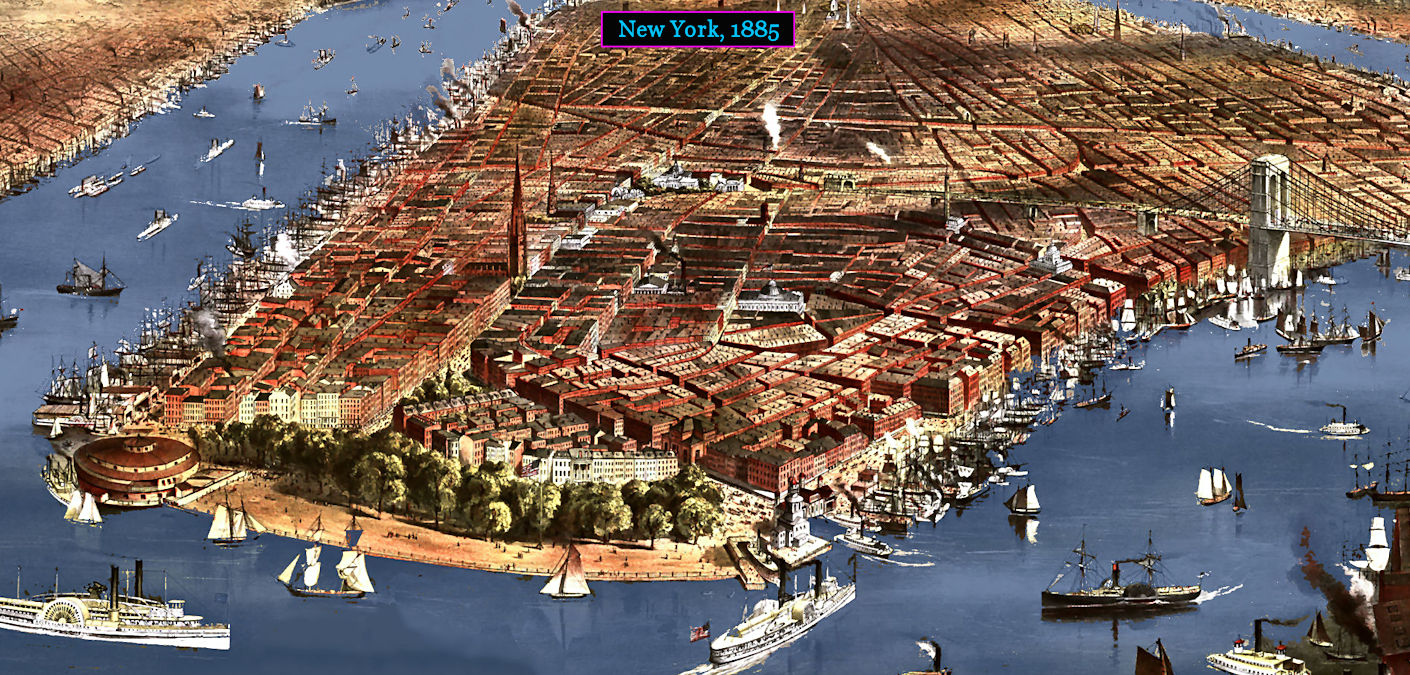
Technology Makeover This is the same view just 20 years later, right after completion of the magnificent Brooklyn Bridge (at right). New York's manufacturing output is now nearly half as great as that of the entire country, 20 years earlier. Neighborhoods are also changing, with a new generation of sturdy warehouses and factories. Puffs of smoke from tall chimneys mark the presence of the first steam-driven factories, while the shipping fleet is already well into a major shift from wind-driven to steam-powered vessels. The magic ingredient behind this continuing growth is newly-cheap steel, being produced in Pittsburgh with mountains of fresh Pennsylvania coal. | |||||||||
| |||||||||
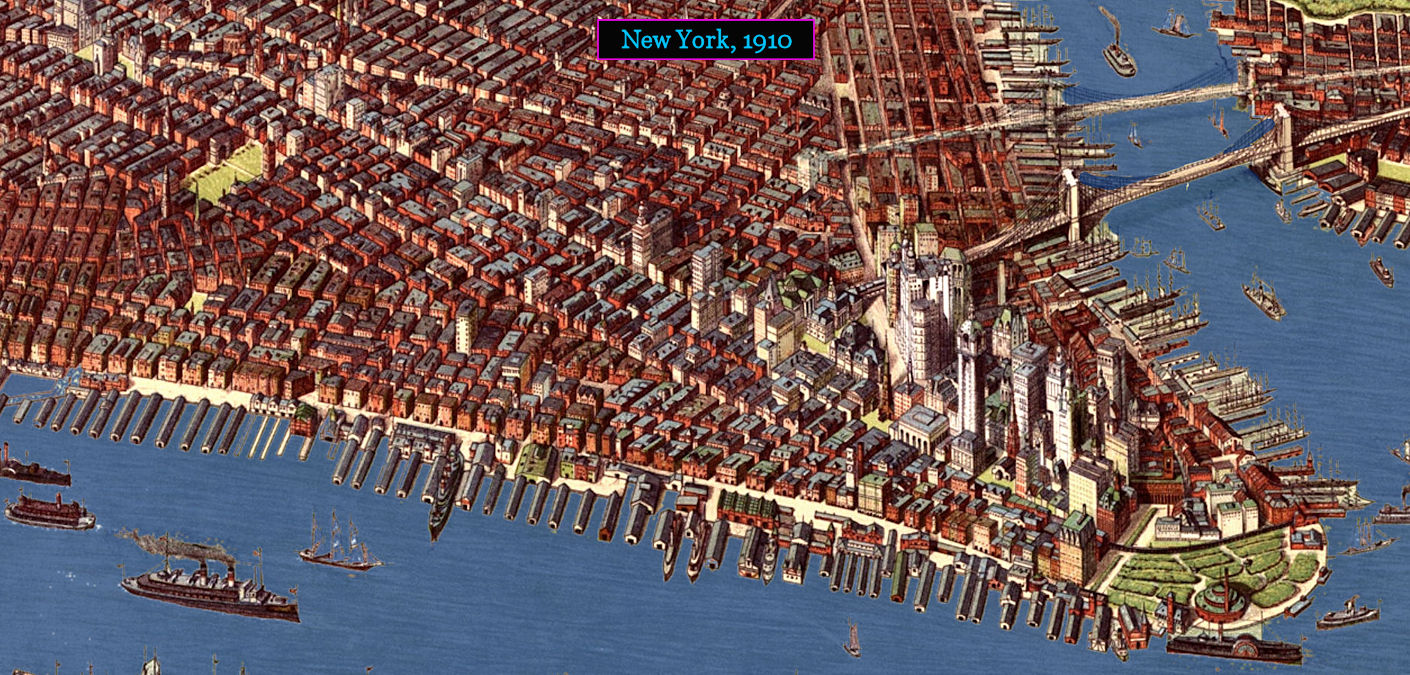
Transformed This is downtown Manhattan, another 25 years later. Sailing ships have virtually disappeared from Hudson-River piers (foreground), while a clump of new high-rise buildings has sprouted in the Financial District, at the tip of the island (lower right). This is the home of huge new banking interests, including the mighty operation run by ground-breaking financier J.P. Morgan. New York is also the unofficial capital of the booming garment industry (making clothing), the largest manufacturing sector in America. Much of this growth is due to the effort of millions of new European immigrants, who continue flooding into the harbor. | |||||||||
| |||||||||
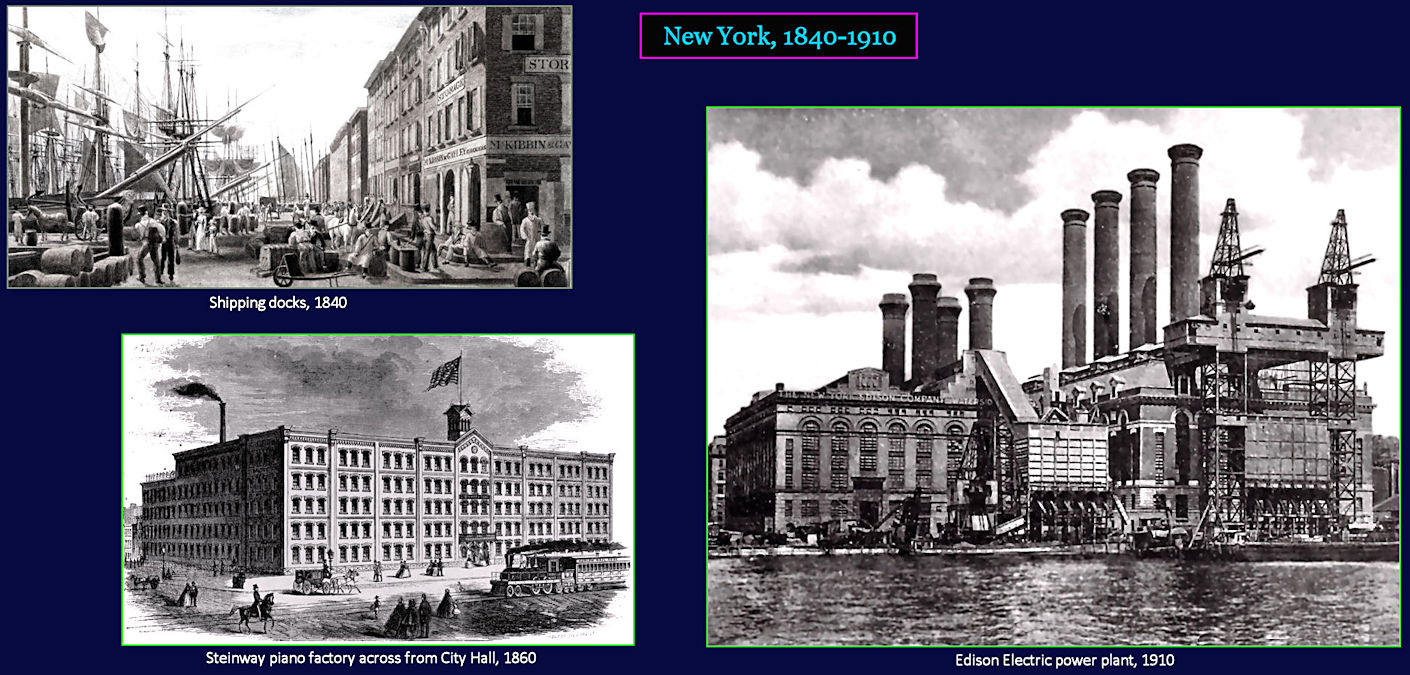
Technology is the Driver Viewed from a street perspective, the changing face of the city is even more dramatic, and all occurring within a single lifespan. The view in 1840 (upper left) is that of a thriving port. Just 20 years later, large factories have started invading downtown areas (lower left). During the next 50 years, sweeping industrial changes result in an entirely new, more muscular landscape (right). | |||||||||
| |||||||||
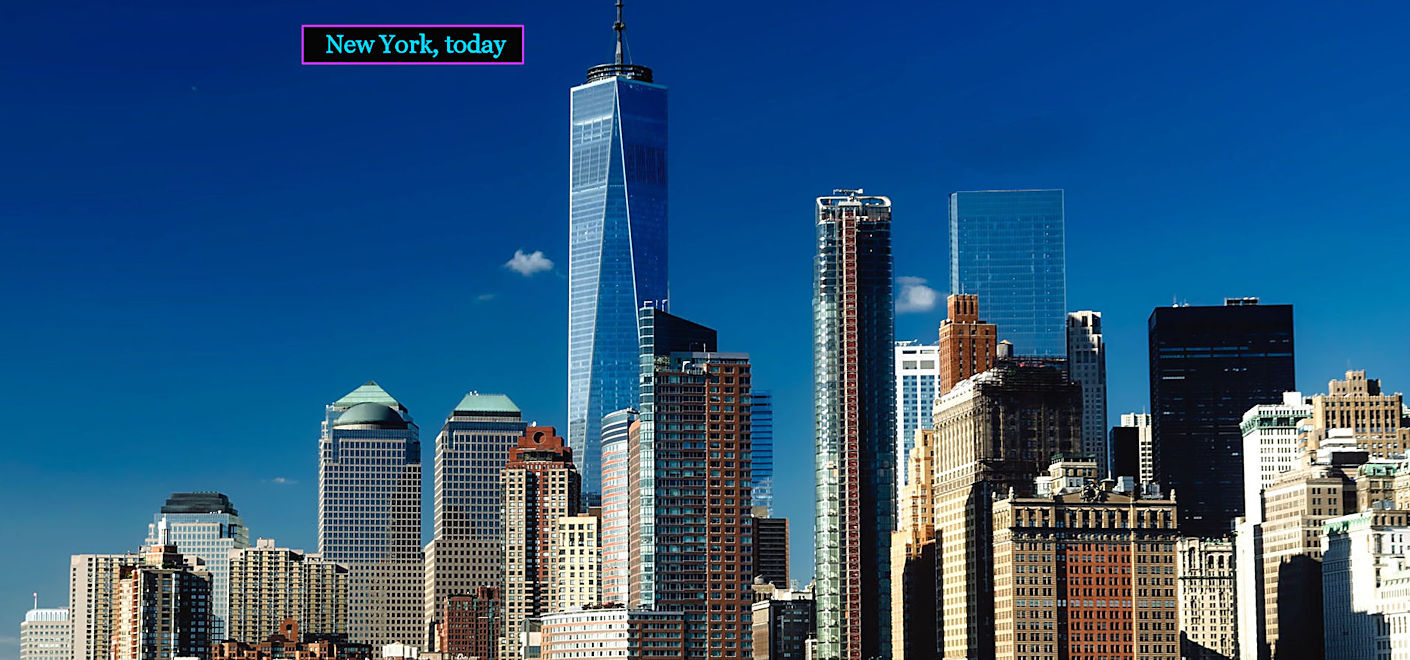
Technology Leads Today, New York is a gleaming metropolis. In the brief period between the Civil War and the First World War, it grew from just being America's busiest port (at the start of the period) to something entirely more vibrant and dynamic. With truly breathtaking speed, it undergoes a complete overhaul, emerging as the financial powerhouse it remains today. The following chapters will fill in the details of this amazing process, as it unfolds across the entire American continent. | |||||||||