| |
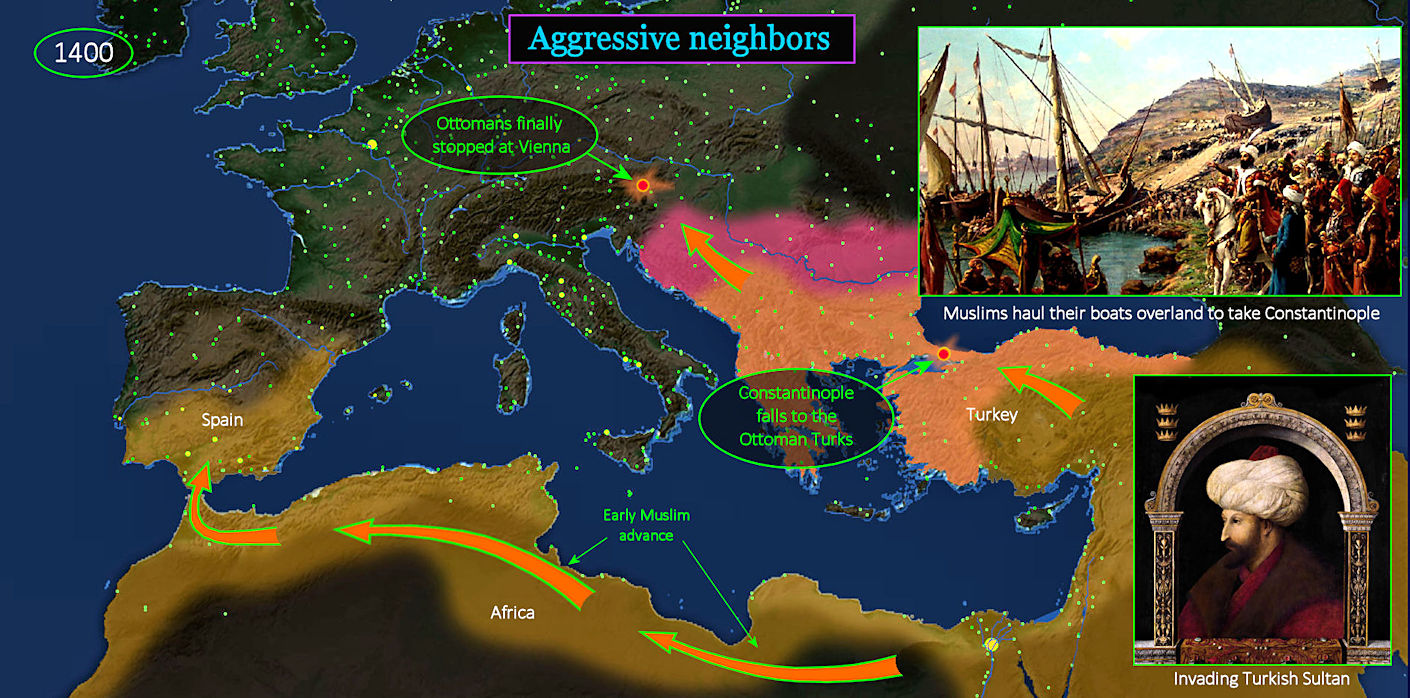
Muslim Invasion This is Europe in the mid-1400s, when the Ottoman invasion is at its height. The sultan who leads the assault means business. When he reaches Constantinople, which has repelled all previous attacks, he drags part of his large invasion fleet overland. Ships are hauled on log rollers over a two-mile improvised road, to surround the city (top right). The strategy works, and Constantinople falls. Pushing on towards central Europe, the Ottomans make three attempts to take Vienna, but are finally turned back. |
| |||||||||
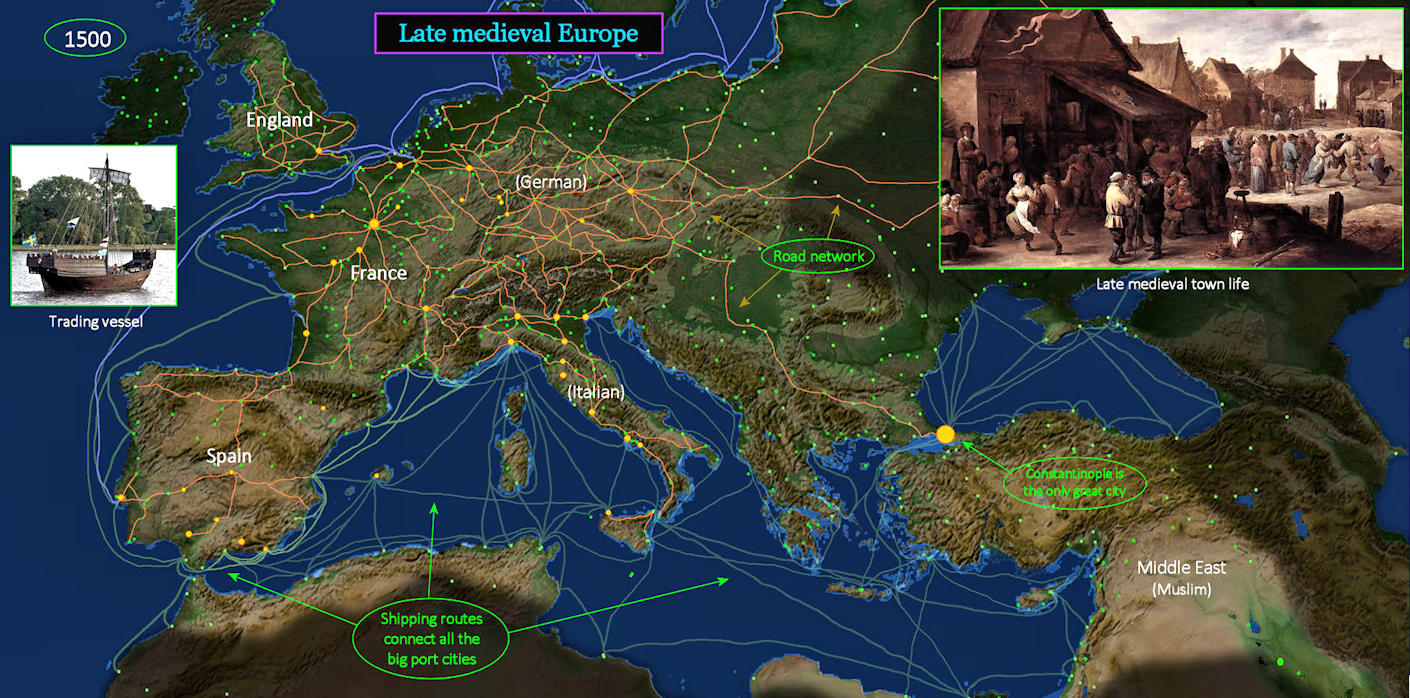
Medieval Commerce After the Muslims are safely pushed back, medieval Europe becomes a bustling hive of business activity, supported by complex shipping networks on both land and sea. Italians control shipping in the Mediterranean, and most of the Atlantic trade up to England. The Middle East, with extensive shipping connections to India and China, remains firmly under the control of Muslim Arabs, who are traders by long habit. Small cities are beginning to reappear in Europe (YELLOW dots), but Constantinople is the only great city, a relic of former Roman might (right, on map). | |||||||||
| |||||||||
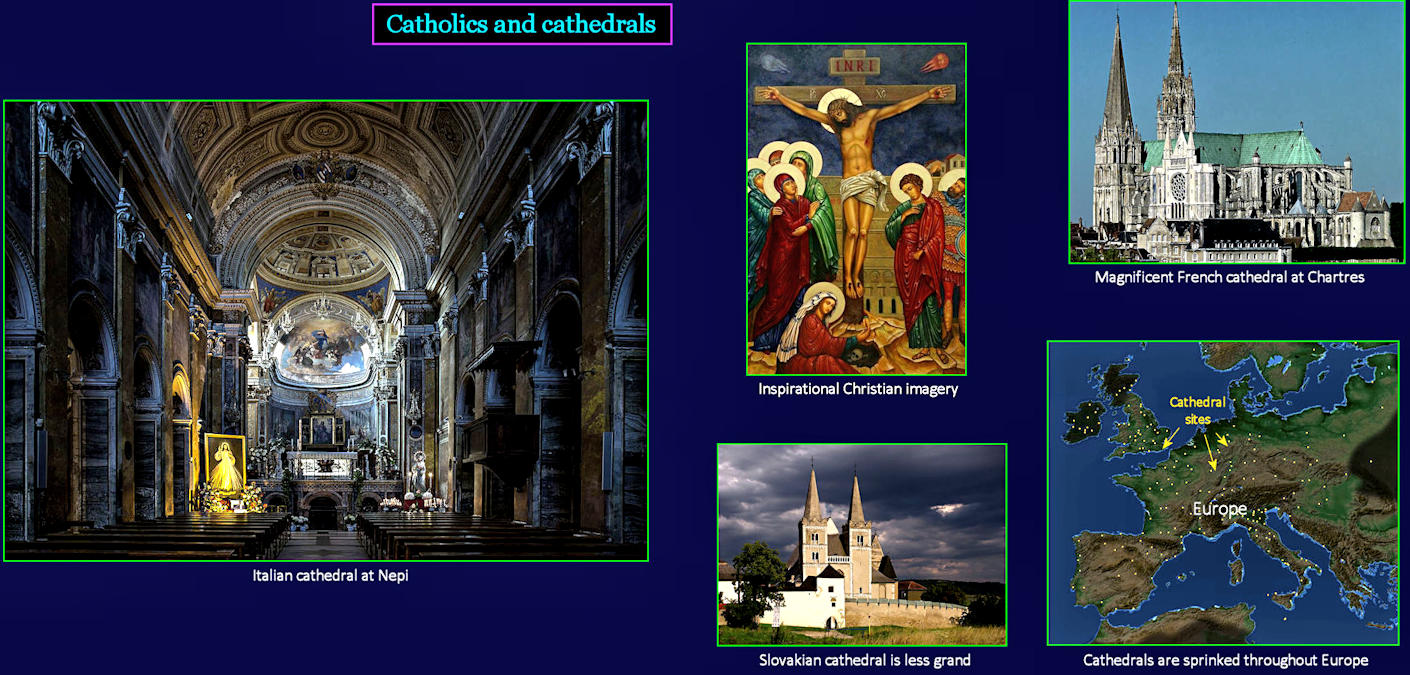
Medieval Cathedrals It would be difficult to overstate just how dominant a role religion plays in medieval life. Until the mid-1400s, the only real church in Europe is the Catholic Church, ruled by the Pope in far-distant Rome. Even kings sometimes need the Pope's blessing. This gives the Church great power, and with this comes great wealth. Throughout the medieval period, the Catholic Church somehow finds resources to build magnificent cathedrals all over Europe, and some smaller ones as well (lower center). The map shows the location of medieval cathedrals. Protestants will eventually become dominant in England and Germany, after the introduction of the printing press, but Catholics remain in control elsewhere in Europe. | |||||||||
| |||||||||
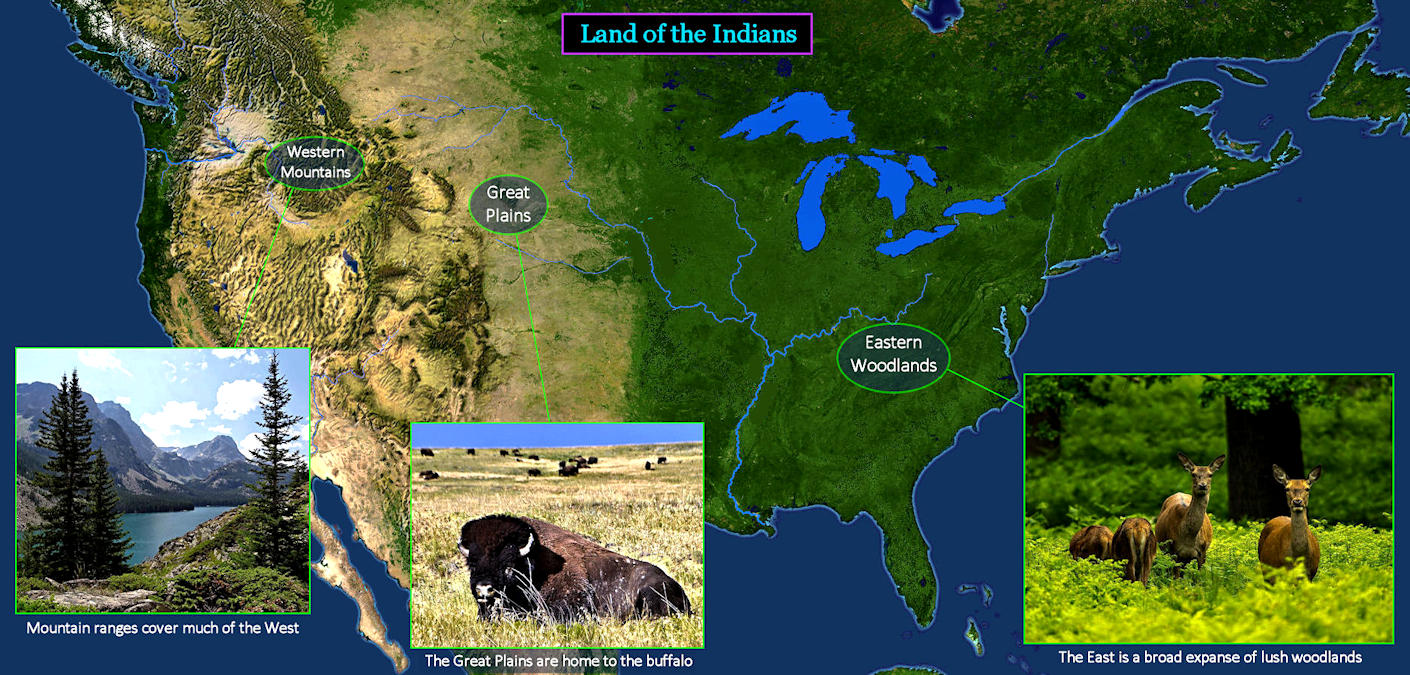
Stark Contrast Compared to the war-torn European landscape, America at this time is a Garden of Eden. Eastern Indians enjoy a relatively easy life, surrounded by wild game. Elsewhere, food is harder to find. Western Indians travel great distances across the Great Plains in pursuit of the great buffalo herds. Indians also live all over what is now California, and up the coast into the Pacific Northwest, with its abundant fishing. In fact, there are very few areas which are not the home of Indians. There are nearly 600 different tribes, although most inhabit relatively small regions. A few are much larger. | |||||||||
| |||||||||
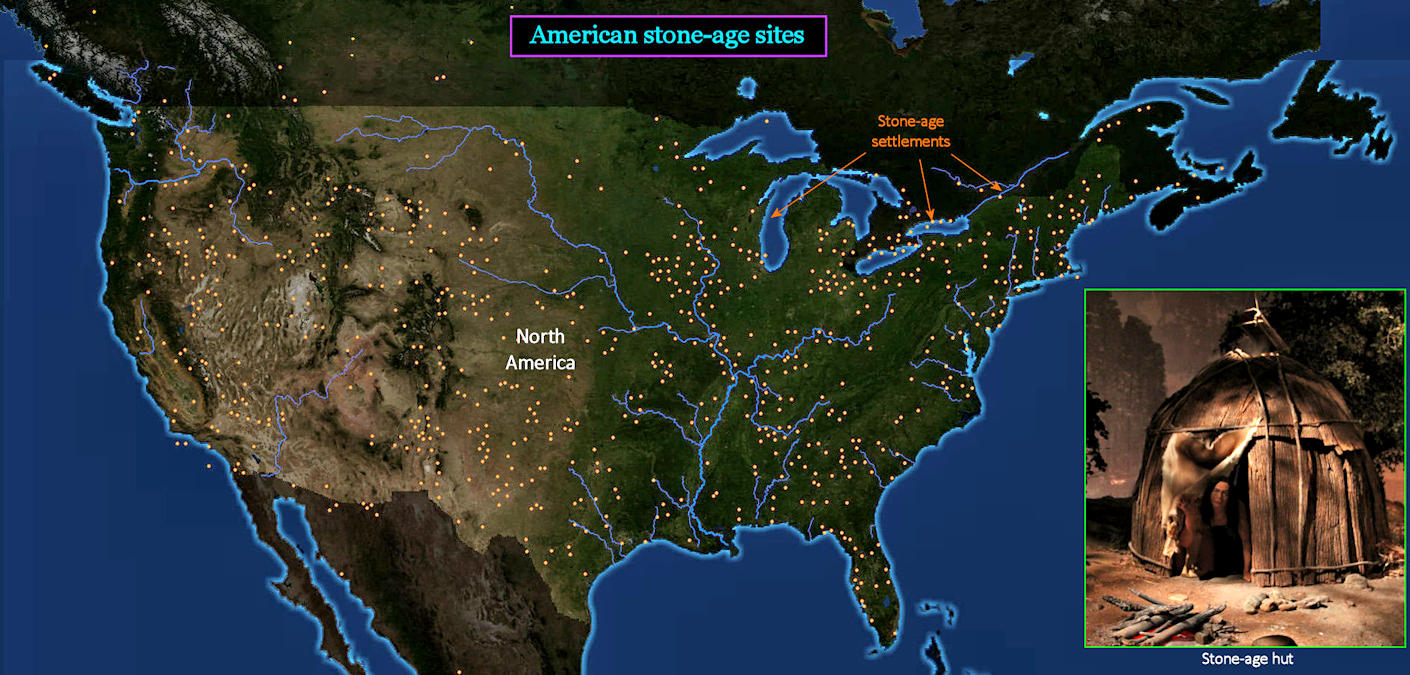
Stone-age Sites The pre-history of America is similar in many ways to that of Europe, beginning with stone-age settlements as shown above. The big difference is that Indians never learn to extract hard metals from the ground, like bronze and iron. Without these materials, they are never able to develop weaponry beyond the bow-and-arrow, or any kind of real wood-working methods. You can't make much with just a stone axe. What little cookware they have is earthenware, which is why they are initially so eager to trade for iron pots. Each dot above indicates the location of a stone-age Indian settlement 8,000 years ago. These are just the known sites. There are surely many more still waiting to be discovered. | |||||||||
| |||||||||
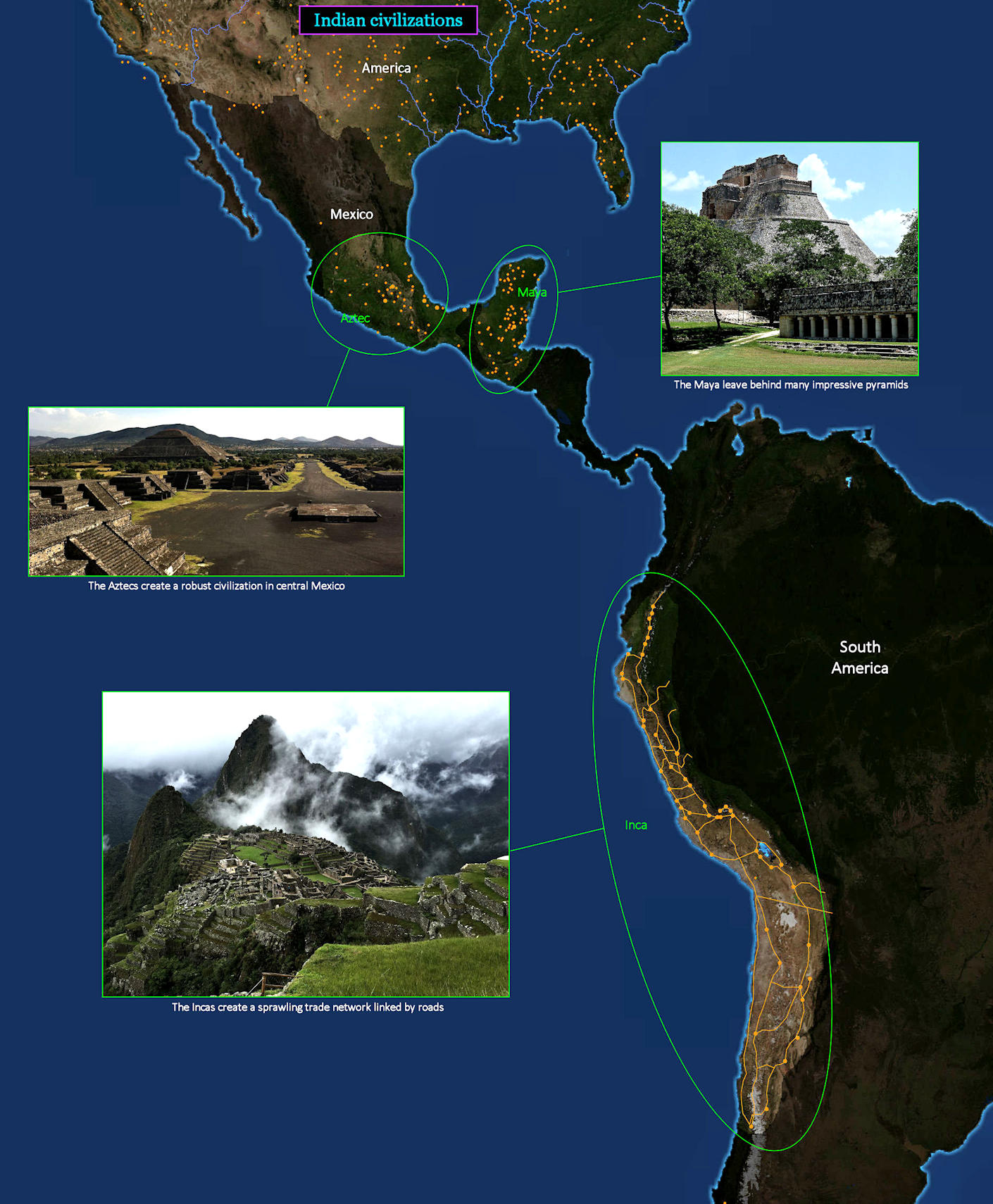
Aztec, Maya and Inca There are no major Indian civilizations in America. But further south, the Spaniards are surprised to find three active civilizations when they arrive in Central and South America, 600 years ago. The Mayan civilization in Mexico is already in decline at that time, but both the Aztec civilization (in Mexico) and the Inca civilization (in Peru) are thriving centers of activity. The Incas build a truly impressive set of roads connecting their settlements, which are strung along the rugged slopes of the towering Andes Mountains. | |||||||||