| |
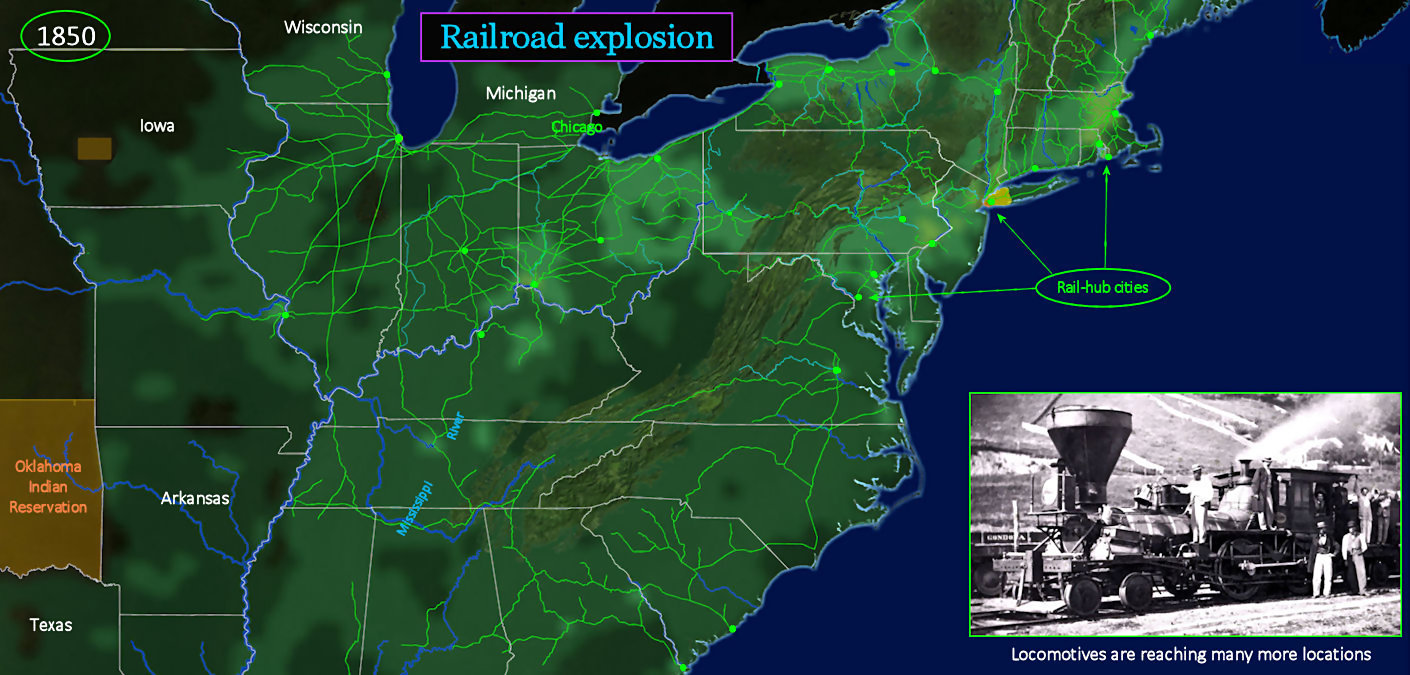
Across the Mississippi Railroads (GREEN lines) now crisscross the northern states, and reach well down into southern cotton country. Large cities are spreading across the North, as rail hubs spur the development of downtown business districts, and big downtown banks. Several new states have been added on the far side of the Mississippi River. The short-lived Republic of Texas, which declared independence from Mexico just ten years earlier, has now become part of America. |
| |||||||||
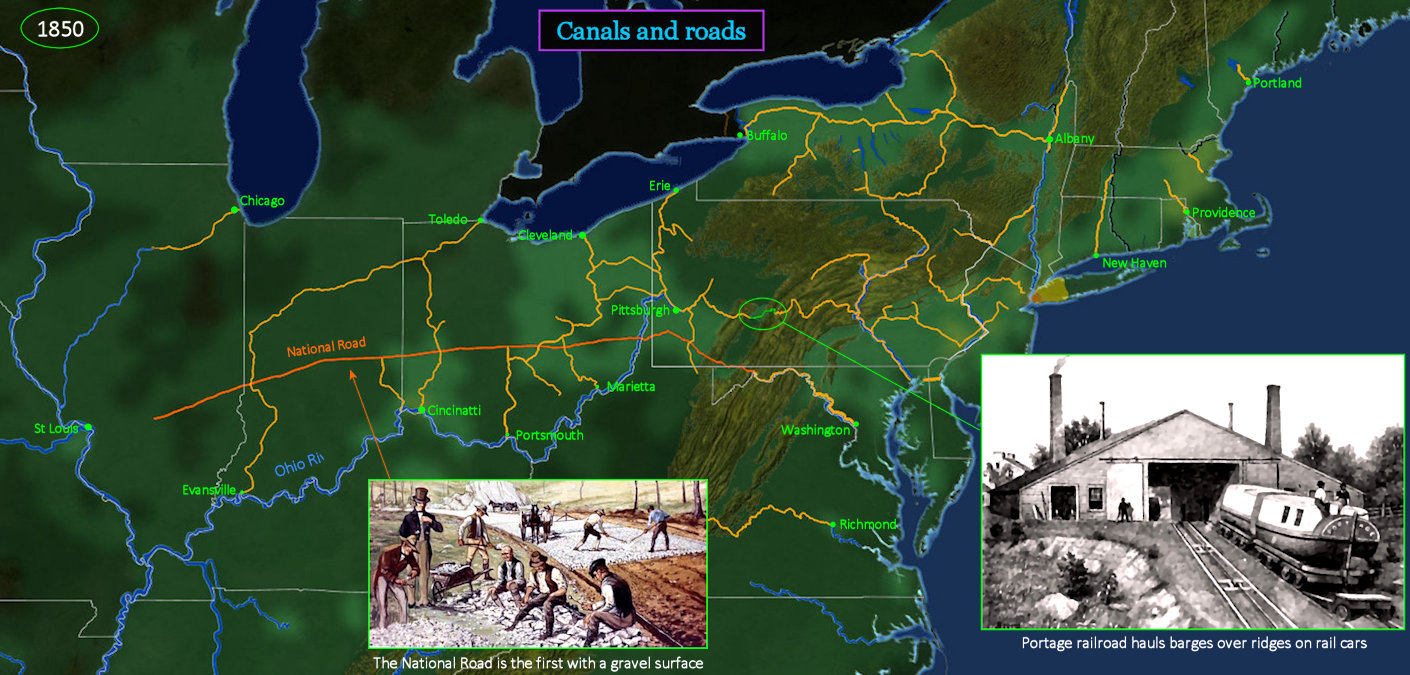
Canal Fever For about 30 years, canals are the best technology available for moving freight, and a surprising number are built (in ORANGE). Most will soon be driven out of business by railroads. But during their day, canals promote the development of a large number of cities, and provide vital links between the Great Lakes and the Ohio River. One oddity of the period is a 'portage' railroad in Pennsylvania, which connects two canal systems separated by a mountain ridge. It actually hauls canal barges up the slope in sections, mounted on top of rail cars, for the trip across the ridge (lower right). The first highway funded by the federal government, called the National Road (lower left), is also the first to have a crushed rock surface. | |||||||||
| |||||||||
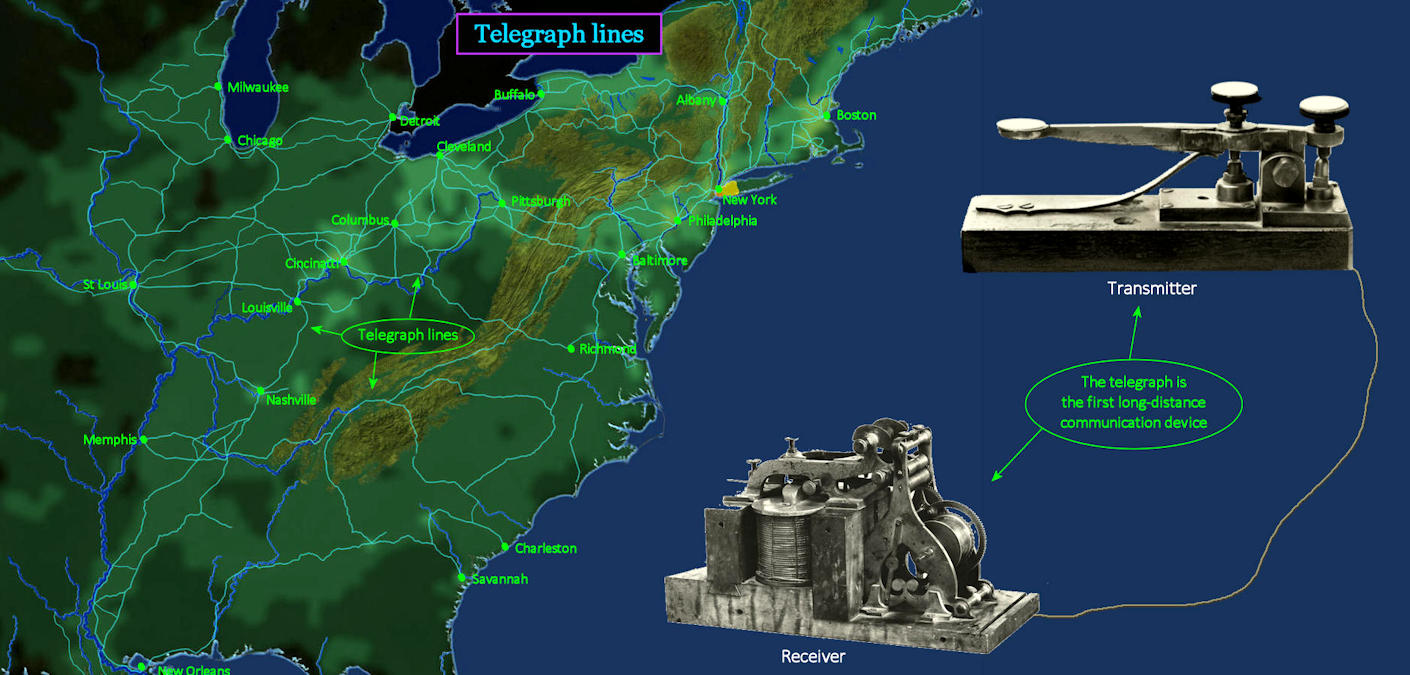
Wired At the same time that steam locomotives and steamboats are speeding up American life, a brand new technology is added to the mix. The telegraph is the first electrical device to find a practical use, appearing well before the electric light. It's not only the first wired device, but also the first long-distance communication device of any kind, excluding signal flags and smoke signals. People can always find ways to profit from knowing about distant events before anyone else, and the telegraph now makes this possible. It quickly becomes essential for large businesses, especially the railroads, which use it to get instant notification of the precise time when trains arrive at their destinations. This facilitates the coordination of schedules. | |||||||||
| |||||||||
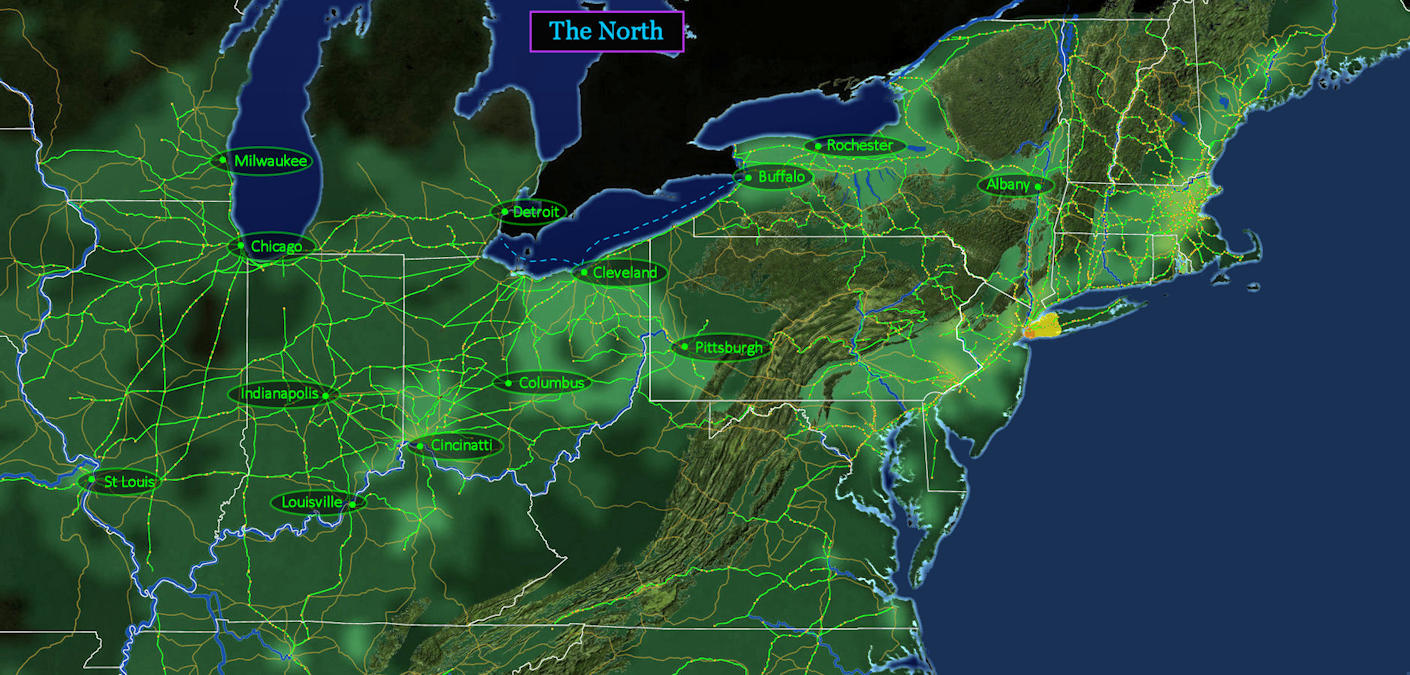
St Louis and Chicago In the North, rail hubs are sprouting into cities all over the Midwest. Where the rails go, cities are sure to follow. Chicago is the new rail link to America's farming heartland, in Illinois and Iowa. There are two bridges across the Mississippi by 1856, allowing railroads to spread even further west. The longer of the two, at St Louis, is the first bridge made of steel, rather than iron. Only steel is strong enough to span the full width of the Mississippi at this point. Steel will soon become the driving force in America, useful not only for bridges and buildings, but also to replace the less-durable iron rails used by railroads. | |||||||||
| |||||||||
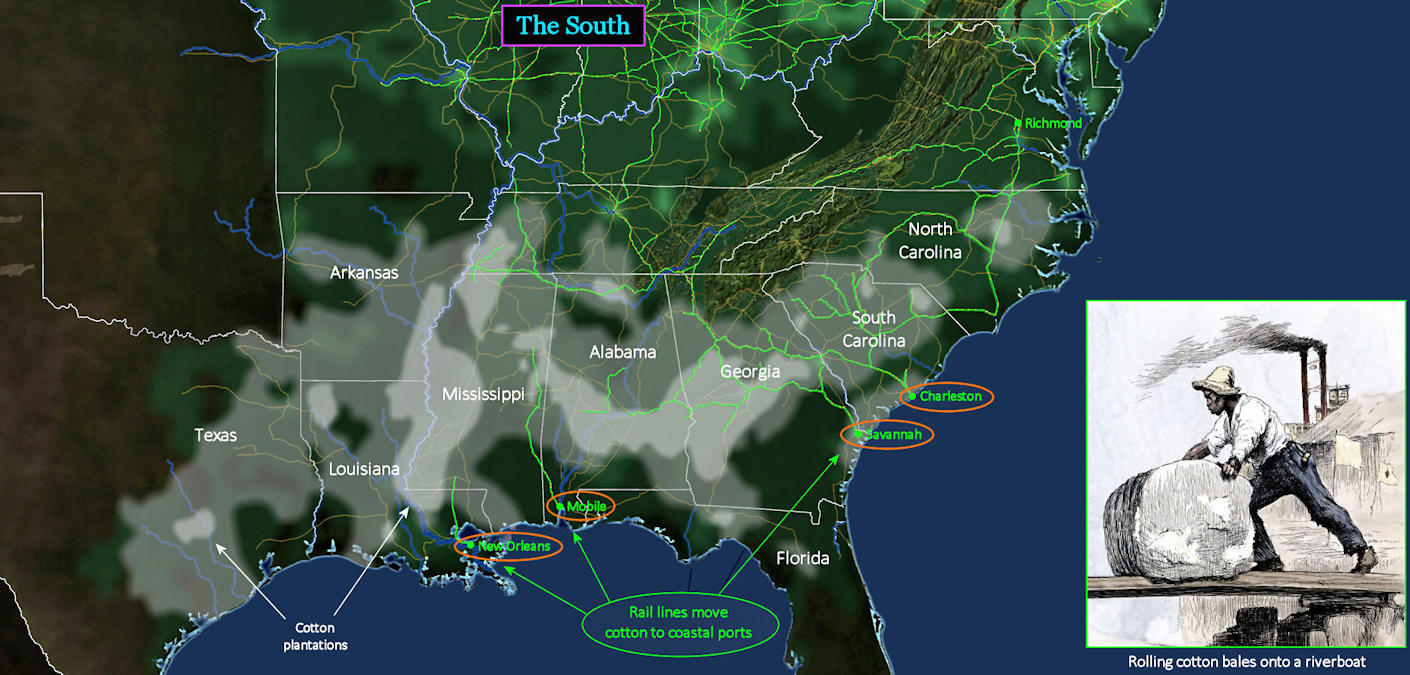
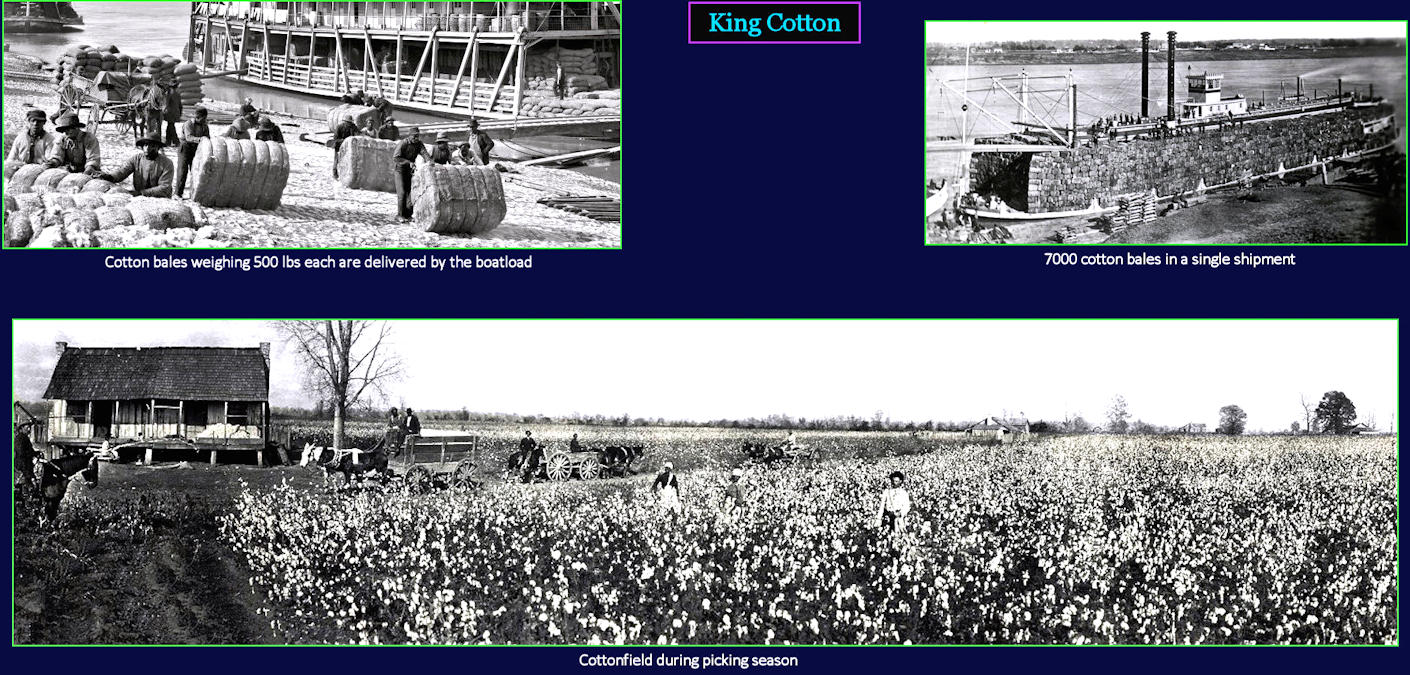
Cotton by Rail By 1850, the South means only one thing. Cotton. Production has tripled in just 20 years, with plantations stretching all the way from North Carolina to Texas. As a consequence, the expanding cities and transportation networks of the North are not being matched in the South. Railroads are only needed to provide connections to the big shipping ports, where cotton now accounts for fully half of all American exports. Most shipments are headed for the big textile centers in Britain, but American mills are also increasingly hungry for southern cotton. Meanwhile, the South only imports items that are needed on a plantation, which isn't much. This is creating a very lopsided economy, based almost solely on plantation slavery. | |||||||||
| |||||||||
Growing Southern Confidence Southerners are so comfortable with their new economic clout that they begin talking of 'King Cotton.' Some even consider breaking away from the northern states altogether, to create their own separate country. With Britain now almost totally dependent upon southern cotton, continuing export income seems assured. Meanwhile, the federal government is still funded almost entirely by taxing imports. Tax rates bounce around a lot, but generally keep rising to match growing government spending. Southerners complain that high tariffs benefit the North, by making imported competing products more expensive, but actually harm southern planters, who are forced to import almost everything. Worse yet, Northerners may soon be gaining control of Congress. | |||||||||