| |
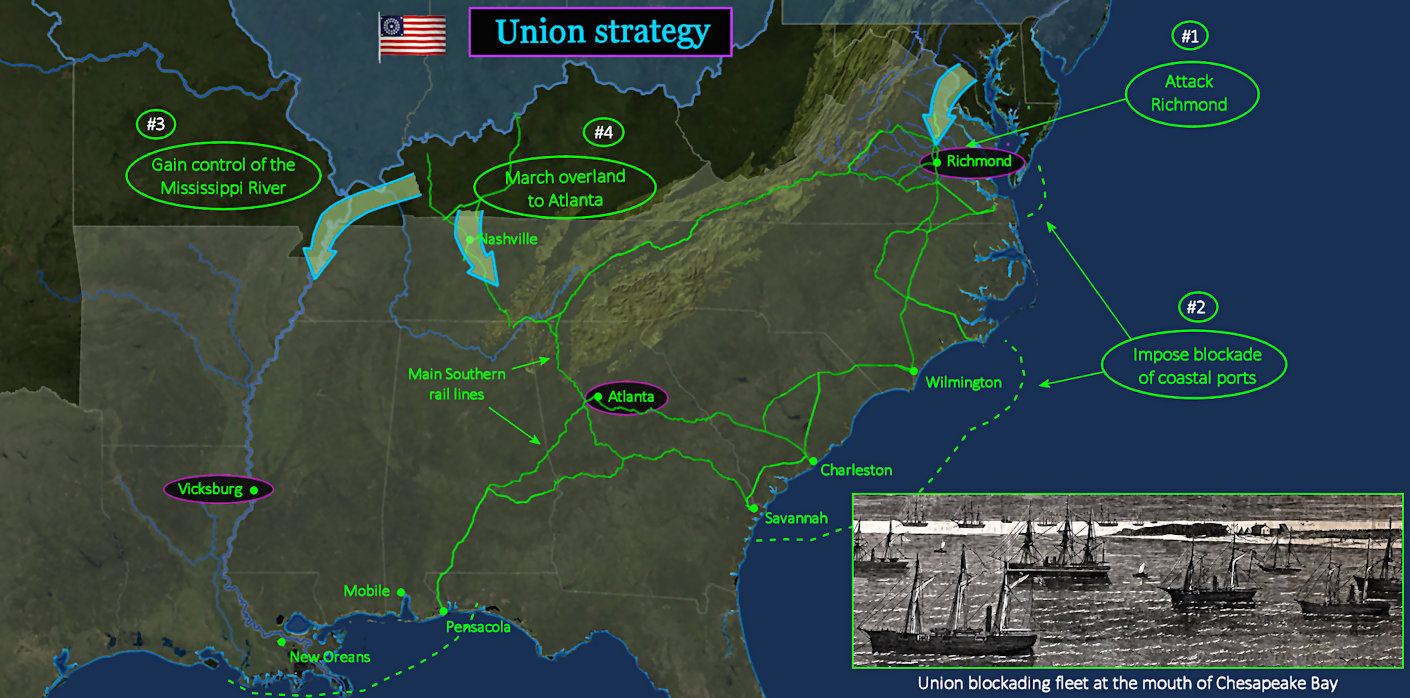
Four-part Offensive Union war planners hope that a strong early thrust can take Richmond, ending the rebellion before it has really begun. Until this succeeds, a total blockade of southern ports should be able to choke off support from Europe. But the navy is small, and mostly dependent upon sail. The navy will need time to build more steam vessels, before the blockade can become really effective. In the meantime, two offensives in the West aim to deny the Rebels use of the Mississippi River, and seize the all-important rail hub at Atlanta. |
| |||||||||
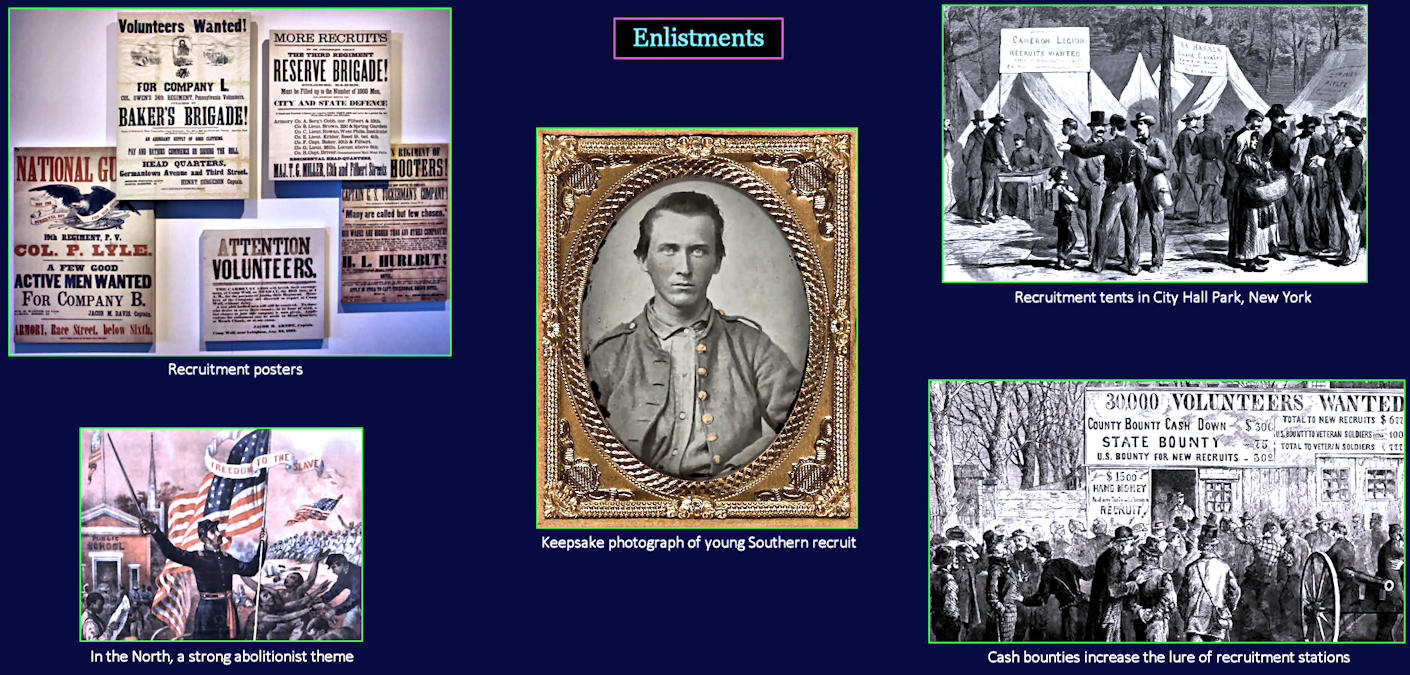
Raising Troops Both sides expect a short war, and initially rely on volunteers. Southerners have a strong motivation to enlist, as they will be defending their homeland, while Northerners are offered bounties of $100 to volunteer for three years. Appeals to abolitionist sentiment are commonly used in recruitment efforts. It gradually becomes apparent, however, that volunteers will not be sufficient to sustain the war effort. The South waits a year before enacting a mandatory draft of all males between 18 and 35 years of age, to serve for three years. The Union waits until the following year, when enlistments are due to expire, to enact a draft. This sparks a riot in New York. Blacks are already serving in the North, though they are paid less than Whites. | |||||||||
| |||||||||
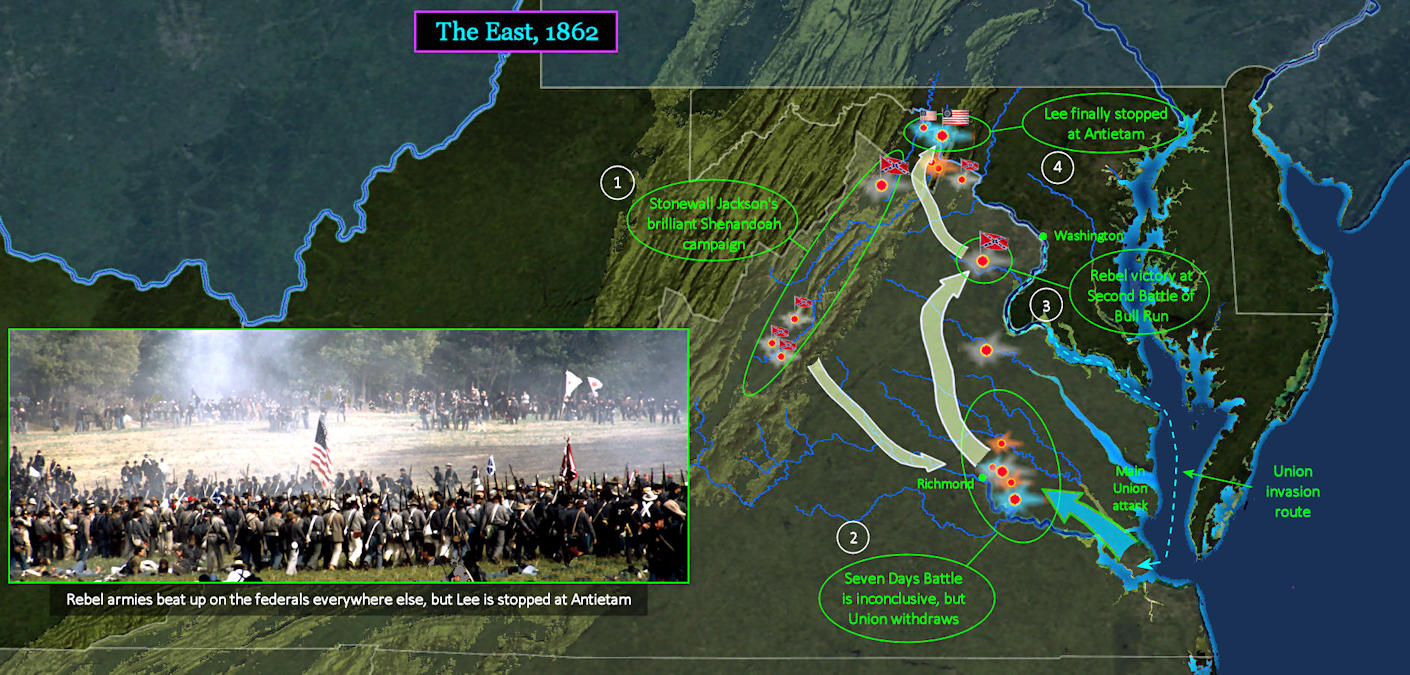
Total War 1862 is the first full year of effectively-organized war. Each side now has trained armies arrayed across the entire country. The war in the East is an almost unbroken string of Confederate victories, which causes near-panic in Washington. It begins with Stonewall Jackson's rampage up and down the Shenandoah Valley, while the Federals dawdle with preparations for a grand assault on Richmond. The main Union army is finally shipped south, but runs into Lee's stout defense at Richmond, and is forced to withdraw. Heavy losses stun both sides. Lee then sprints north, winning more victories before heading into Union territory. He is finally stopped at Antietam, though not defeated. Nonetheless, Lincoln declares Antietam to be a Union victory. | |||||||||
| |||||||||
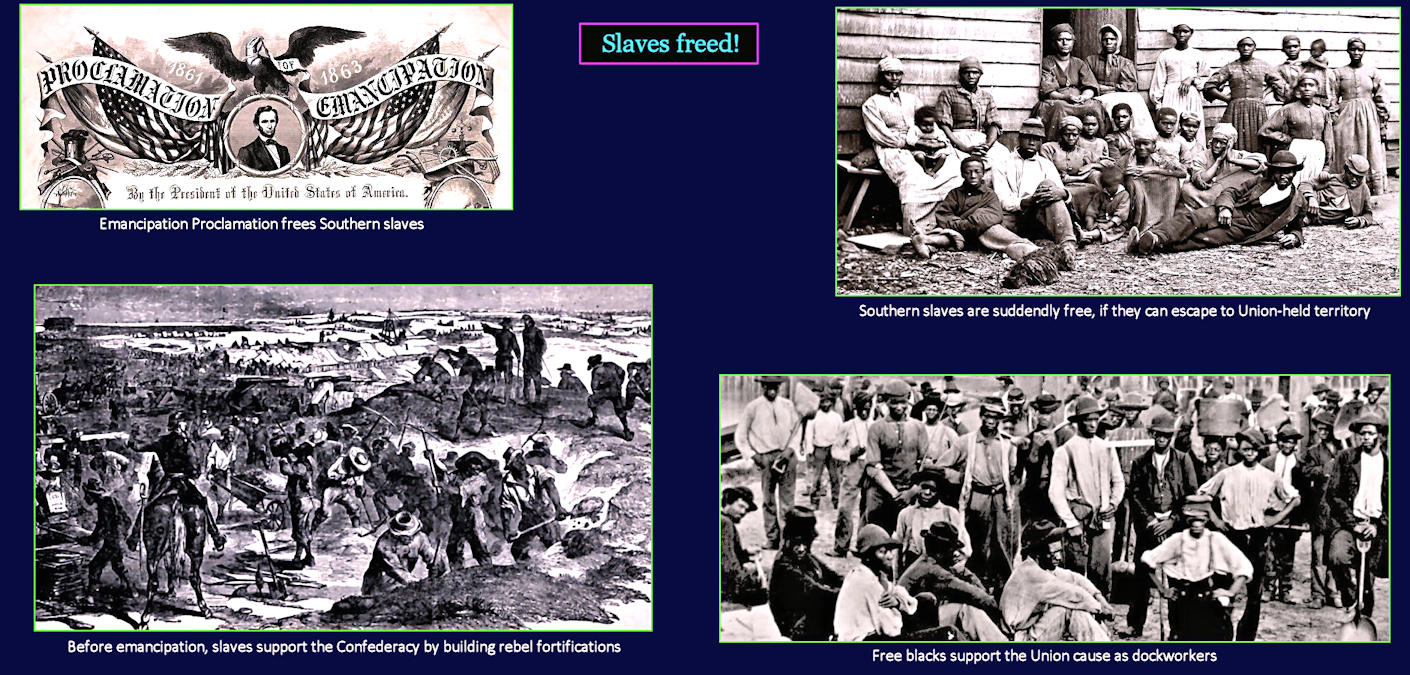
A Bold Step Lincoln has been waiting for a Union victory to unveil his plan to free southern slaves. The Constitution makes no mention of slavery, leaving each state free to decide for itself how it will treat the issue. But now that the Confederacy is in rebellion, Lincoln uses his power as Commander in Chief to set policy that affects the war. Southern slaves are being used as laborers to build rebel earthworks, in support of the Confederate war effort, so Lincoln declares them to be forced participants in the rebellion. He issues his historic Emancipation Proclamation right after the near-victory at Antietam, resulting in 3.5 million southern Blacks suddenly being freed. He has no justification, however, to free the additional half million in non-rebelling border states, which remain slaves. | |||||||||
| |||||||||
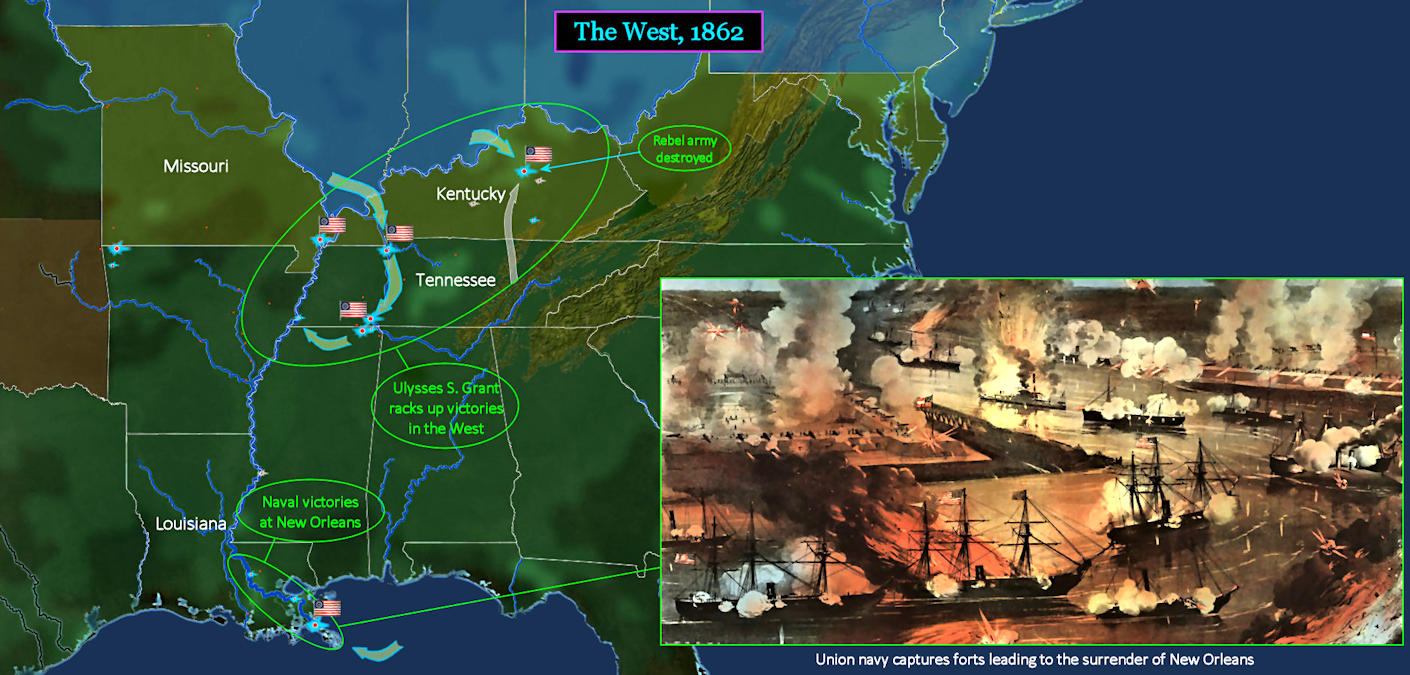
Better News from the West While Lee and Jackson are enjoying great success all over the East, the story in the West is almost the exact opposite. A young and untested Ulysses Grant leads methodical Union campaigns that take Confederate strongholds in Kentucky and Tennessee, effectively ending rebel resistance in the western border states. Further south, a federal naval squadron braves the fire from Confederate batteries to take forts protecting the all-important port of New Orleans. This shuts down most cotton exports from Mississippi, the leading cotton-producing state. All this goes almost unnoticed in Washington, however, as the public is kept in a constant state of anxiety, bordering on terror, by Lee's continuing success. | |||||||||
| |||||||||
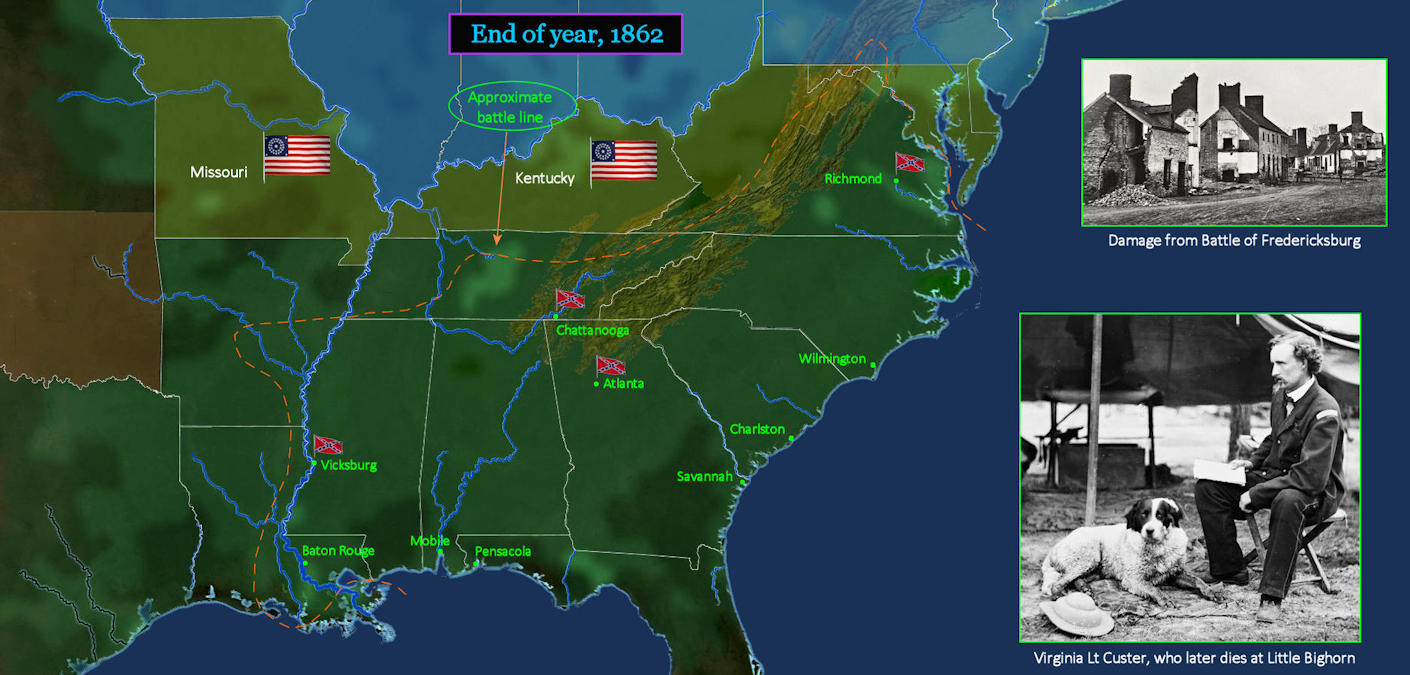
Virginia Holds Fast By the end of the first year of total war, the battlefield has shrunk considerably in the West, while holding firm in Virginia. Missouri and Kentucky have been cleared of rebel armies, and the federal blockade is gradually beginning to bite. Still, the South continues to operate out of every major port except New Orleans. The South is clearly being squeezed, but it doesn't feel that way in Washington. Lincoln has already replaced his top general twice, but so far Lee has managed to stop each one short of Richmond. This is perhaps partly due to excess Union caution, but also because it's difficult to operate in hostile rebel territory. The Union army is essentially groping in the dark, while rebel informants track its every move. | |||||||||