| |
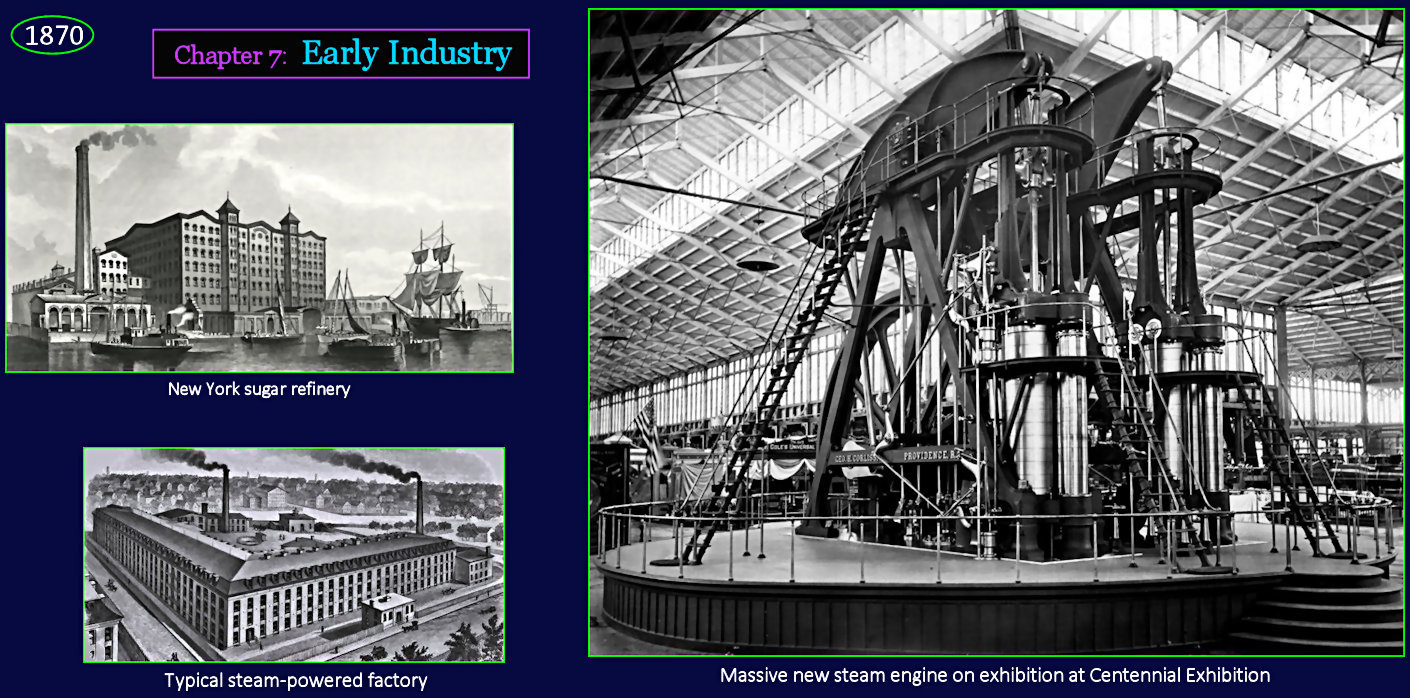
Big Machines The Industrial Era in America begins before the Civil War, but by 1870 is hitting on all cylinders. This is partly because steam locomotives, and stationary steam engines for factories, are becoming widely available everywhere. But above all, it's the growing availability of iron and coal. Before the Civil War, wood and charcoal (made from wood) were the primary fuels. After the war, coal takes over in a big way, as railways begin moving massive amounts of it. At the same time, a surge of new immigrant labor is flooding into America, providing the muscle. |
| |||||||||
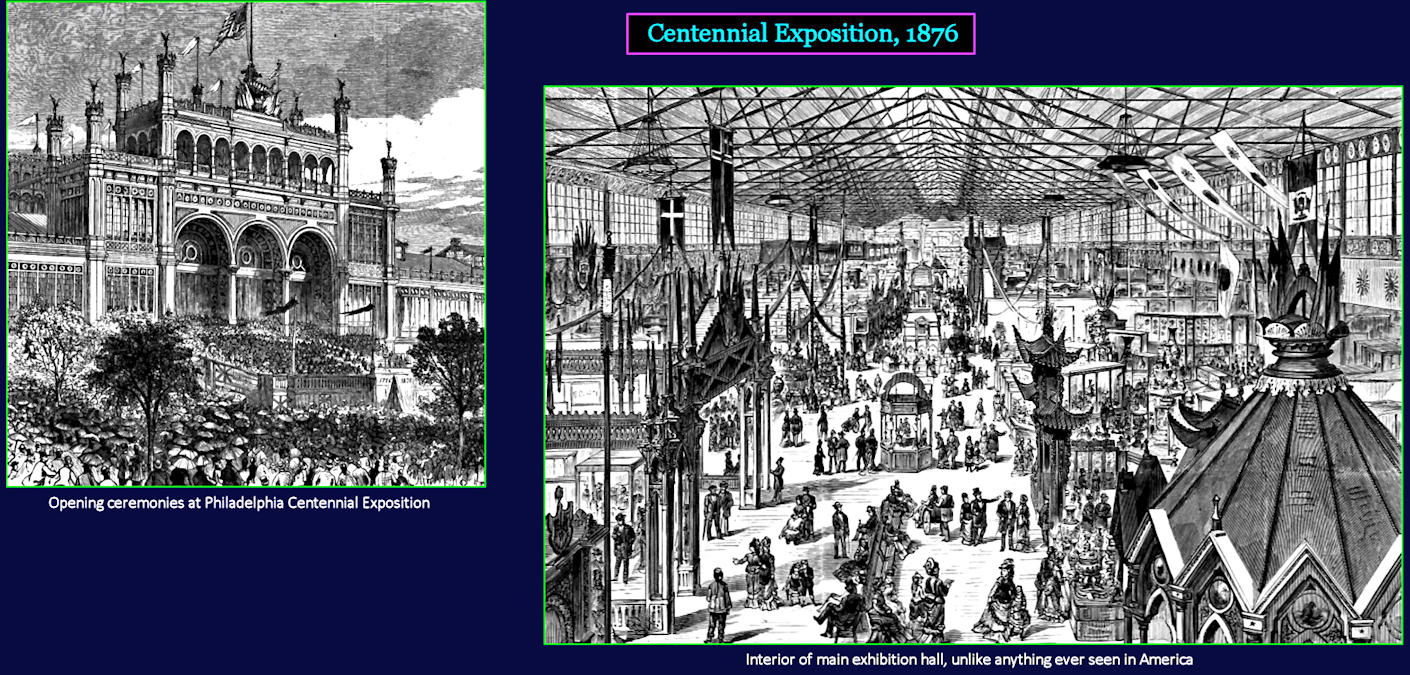
Futuristic Technology There is no magical date when the Industrial Era began, but the Civil War is a good dividing line. Before the war, manufacturing is barely noticeable, except in the largest cities. Afterwards, it's seemingly everywhere. By 1876, in fact, the change is so dramatic that America stages its very first grand manufacturing exposition, in Philadelphia. The date marks the 100-year anniversary of the Declaration of Independence, and America is in a celebrating mood. The exhibition halls are immense, unlike anything seen before. Inside are displays of all the new marvels, including the huge new steam engines that are powering all the growth. | |||||||||
| |||||||||
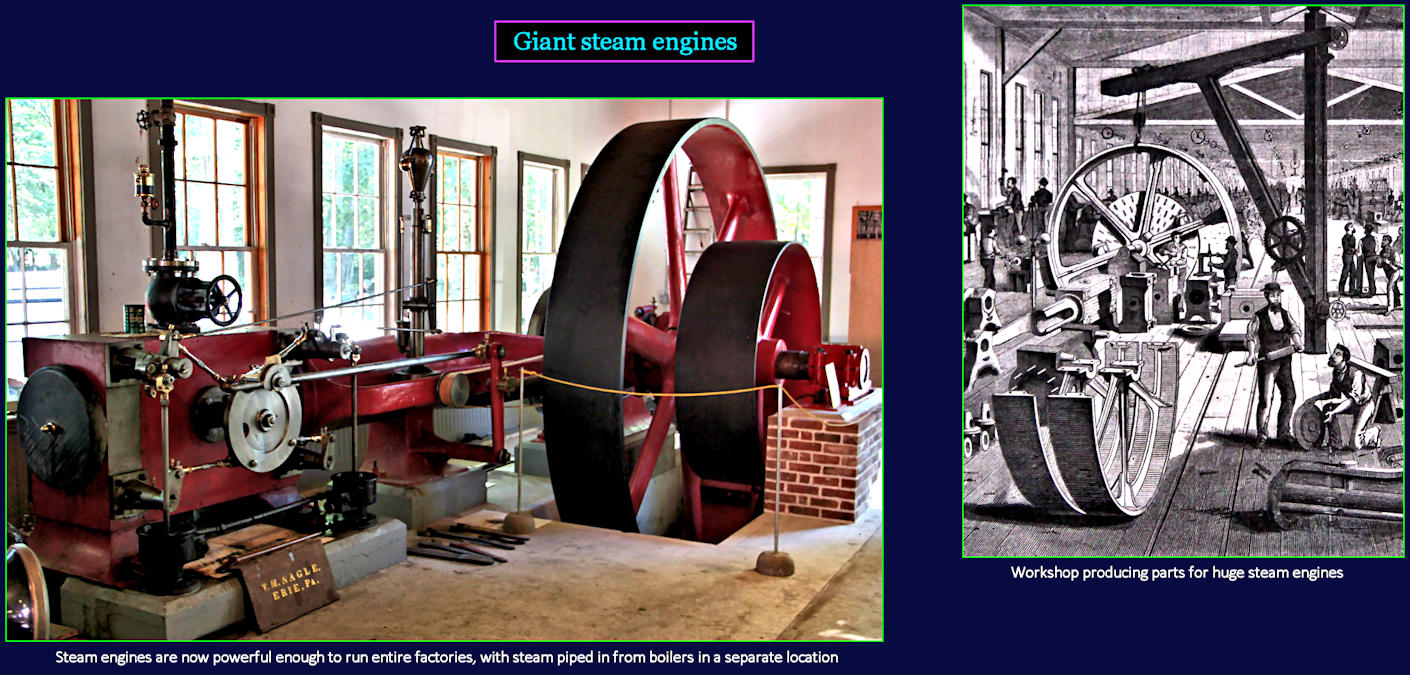
Unlimited Power (almost) The steam engine above (left) is typical of those being installed everywhere in the 1870s, from New York to Kansas, and even California. They are not only bigger and more powerful, but also much more efficient. This is largely due to separate linkage mechanisms for the intake and exhaust valves, which can be precisely timed to extract the maximum energy. The steam engines are big, but operate slowly and almost completely silently, with massive flywheels to smooth out the stroke. The engine shown above has two flywheels, each of which can drive a wide leather belt to transmit power elsewhere in the factory, via shafts and pulleys. The larger the driving wheel, the faster the belt travels. | |||||||||
| |||||||||
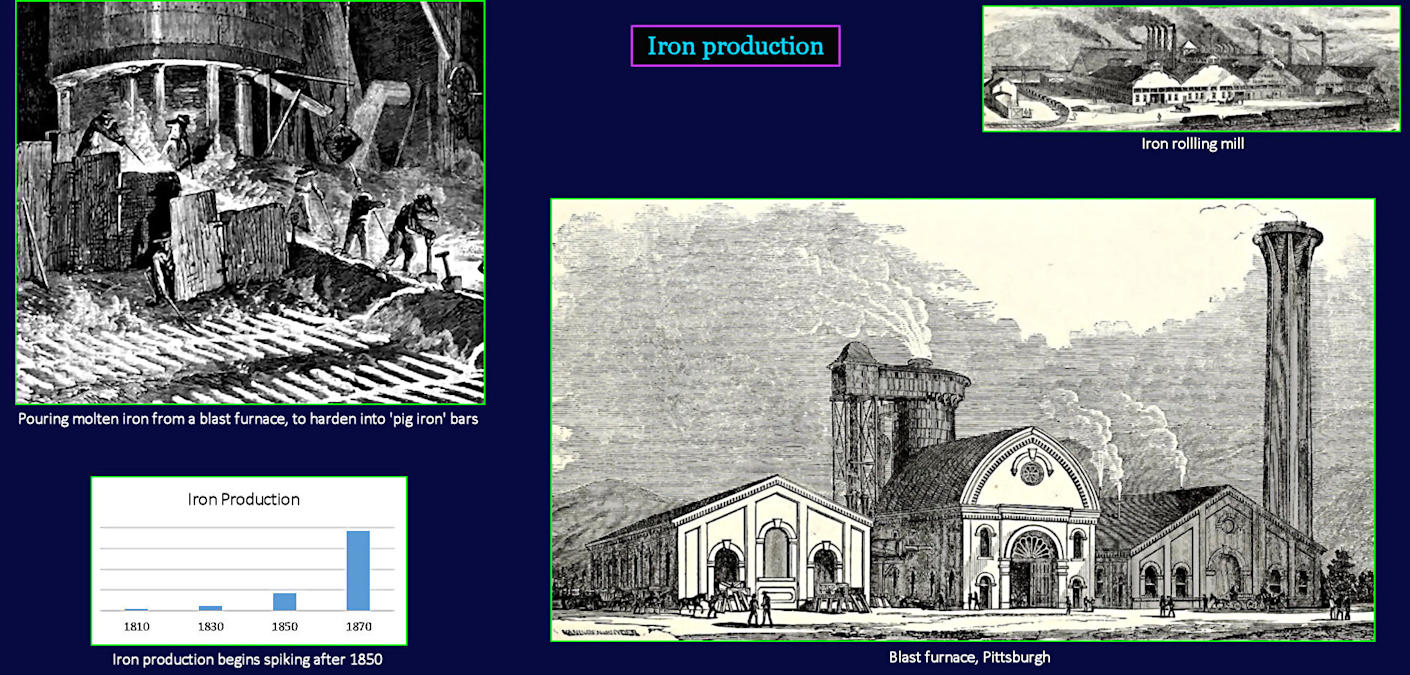
The Indispensable Metal All of this growth, including the exploding railroad network, takes lots of iron (chart above). By 1870, American furnaces are producing over 3 million tons of iron to build factories, railroads, locomotives, boilers and bridges. Per year. Half a million tons are used just to produce the rails needed to build out the growing rail network. This is where coal comes into the picture. It takes massive amounts of heat to extract usable iron from raw iron ore. In 1850, this energy came largely from burning charcoal, made from wood. By 1870, coal production has taken over as the dominant industrial fuel, with production rising from almost nothing to 30 million tons per year. Almost everything runs on coal. | |||||||||
| |||||||||
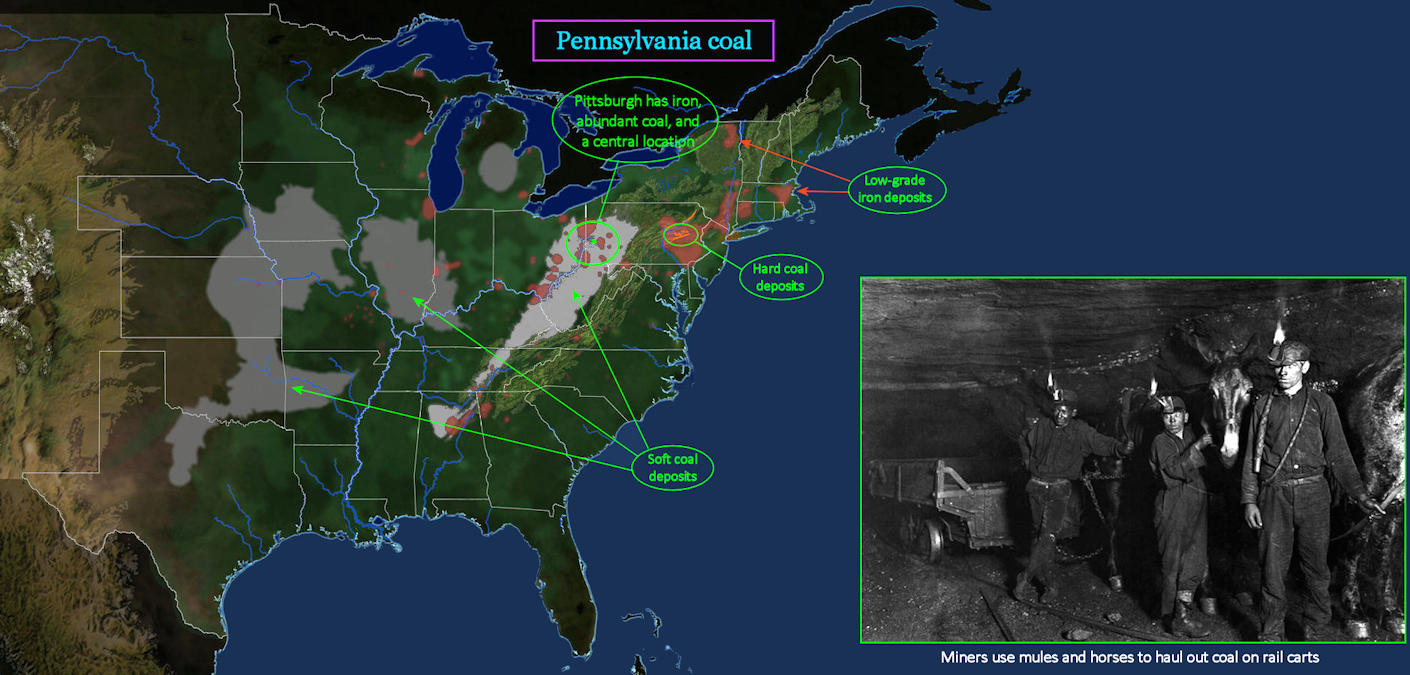
Iron's Mistress The large coal shipments which fuel the explosive production of iron come almost entirely from the region lying just west of the Appalachian Mountains (brightest GRAY highlight on map). Especially the region surrounding Pittsburgh. Much of it is soft coal, which is mined directly from the hills within a mile of downtown Pittsburgh, but also all the way down into West Virginia and Kentucky. An almost equal amount of a much harder, hotter-burning coal is mined from a surprisingly tiny region in the eastern mountains (ORANGE highlights). Altogether, Pennsylvania produces about five times as much coal as either of the two next biggest coal-producing states, Ohio and Illinois. | |||||||||
| |||||||||
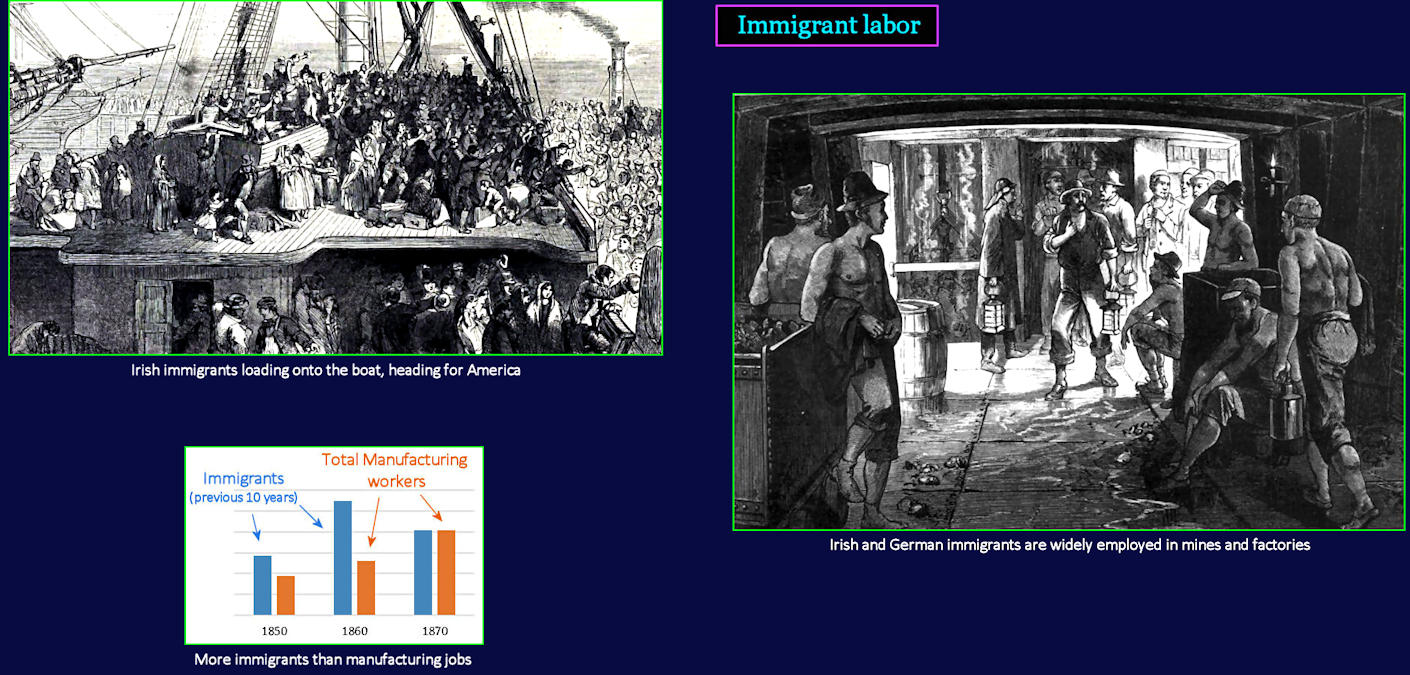
Northern Captive Labor Prior to the Civil War, the southern cotton economy is powered by slaves. Right after the war, the new coal-and-iron northern economy is highly dependent upon a different labor source. Immigrants. The orange bars on the chart show the growth in manufacturing workers. The BLUE bars show the influx of new immigrants, mostly from Ireland and Germany. Between 1860 and 1880, almost 7 million new immigrants arrive in northern ports. That's an average rate of 5,000 per week, for the entire 20 years. This is more than enough cheap labor to fill every single new job opening in the growing manufacturing economy. And hungry new immigrants just keep pouring in. | |||||||||