| |
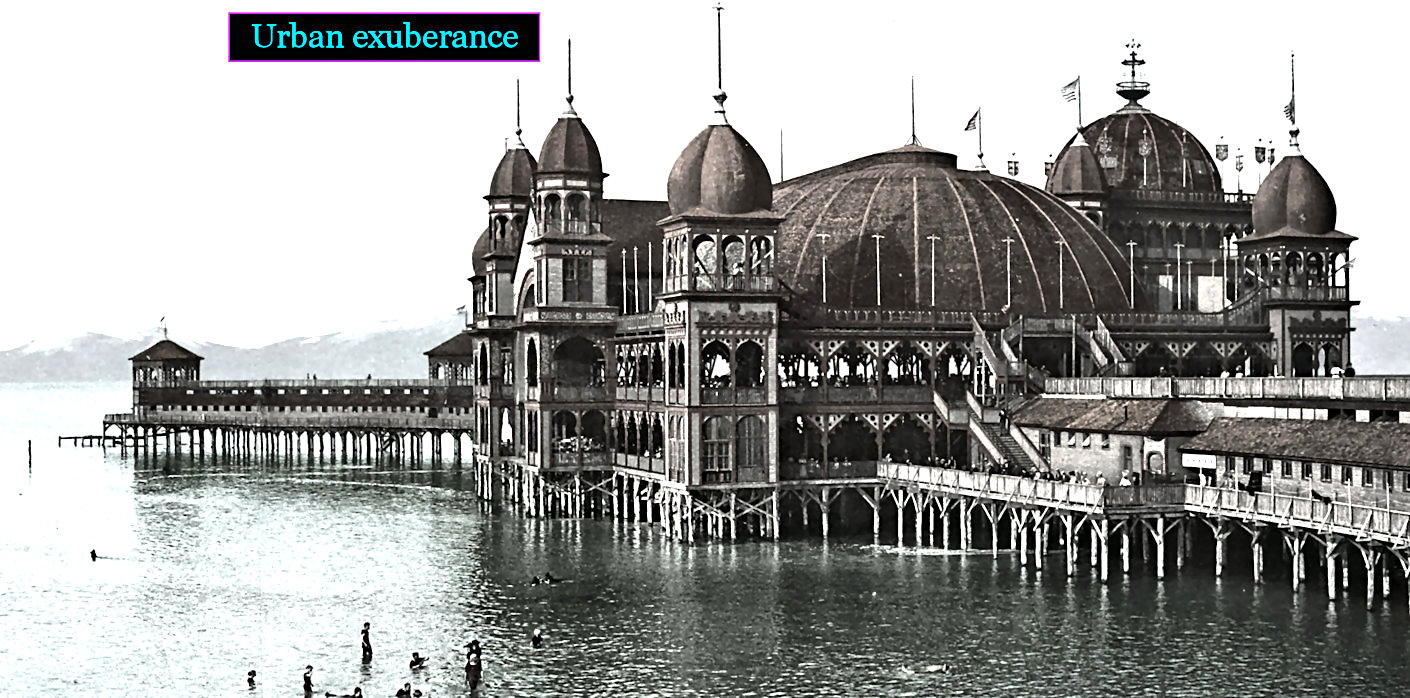
Cities Have it All The Saltair Pavilion in Salt Lake City is just one example of the deep pockets that finance large structures during this period. It's jointly owned by the Mormon Church, and the Salt Lake and Los Angeles Railway, and is emblematic of a long period of conspicuous civic collaboration. |
| |||||||||
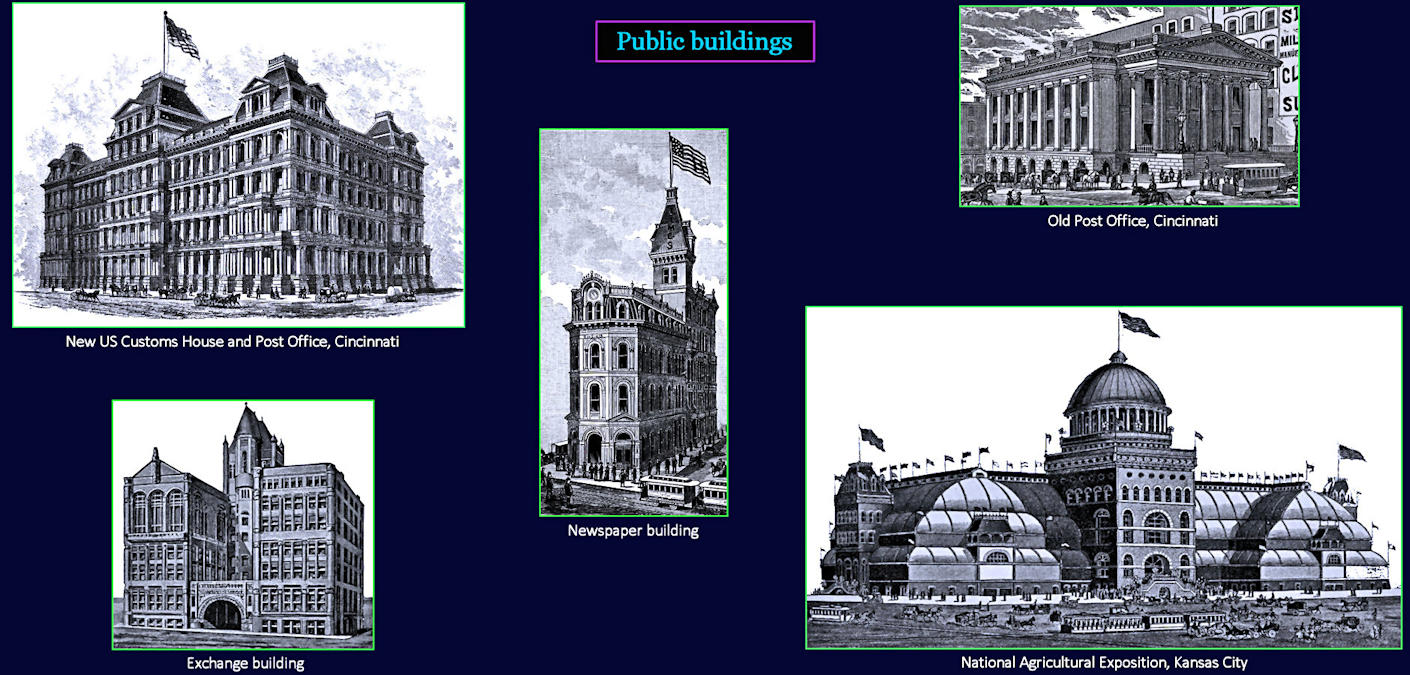
Big and Grand The grandiose style of the period is evident everywhere, from government buildings and newspaper offices, to special expositions. In previous times, public buildings had adopted classical tones, with Greek columns and pediments. Newer structures, however, are sprouting towers and turrets everywhere, with adornments and fanciful features of all sorts. America is on a roll, and it shows, especially in the big cities. Out in the country, not so much. | |||||||||
| |||||||||
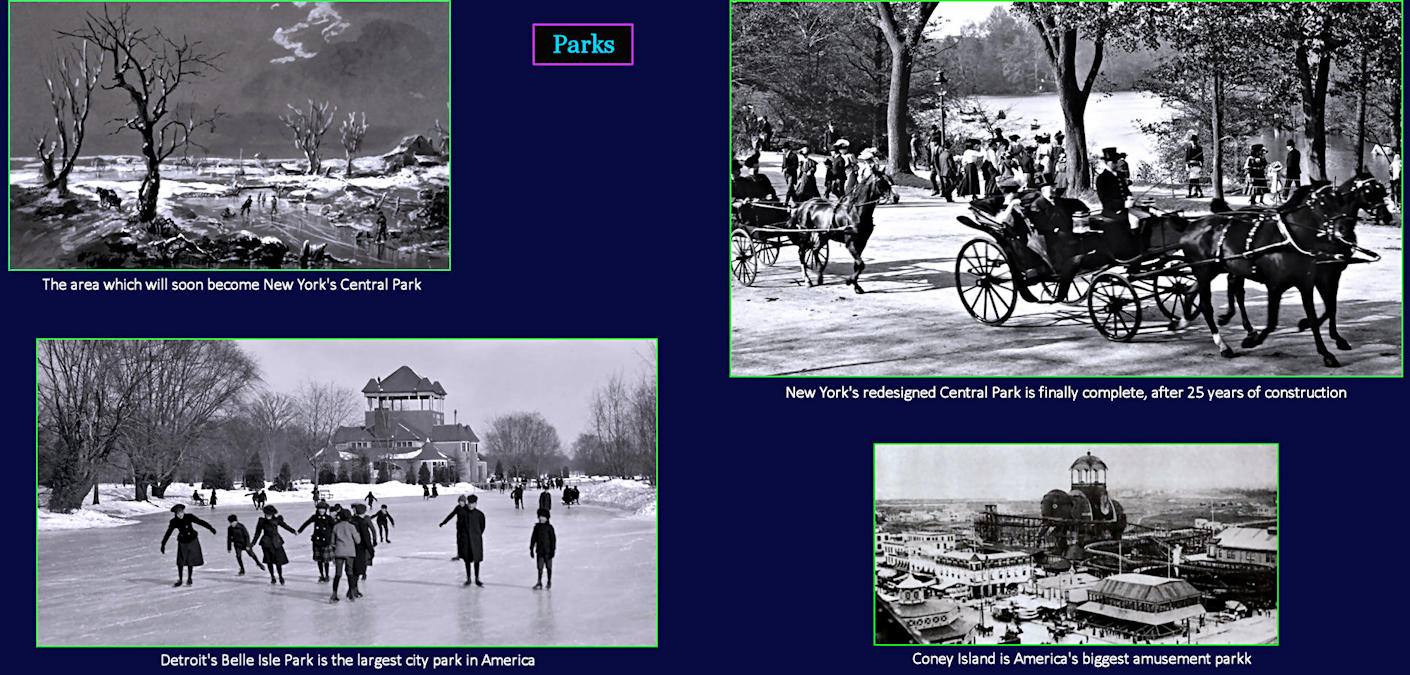
Fresh Air America already has lots of small city parks, but some are now redesigned in a much grander style. New York's Central Park is the most famous, designed by the man who created Boston's 'Emerald Necklace' in the 1860s, and help design Detroit's Belle Isle in the 1880s. Meanwhile, a modest summer resort is built for Brooklyn residents on Long Island's south shore, just before the Civil War. After the war, railroads bring visitors from New York and surrounding areas to its wide-open beaches, and the Brighton Beach resort is erected on the same site. This soon expands to become Coney Island, America's first monster amusement park. | |||||||||
| |||||||||
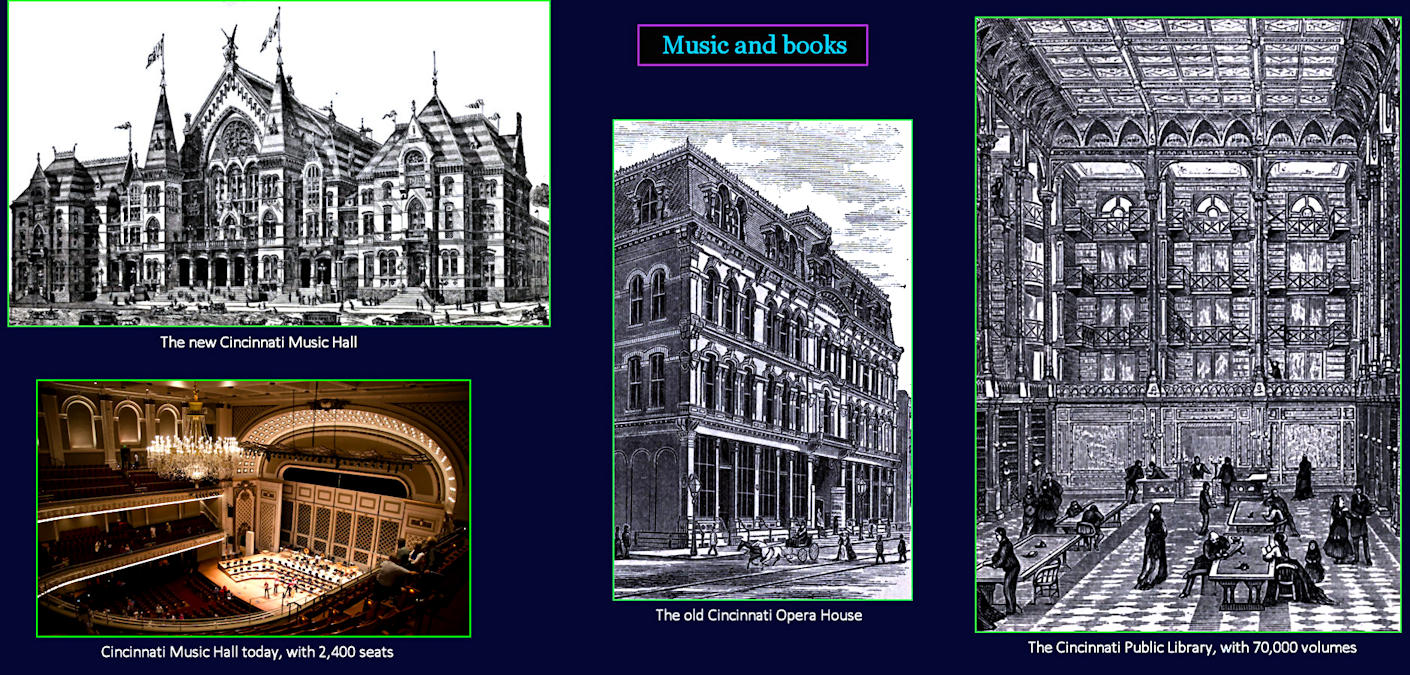
Cultural Amenities Music halls and opera houses are all the rage. Cincinnati has three, including a magnificent concert hall that still hosts performances today. In some cities, small existing libraries are consolidated into large new public libraries, with elaborate architecture. | |||||||||
| |||||||||
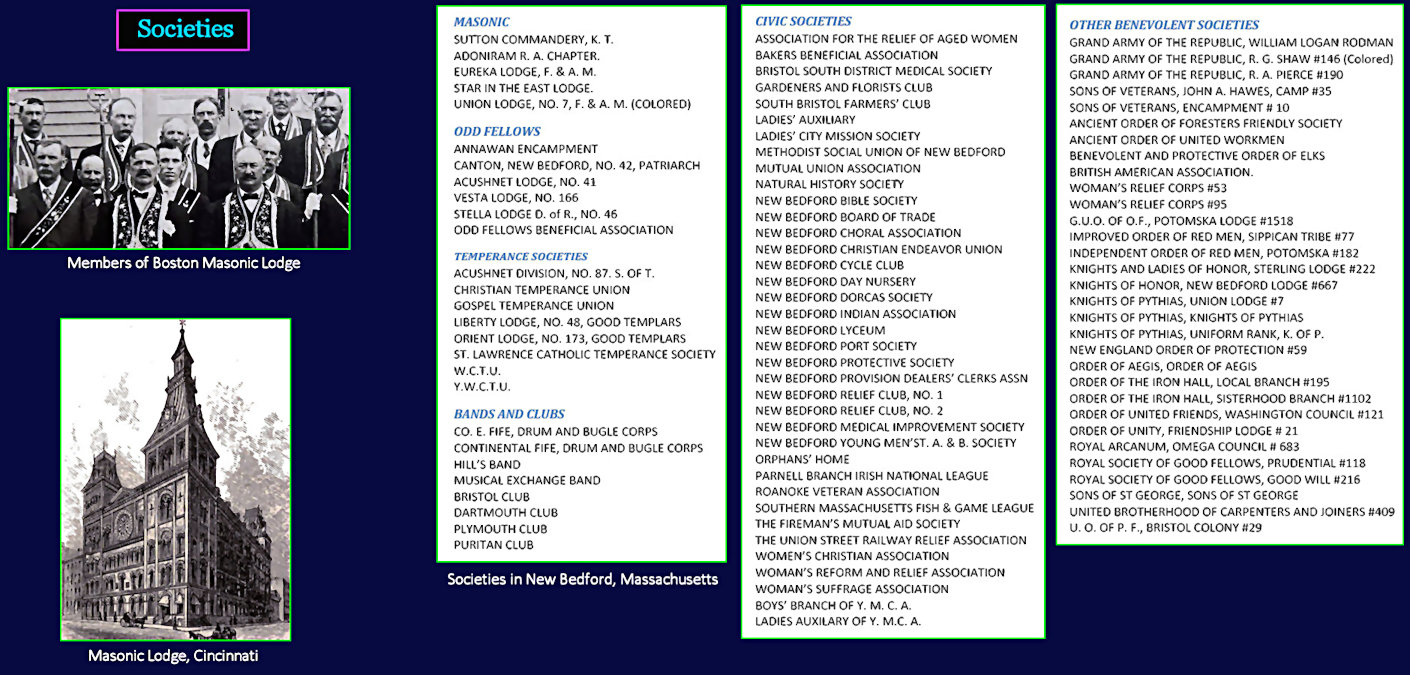
Clubs for Everyone Civic societies are springing up in every American city during the 1800s. The lists above are from New Bedford, which was among the wealthiest cities in America during the heyday of whaling, but now has just 40,000 residents. As elsewhere, the two most prominent societies are the Masons and the Odd Fellows. Both are secret societies, with semi-religious rituals, special passwords and oddly-festive uniforms. They attract businessmen, and often own their own downtown buildings. Normally, there is a large meeting hall upstairs, while other floors contain offices for lawyers, brokers and insurance agents. Men enjoy having a comfortable place to meet, without the coarseness of working-class saloons, yet still safely away from the wives. | |||||||||
| |||||||||
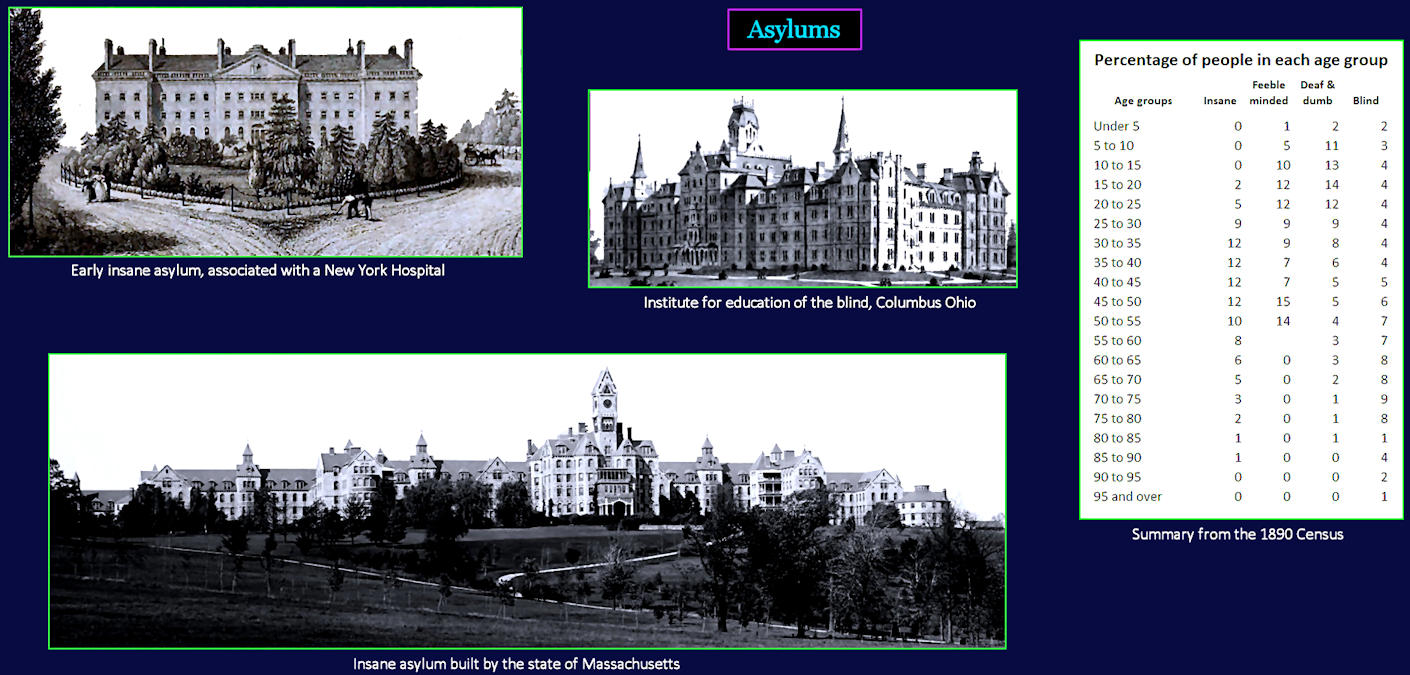
Society's Misfits Today we would call them rehabilitation facilities for the partially disabled, but in the 1800s they are just called asylums, or 'refuges' for the insane, the blind or the deaf. People with mental illness are often called lunatics. The US Census of 1890 lists over 100 public institutions for the insane, in addition to some 40 private institutions. Additional facilities are listed for the deaf and blind. Some cities also have 'workhouses,' for adults convicted of minor offenses. | |||||||||