| |
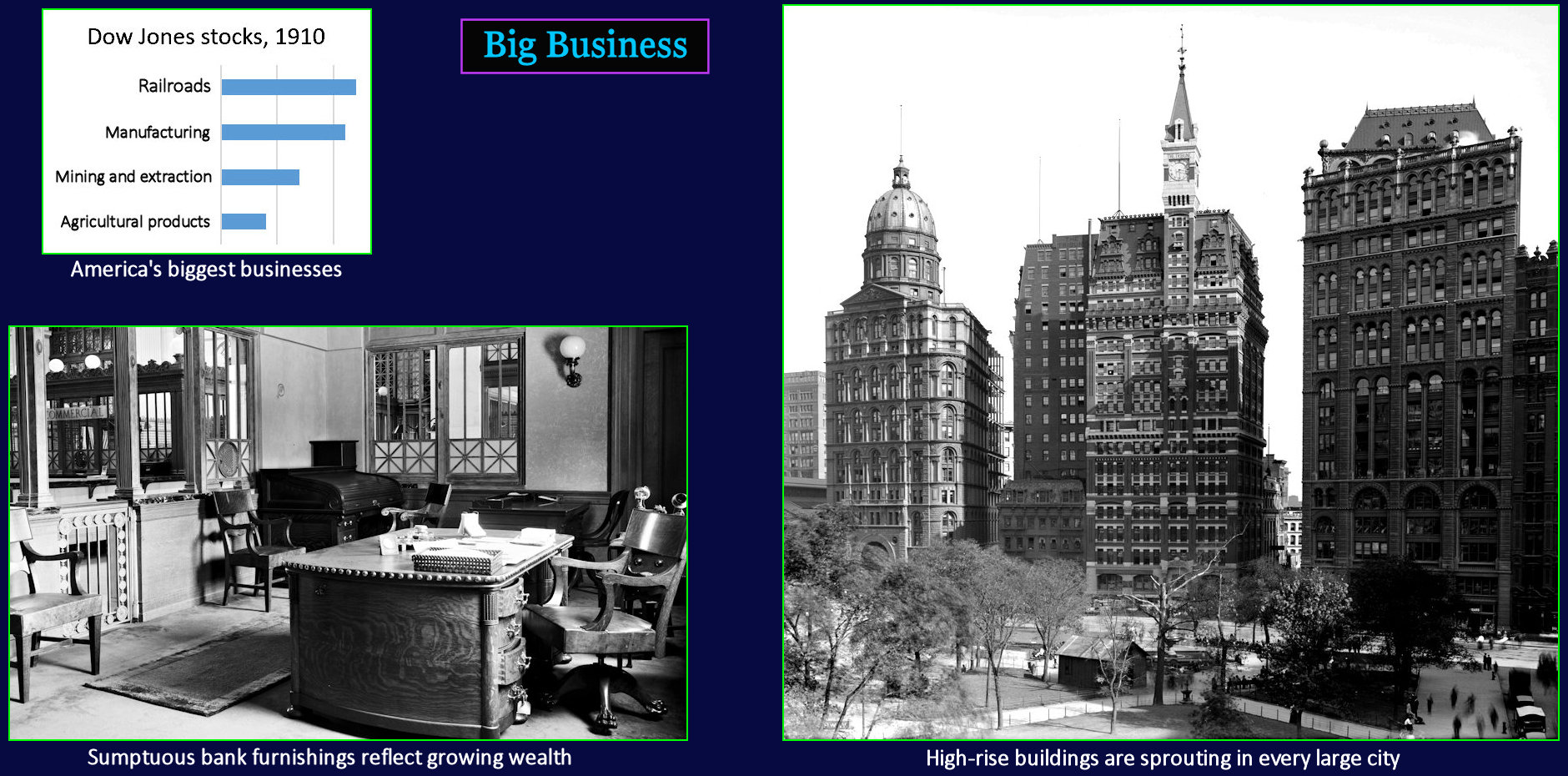
First Business Towers When the Dow Jones company first begins computing averages for the New York Stock Exchange in 1896, it focuses on just the dozen largest railroad companies By 1910, railroads are still the largest component of the Dow, but are closely followed by big manufacturers, including the steel producers. Many are already so large that they can finance their own downtown high-rise buildings. Somewhat surprisingly, newspapers are among these corporate titans. The photo at right shows New York buildings owned by three top newspaper publishers. |
| |||||||||
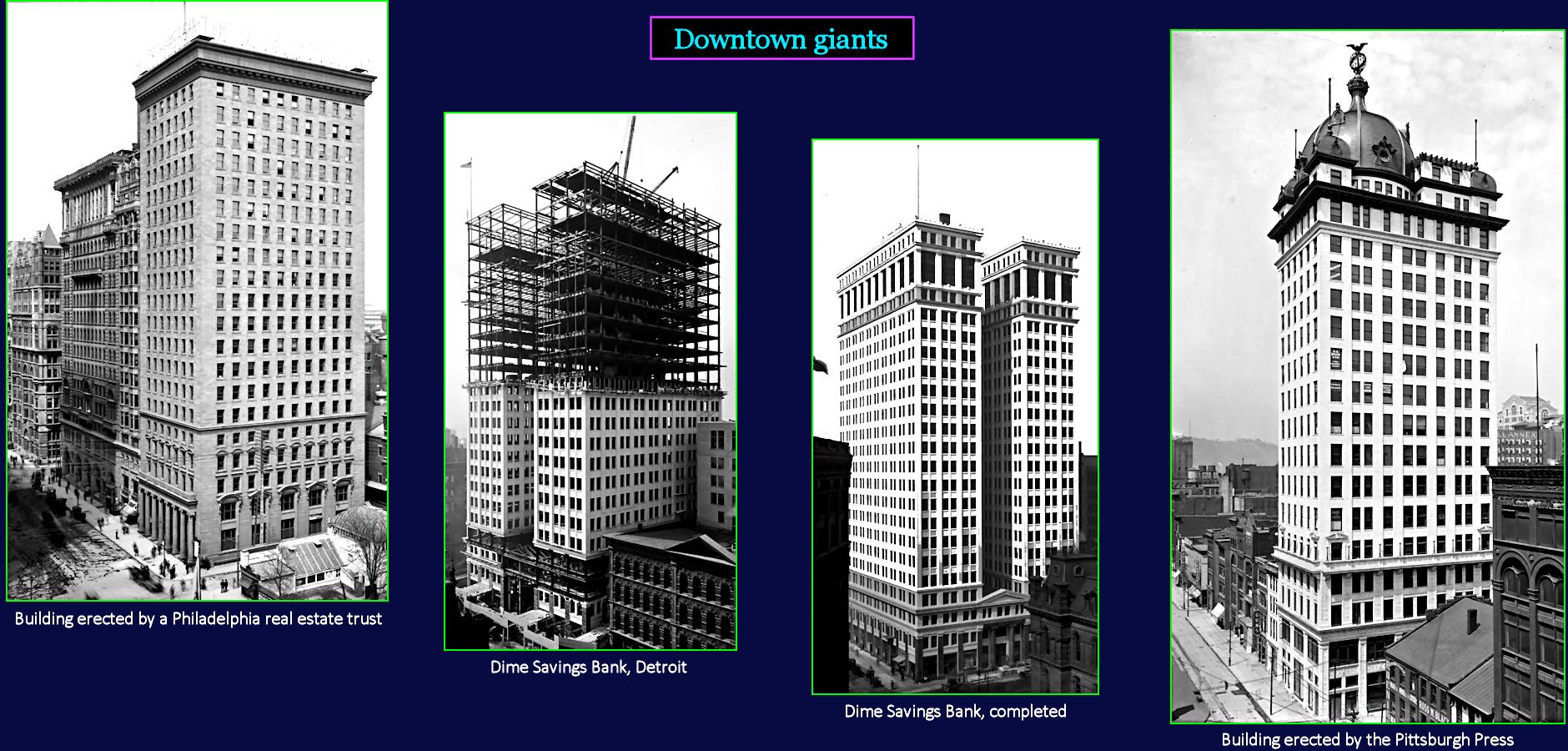
Race to the Top These towering monsters are typical of buildings rising in many major cities. Banks had always owned prominent buildings, often in competition with government structures for the greatest number of classical Greek columns. But the new high-rise buildings are a whole new type, emphasizing height rather than style, though some sport adornments on top. They're owned by the wealthiest of the wealthy, and attract plenty of admiration. | |||||||||
| |||||||||
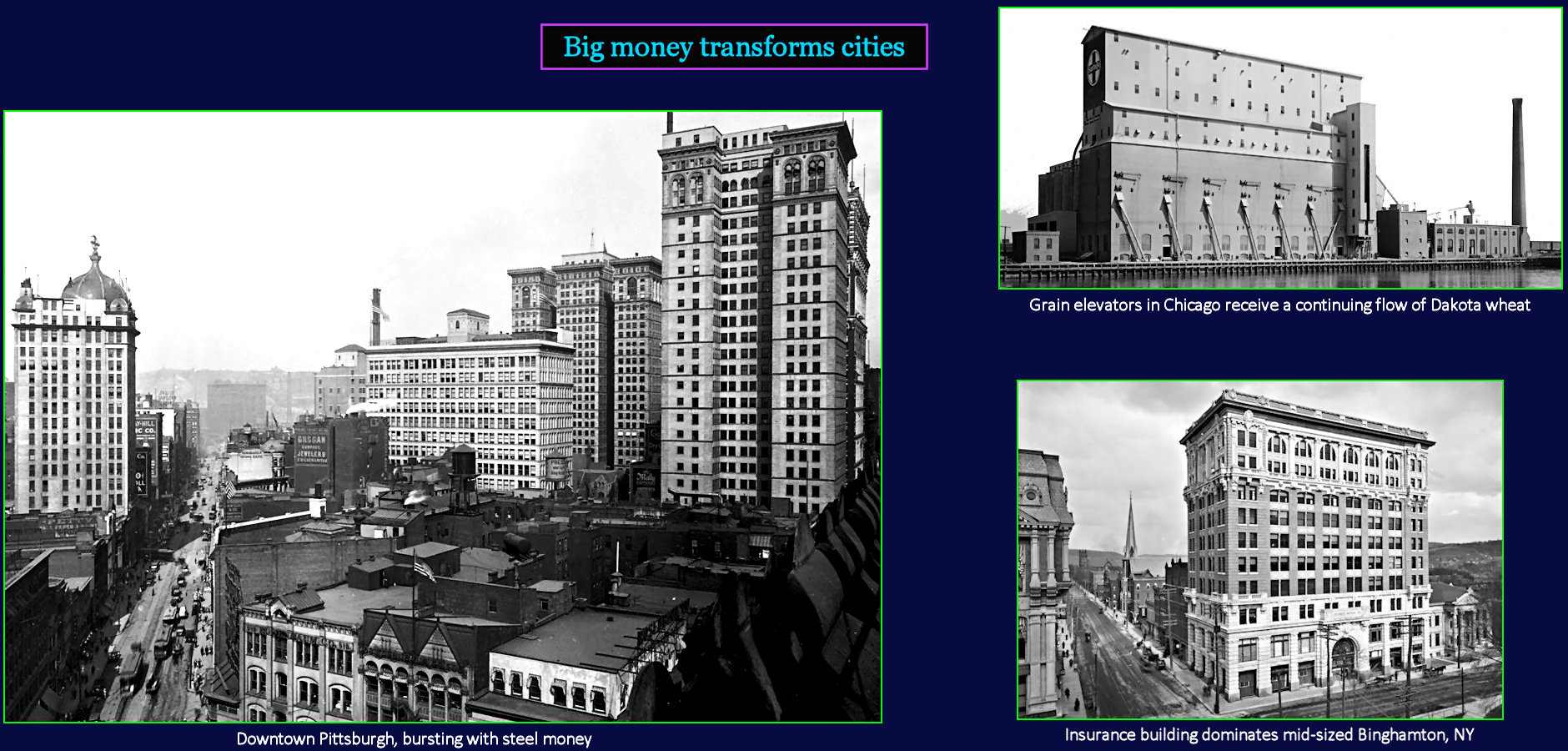
Downtown Goes Vertical America's biggest cities continue to be the important transportation hubs. Increasingly, however, regional manufacturing centers are also growing in size and importance. Pittsburgh is the most prominent example of this trend. With all the orders pouring in for Pittsburgh steel, deposits in Pittsburgh banks are also growing, and high-rise buildings are the latest trend in development projects (left). Growing cities attract new residents, creating an ever-increasing demand for downtown office and retail space. Even smaller cities are attractive markets for the big new downtown buildings. With just 30,000 residents, Binghamton has a new insurance building that towers over the existing downtown landscape (lower right). | |||||||||
| |||||||||
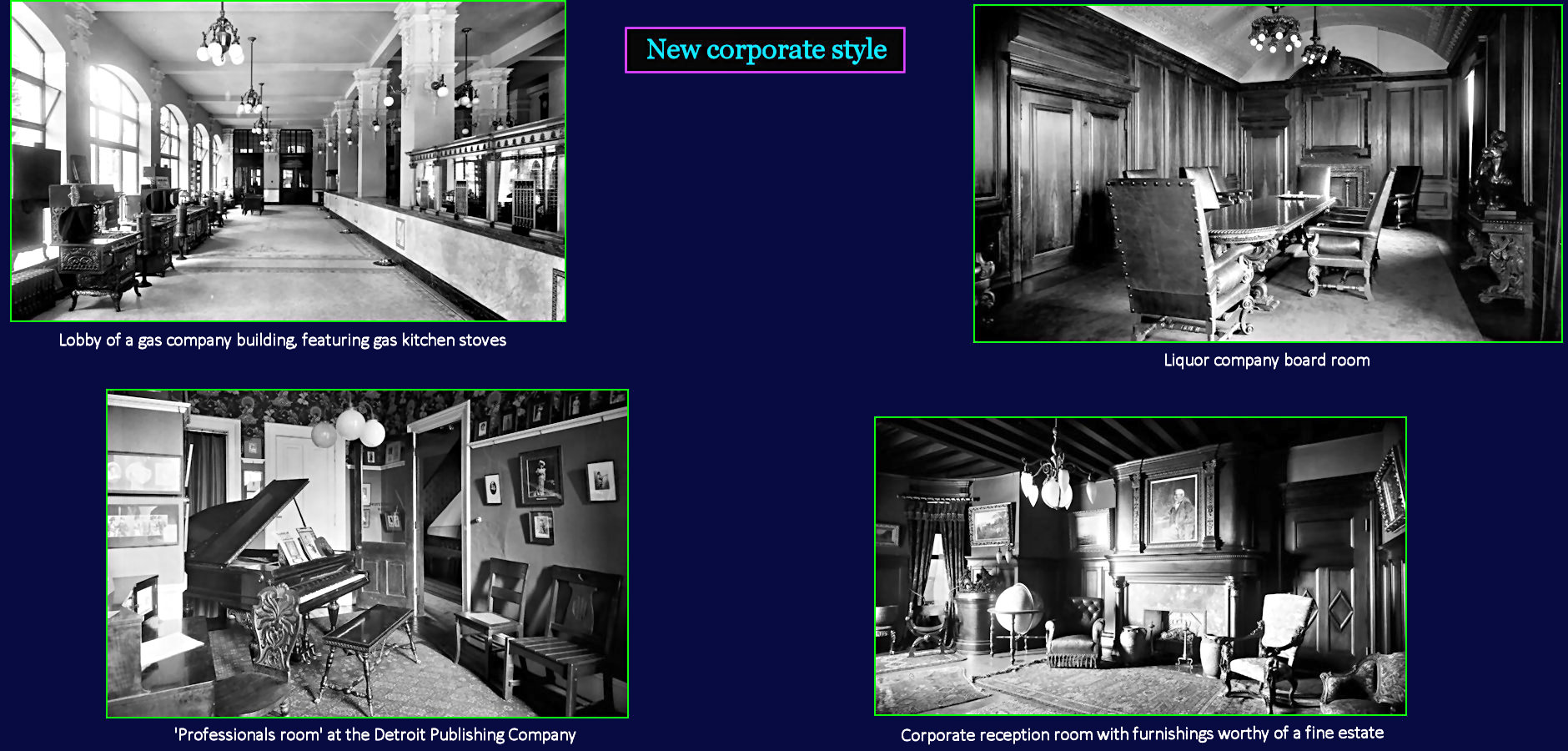
The Corporate Look The interiors of the new corporate towers emphasize sumptuous elegance. Public lobbies and reception areas are showpieces, rivaling the splendor of hotels and retail giants. Boardrooms, lounges and upstairs offices mirror the look of the finest residences. This includes such touches as grand pianos, fine wood paneling and luxurious upholstered seating. | |||||||||
| |||||||||
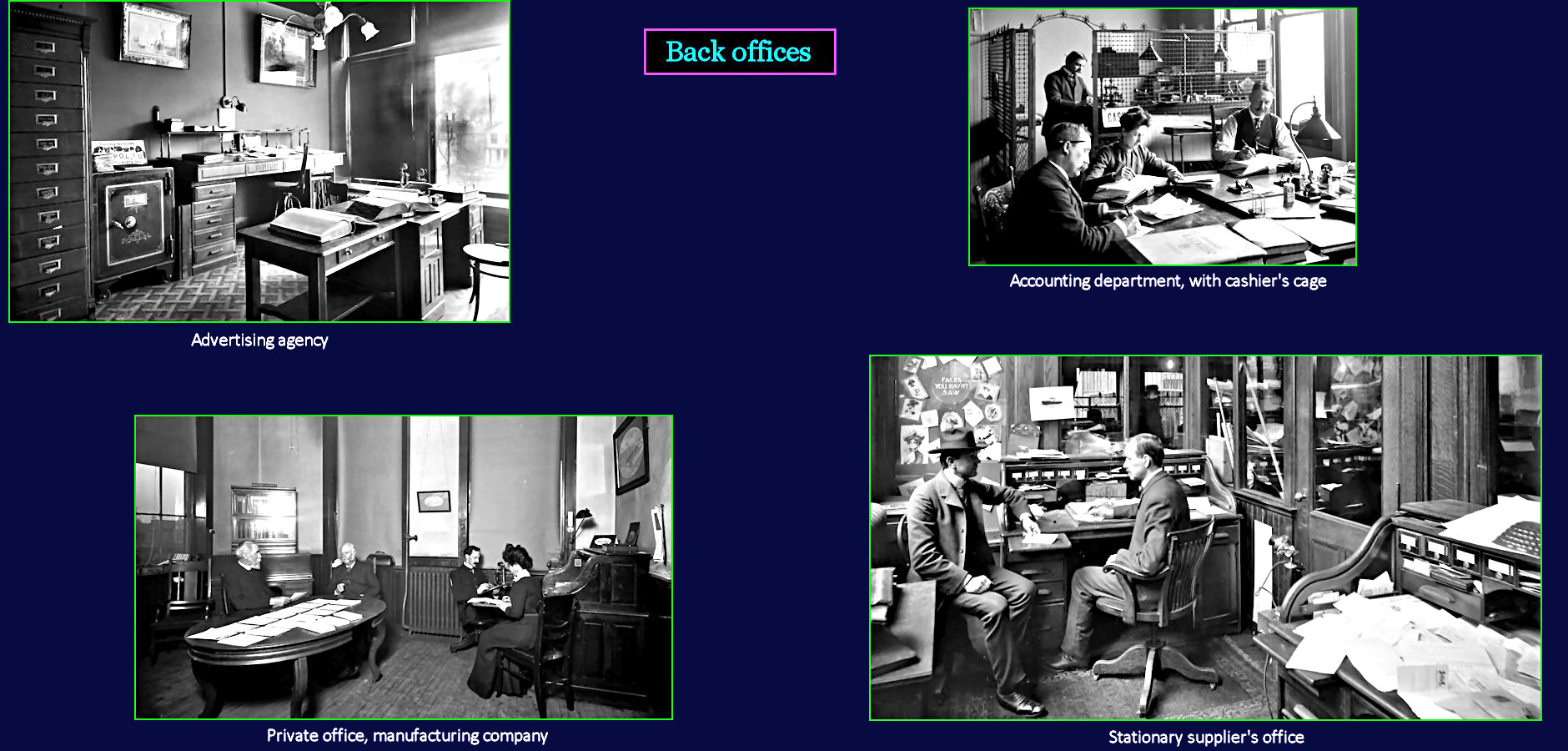
Where Business Gets Done The real work of business is conducted in the 'back office,' which does not yet have conveniences that we take for granted today. Like copy machines and computer spreadsheets. Paper still rules the desktop. | |||||||||
| |||||||||
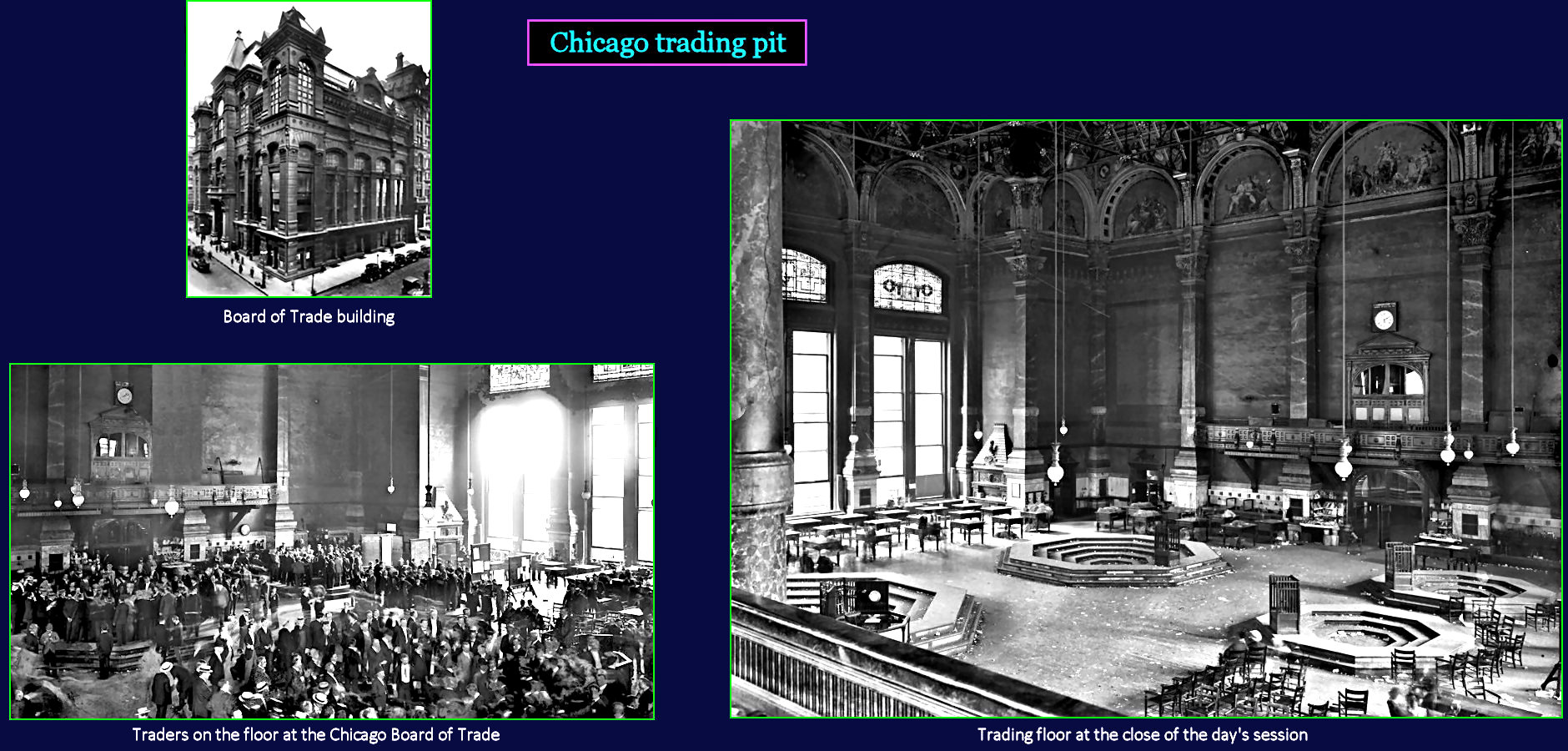
Futures Trading New York continues to dominate the world of finance, as host of the New York Stock Exchange. But Chicago is the center for trading in bulk commodities of all kinds, like hog bellies. It's the natural shipping hub for grain, lumber and livestock arriving from the west, north and south. The Chicago Board of Trade provides the first venue for trading in commodities 'futures,' which are contracts for delivery of goods at some future date. Contracts for grains like wheat and corn are the first to be traded, but livestock and other products are soon added to the list. Without the aid of computers, orders in the trading pit (lower left) are placed using a combination of hand signals and yelled prices. | |||||||||