| |
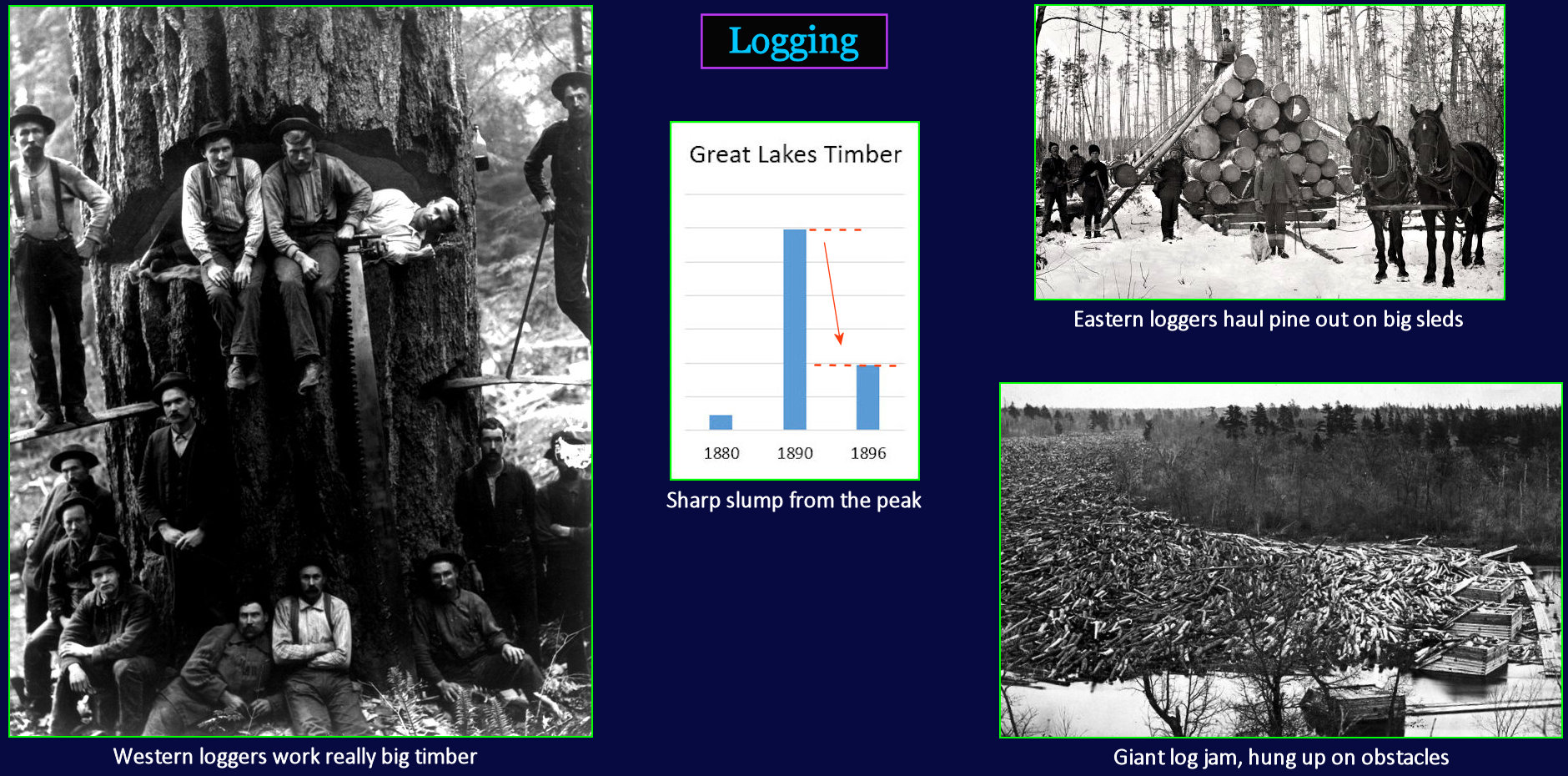
Men and Trees In the photo at left, two loggers are standing on boards which have been inserted into notches cut in the trunk. From these positions, the two men used the long saw (standing vertically, center of photo) to make the big notch in the trunk that will bring down the tree. Out east, the logs were somewhat smaller (top right), and are typically moved with horses during the winter, over frozen ground. Logs are stacked on the shore, then rolled into the water during spring flooding season. Sometimes they jam tight (lower right). |
| |||||||||
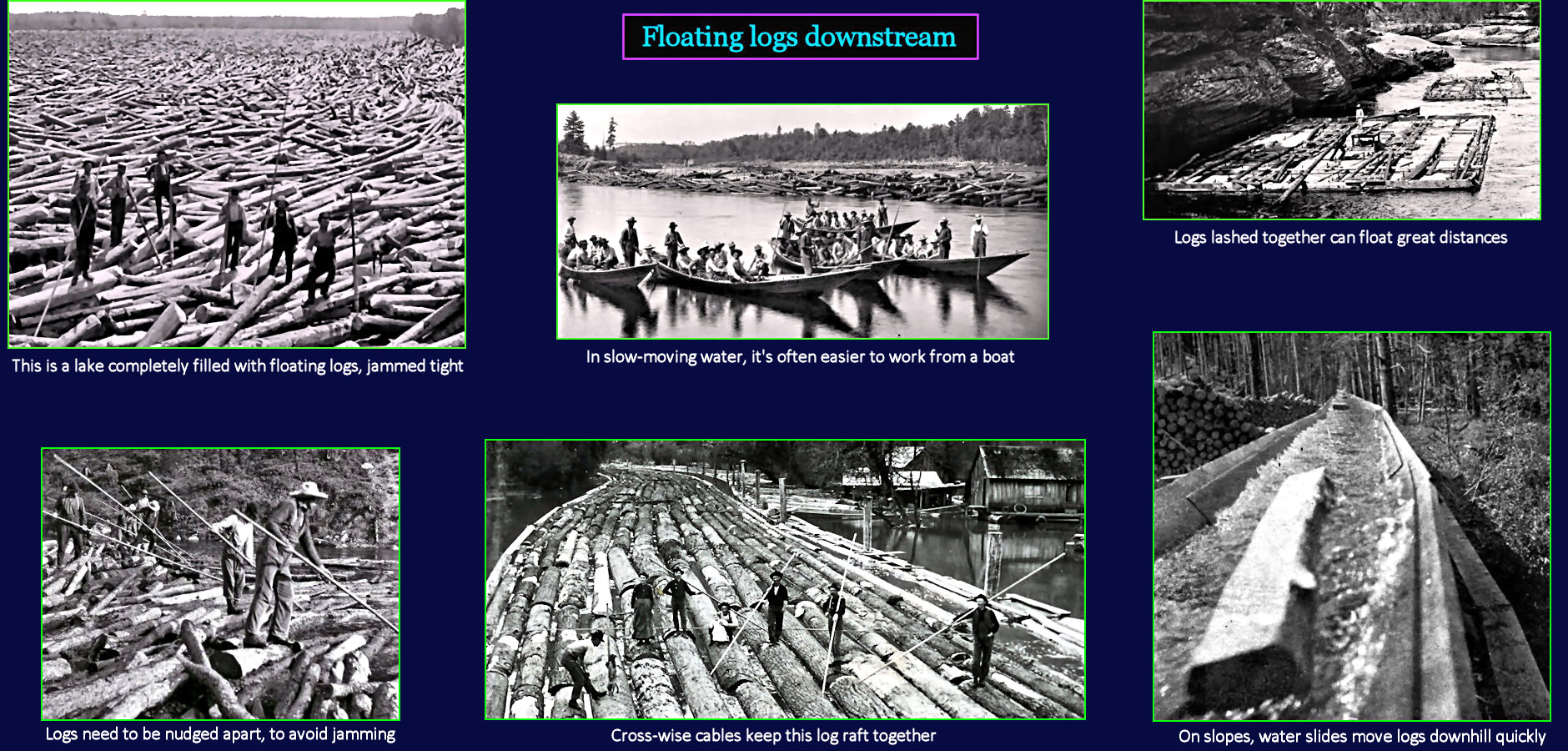
Floating Wood The scope of logging activity during the peak years, before 1900, is staggering. Floating is simple work, but loggers have to be continuously alert to logs rolling under their feet, which can happen quickly. The men who keep the logs moving downstream are in constant danger. Working from long, canoe-like boats (top center), lumbermen make Maine the logging capital of the world by 1830, before the big activity moves west to Michigan and the Pacific Coast. Big loads can be easily moved downriver by lashing or chaining logs together (top right, center bottom). On slopes, long slides made from boards are continuously flooded from the top with water, to quickly float logs downhill (bottom right). | |||||||||
| |||||||||
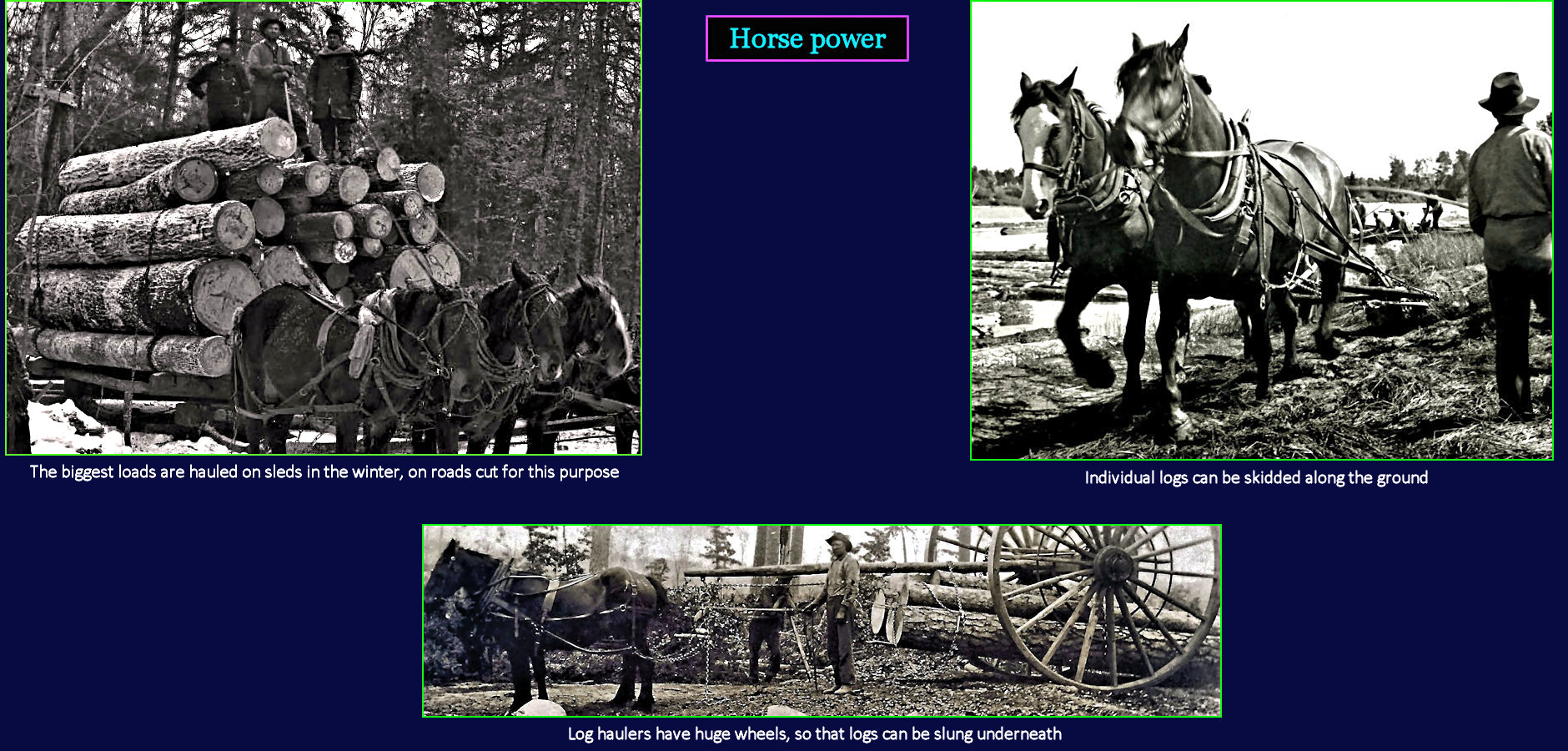
Hauling Wood Water is great for moving logs downriver, but first you have to get the logs down to the riverbank. Teams of two or three horses are commonly used to drag big skids through the northern woods in winter, when the ground is frozen (top left). Logging roads are sometimes intentionally flooded to create a wide pathway of slick ice. Single logs can be skidded right along the ground (top right). Bigger logs can be hauled on a kind of upside-down cart (bottom), if there's room between the trees. | |||||||||
| |||||||||
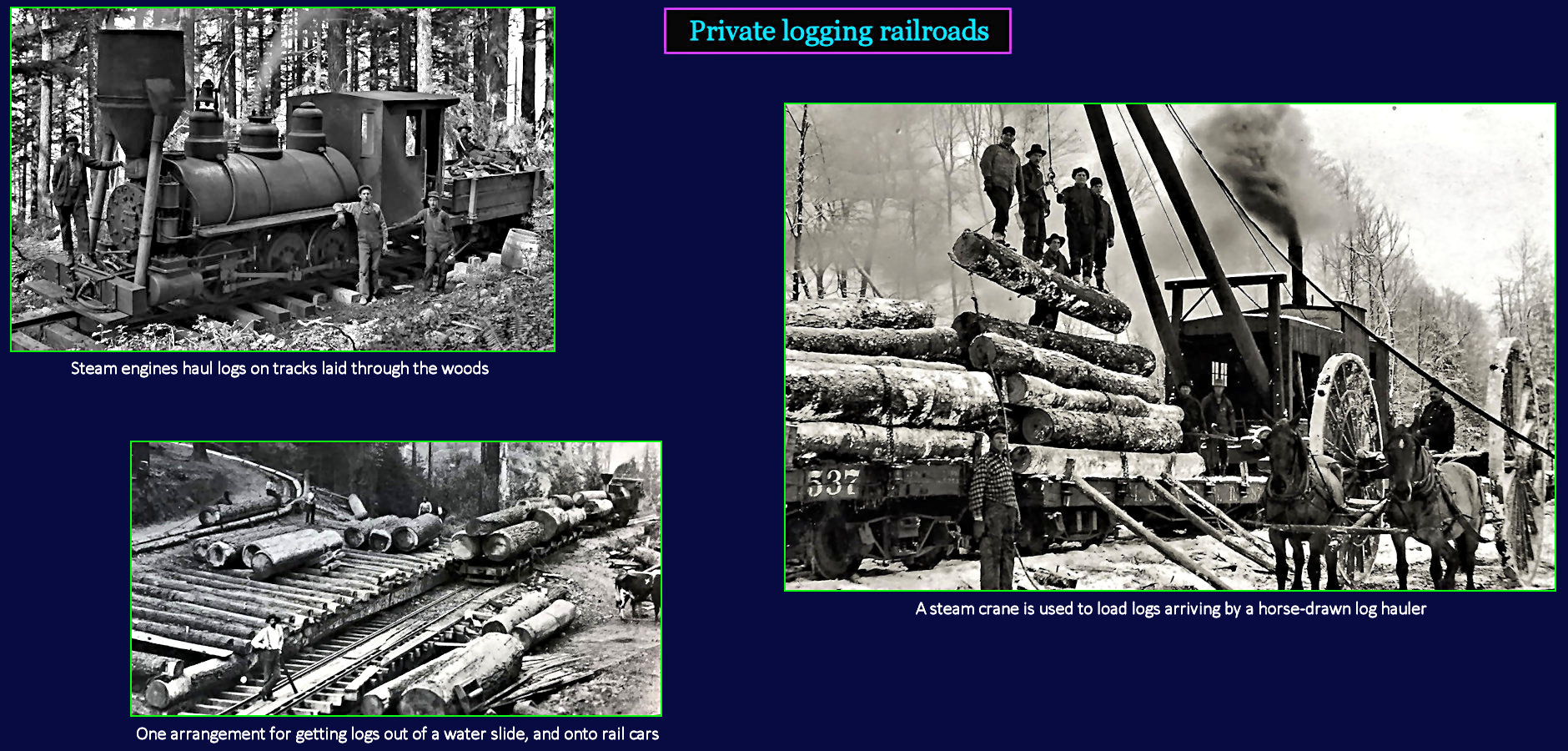
Wood by Rail The bigger logging operators eventually discover they can build their own railroads, right through the woods, to reach stands of trees far from the water (top left). This is often a two-step process, with logs arriving at the rail cars by other means. Hundreds of little narrow-gauge logging railroads are built in Michigan alone, which can be pulled up and moved as conditions dictate. When loggers are finished with an area, equipment is sometimes left to just rust away in the woods. | |||||||||
| |||||||||
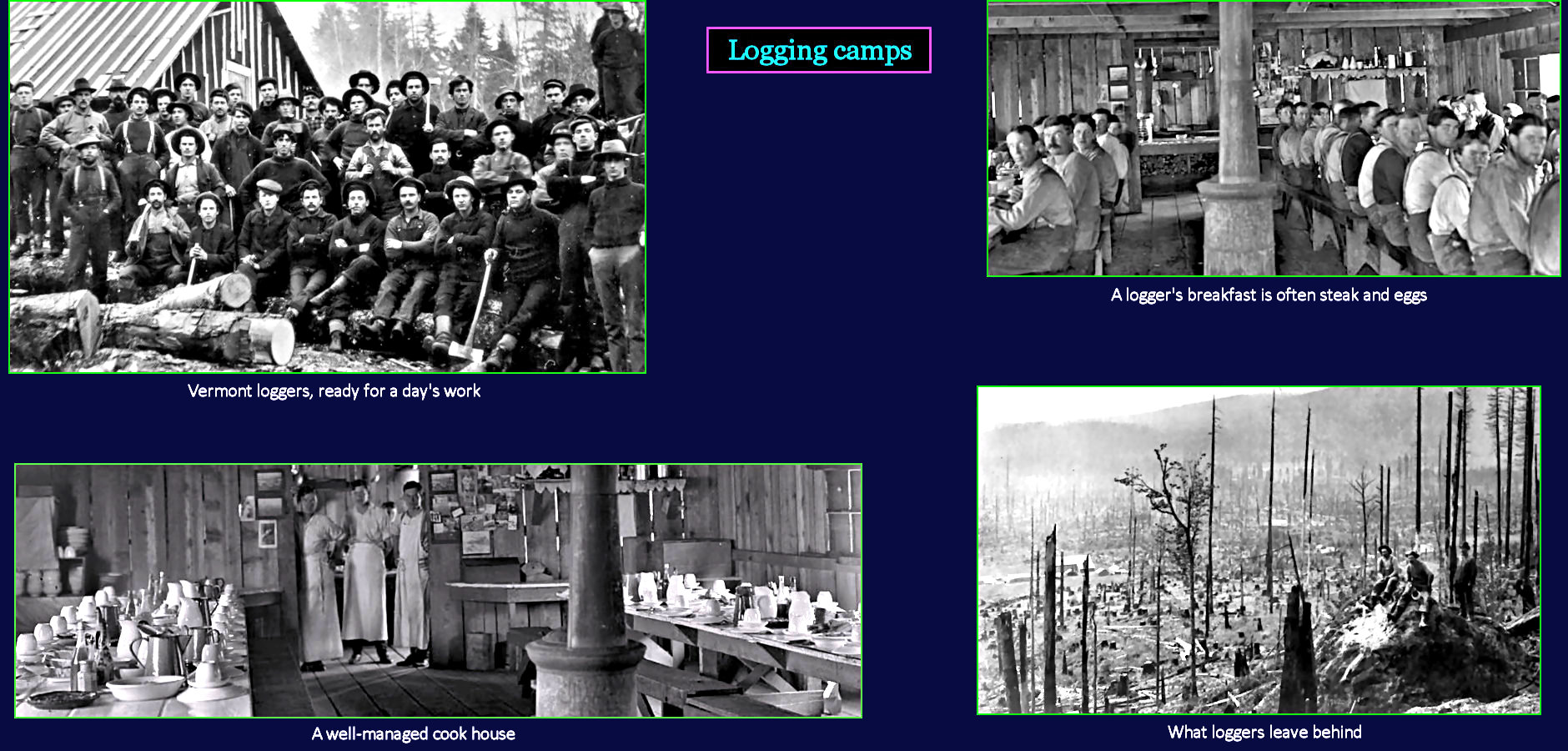
Eating and Sleeping Wood The life of a logger is much like that of a miner, living far away from the nearest town. One big difference, however, is the diet. Loggers are typically beefed up with a 'lumberjack breakfast' that might look like dinner to anyone else. But the scars left from abandoned logging and mining camps are much the same, as little attempt is made to clean up a site. Great stump fields remain for decades (lower right). Equipment, buildings and materials of all kinds, no longer needed, are sometimes also left behind. | |||||||||
| |||||||||
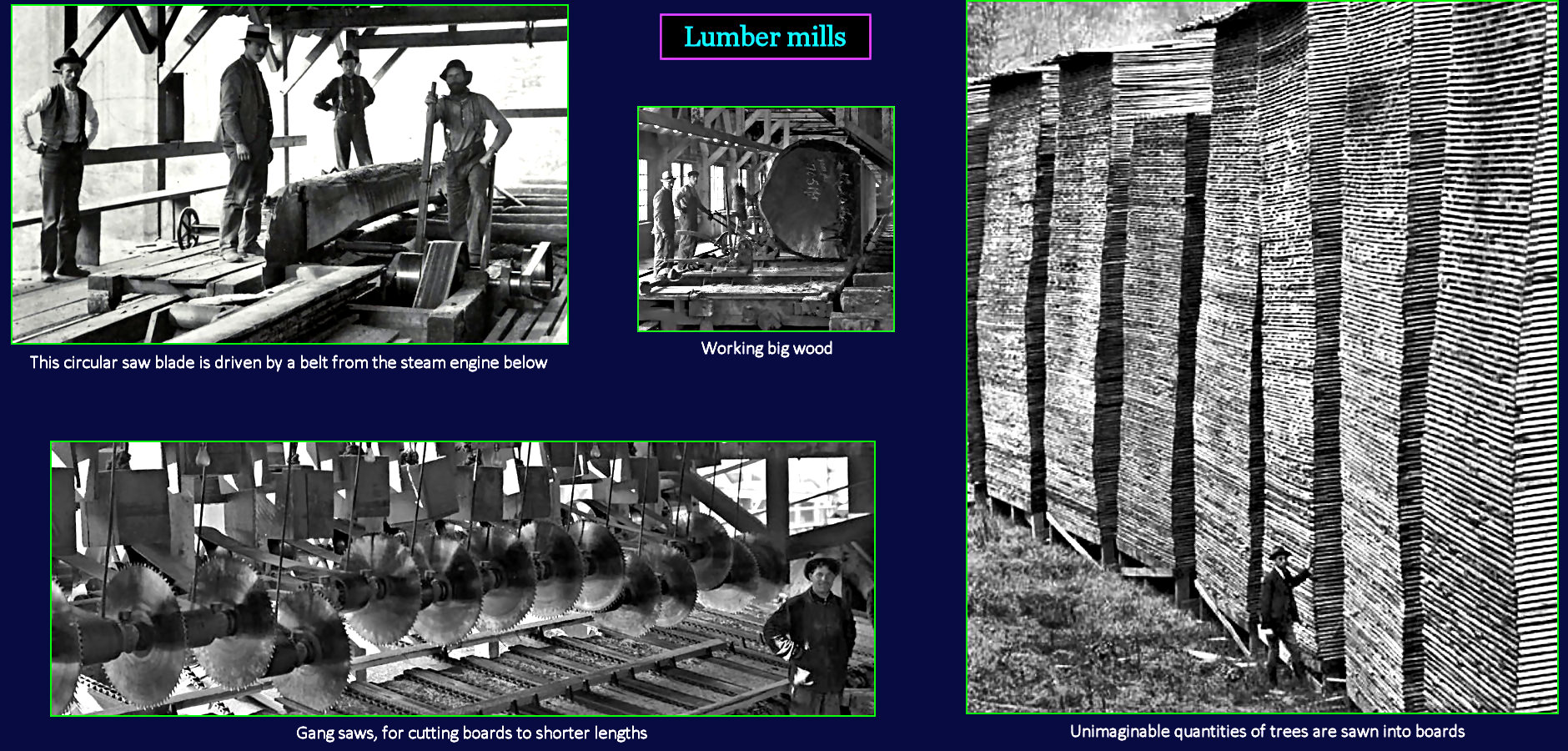
Where it all Goes The final destination for all that wood is the lumber mill, with its big circular saw blade (top) and smaller gang saws (bottom). Band saws are also sometimes used. Stacks of lumber drying out behind the mill soar beyond belief (right). | |||||||||