| |
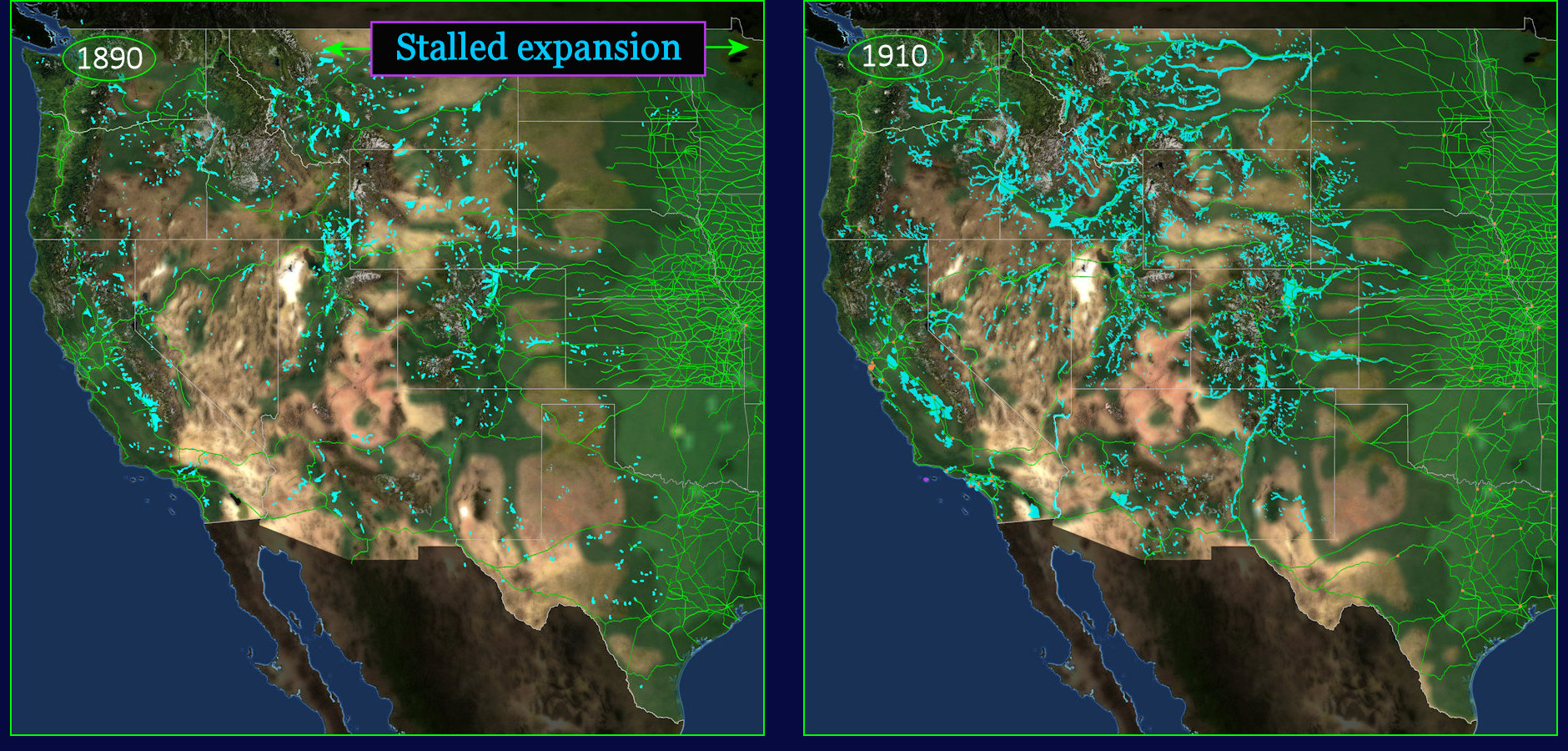
More Irrigation The only real difference between these two maps is in irrigation, which has tripled in extent. Earlier irrigated areas were mostly near the base of mountain ranges, benefiting from runoff of mountain snow. Later irrigation relies increasing on the use of steam pumps, near major rivers. There is a modest increase in settled areas (DARKEST GREEN), but few new railroad lines. The main period of rail expansion is now over. |
| |||||||||
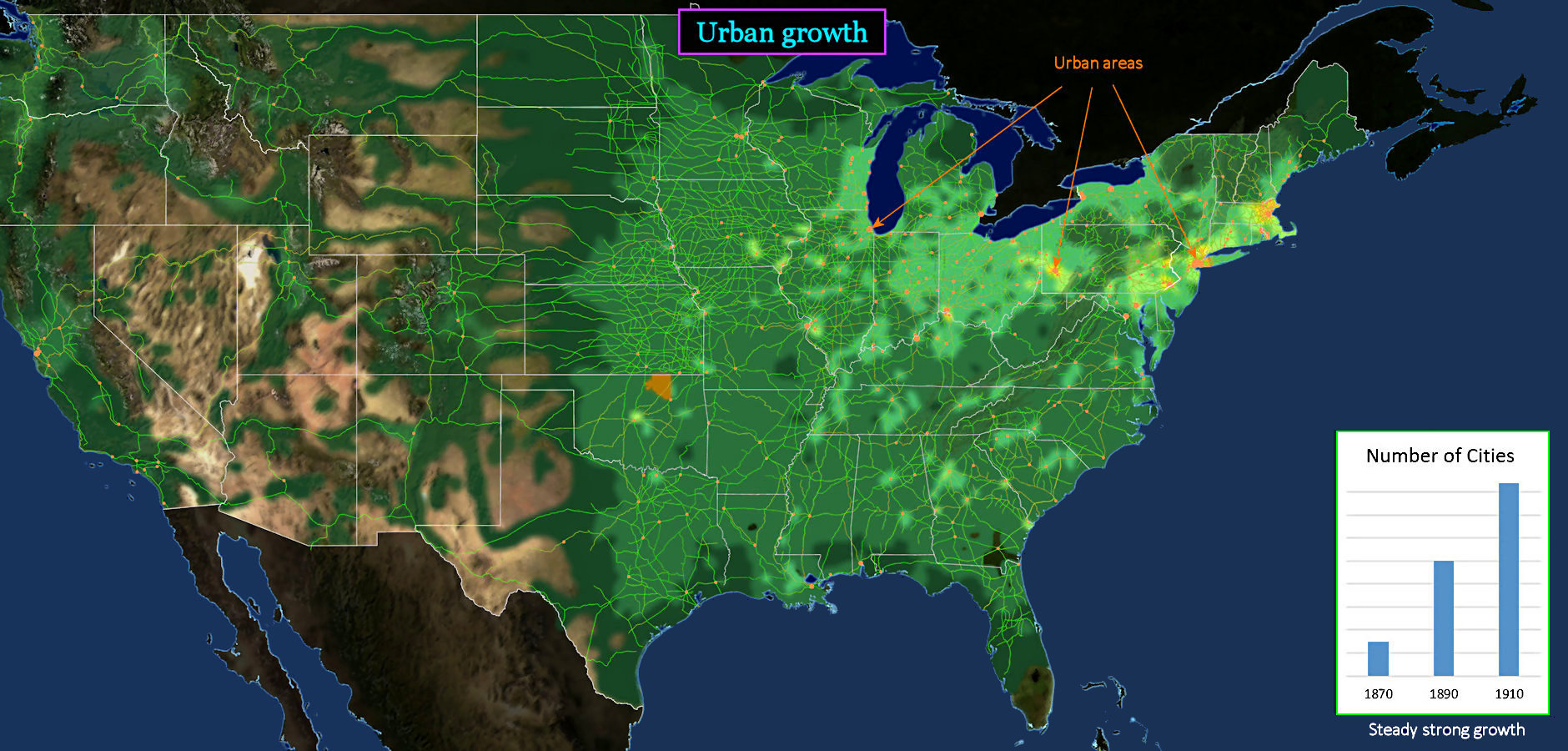
Moving to the City The real growth in America is appearing in northern cities. The ORANGE highlights above indicate urban centers, which are now appearing in cities with as few as 10,000 residents. The number of such cities is roughly doubling every 20 years (see chart). The cities themselves are also growing in size. By 1910, there are more than 50 giant cities, with at least 100,000 inhabitants. Just 40 years earlier, there were only 10. Businesses are especially attracted to city centers, which they can view from plush offices on upper floors of their new high-rise buildings. The middle floors are generally rented out as offices for lawyers, insurance agents and the like. | |||||||||
| |||||||||
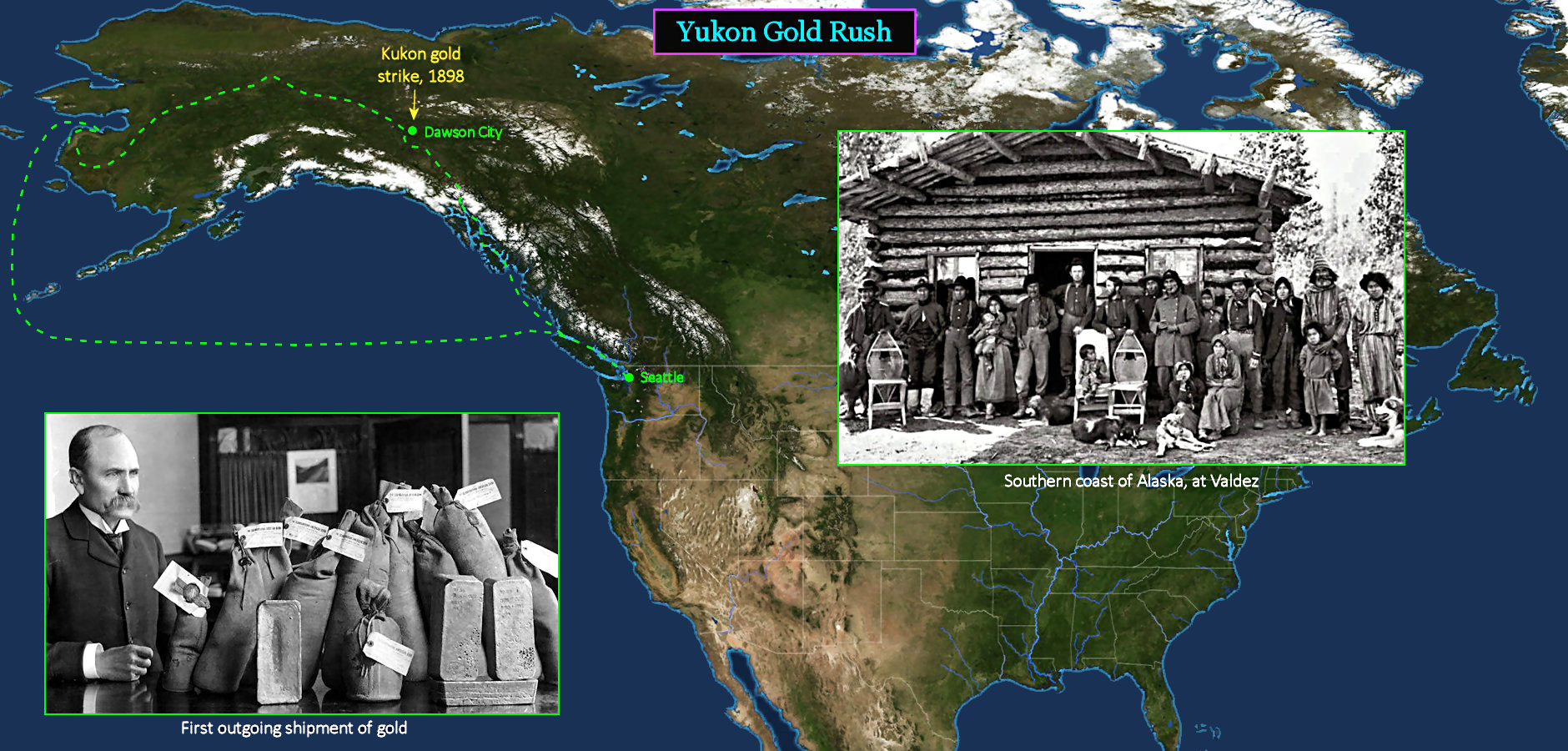
Northern Gold The discovery of gold in Alaska, far to the north, creates a sensation in 1898. The long way around is an all-water route, heading straight west before turning north and then hooking back to the far western tip of Alaska. From there, travelers can take a steamboat all the way up the Yukon River, arriving at Dawson City from the northwest. But this route can only be used until the river ices up. The shorter, more direct route requires trekking 40 miles on foot, to reach the place where boats or rafts be used to cover the remaining 500 miles. No one is even allowed on the trail unless they bring a year's worth of food, which typically requires 30 round-trips, on foot. Amazingly, some 30,000 men accomplish this feat in the first summer. | |||||||||
| |||||||||
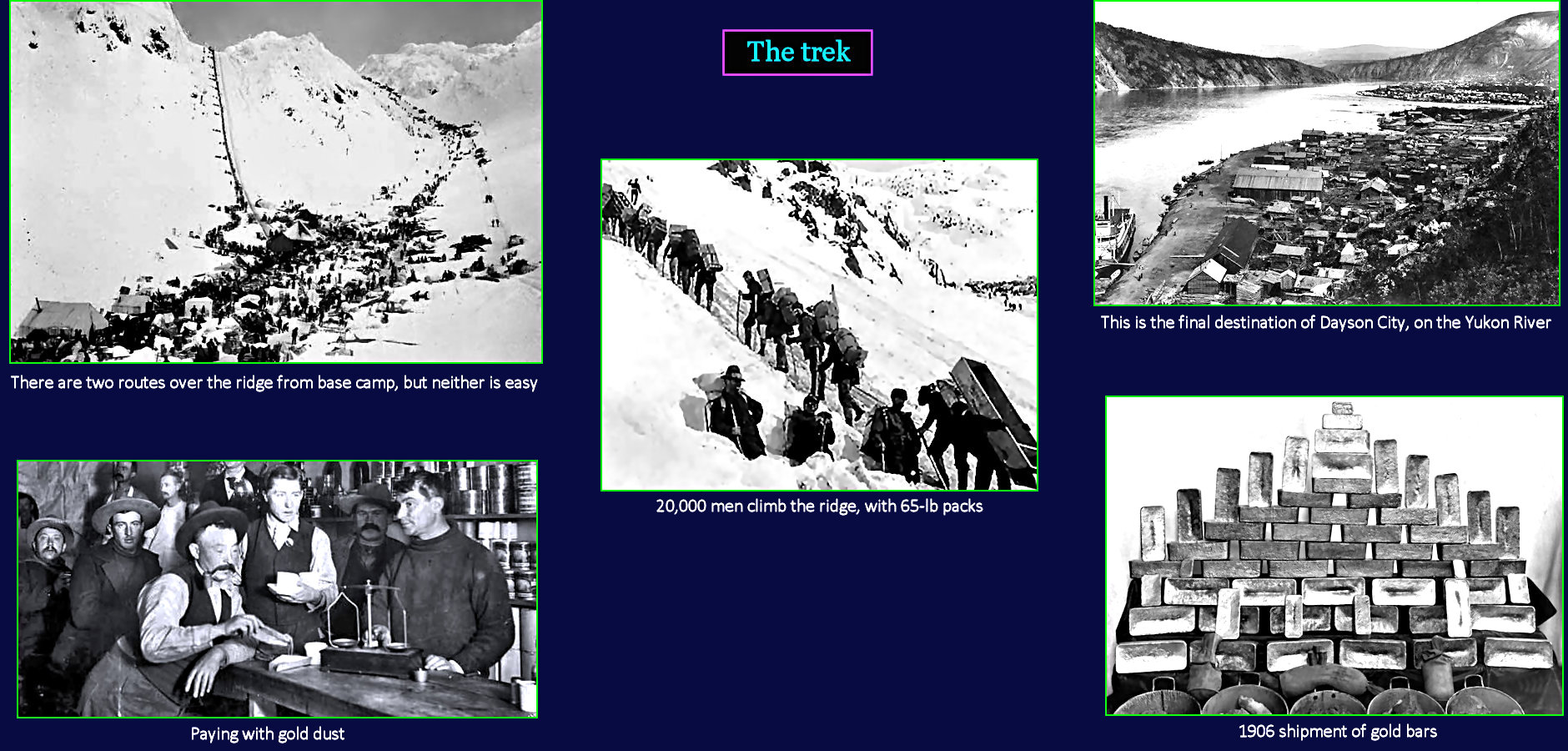
Toughing it out The photo at top left shows the difficulty of the trek over the high pass, carrying food and equipment in heavy packs. Along the way, there is a steep section which leads up a nearly-vertical snow-covered path, with steps cut into the ice in places to allow climbers to plant their feet. The photo at top right shows the final destination, on the Yukon River. Improvements in transportation and equipment allow gold shipments to spike dramatically in 1896. They remain at high levels for 10 years, before coming steeply back down again. Mining operations here, as elsewhere, quickly exhaust all easily-accessible deposits. | |||||||||
| |||||||||
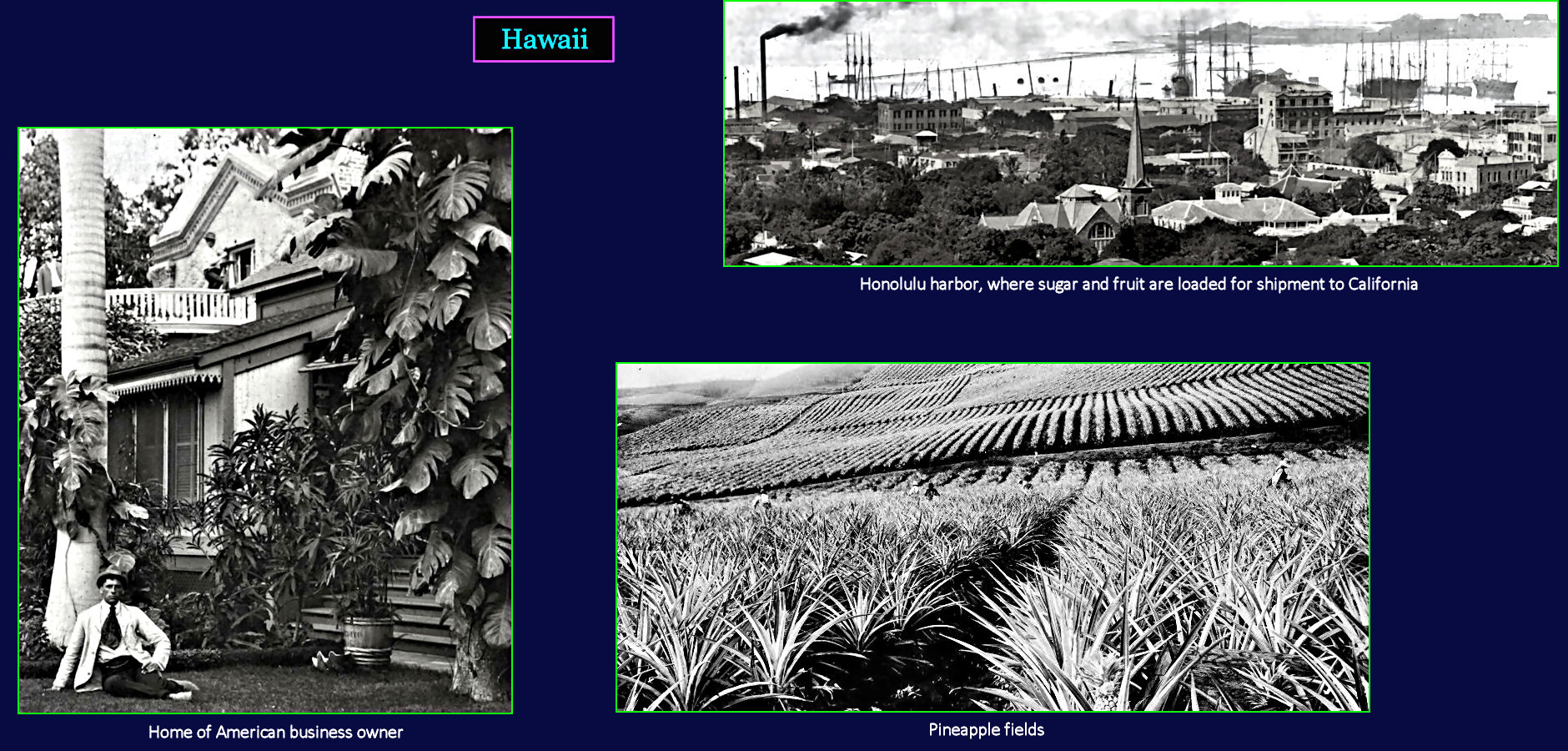
Pacific Expansion In the same year that gold is discovered in Alaska, America seizes the formerly-independent kingdom of Hawaii, after a coup staged by a group of Euro-American business leaders. Sugar has been the main export product of Hawaii since the arrival of Europeans, 100 years earlier, and is now the mainstay of the economy. Large sugar plantations and processing plants are owned by foreigners, including Americans. The island containing Pearl Harbor is deemed a vital American interest by military planners, and the entire island chain is annexed as a new American possession. | |||||||||
| |||||||||
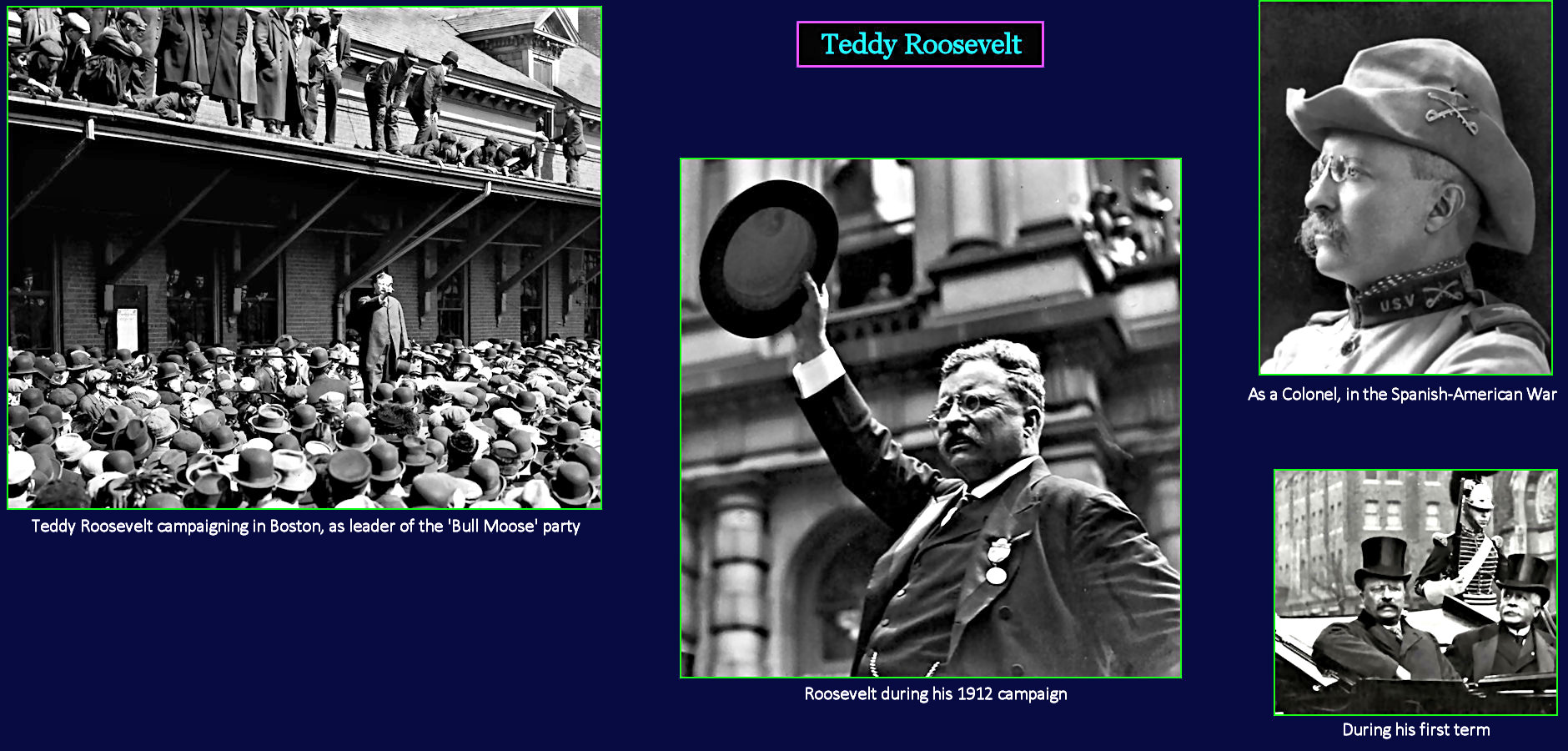
One of a Kind During this time of great change, one man stands out as symbolic of America's new muscular presence on the world stage. Theodore Roosevelt. Having achieved early prominence through his enthusiastic participation in the Spanish-American War, he is selected as Vice President by William McKinley, shortly before McKinley himself is assassinated. Roosevelt's status as an 'accidental' president may help explain his willingness to challenge norms. Candidates for Vice President, unlike those for President, are not chosen by party 'machines.' Roosevelt is the youngest man ever to become President, and becomes the first to attempt to regulate the worst excesses of Big Business. | |||||||||