| |
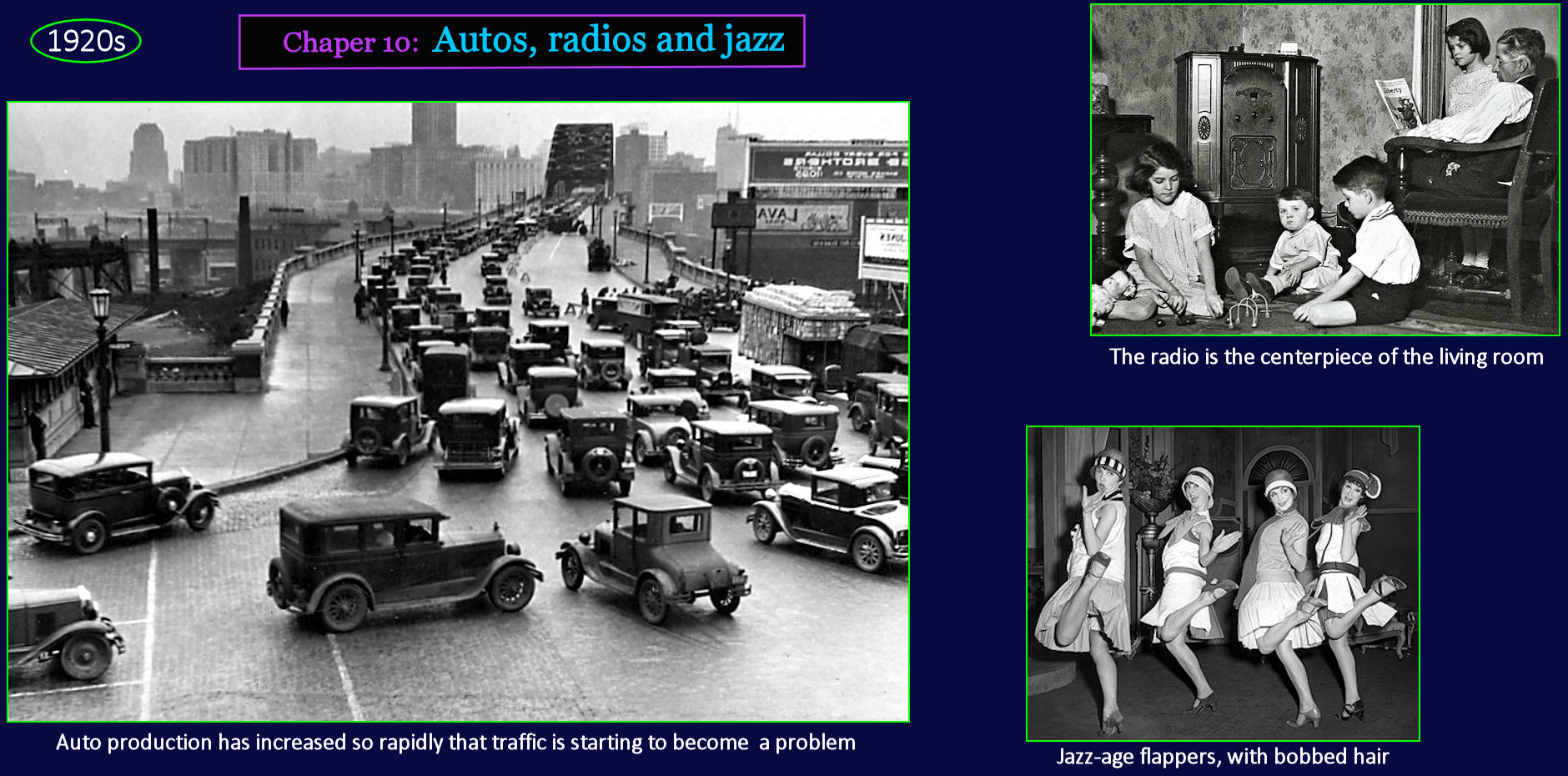
Everything All at Once The big story of the 1920s is skyrocketing auto production. The photo at left highlights the new problem of traffic congestion, although the bottleneck shown here is being caused by a construction zone. Still, the problem is real. Only 15% of all autos are sold into urban areas, but streets have never been burdened with so many vehicles. A surging stock market boom is led by RCA, the leading name in the emerging radio craze. The Jazz Age has arrived, complete with wide-eyed flappers (lower right). |
| |||||||||
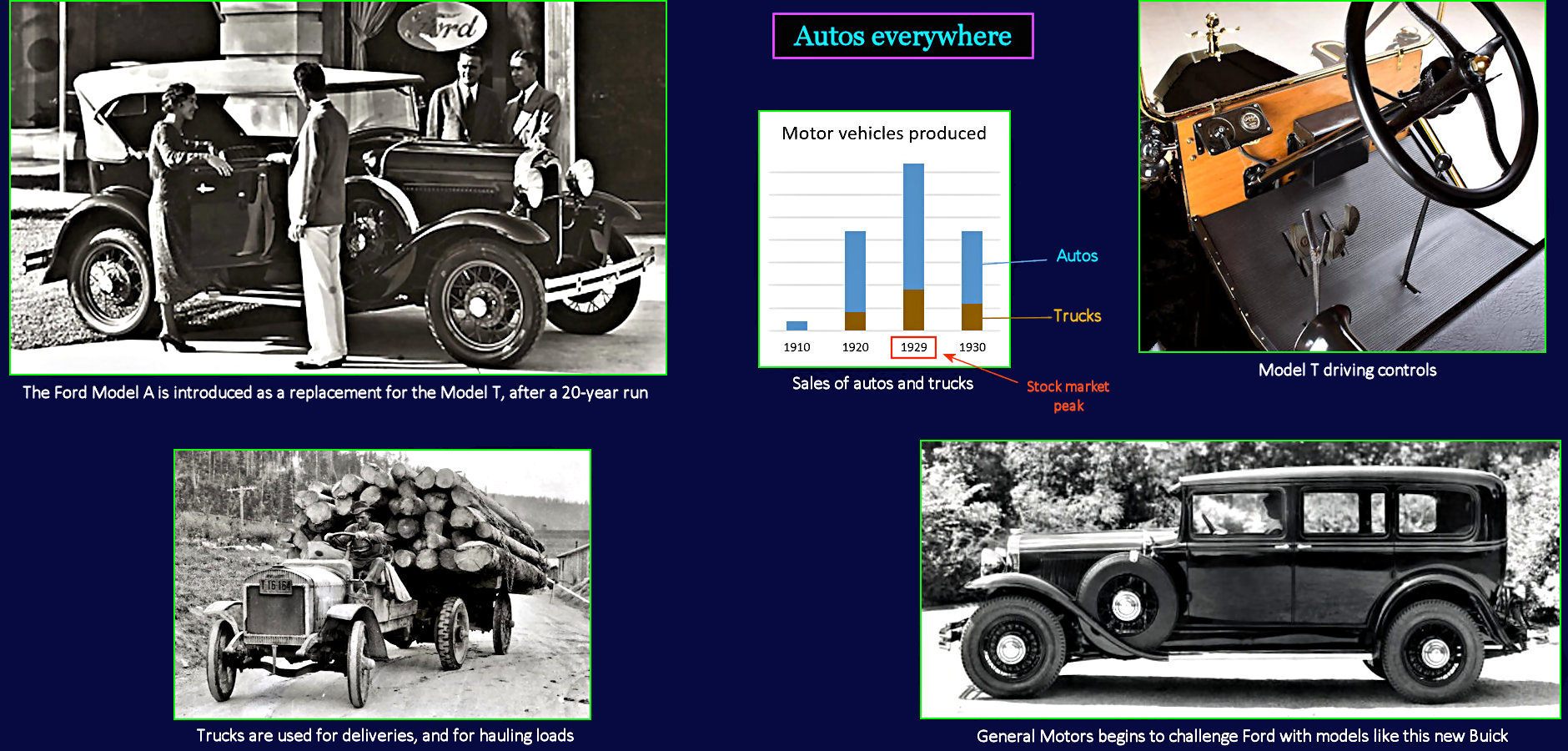
The Deluge Begins It's hard to overstate how completely autos transform America during the early 1920s. Most are equipped with a folding fabric roof, like modern convertibles (top left), but by 1930 the full-steel body has become the standard (lower right). One-eighth of all vehicles sold are trucks, which use the same size engines as cars, but have reduced gearing to pull heavier loads (lower left). Engines in both cars and trucks range from 20 to 40 horsepower. The 1929 stock market crash puts a big dent in auto production, which will continue into the 1930s (center top). | |||||||||
| |||||||||
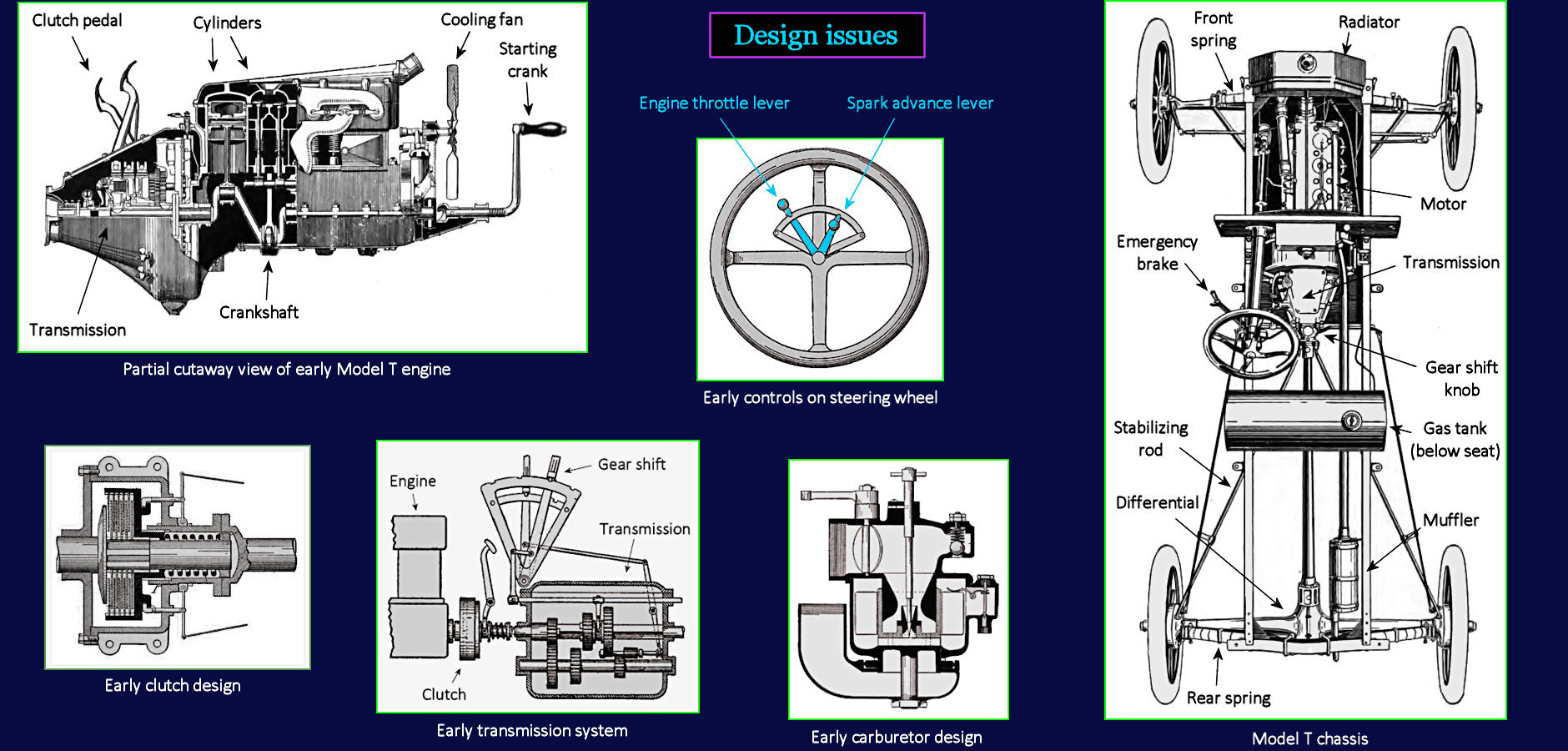
Complex Engineering Auto manufacturers have to overcome many technical problems before cars become truly practical. Soft rubber tires and leaf springs must be developed before cars can be operated comfortably at speeds much above that of a trotting horse. Gasoline engines need reliable starting and ignition systems, and improved cooling and lubrication systems. Transmissions, clutches, universal joints and differentials present additional challenges. Carburetors are developed to mix air more efficiently with gas vapors, and a new lever is added to the steering wheel to adjust spark timing as engine speed changes. Early cars have no accelerator. Instead, speed is controlled by a hand-operated throttle lever mounted on the steering wheel (center top). | |||||||||
| |||||||||
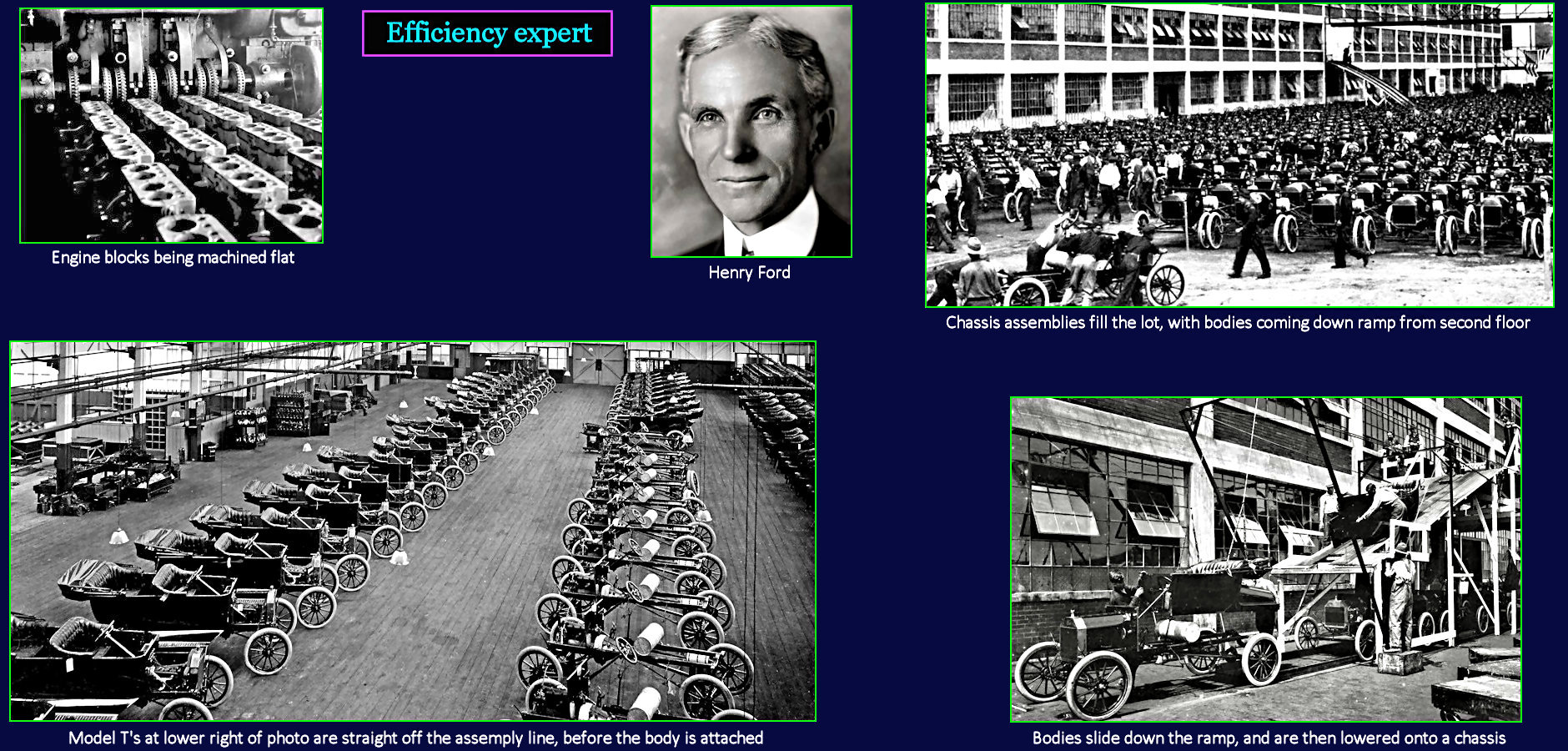
A Man with Big Ideas The innovation that turbo-charges auto production is the introduction of the 'moving' assembly line, in 1913. Partially-assembled vehicles are moved mechanically down the line, while workers remain more or less in one position along the line, installing individual sub-assemblies as the cars pass slowly by. Ford builds a huge new plant in downtown Detroit just to house the new line. It's the largest manufacturing plant in the world, producing a fully assembled chassis (without the body) every 90 minutes. This previously took 12 hours. Ford is gradually able to drop the price of a Model T in half, which lights a fire under every other auto manufacturer. Prior to 1928, only Chevrolet manages to produce a car at anything near Ford's price. | |||||||||
| |||||||||
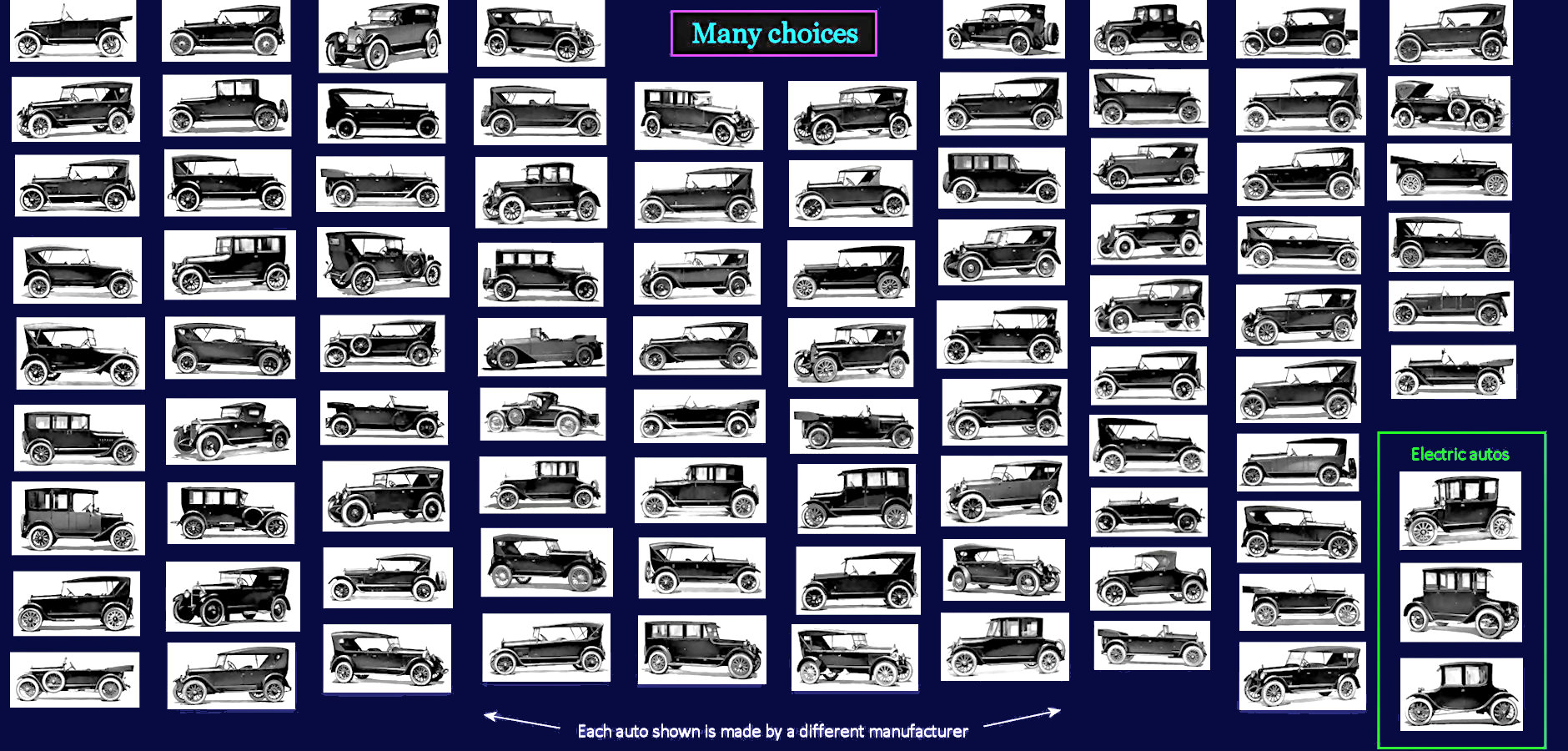
How to Decide? At the time that Ford introduces the Model T, there are a great number of smaller auto manufacturers, including 20 in Detroit alone. Each of the autos shown above is built by one of Ford's competitors. All are 1916 models, which range from sporty little two-seat roadsters, to sedans holding up to seven passengers. Most have soft fabric tops, which can be folded back in pleasant weather. Engines average 25 horsepower. Early models have troublesome hand-operated cranks to get the engine started, although a few use compressed air. Electric starters aren't introduced until 1912. Three brands offer electrically-powered autos, drawing power from a bank of batteries in the rear (lower right). | |||||||||
| |||||||||
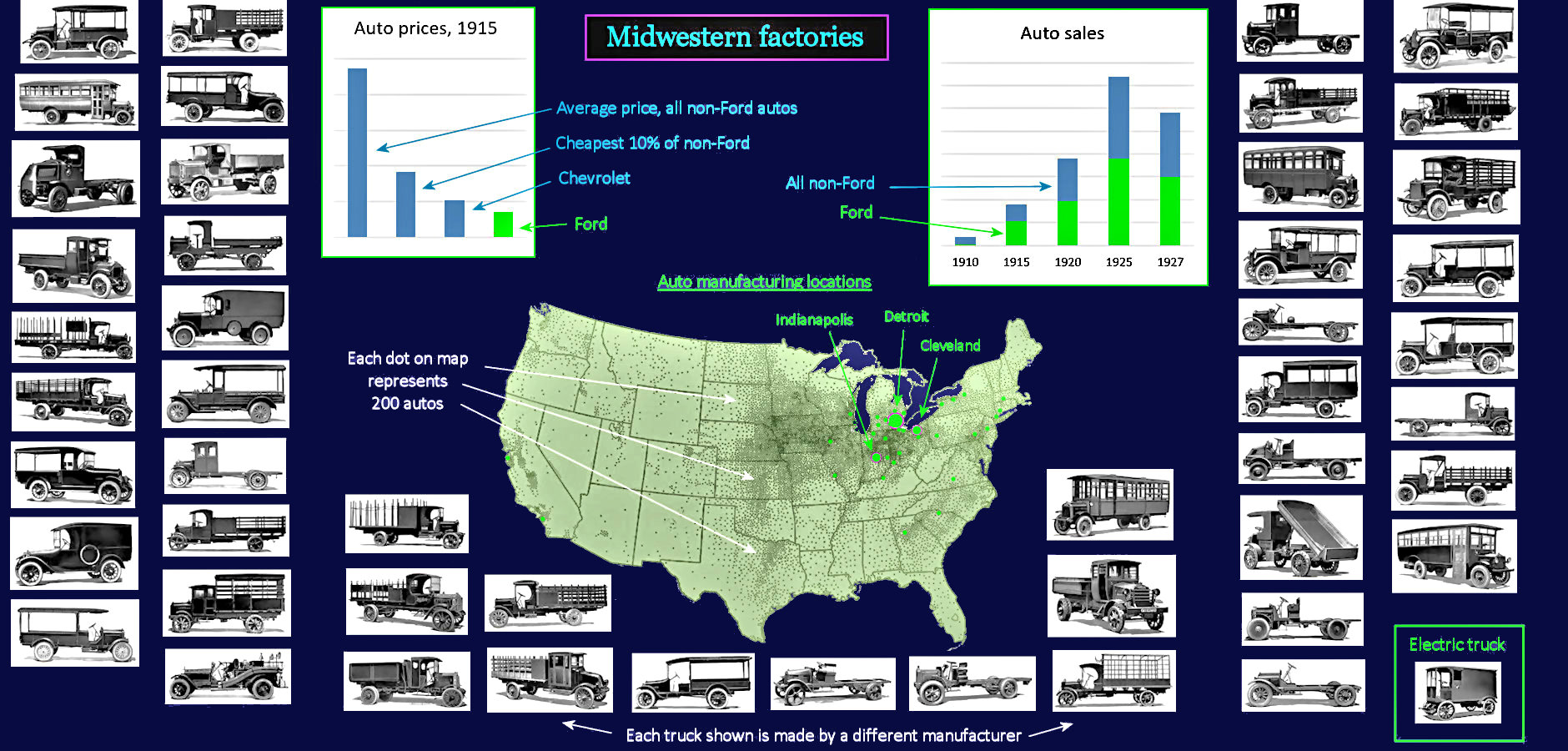
America's First Trucks Truck manufacturers in 1916 are shown above. Before 1930, almost all vehicles are built in Midwestern cities (GREEN circles on map), with large clusters of manufacturers in Detroit, Cleveland and Indianapolis. Cars and trucks are delivered all over the country (black dots on map), and are surprisingly popular on farms, far from any city. The chart at top left compares the price of Ford's Model T to all others. Ford's exceptionally low pricing allows him to control half the market for autos throughout the 1920s. By 1928, however, General Motors is beginning to provide effective competition. It combines the previously separate brands of Chevrolet, Pontiac, Oldsmobile, Buick and Cadillac, and begins installing its own moving assembly lines in 1926. | |||||||||