| |
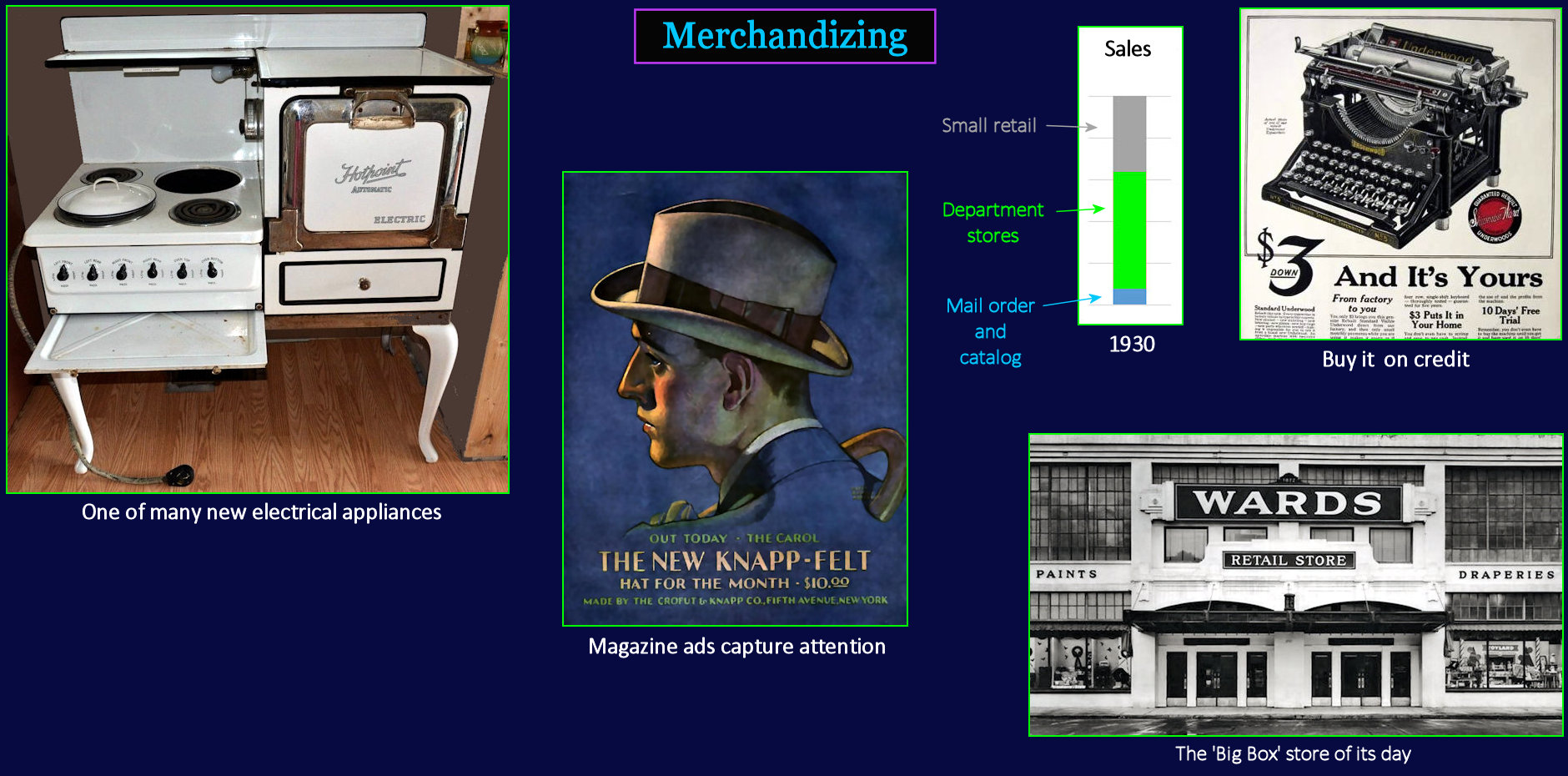
Attracting Consumers There are three main outlets for products. First are the small downtown stores, which have barely changed over the years. These offer necessities, like groceries and shoes. Next are the big department stores. Here, you can buy fashionable clothing, tasteful home furnishings, and the latest appliances. Like radios and vacuum cleaners. But another fast-growing source of sales is the mail-order catalog. There are plenty of these, but none comes close to matching the scope of Sears and Roebuck, which advertises itself as the world's largest store. |
| |||||||||
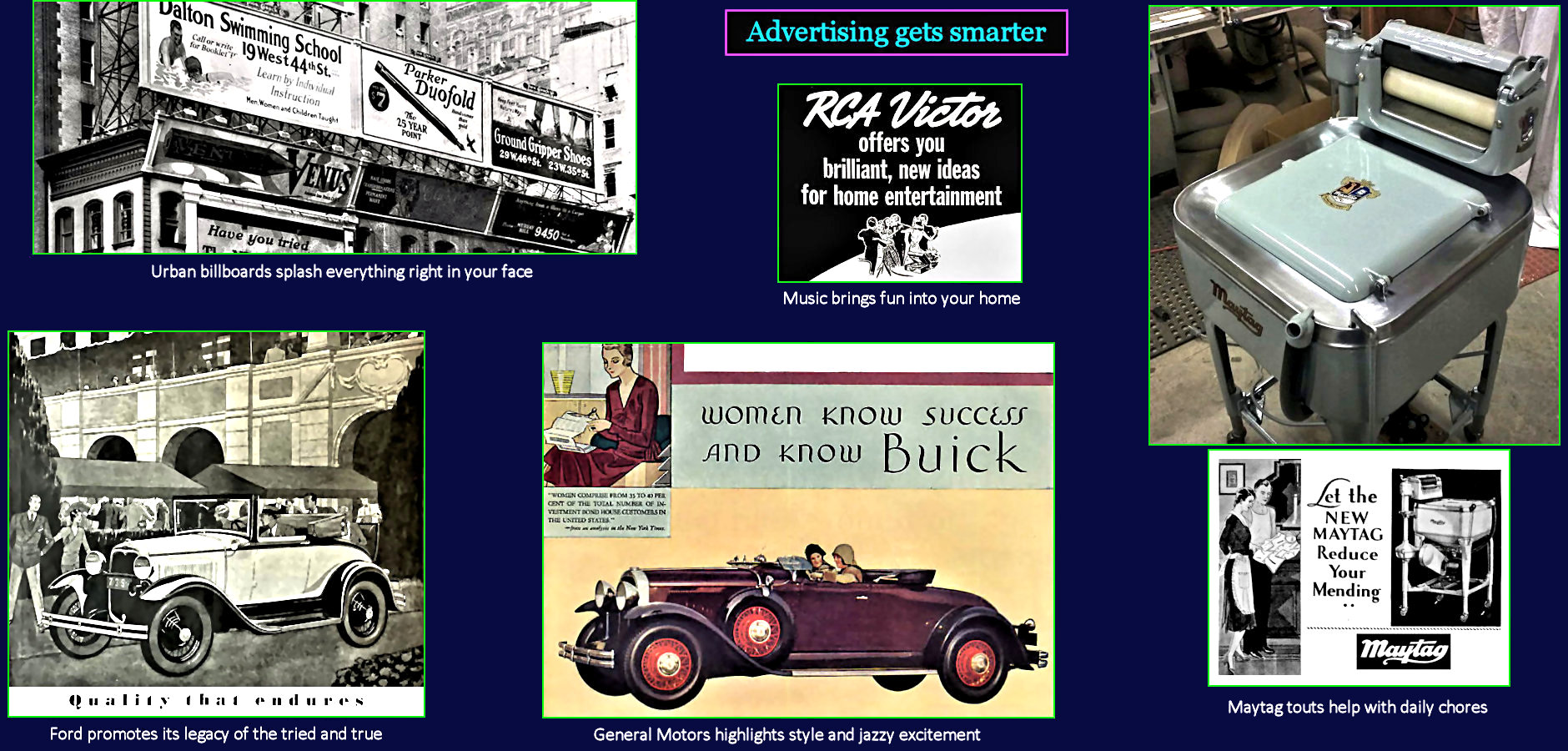
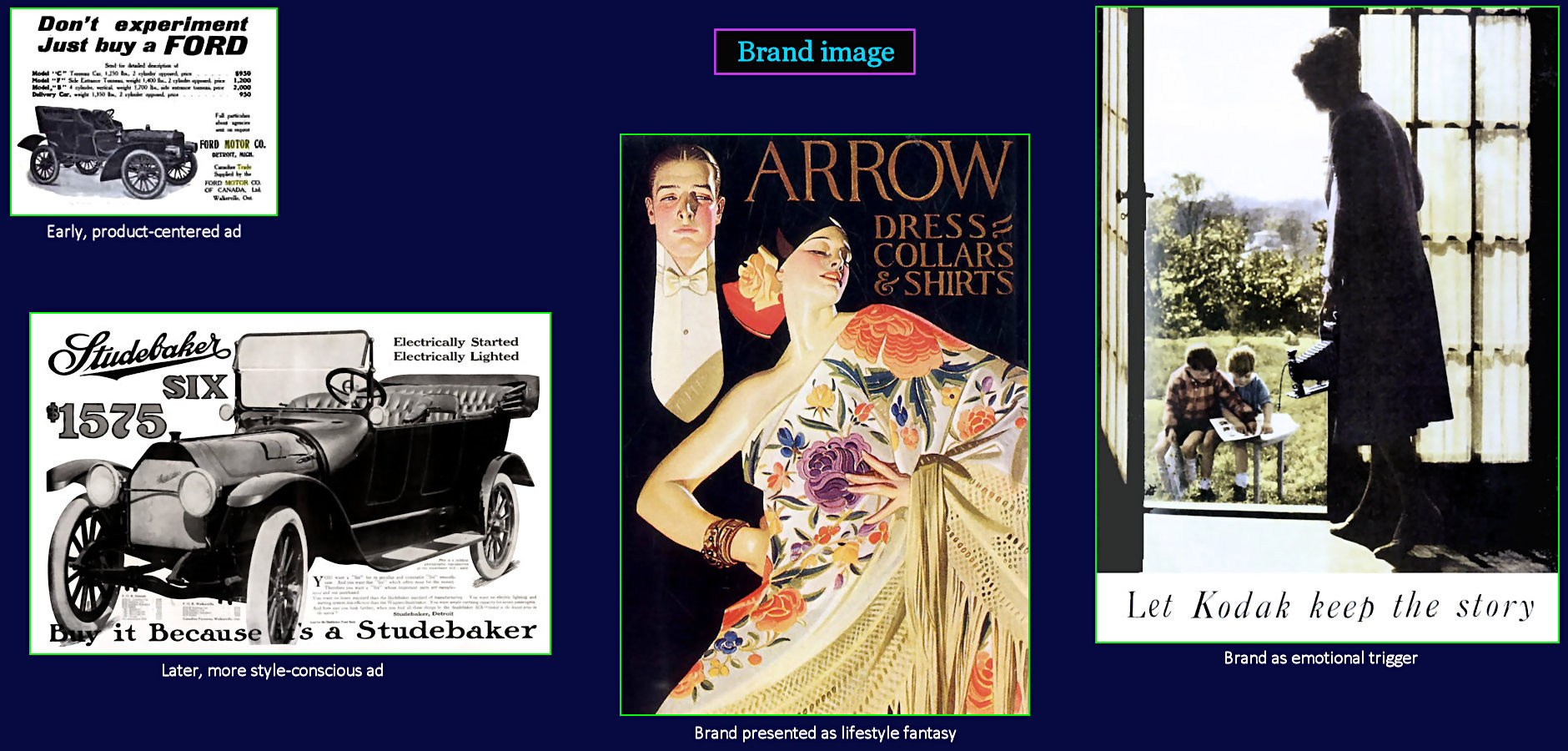
Style and Brand Retail stores have been advertising in local papers since before the Civil War, competing mostly on price. Now, manufacturers are also getting into the game, to widen their markets. They begin to develop something called brand loyalty, using gimmicks that appeal to America's developing sense of style. Ford has enjoyed huge market share offering a solid, functional product at a great price. But General Motors begins making inroads by shifting the emphasis to an emerging sense of fashion. It's a contest Ford won't win. Appliance manufacturers are quick to join this new trend, which transforms the art of product 'promotion.' Instead of a simple display of function and price, new ads offer a whole new lifestyle. | |||||||||
| |||||||||
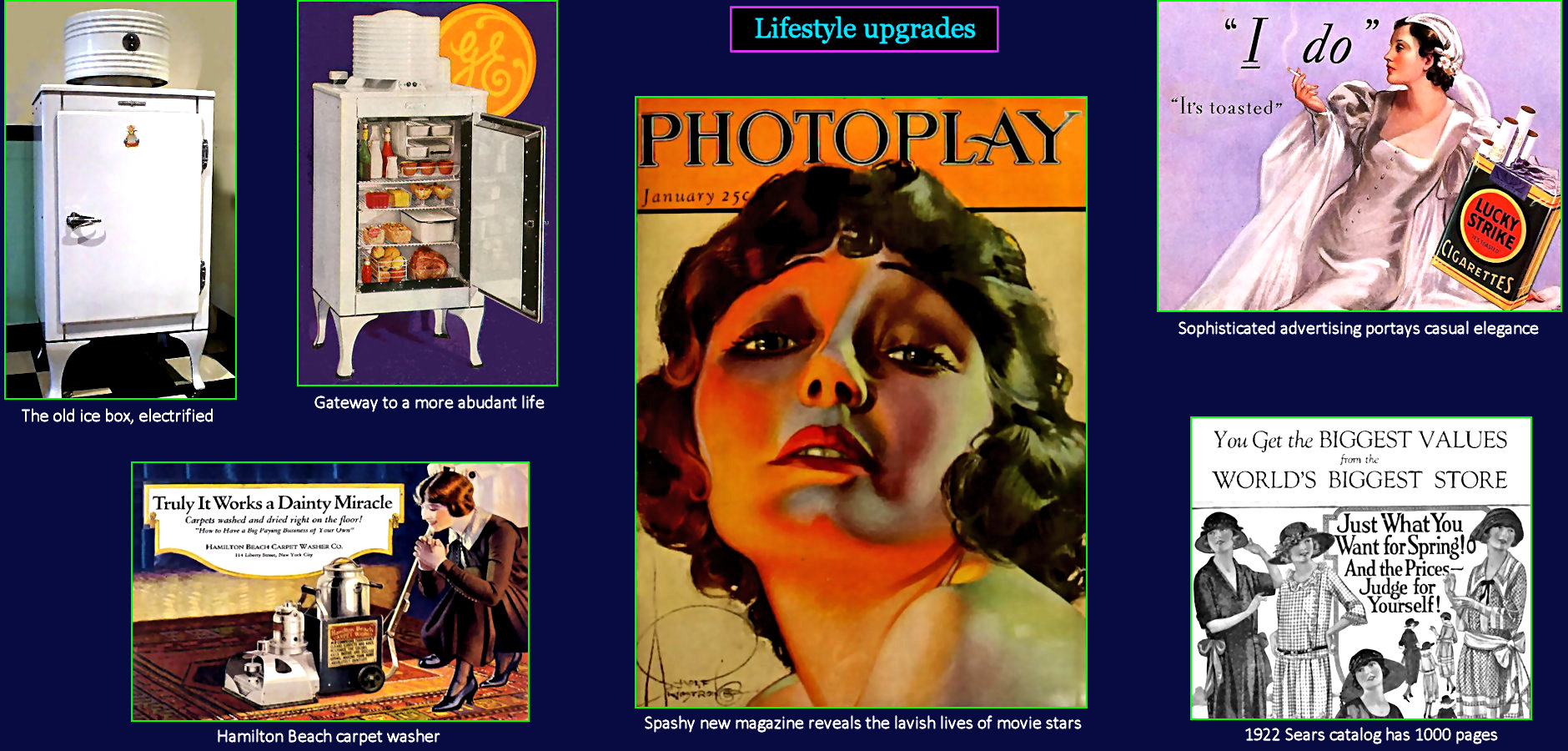
Appliances and More Electricity has been around for years, but only used in households for lighting. Now, with the development of better and smaller motors, whole new markets are being opened up for electric appliances. Radios are the most exciting, but housewives are also offered a wide array of new work-saving conveniences. Electric refrigerators stay cold automatically, without the need for continual deliveries of blocks of ice. Electric stoves offer an alternative to gas stoves (available in cities) and coal stoves (used everywhere else). Washing machines, vacuum cleaners and steam cleaners are entirely new. Smaller items, like table-top fans, electric irons and food mixers add to the choices. | |||||||||
| |||||||||
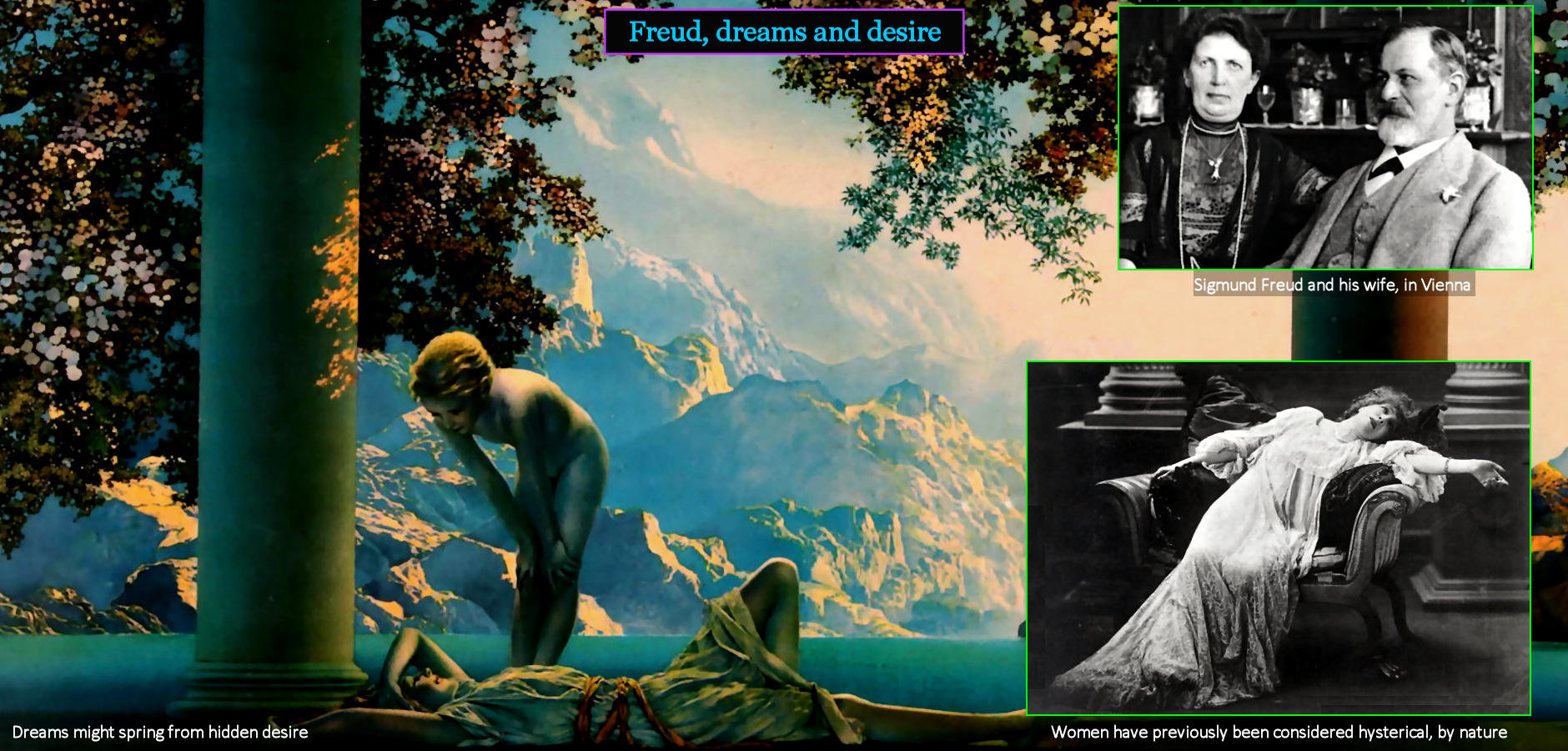
Hidden World Revealed Sigmund Freud helps usher in the new spirit of consumer appetite in America, though indirectly. Freud is practicing psychology in Vienna, the capital of the old Austro-Hungarian empire, and bastion of strict social norms. His study of troubled young women leads him to propose a surprising new theory. The wild turmoil experienced by these women, he argues, is triggered by suppressed sexual memories, mixed with hidden desires. According to Freud, people don't really act rationally. Instead, they're at the mercy of emotions lying hidden deep beneath the surface, which are sometimes revealed in dreams. Women, it seems, are particularly susceptible, leading to a common mis-diagnosis of female 'hysteria,' which is widely accepted as medical fact. | |||||||||
| |||||||||
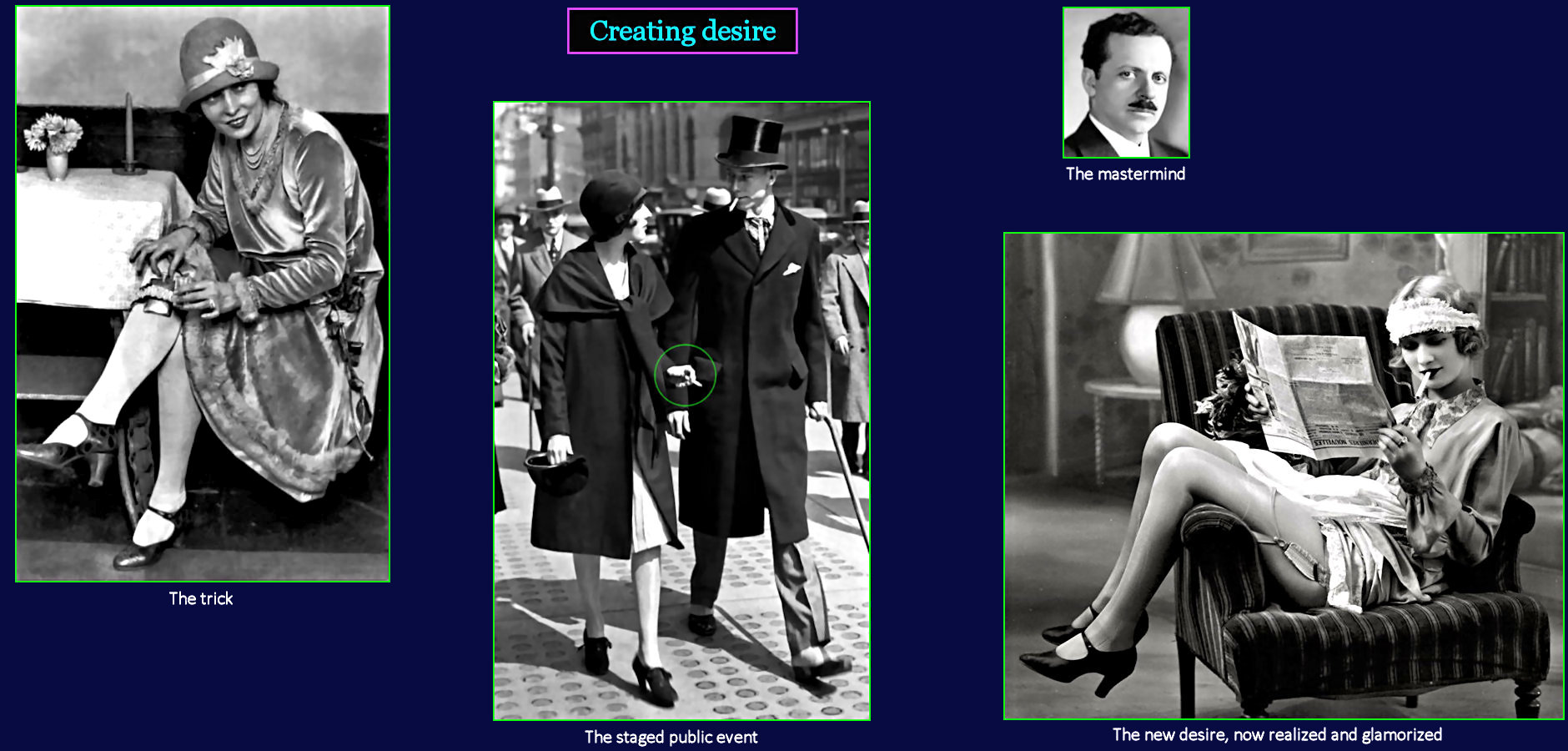
You Need This Cigarette Freud's nephew, Edward Bernays (upper right), takes Freud's theories in a new direction. If people act upon vague hidden desires, perhaps these desires can be evoked by subtle manipulation. At the time, it's widely considered taboo for women to smoke cigarettes in public. Bernays concocts a stunt to help his friend, the president of American Tobacco, get more women to smoke. He persuades a group of rich young debutantes to tuck cigarettes into their stockings, join the New York Easter Parade, and (on a signal) pull out their cigarettes, all at the same time. Bernays suggests calling them 'torches of freedom,' and it sticks. | |||||||||
| |||||||||
Ad Agency Magic The success of such techniques leads to the widespread use of suggestive imagery in big, full-color ads. These are prominently displayed in slick new urban magazines, mostly targeting women. The magazines, of course, are funded largely through money flowing in from large corporations in the form of advertising dollars. Corporations are buying an audience for these tantalizing pitches, expertly blended with fantasy. Women, in turn, are given a glimpse into the secret lives of movie stars and social elites, who are surrounded by stylish accessories. With retailers supplying credit, it's easy to get hooked. | |||||||||