| |
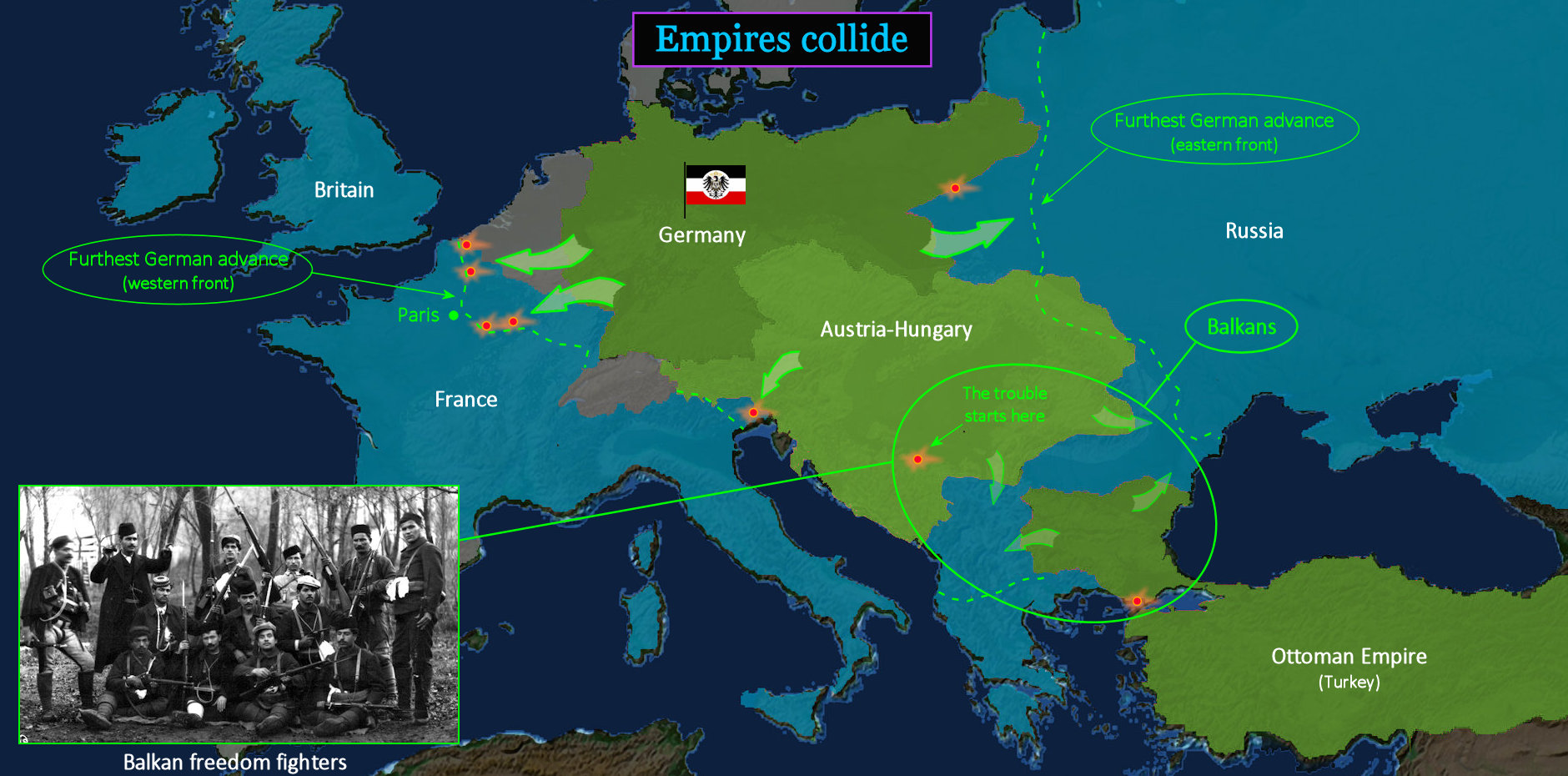
War That Goes Nowhere All the major European powers are drawn into the war in the early days, based upon a tangle of pre-existing alliances. After the initial chaos, the German-speaking nations of Germany and Austria are joined by the tottering rump of the Ottoman Empire (Turkey) to form the so-called 'Central Powers' (in GREEN). They're opposed by the 'Allies' (in BLUE), meaning Britain, France, Italy and (to the east) Russia. There has been almost no movement in the war for three years. The GREEN dotted lines indicate the maximum extent of German advances. |
| |||||||||
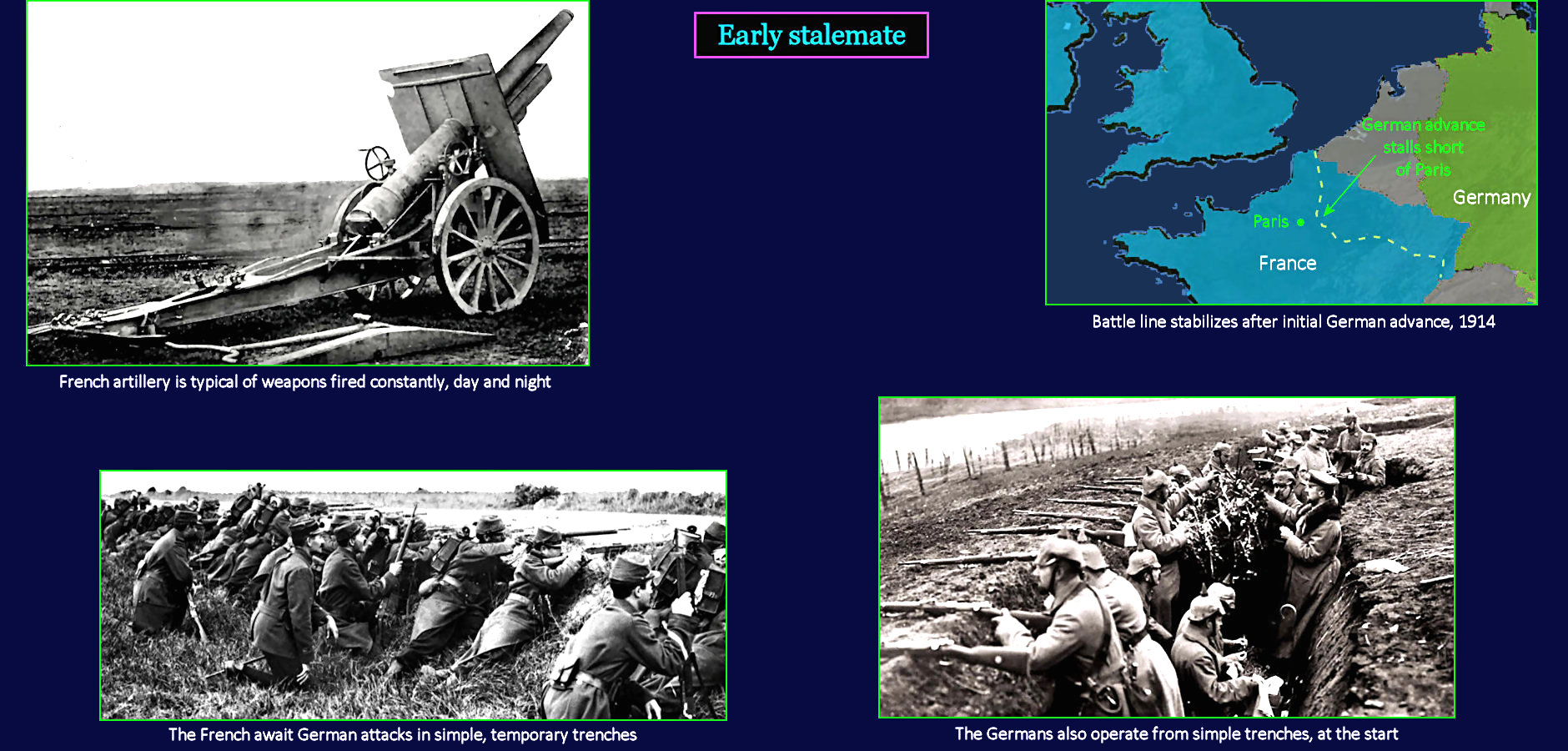
Old-fashioned Trench Warfare Germany plans to march quickly on Paris, hoping to replay its victory over France in the Franco-Prussian War. The Germans launch their attack through neutral Belgium, and within a month are within 50 miles of Paris, when the French finally manage to bring the advance to a halt. For the next three years, fighting rages between the trenches that extend north-and-south, on both sides, for many miles. The Germans are eventually pushed back towards Belgium, but neither side can maintain an advantage. The Germans try using poison chlorine and mustard gas on French and British troops, but this fails to tip the balance. | |||||||||
| |||||||||
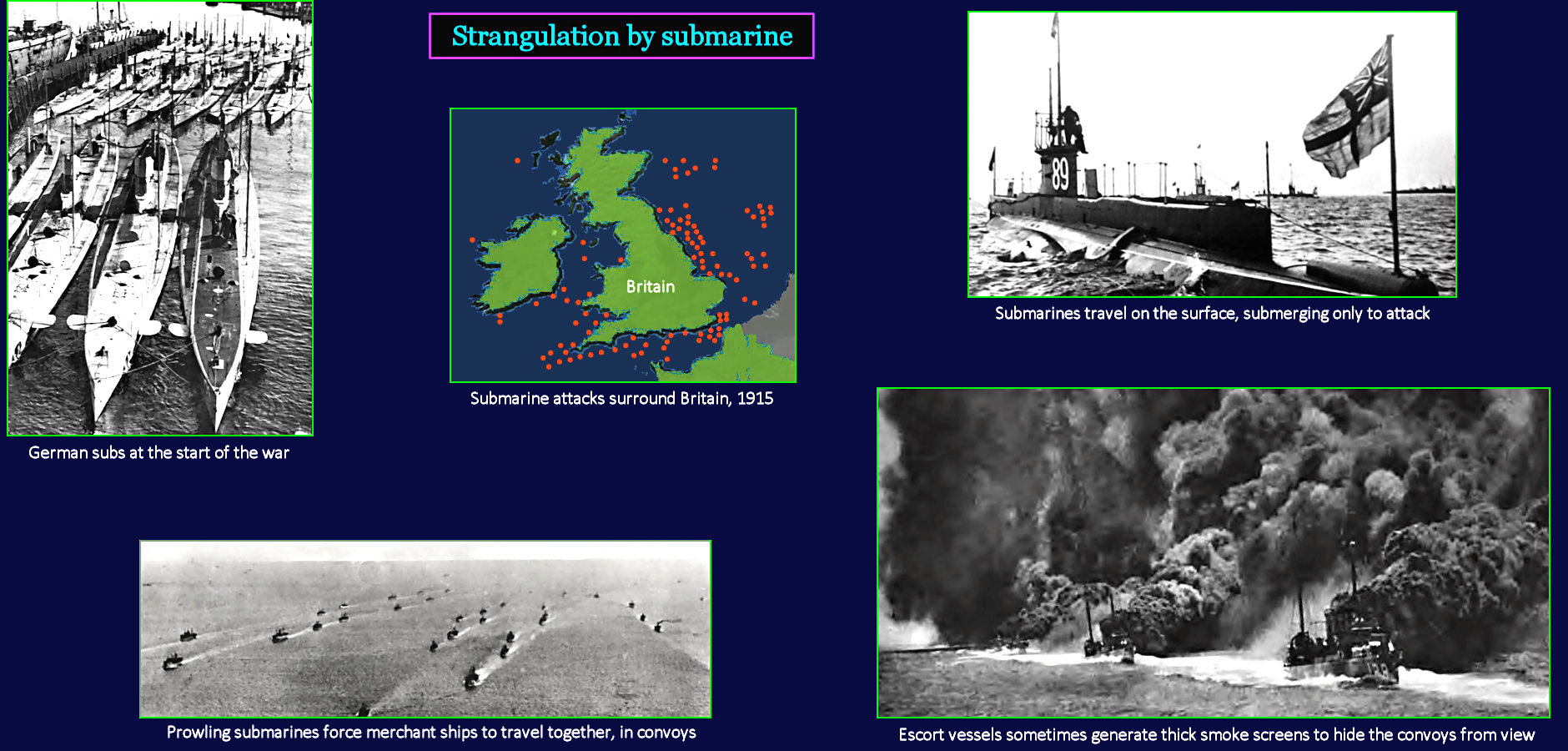
Deadly New Weapon The Germans have much greater success with their blockade of British ports by submarine (see map). Early on, the Germans launch 'unrestricted' submarine warfare, attacking ships of any nation, Allied or not, military or civilian. This results in staggering losses to Allied shipping, including the sinking of the British Lusitania, with 128 Americans among the 1,200 dead. This prompts a strongly worded note from President Woodrow Wilson, who has thus far kept America out of the war. Germany feels compelled to accept strict restraints on attacking neutral shipping, but losses continue. Eventually, the Allies learn to group shipping together in large convoys (lower left), protected by destroyers armed with depth charges. | |||||||||
| |||||||||
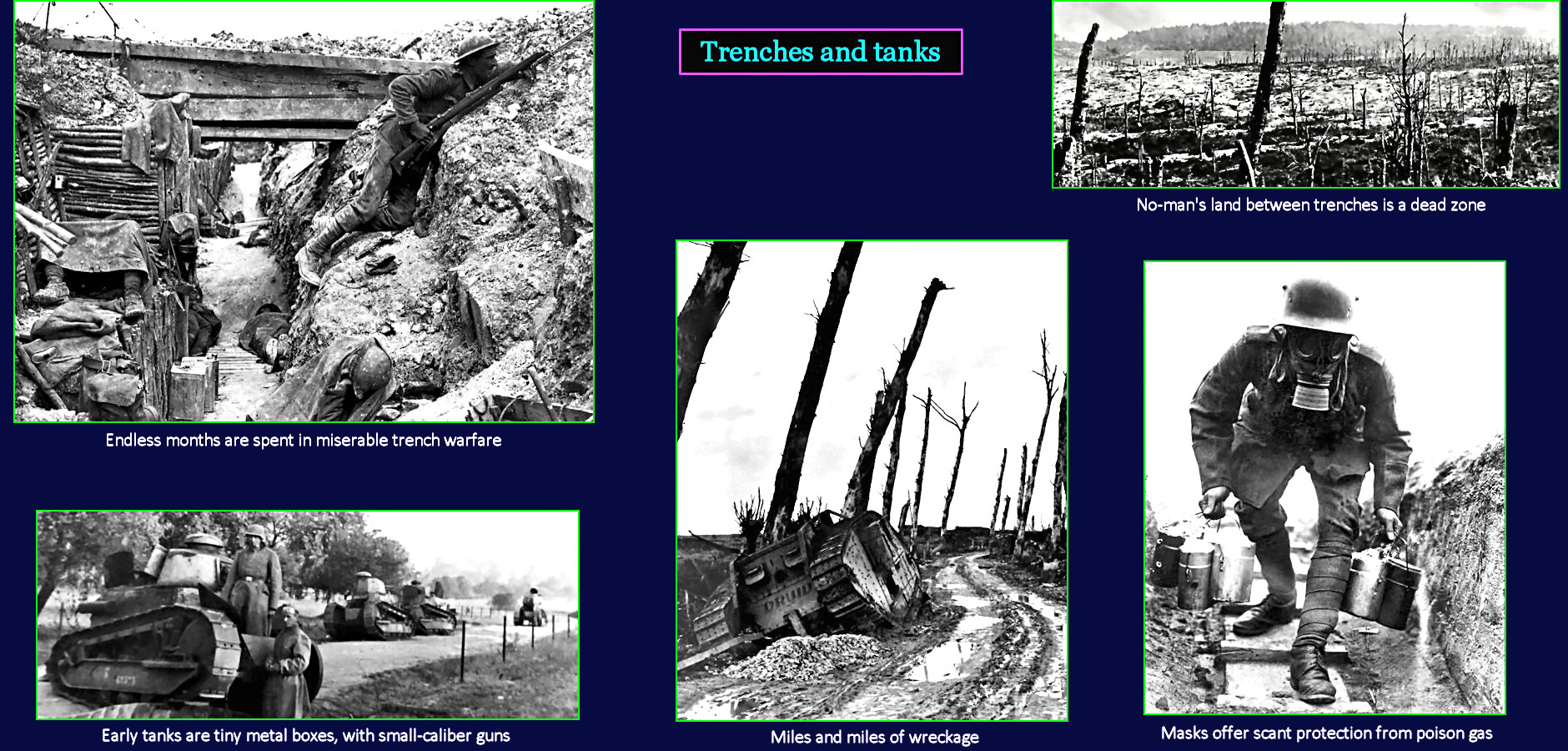
The New Trench Warfare Most memorable photographs from World War One document the horrors of continuing trench warfare east of Paris, on the so-called 'Western Front.' Both sides experiment with small battlefield tanks, which offer protection from withering machine-gun fire. By the end of the war, casualties on the Western Front total a staggering 13 million. Beyond that, many soldiers returning home from the battlefields are permanently scarred by amputations, 'shell shock,' and recurring nightmares. | |||||||||
| |||||||||
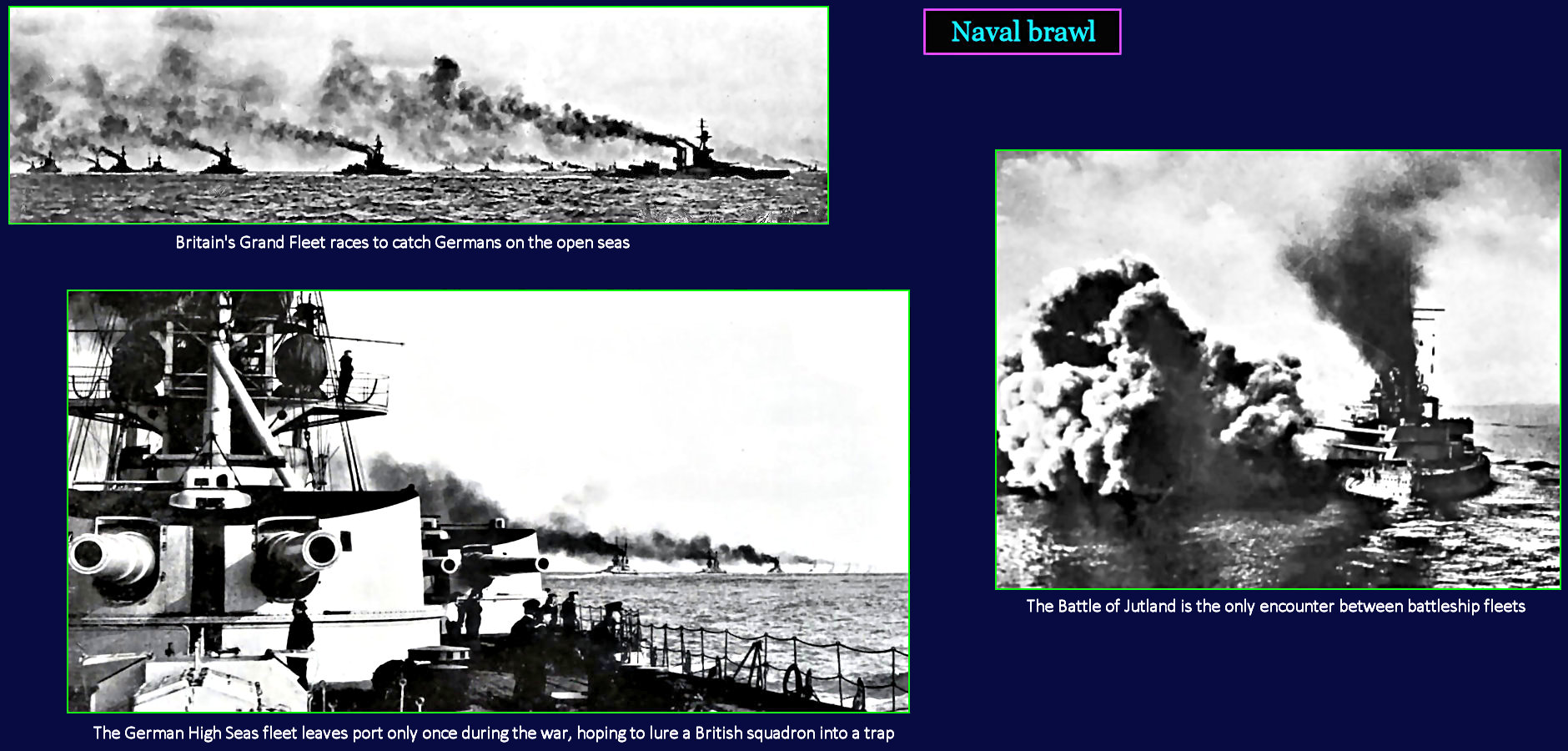
Battle Fleets Finally See Action Though both sides have large fleets of modern battleships, they play little role in the war. Britain has the largest fleet, which the Germans try to whittle down using submarines. When this fails, they send their entire High Seas Fleet to sea , hoping to lure out a smaller British squadron. Instead, Britain sends out its entire Grand Fleet, meeting the Germans in the titanic Battle of Jutland. The 'fog of battle' hampers operations on both sides, with limited visibility and confused communications. In the end, the Germans are forced to run back to port, never to emerge again. | |||||||||
| |||||||||
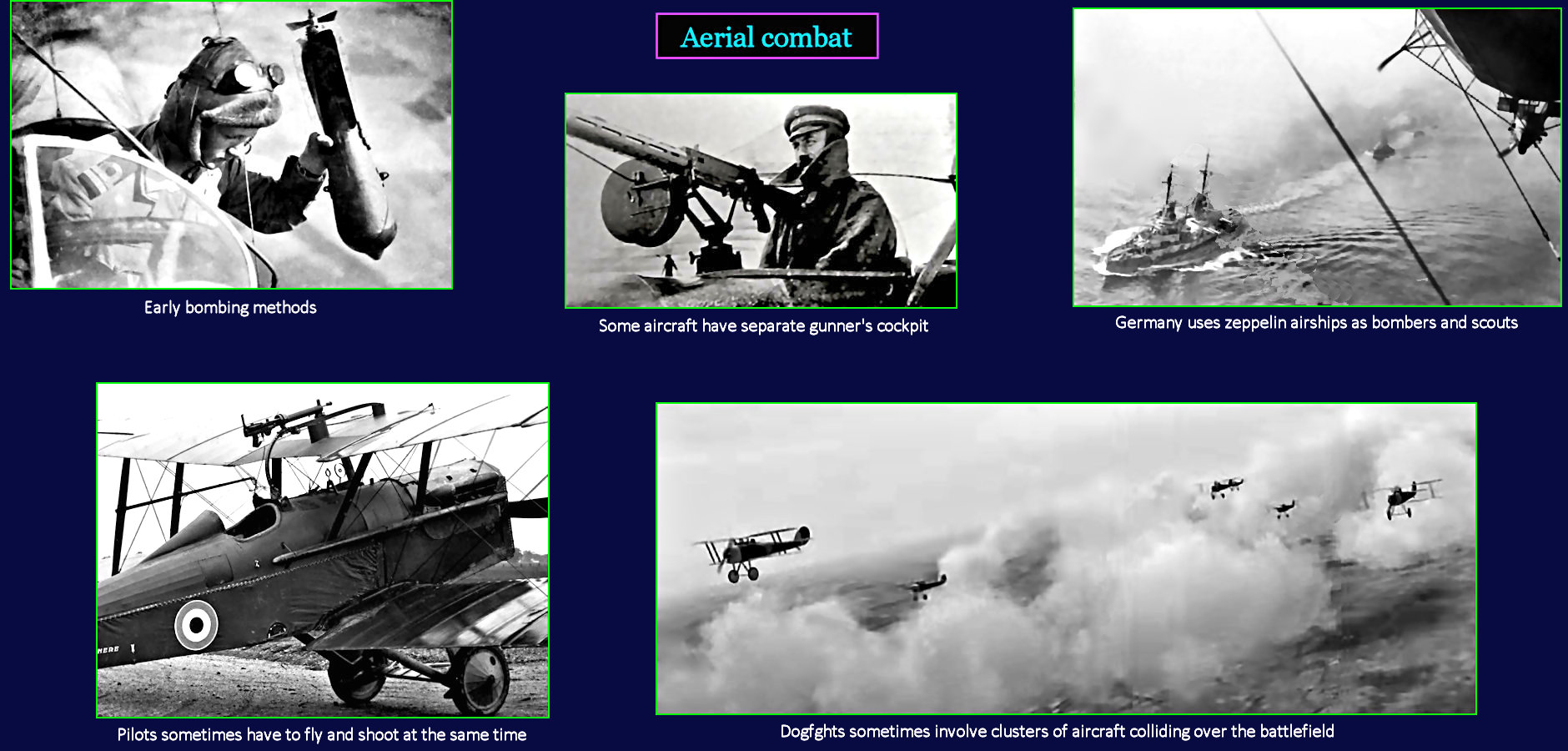
Another New Weapon World War One is the first war in which aircraft take part. These are fragile aircraft, with lightweight wooden frames covered only in canvas. Initially, light machine guns are mounted on the wing, or forward of the cockpit, where they are operated by the pilot. Later aircraft have separate gunners, with larger weapons, and bombs are sometimes dropped from a separate rear cockpit. Aircraft, including the big German gas-filled zeppelins (top right), are also used to scout enemy positions. | |||||||||