| |
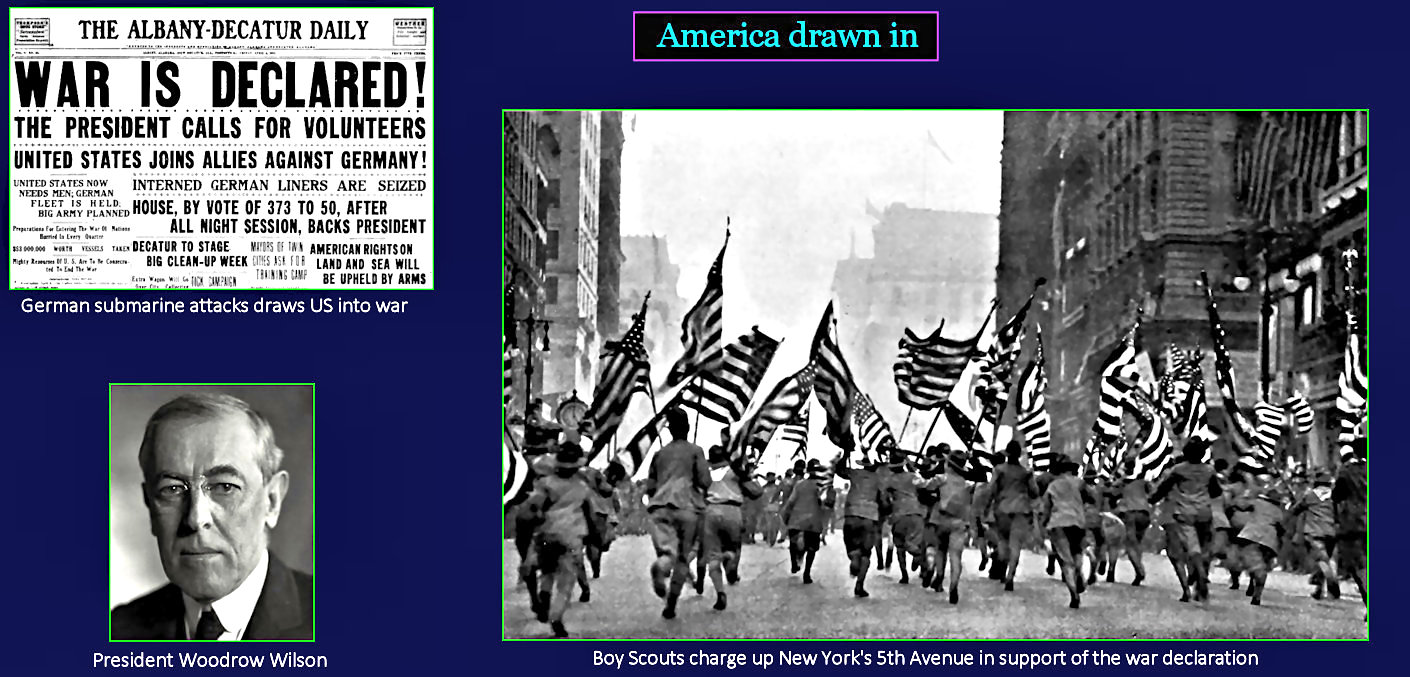
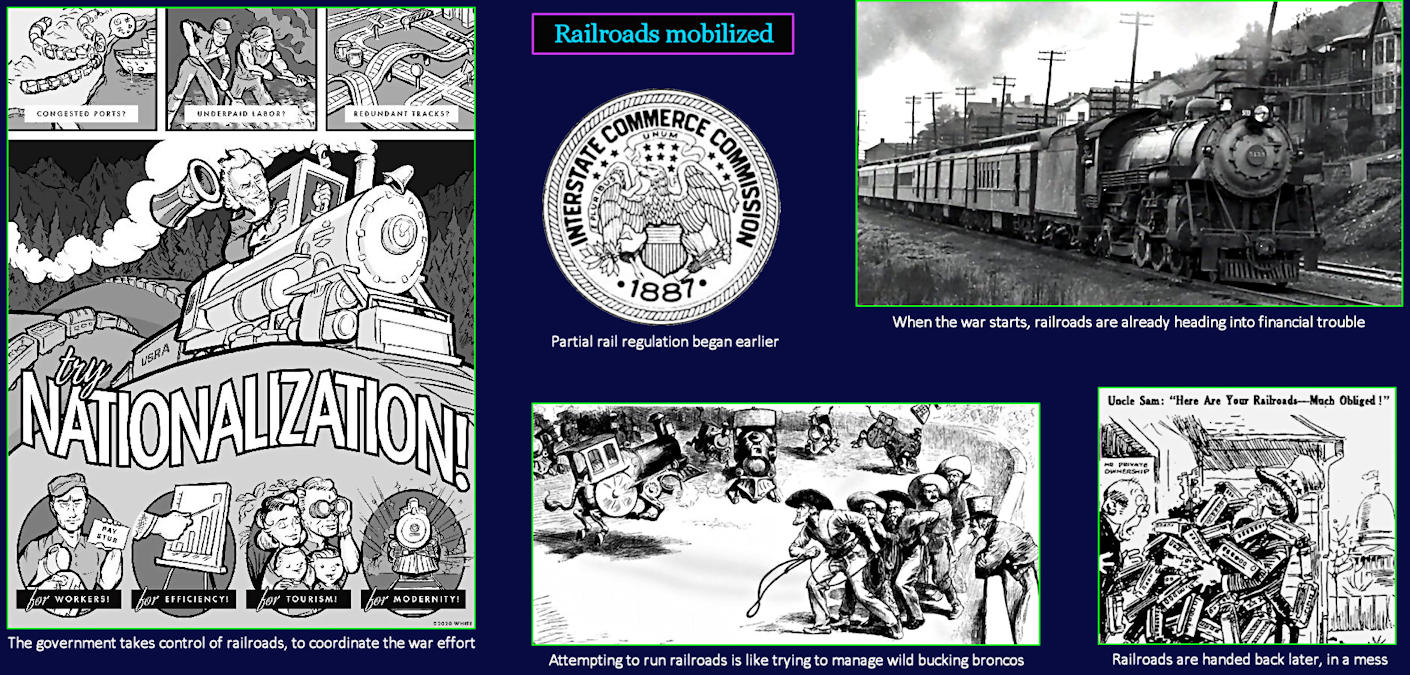
Yanks Prepare for War The declaration of war comes just three months after Germany's resumption of unrestricted submarine warfare. Mobilizing the war effort takes a few more months, as America has almost no standing military. By mid-summer, however, America is sending a quarter million new troops to Europe each month. This provides the muscle for a strong new offensive on the Western Front. Along the way, Congress takes the amazing step of assuming management control of all American railroads, to improve coordination of the war effort. |
| |||||||||
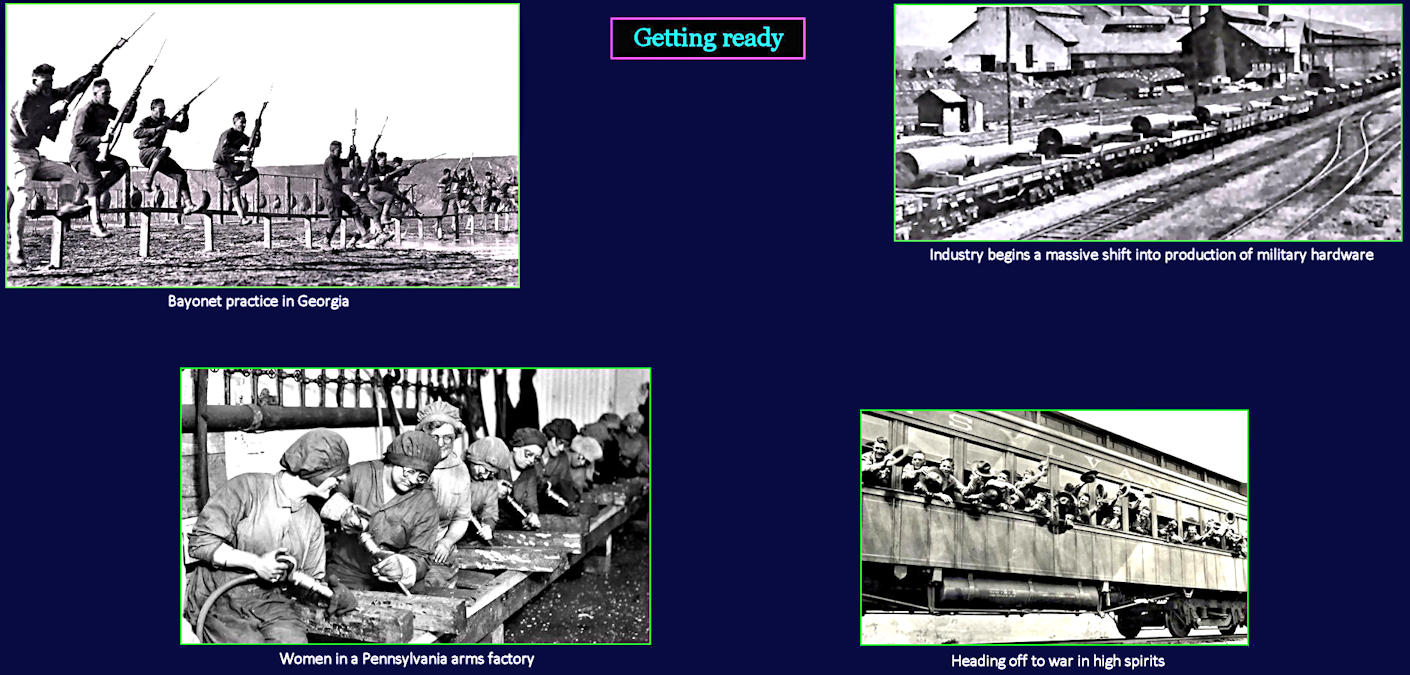
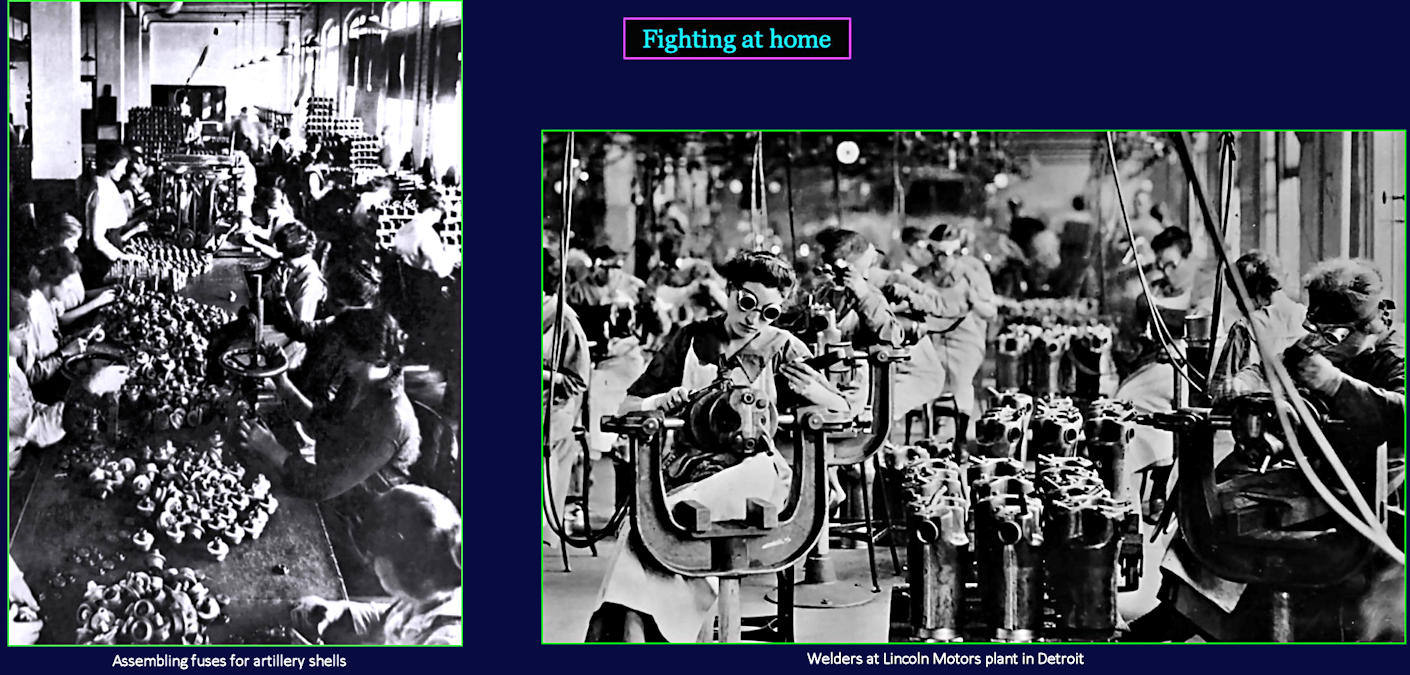
Men and Women Mobilization gets off with a surprising bang. Troops are raised and trained in large numbers, while factories begin converting to the production of munitions. This divides America into two separate efforts. The men are donning uniforms, while women are picking up tools. The steel industry, which had been dealing with declining profits, is suddenly revitalized. At the same time, farmers are benefitting from ballooning grain exports to Europe, in support of the large Allied armies in the field. | |||||||||
| |||||||||
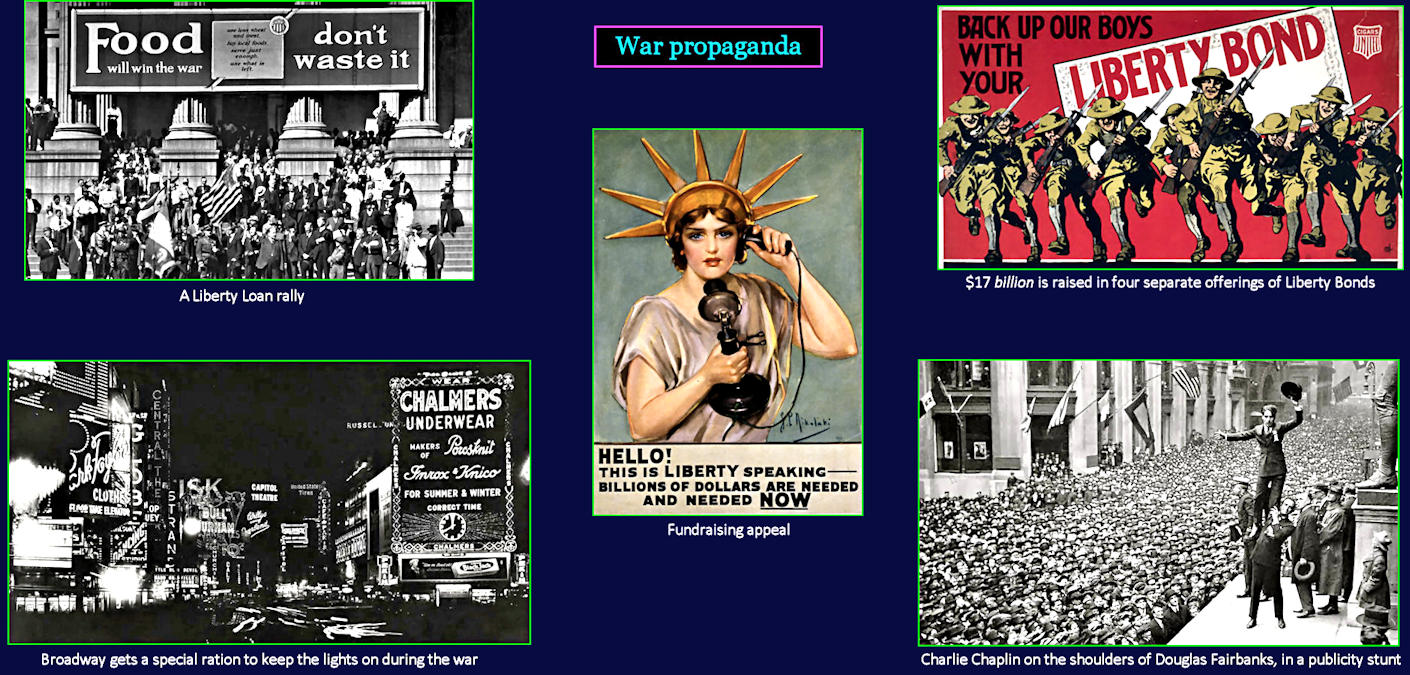
Getting out the Checkbook All this results in the need for massive new war financing. Victory Bonds are a way for ordinary Americans to contribute directly, and immediately, to the war effort. Everyone is called upon to join in support of the war, including movie stars and housewives. The mood is electric, as America is now throbbing with war activity. | |||||||||
| |||||||||
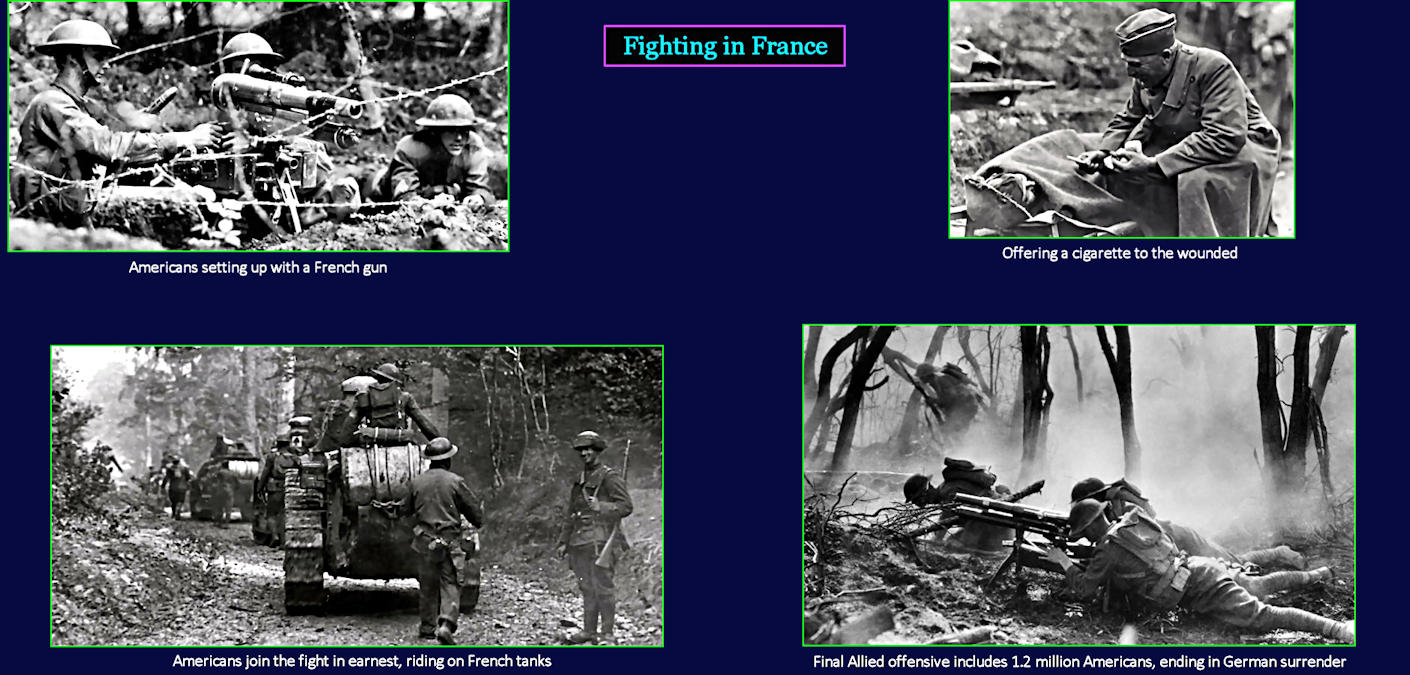
Over There For the first several months, American troops are used mainly for support. They lack combat experience and heavy equipment, like tanks. America eventually begins producing copies of a French tank, and makes 1,000 by war's end. Meanwhile, US troops gradually assume a greater role in operations, including the final push to victory in late 1918. | |||||||||
| |||||||||
Over Here Women are also involved in the war effort in large numbers. Many are industrial workers, but thousands also served as auxiliaries in the armed forces, and as nurses in the Army Nurse Corps. About 10,000 serve overseas. One result of such activity is the rise of the Suffragette Movement in America, which eventually leads to women acquiring the right to vote soon after the war ends. | |||||||||
| |||||||||
Heavy Government Hand During the years leading up to the war, America's railroads are already showing signs of financial distress. A long period of over-building has resulted in excess capacity, which Congress had initially attempted to address with the creation of the Interstate Commerce Commission, back in 1887. In 1910, this commission is granted the additional power of setting rates, which interferes with the ability of railroads to manage rising costs. By 1915, one-sixth of total railroad mileage is being managed by receivers appointed to settle bankruptcy proceedings. The war changes all that, with rapidly rising levels of activity that leads the Railroads War Board to call for total government control. This is not a great success, and is terminated quietly in 1920. | |||||||||