| |
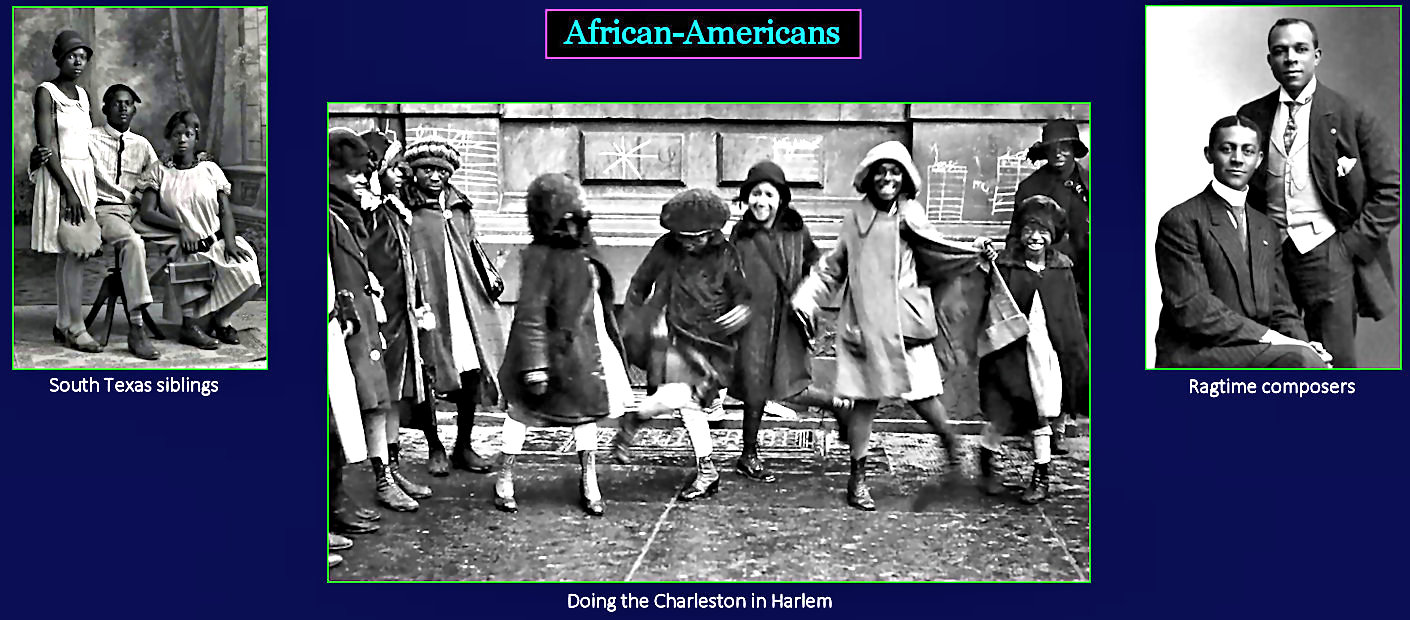
New York Phenomenon Harlem is home to the first Blacks recognizable as African-Americans. Faces in the pictures shown here are no longer those of slaves, but of people living more or less typical American lives. For white New Yorkers, it's an eye-opener. Harlem features a fully functioning business center, with children playing in the streets and motorcars lining the road. But it also exudes a vitality that surpasses that of other urban areas. This is the start of what will prove a very long journey, slowly integrating Blacks into America society. |
| |||||||||
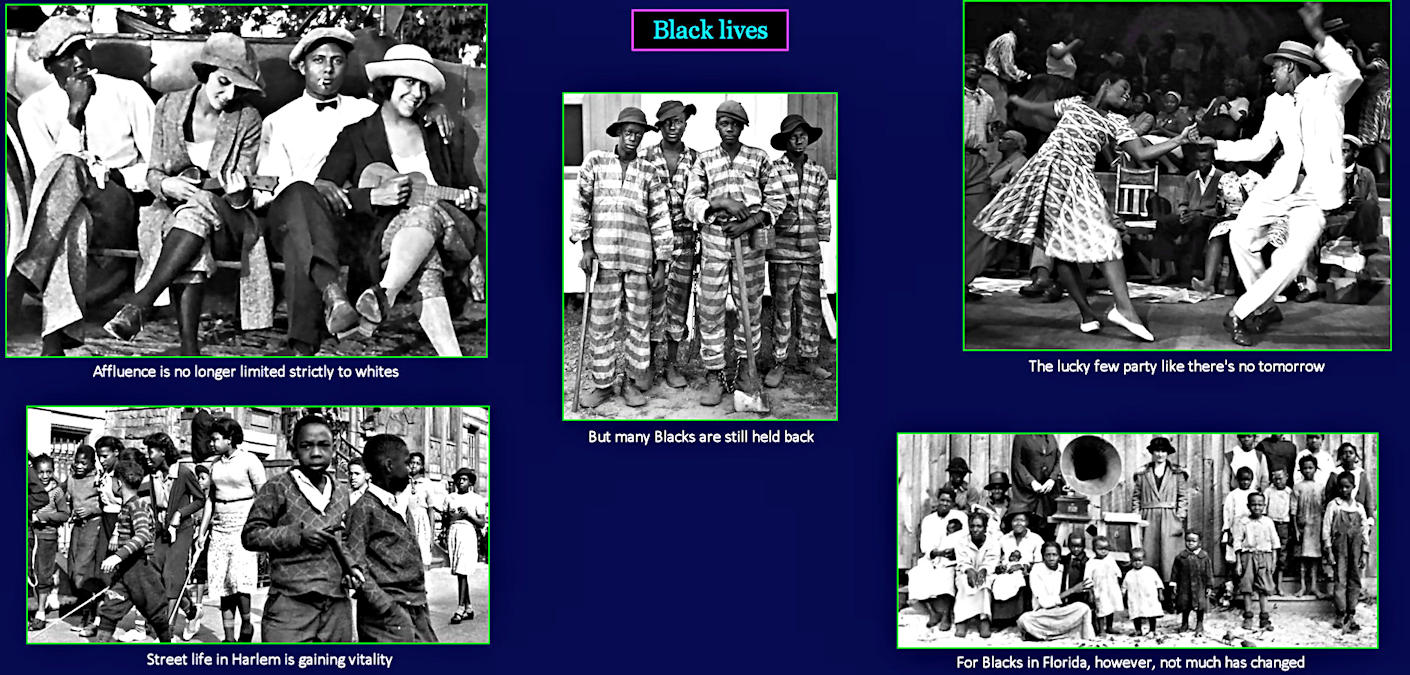
Suddenly, More Visible In a real sense, this is the beginning of Black Lives Matter. But only just. While affluent young Harlem residents are a new look for America, life has changed very little for the millions of Blacks living elsewhere. In the South, young Blacks are routinely arrested on the flimsiest of charges, and then exploited as free prison labor (center top). Black performers are gaining recognition, but the vast majority of black families find no way to escape their typically impoverished circumstances. They aren't inferior humans, but they're often held back by inferior living conditions, and inferior opportunities. | |||||||||
| |||||||||
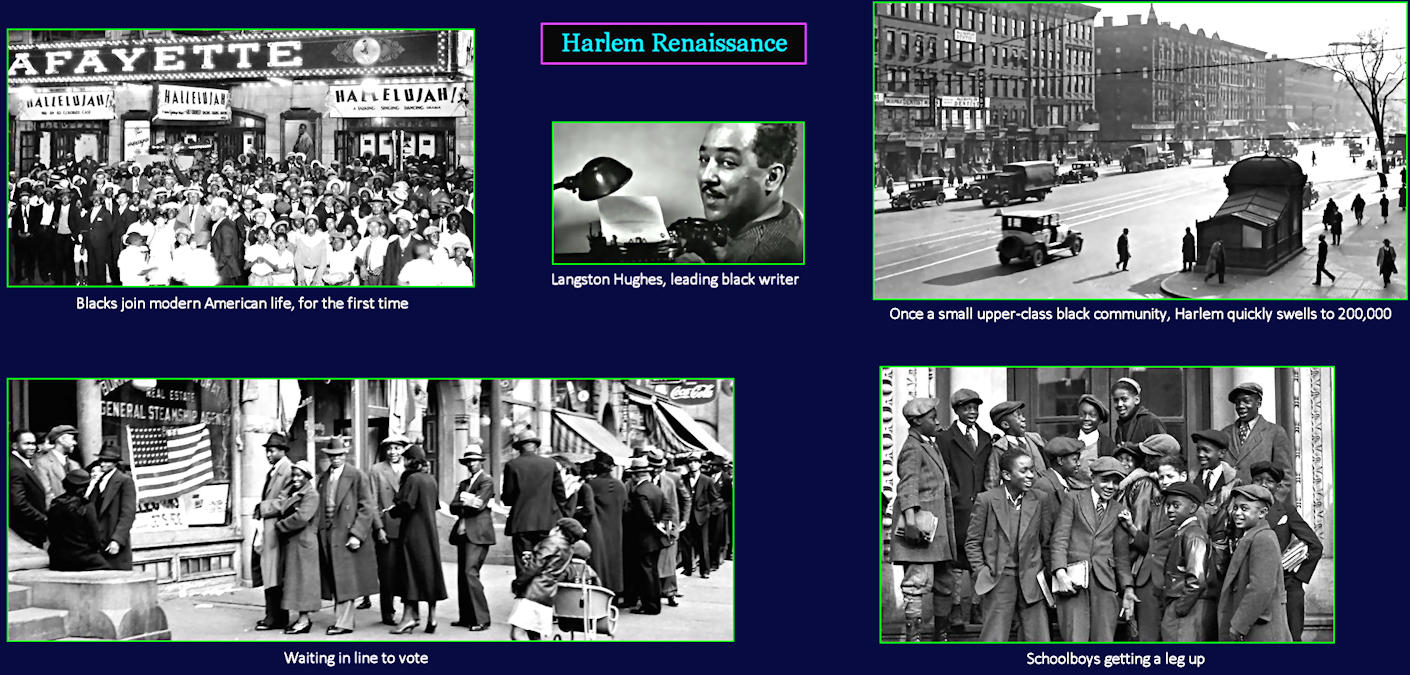
Writers and More Harlem is a robust community in the 1920s. The crowd assembled in front of the theater (top left) resembles any similar crowd anywhere in America, but with black faces. Langston Hughes (center top) is just one of a cluster of new black writers that are emerging from this locally fertile ground. | |||||||||
| |||||||||
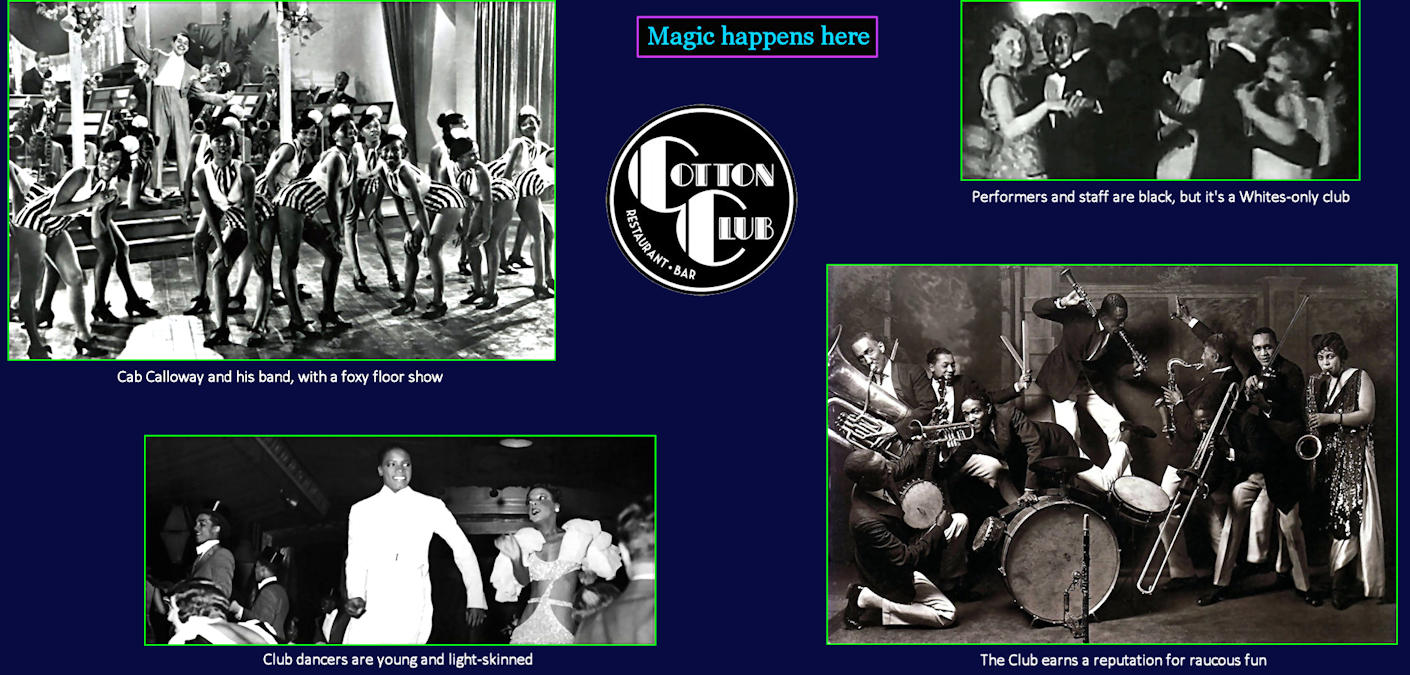
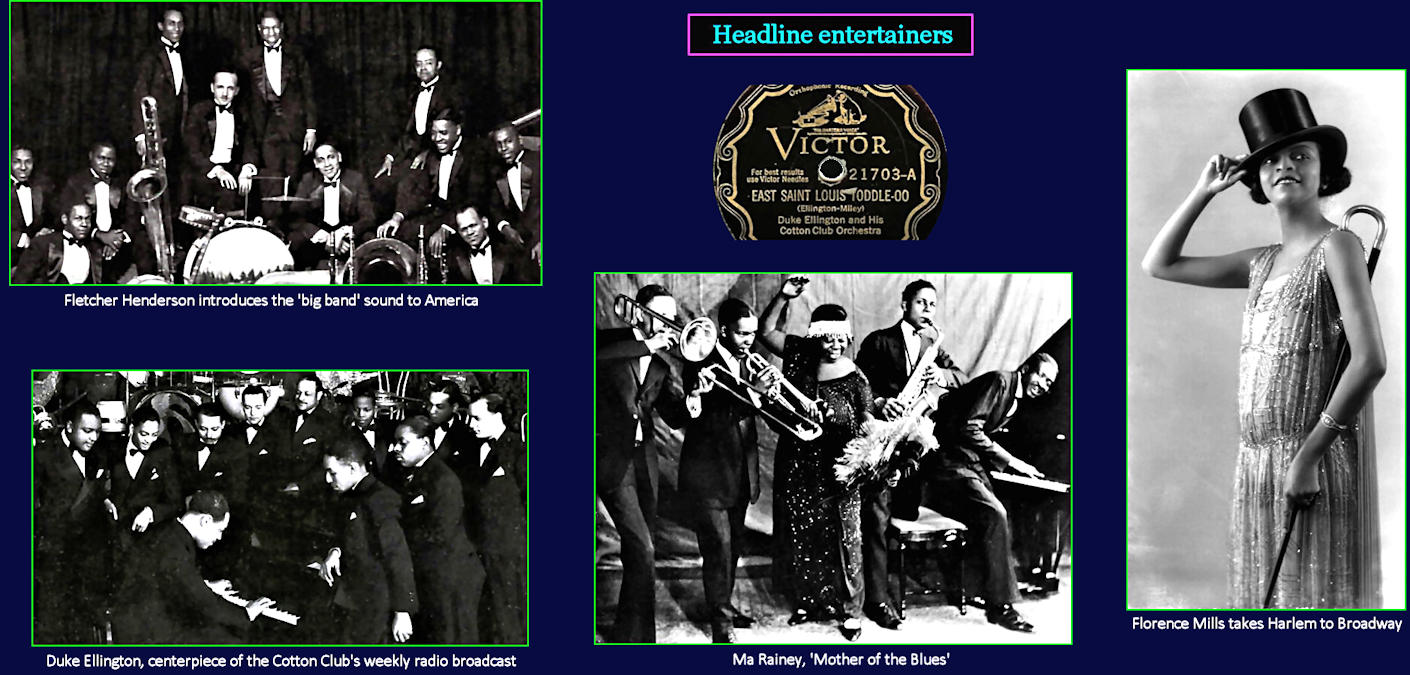
Hottest Show in Town The Cotton Club is the throbbing center of entertainment, though only one of several 'Whites-only' clubs in Harlem. It's been renovated by a local gangster, who puts in lots of money to dress it up in exotic, jungle style. Some of the biggest names in jazz play the Cotton Club during its heyday, before the Depression takes the shine off. Louis Armstrong, Duke Ellington, Cab Calloway and King Oliver all rise to prominence at the Cotton Club. The clientele is white, while performers and wait staff are all black . This can only happen in Harlem. Anywhere else, it would be banned as scandalous, or outright illegal. | |||||||||
| |||||||||
Horns and Riffs The Jazz explosion at the Cotton Club is exported throughout America via radio broadcasts and records. It's a perfect storm of energy. | |||||||||
| |||||||||
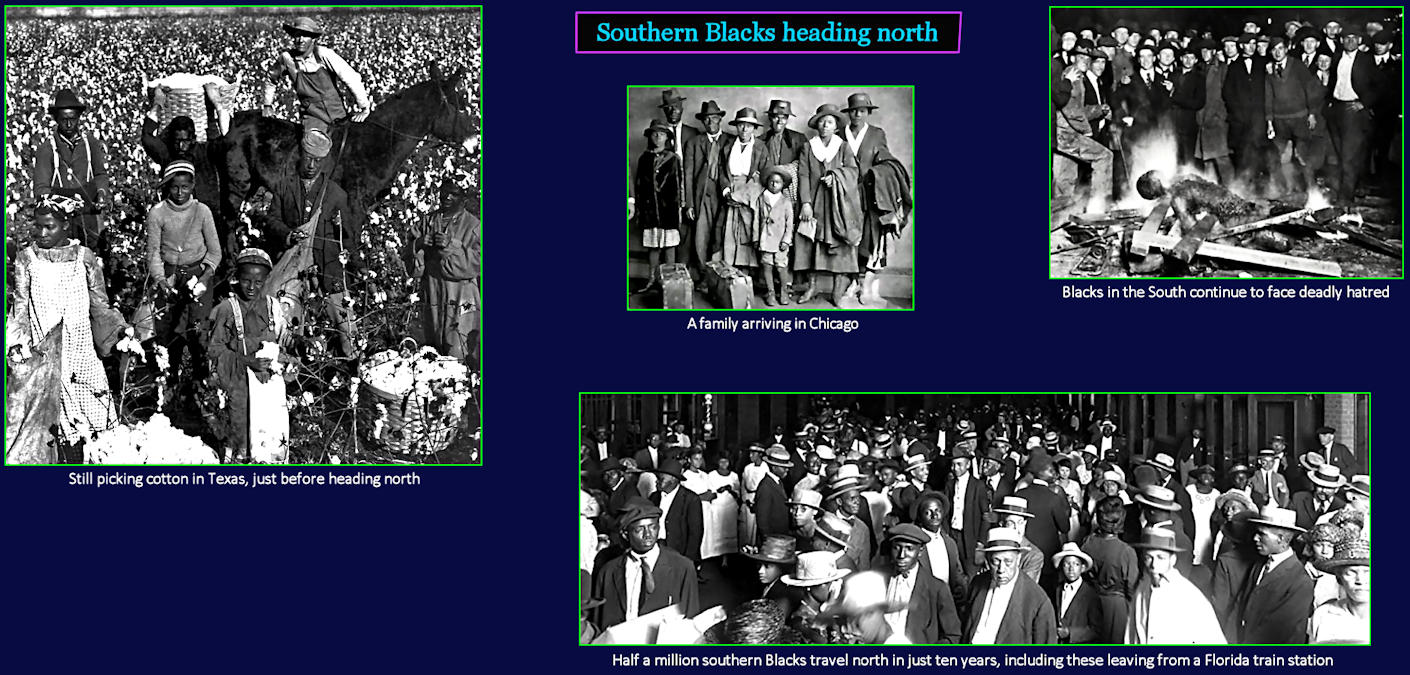
Abandoning the Past The sudden population growth in Harlem is part of a much larger migration of southern Blacks to northern cities during the 1910s. Even larger numbers will follow in later years, as railroads and manufacturers offer jobs to Blacks eager to trade poverty and abuse in the South for work in the North. Many find solid jobs in the surging automobile industry in Detroit, while other destinations include Kansas City, St Louis, Chicago, Buffalo and even California. The Pennsylvania Railroad kicks this off when it offers southern Blacks a free ticket north, if they will work for the railroad. | |||||||||