| |
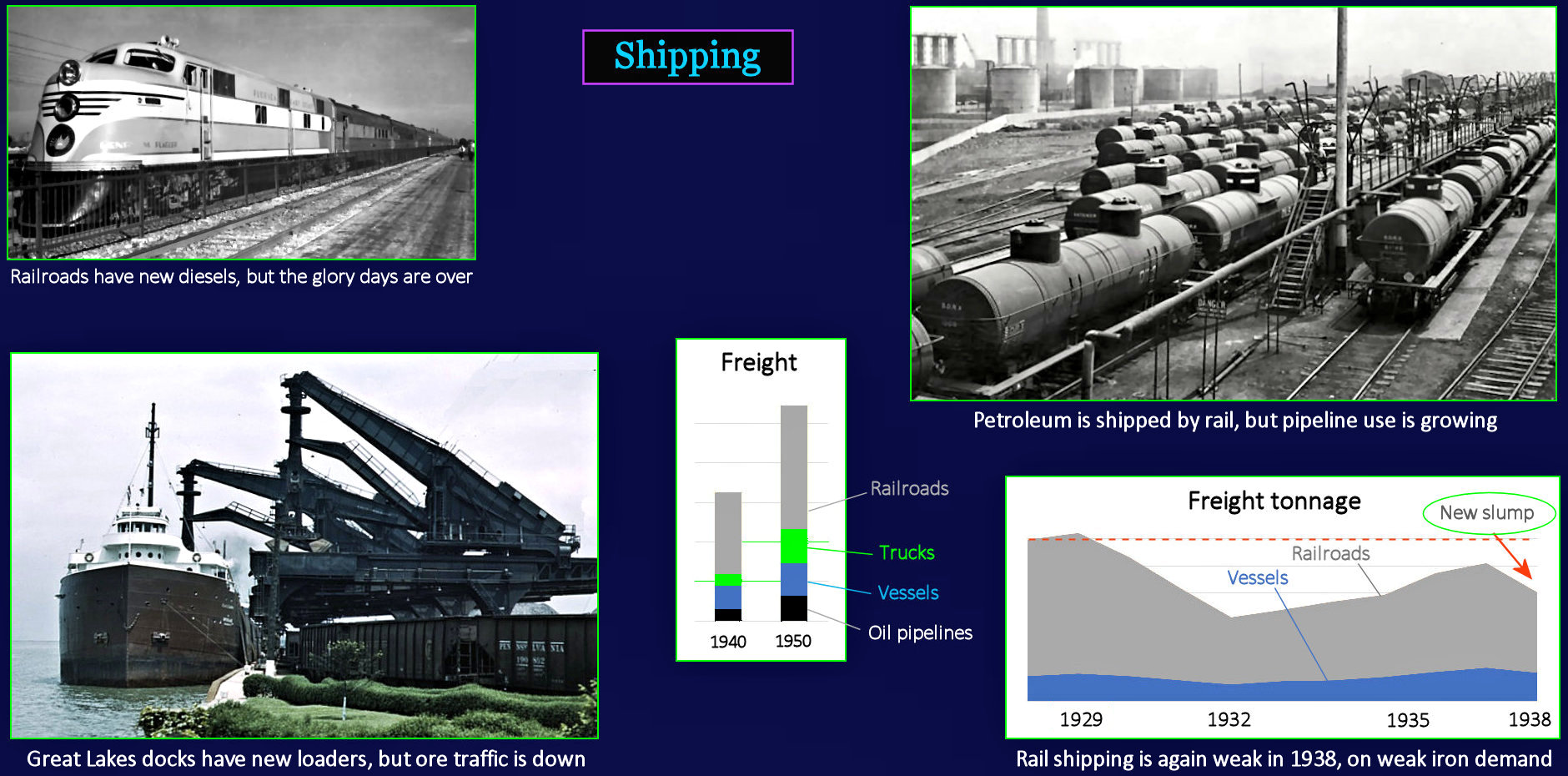
Railroads Still Dominate Traffic With competition growing, railroads begin to introduce big new diesel locomotives (top left) to replace older coal-driven engines. Rising demand for oil is driving increased production of tanker cars (top right). Freight shipped by water remains steady, due to the low cost. The smaller chart (center) shows two new categories of freight carriers. Trucks and pipelines. Trucks will soon challenge maritime shipping for second place, while long-distance pipelines will handle an increasing share of oil and gasoline deliveries. |
| |||||||||
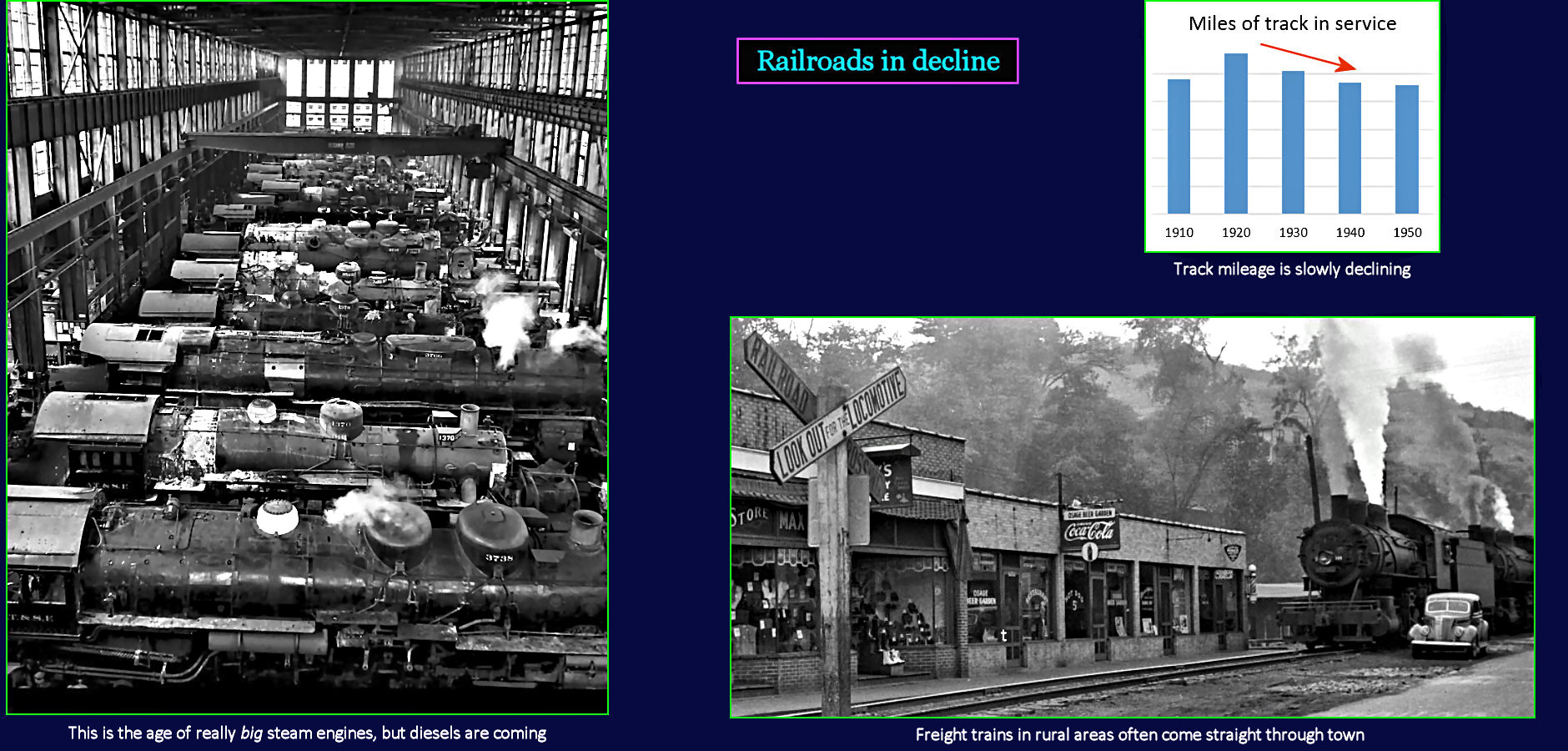
Rail Mileage The slow decline of American railroads is displayed in the chart at top right. It shows a long-term reduction in miles of railroad track in service, beginning in 1920. For the first time, newly-abandoned track is being removed faster than new rails are being laid. Somewhat surprisingly, this begins a full 10 years before the crash that sets off the Depression. By 1930, the downward trend is clearly evident, and continues straight through World War II. This means there is no longer any demand for new steel rails, which just 20 years earlier accounted for fully 15% of all steel production. As unprofitable routes are closed, rails are torn up and re-used elsewhere, or simply returned as scrap to the foundries, to be recycled in more useful forms. | |||||||||
| |||||||||
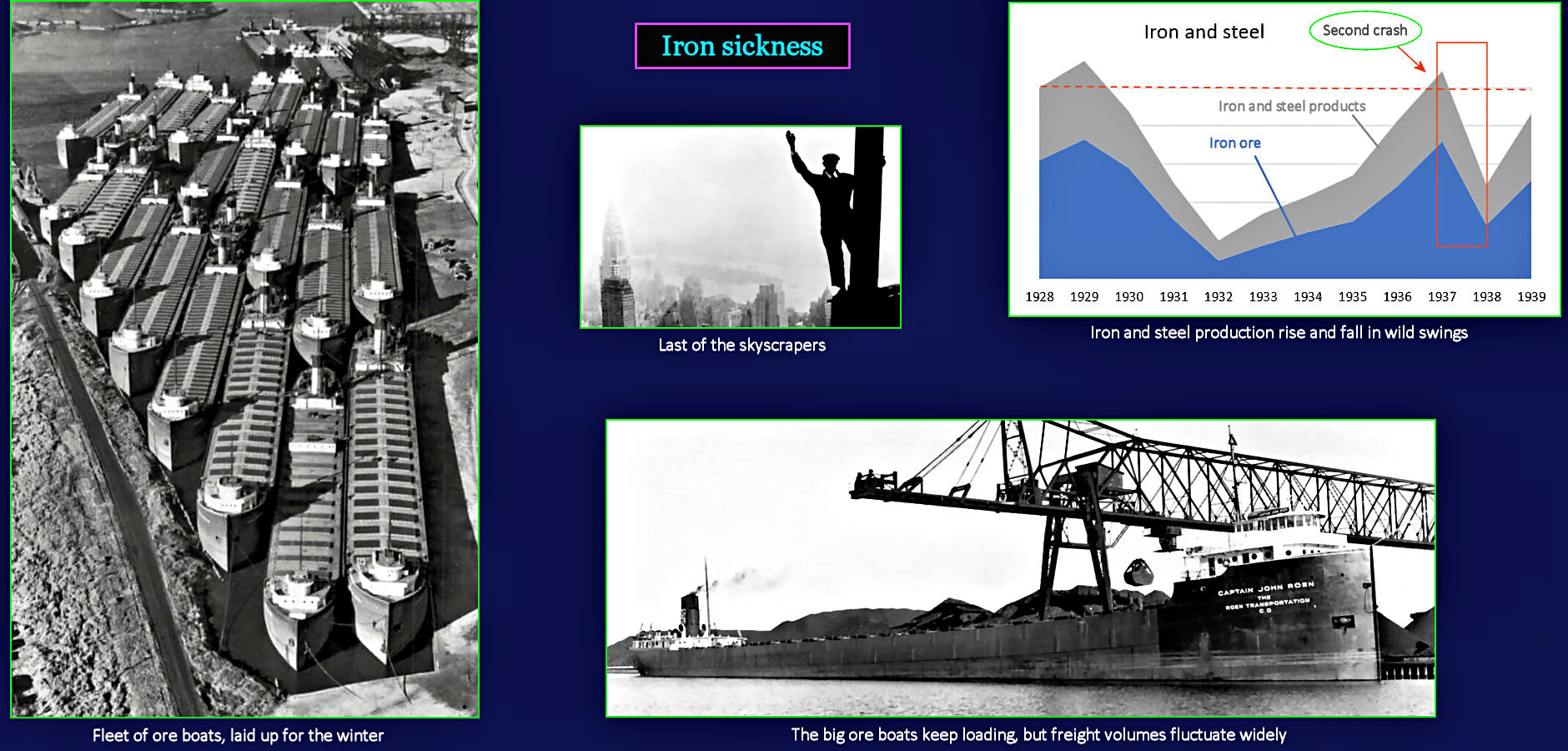
Fluctuating Demand for Iron The shrinking of railroad business affects the iron and steel industry directly, and severely. The price of iron peaks in 1920, at precisely the moment that railroad expansion ends. It continues falling throughout the Depression, until bottoming in 1940, having fallen 40%. To understand this long slide, consider that at the peak of railroad activity, railroads were spending fully 40% as much money on new railcars as consumers are spending on new autos, each year. But 20 years later, the total number of railroad freight cars in use has dropped by an astonishing 30%. Railcars are almost pure steel, and railroads are now scrapping them, instead of buying them. Big difference. Even the wave of war spending, which begins in early 1942, fails to raise the price of iron. | |||||||||
| |||||||||
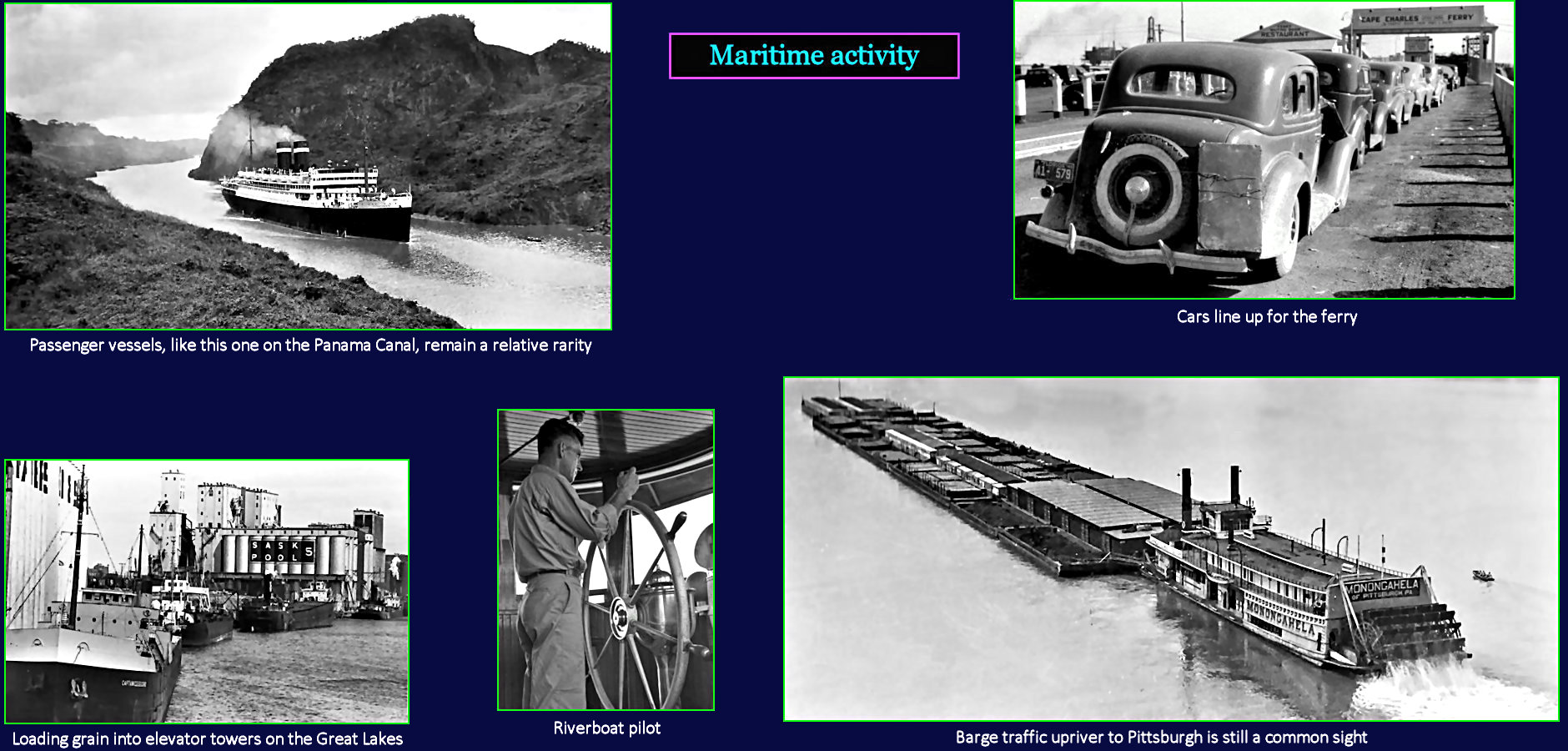
Cheapest Freight Option Throughout the 1930s, waterborne transportation is not only recovering briskly, but actually rising much faster than the general economy. The only real exception is the reduced flow of big ore boats coming down Lake Superior. Coastal traffic now exceeds pre-Depression levels, while river barge shipments are growing even faster. Coal is still in demand everywhere, and barges are the cheapest way to deliver it. Meanwhile, traffic through the Panama Canal is remaining steady, after a modest dip. | |||||||||
| |||||||||
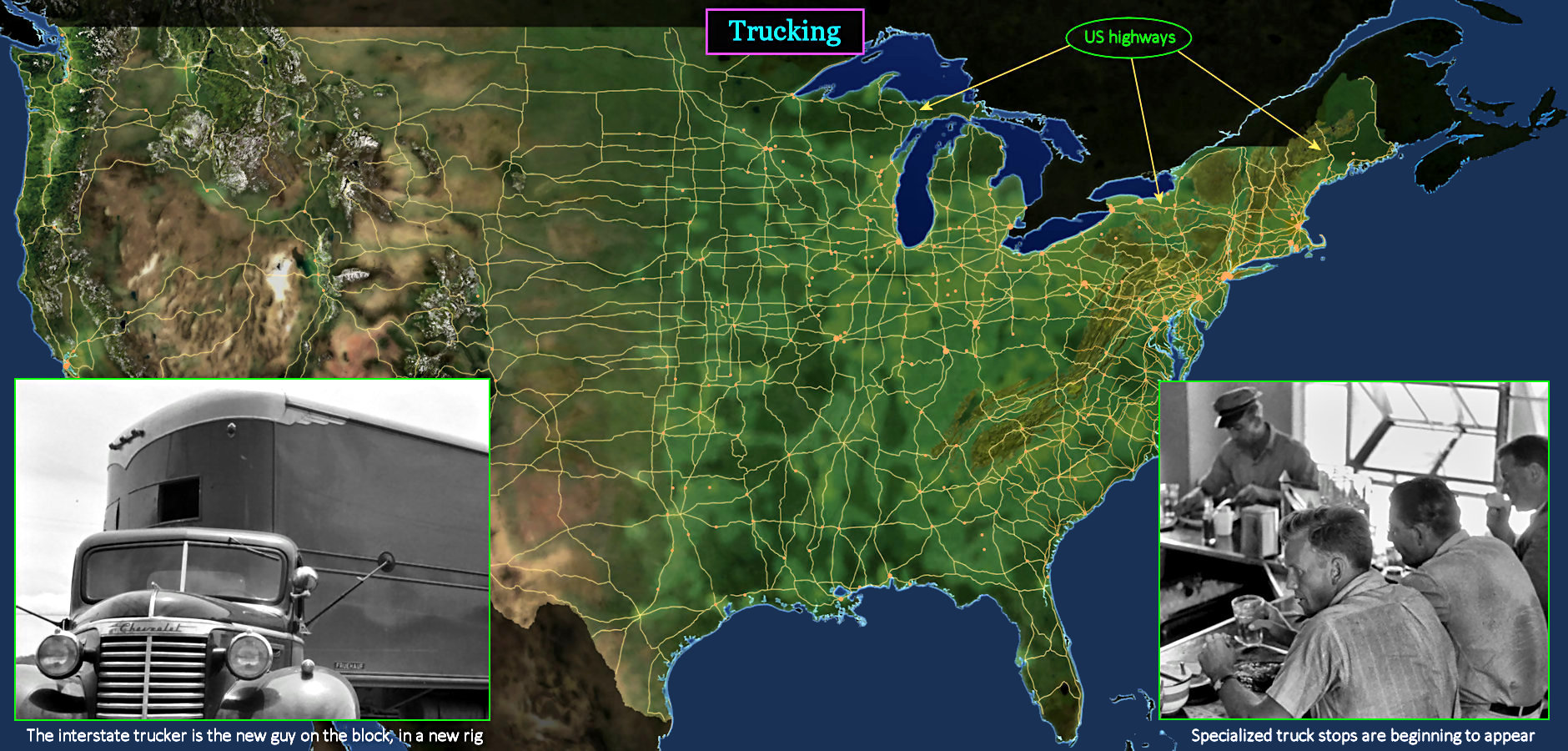
Truckers, Before Interstates The federal government begins paving existing dirt roads back in 1921, rolling out the newly-renumbered highway system in 1926. The 'highways' are actually modest two-lane roads linking urban centers, like the existing rail network. Many have been paved with New-Deal funding. Meanwhile, trucks are now sometimes offered in a 'semi-trailer' design (lower left). These rigs, common today, have a short cab, with motor and driver, and a separate box-like trailer. The trailer mounts to the cab on a swivel, which makes it easier to maneuver, especially when backing into tight spaces. It also permits loading the trailer at leisure, to await later pickup. The trailer is a precursor to the 'shipping container,' which is now standard on freighter vessels. | |||||||||
| |||||||||
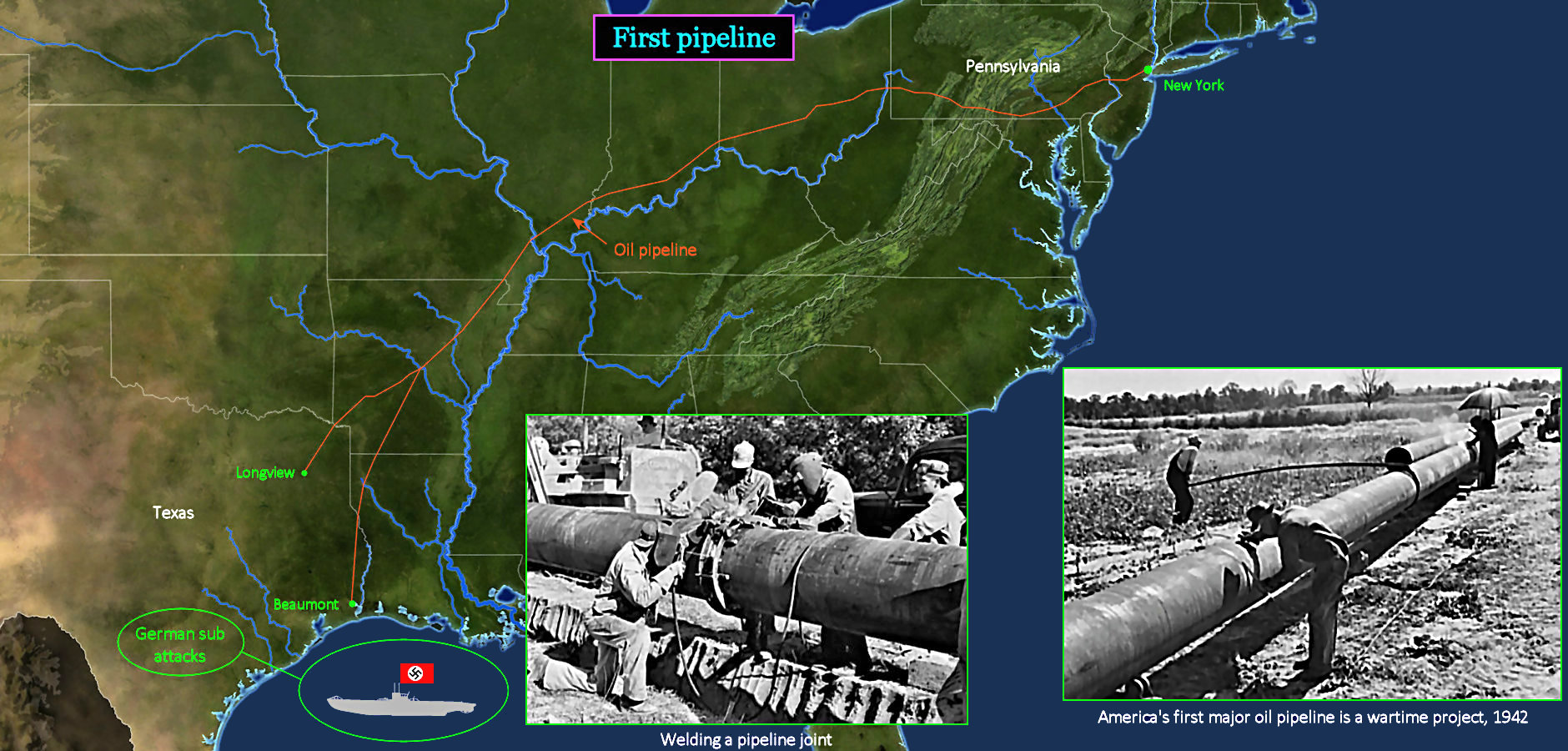
Evading German Subs The other transportation innovation of the 1930s is the long-distance oil pipeline. John D. Rockefeller used much smaller and shorter pipelines to expand his iron grip on the oil business, way back in the late 1800s. It's the cheapest means of transport, by a wide margin, but has not yet been attempted on really long-distance routes. But when German submarines begin sinking tankers leaving Gulf Coast ports during the Second World War, a new project is launched to deliver oil products to New York by overland pipeline. This is America's first large-diameter pipeline, and it's a big success. | |||||||||