| |
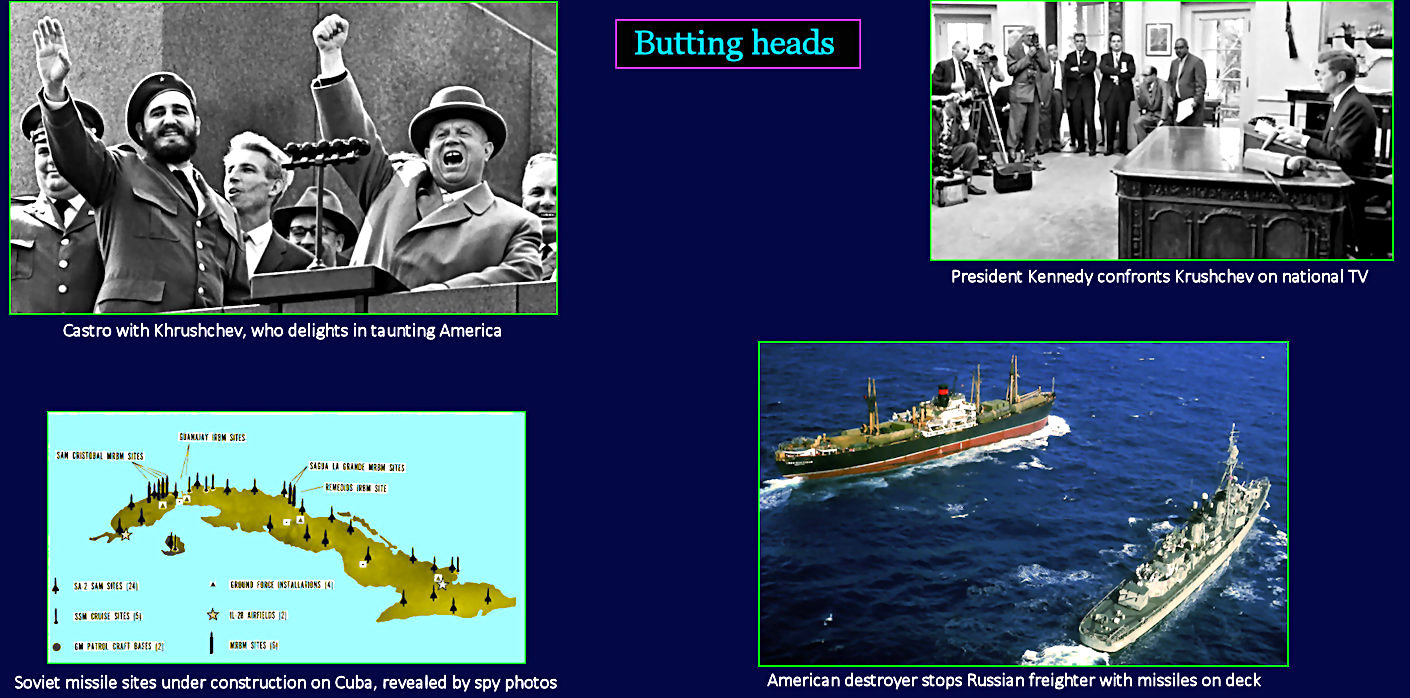
Khrushchev and Castro The Cold War begins heating up as Khrushchev teams up with Fidel Castro, in Cuba, in an attempt to gain advantage over the still-young President Kennedy. Khrushchev is quietly shipping ICBM nuclear missiles to Cuba, where they are being secretly deployed in a position to threaten the entire US. American spy planes detect the move, but Kennedy hesitates to order the pre-emptive military strike that his generals are recommending. Instead, he blockades the arriving Soviet ships. After frantic but secret phone negotiations, Khrushchev backs down. |
| |||||||||
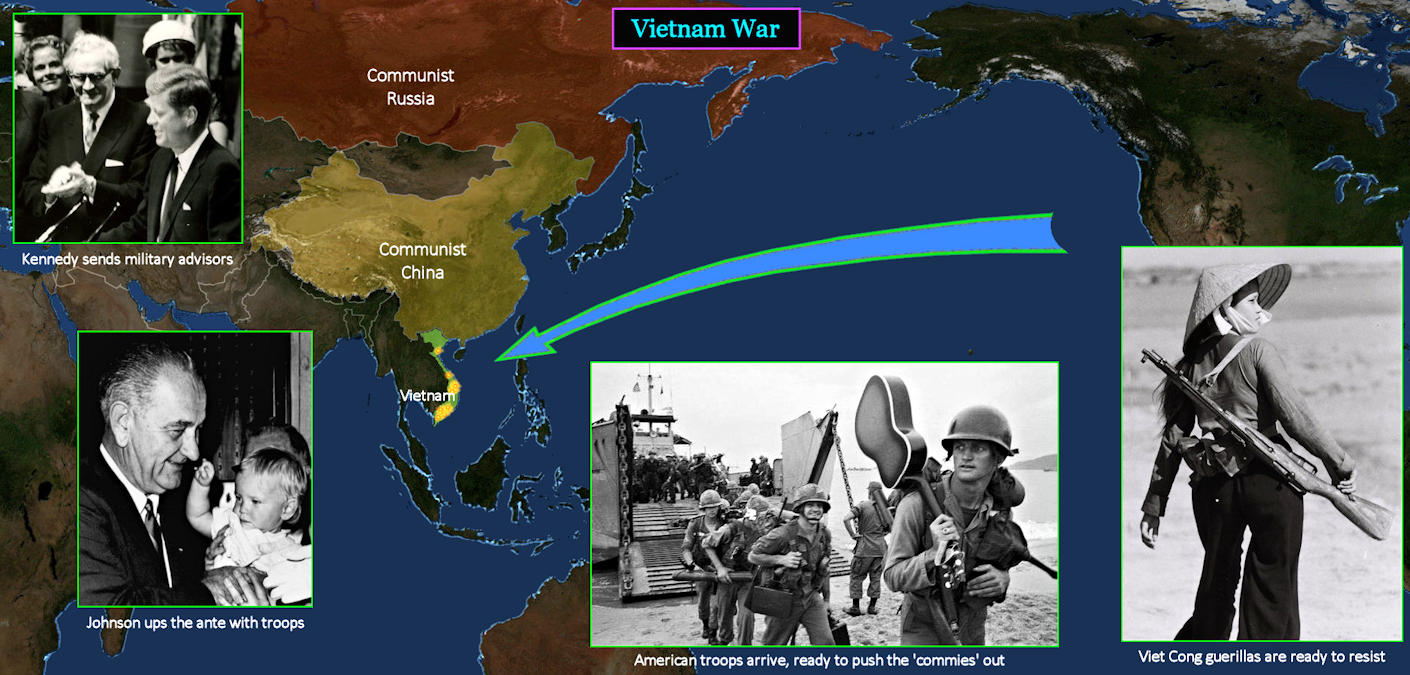
Next Stop, Vietnam When President Johnson is finally persuaded by his advisors to begin deploying combat troops to Vietnam, in 1965, the war is not yet the nightmare it will soon become. The new deployment of Marines marks a significant escalation from the non-combat military advisors Kennedy began sending, three years earlier. Americans are confident they can beat back the communists with superior force, a feat which the French could not accomplish, even with 15 years of quiet American financial support. A military draft is now in effect, but at the end of the first full year of deployment, two-thirds of the half million troops are still volunteers. About half of these, however, are young men who volunteered because they believed they would soon be drafted anyway. | |||||||||
| |||||||||
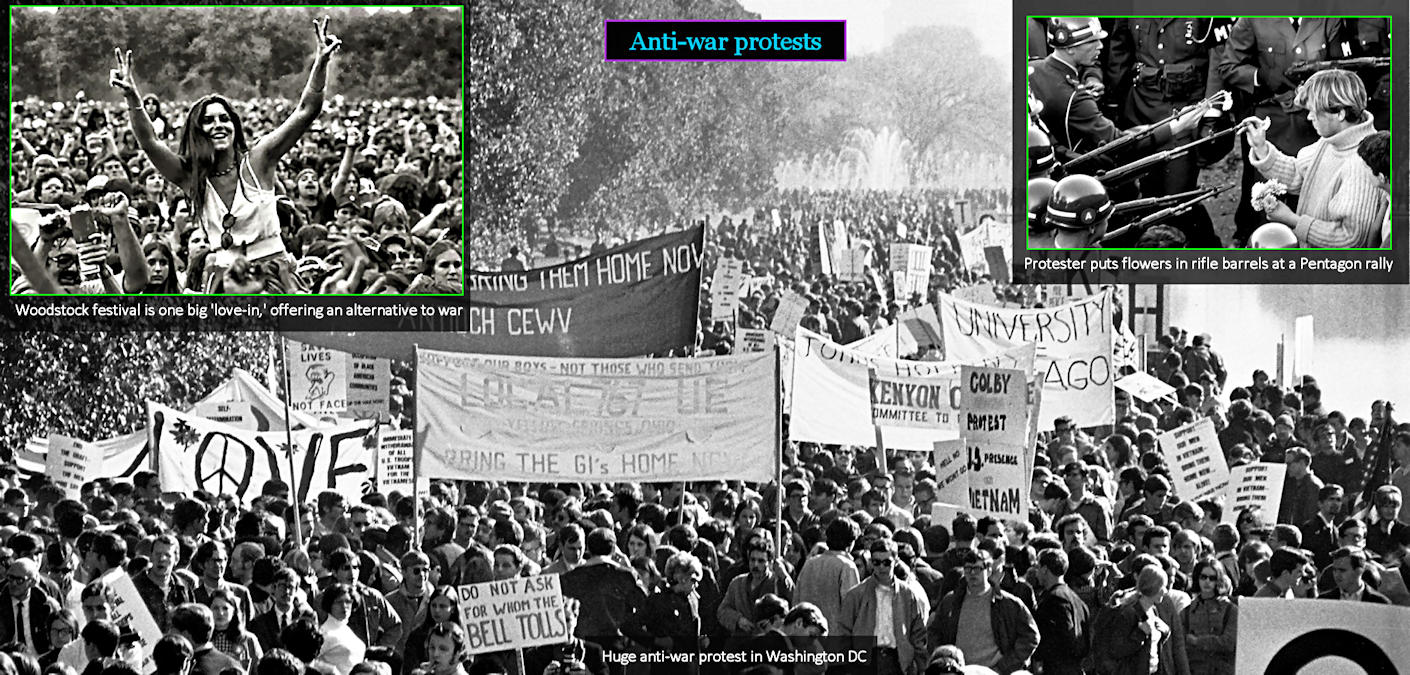
Hell No, We Won't Go Students are the first to mount sustained protests against the war, largely because the 'deferment' from the draft for college students expires upon graduation. The growing use of marijuana among college students is also a factor, as much of the music they listen to carries a strong pacifist theme. This begins with folk singers, but soon includes almost all the new rock stars that perform at drug-enhanced concerts. The 1969 Woodstock Festival is a focal point for these events, shortly followed by the big anti-war march in Washington, composed largely of students. | |||||||||
| |||||||||
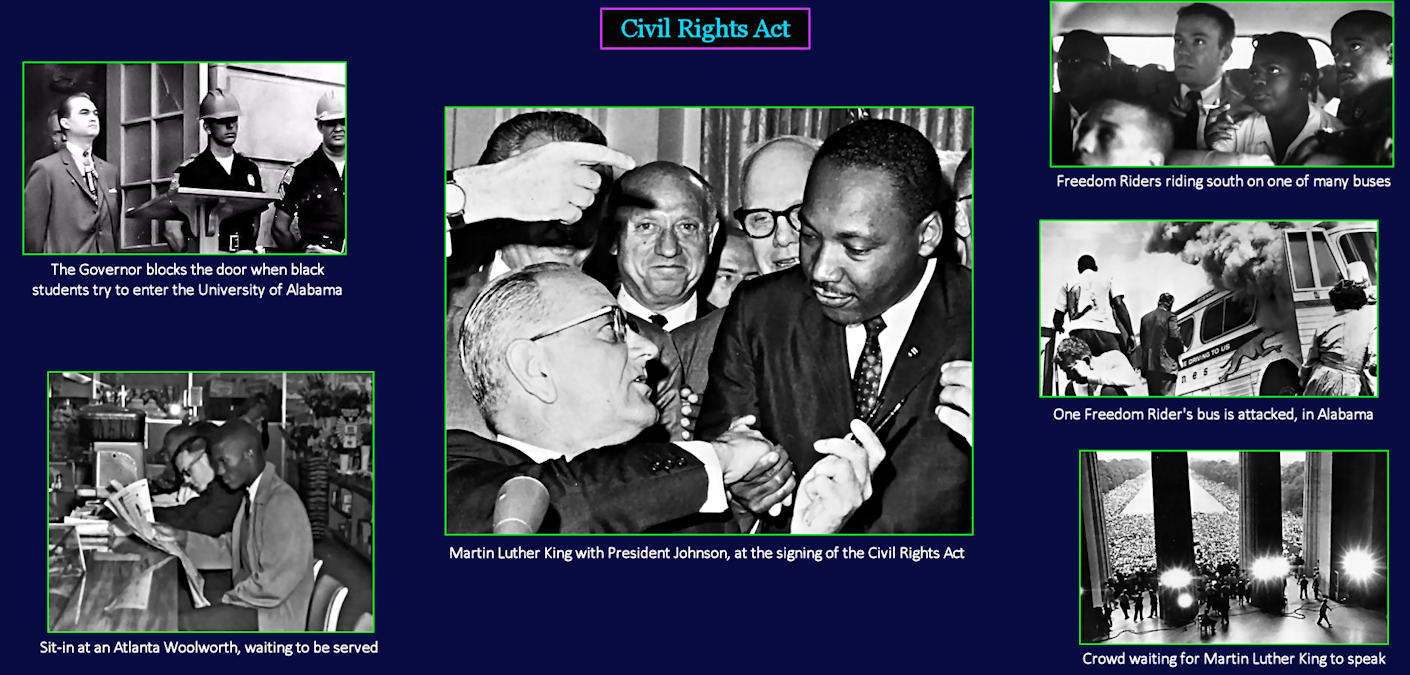
Sustained Effort Pays Off In the south, the focus remains on the struggle by Blacks to overthrow segregation. This kicks off anew in 1961, with 60 separate busloads of northern 'freedom riders,' who travel south demanding enforcement of recent court rulings banning segregated buses. One of the buses is attacked and burned by Whites. The long, tough struggle for black rights is increasingly championed by a young Baptist preacher-turned-activist, named Martin Luther King. Unlike more militant black leaders, King consistently argues against the use of violence. He organizes a successful year-long boycott of operators of segregated buses, in Alabama. President Johnson is finally persuaded, against his instincts, to support the Civil Rights Act, giving Blacks the vote. It passes in 1964. | |||||||||
| |||||||||
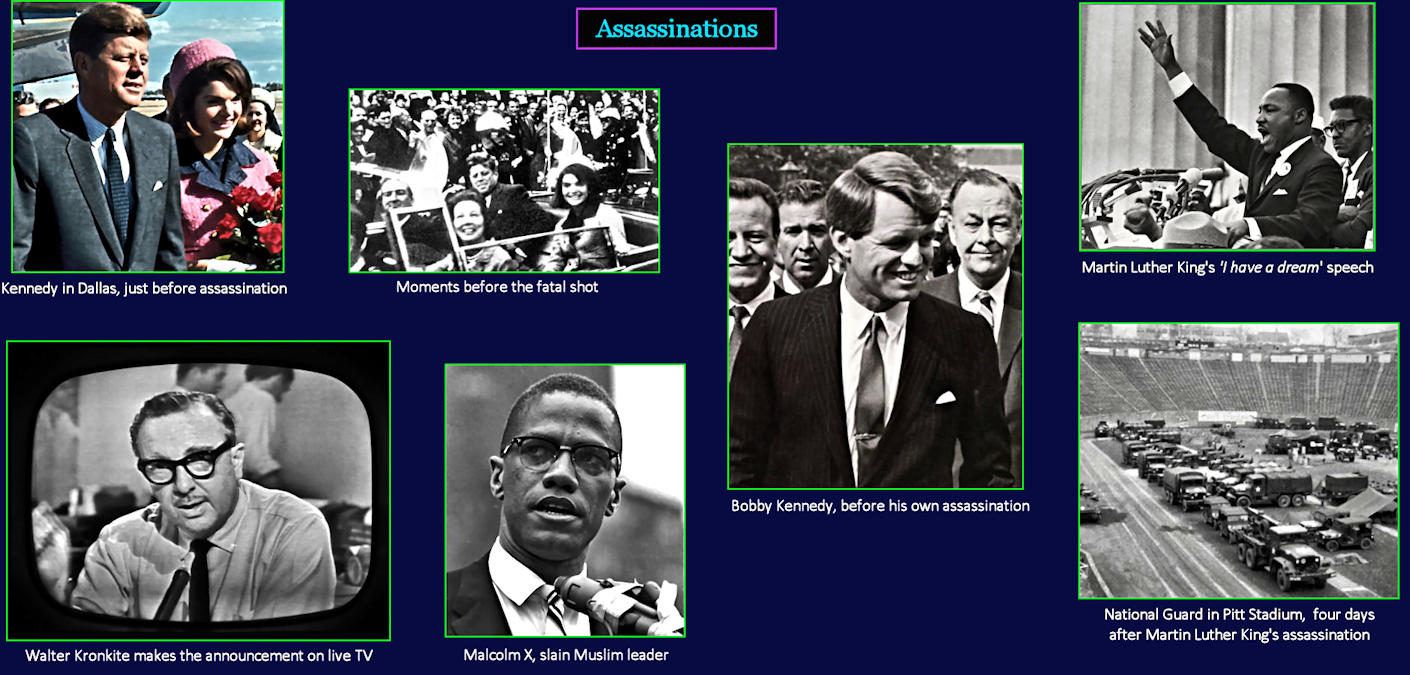
What's Going On? Increasingly disturbing events fill the 1960s, beginning with the assassination of President Kennedy in 1963, in Dallas. Liberals are aghast. How could this happen, in America? southerners who never trusted a Northerner to begin with, are less disturbed. Two years later, a chaotic confrontation between police and residents in a black section of Los Angeles lasts six days, resulting in widespread arson and looting. Black Muslim leader Malcolm X is assassinated the same year, in New York. Two years later, more race riots erupt, this time in Black Detroit. Finally, in 1968, Martin Luther King is assassinated in Memphis, and John F, Kennedy's younger brother, Robert, is gunned down two months later, while campaigning for president. Bad omens for the future. | |||||||||
| |||||||||
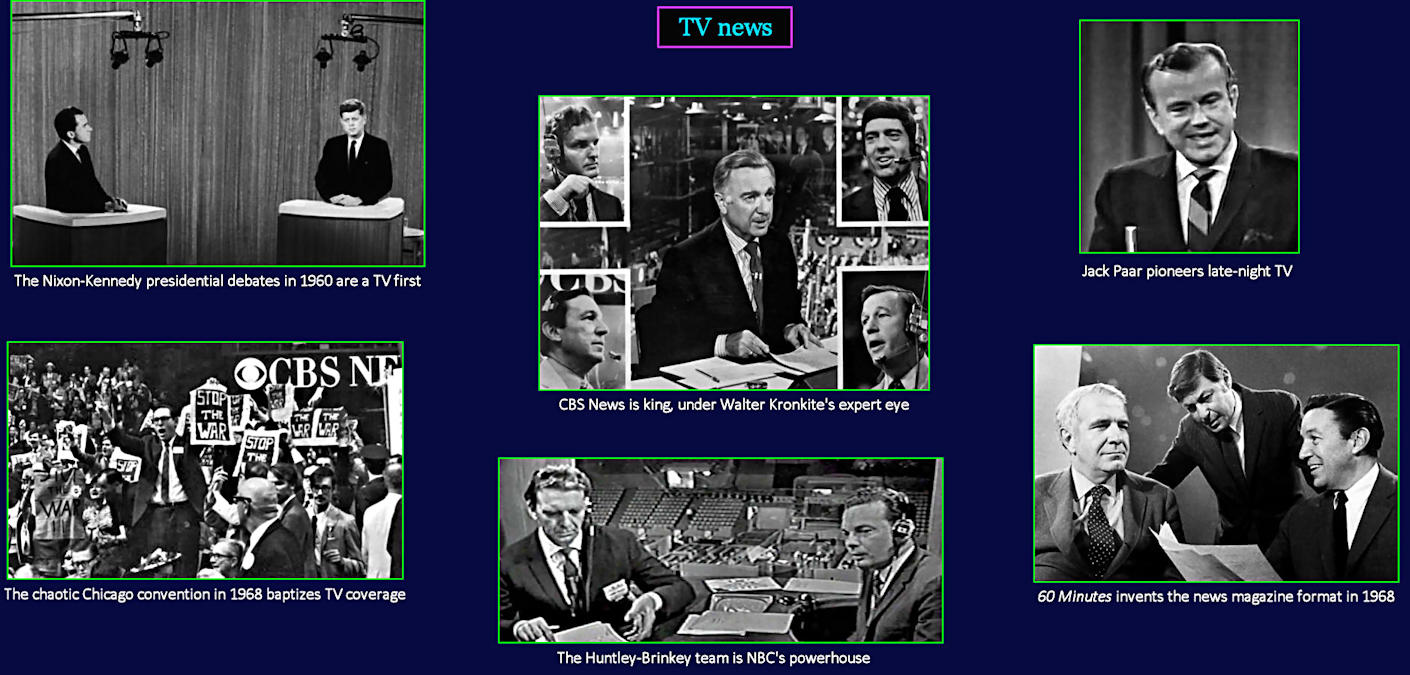
And That's the Way it Is Less than 1% of American homes own a TV when nightly news broadcasts first begin, in 1948. Four years later, one-third of all households own a set, and the nightly news is firmly entrenched. The format changes very little for the first 20 years, with a lone newsman sitting behind a microphone, until the Democratic National Convention in 1968. Hoping to gain viewers, the major networks set up booths for their star broadcasters, with feeds from several main cameras outfitted with long zoom lenses. Each network also has smaller cameras around the periphery, some rigged as mobile units with the latest lightweight cameras. The newsmen who chair the booths are soon called 'news anchors,' remaining familiar well into the next generation of viewers. | |||||||||