| |
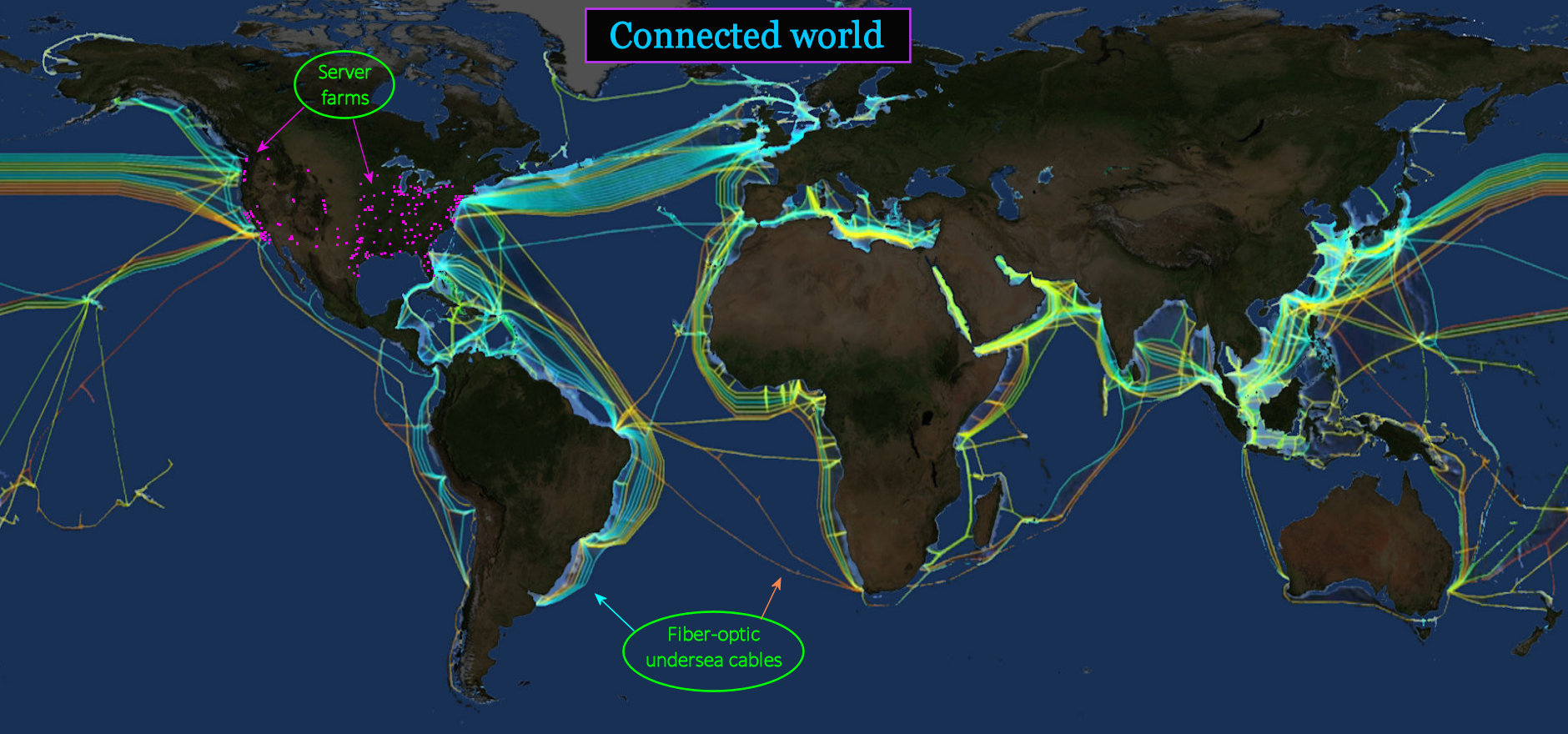
Global Selfie This is one planet, fully connected. There are no more time delays, as financial transactions fly around the globe at digital speed. There are lots of benefits to be derived from this arrangement. Scientists and researchers all over the world can pool efforts. Immensely complex systems can be managed remotely, by automated systems that continually assess changing conditions. The flip side is that hackers, terrorists and global anarchists can suddenly immobilize parts of this automated framework. Manual backup systems have largely been dismantled. |
| |||||||||
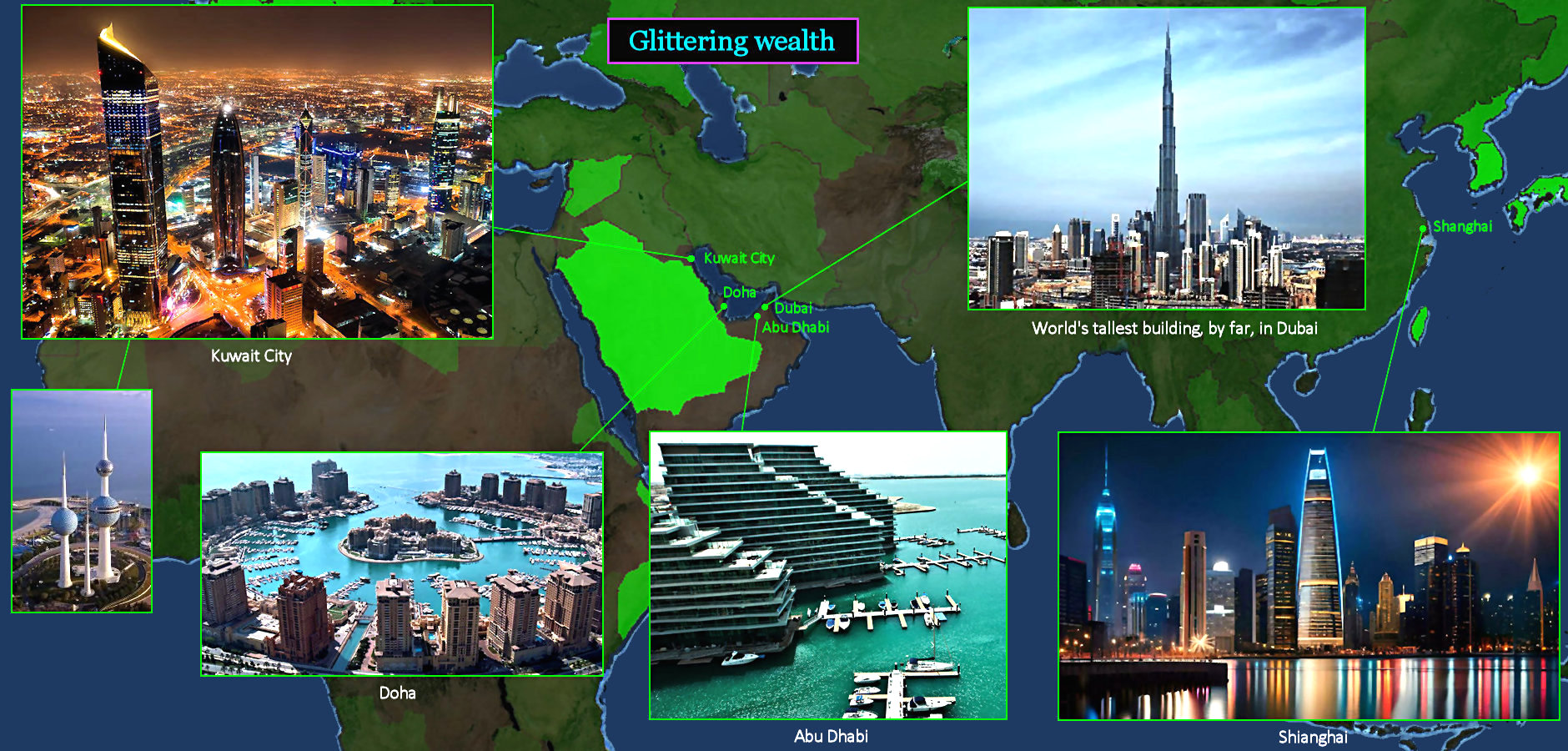
Global Showpiece To view the upside of globalism, a good place to visit is the oil-rich region of the Persian Gulf. Here, fabulous hotels, resorts, and business towers loom over harbors bustling with commerce. Especially at night, the brilliance is mesmerizing. This may seem a little ostentatious, but the motivation is the same as that which has driven Americans to the present day. Visible tokens of affluence are a projection of success. The wealthiest individuals seem obsessed with owning the biggest yachts, most successful sports franchises and, in general, the finest that the world has to offer. Glittering display is taken as an indicator of great ability, and importance. | |||||||||
| |||||||||
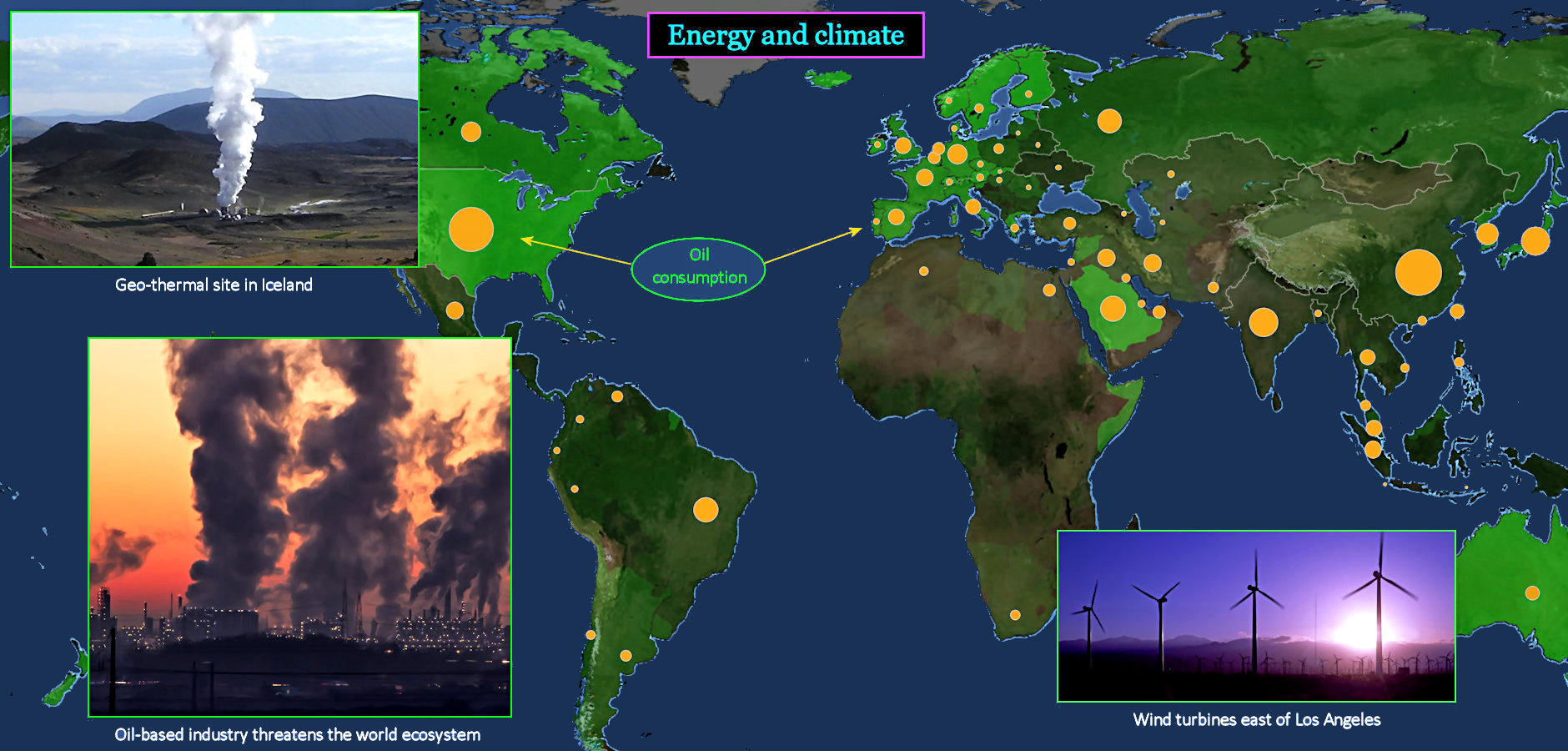
Global Timebomb There's still time to avoid the downside of globalism. The ORANGE circles above represent current oil consumption, which is a big driver of climate change. But alternative energy sources are already beginning to cut into the global demand for fossil fuels. Charts of world oil consumption are currently leveling off, and are expected to start heading back down. The same is true for coal, while similar charts for electricity generated by wind, solar and geothermal sources are rising steadily. One leading source of pollution, however, has so far been largely ignored. Methane released from cattle, raised to satisfy a growing global appetite for meat, is a more potent source of greenhouse effects than all transportation and industrial pollution combined. Really. | |||||||||
| |||||||||
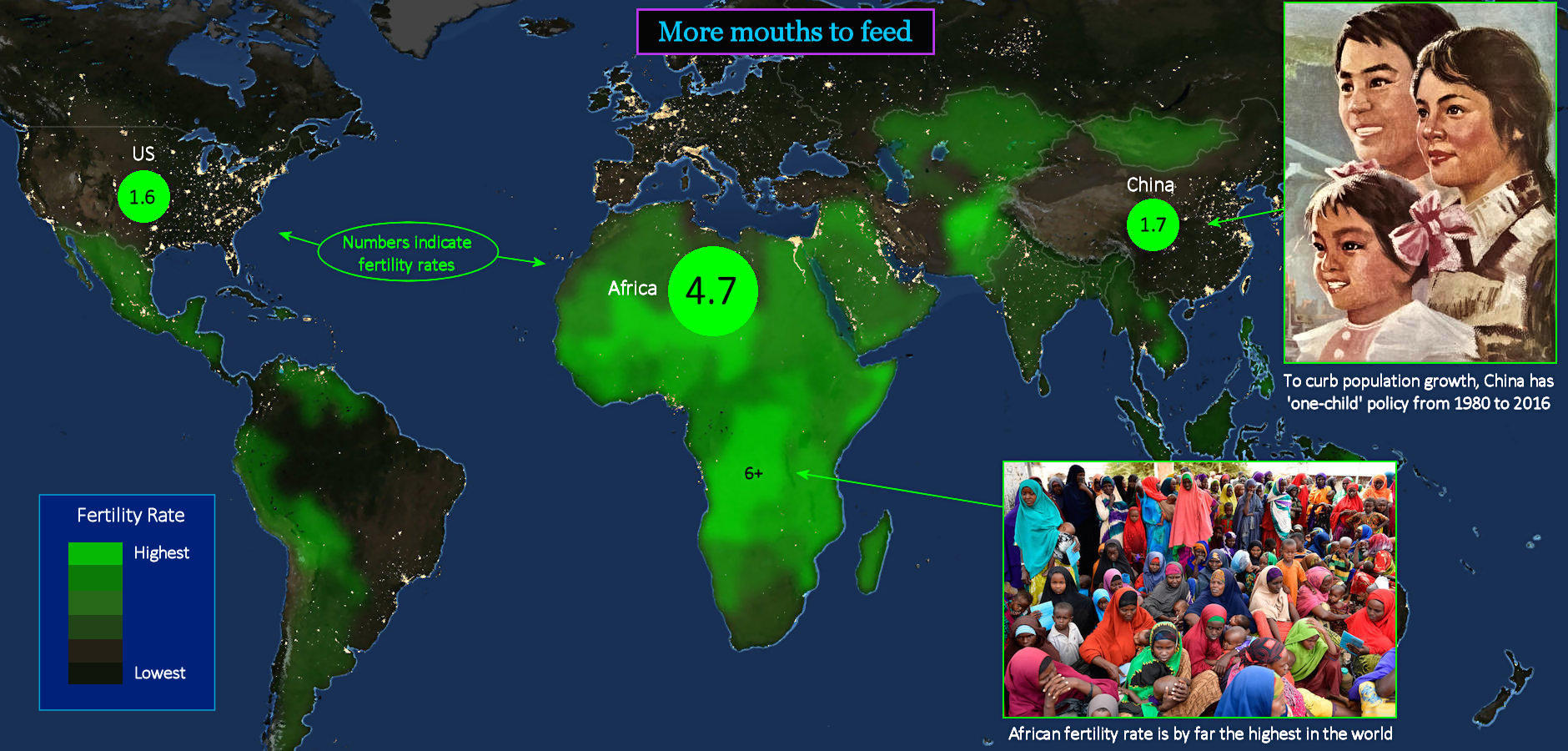
Uneven Population Growth Another element of global concern is the continually growing population of humans on the planet. More people means greater food requirements. Africa has less good agricultural land than almost anywhere else, yet an average fertility rate nearly triple that of the US, Europe or China. GREEN highlights on the map show counties with fertility rates at least twice that of the developed world. A great indicator of the developed world is the presence of urban/industrial sites, shown above as YELLOW dots. | |||||||||
| |||||||||
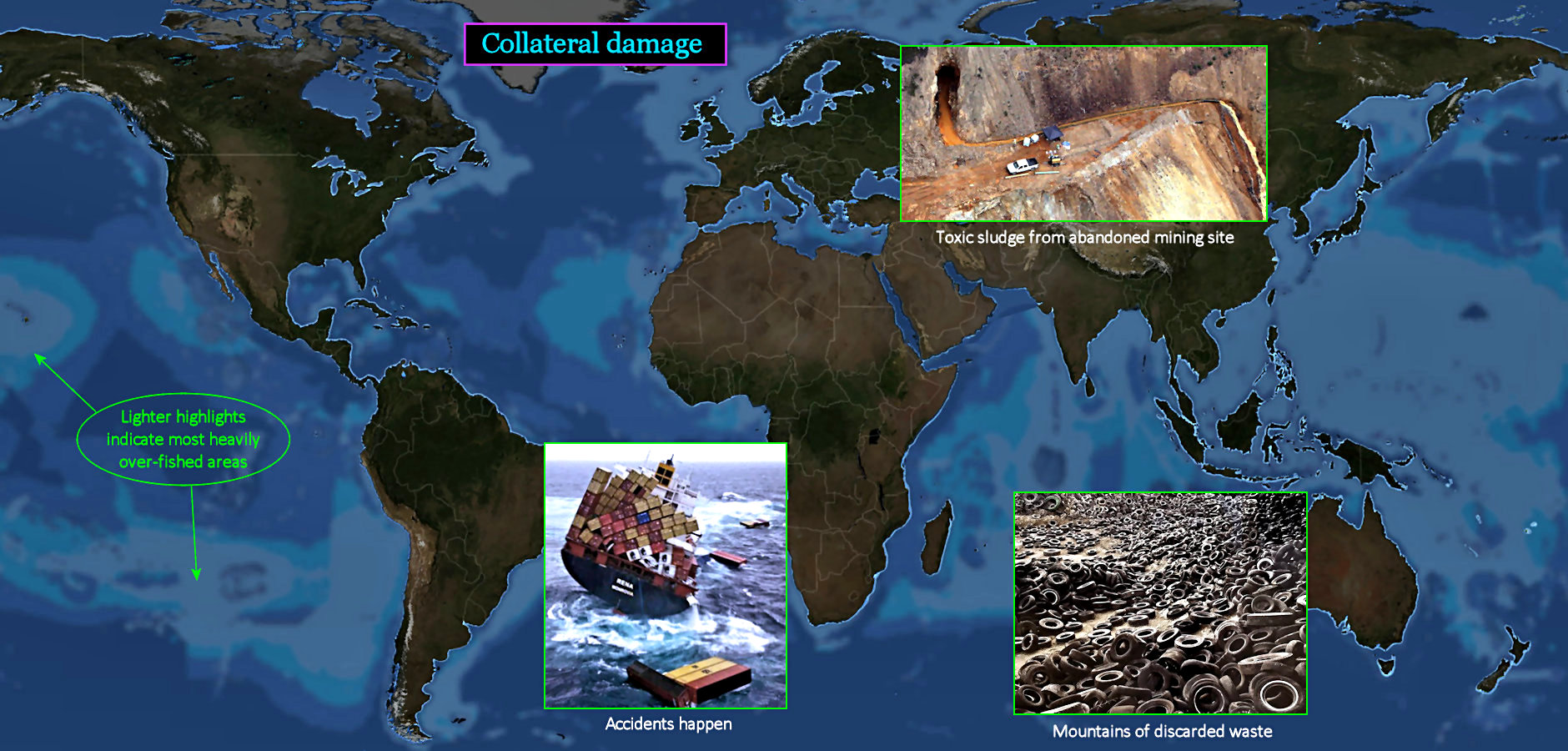
Food Stress There is no better indication of looming food issues than the world's oceans. There are growing islands of floating plastic, while overfishing of all the world's most productive oceans continues. The lightest BLUE zones on the map indicate the most heavily fished areas. This includes most of the Pacific and Indian oceans, was well as most coastal areas. The situation on land may also be getting worse. Global food production increased by a factor of four during the previous 60 years, due to increased use of fertilizer. Production may now be leveling off, however, as more and more fertilizer is applied, with less and less additional effect. Meanwhile, runoff of fertilizer into the world's oceans is a continuing troubling factor. | |||||||||
| |||||||||
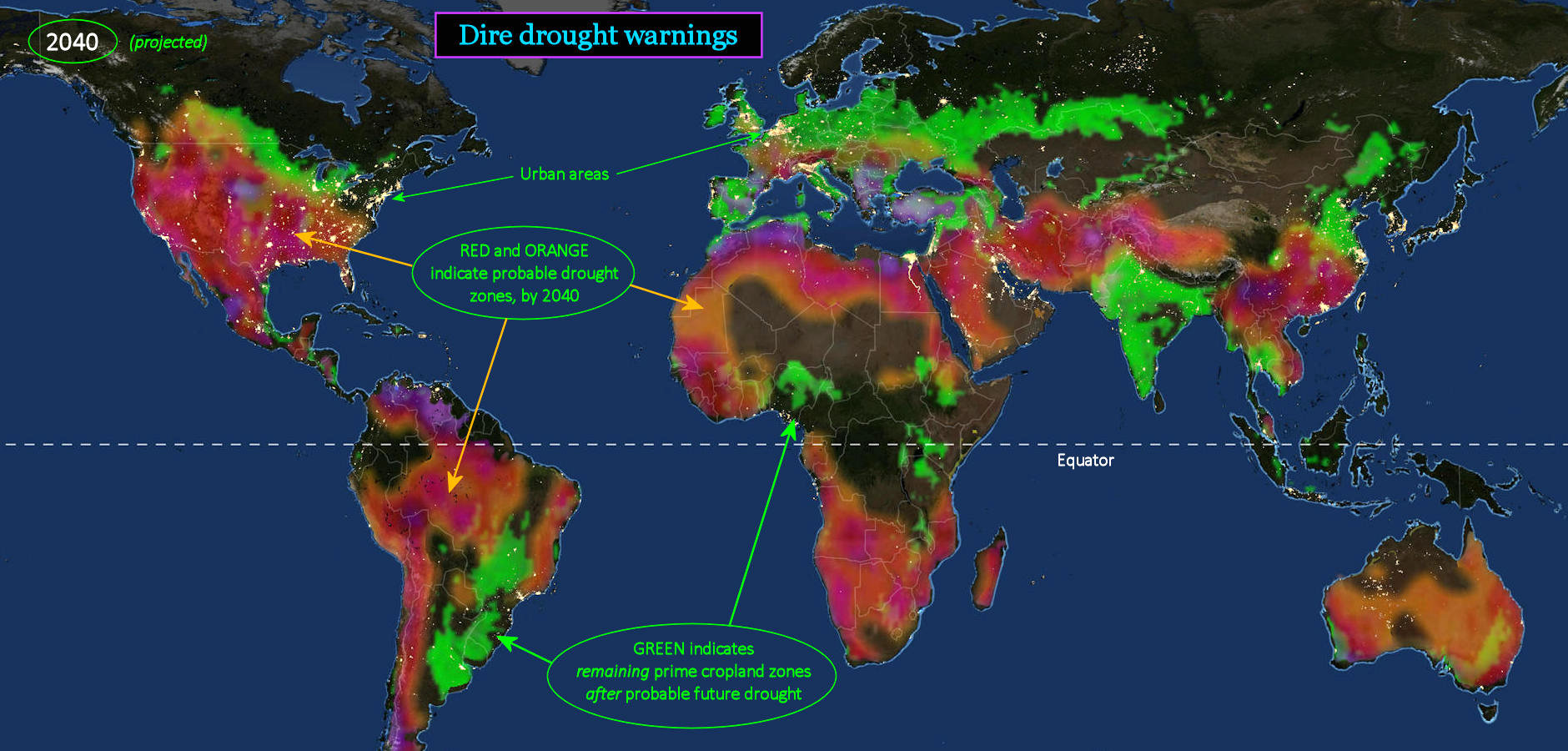
Bigger Threat Perhaps the most dangerous change brought on by the industrial/digital era is the cumulative effect on the world's climate. Global ice is already melting, sea level is rising, and extreme weather events are increasingly common. The scientific evidence is now overwhelming that nearly 150 years of industrial and agricultural growth has resulted in a sharp increase in the emission of 'greenhouse' that trap heat near the earth's surface. Scientific models predict the ultimate result will be growing regions of persistent drought (RED and ORANGE zones), resulting in a dramatic loss of prime farming regions . As shown here, America may be hit the worst. | |||||||||