| |
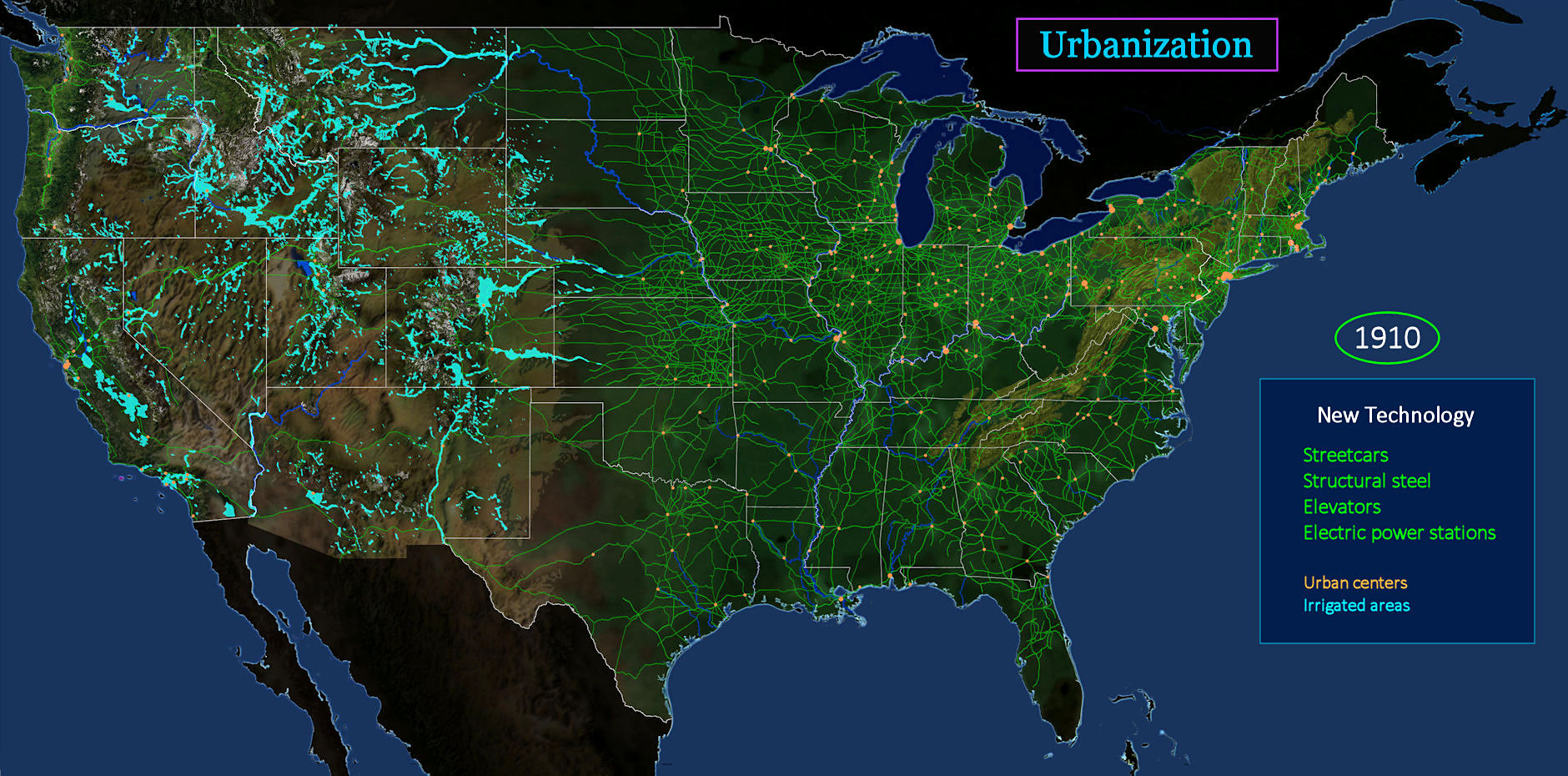
Electricity Boosts Vitality All the new technologies combine to expand downtown areas, as factories using a mix of steam and electricity are radiating out in all directions. This supports a new urban culture that acquires mobility with the introduction of streetcars, mostly powered by electricity. Night life magically appears, as new urban lighting lures customers out to theaters, restaurants and department stores after dark. Railroads continue to spread westward, while western lands are suddenly more productive, with the widespread availability of steam pumps for irrigation. |
| |||||||||
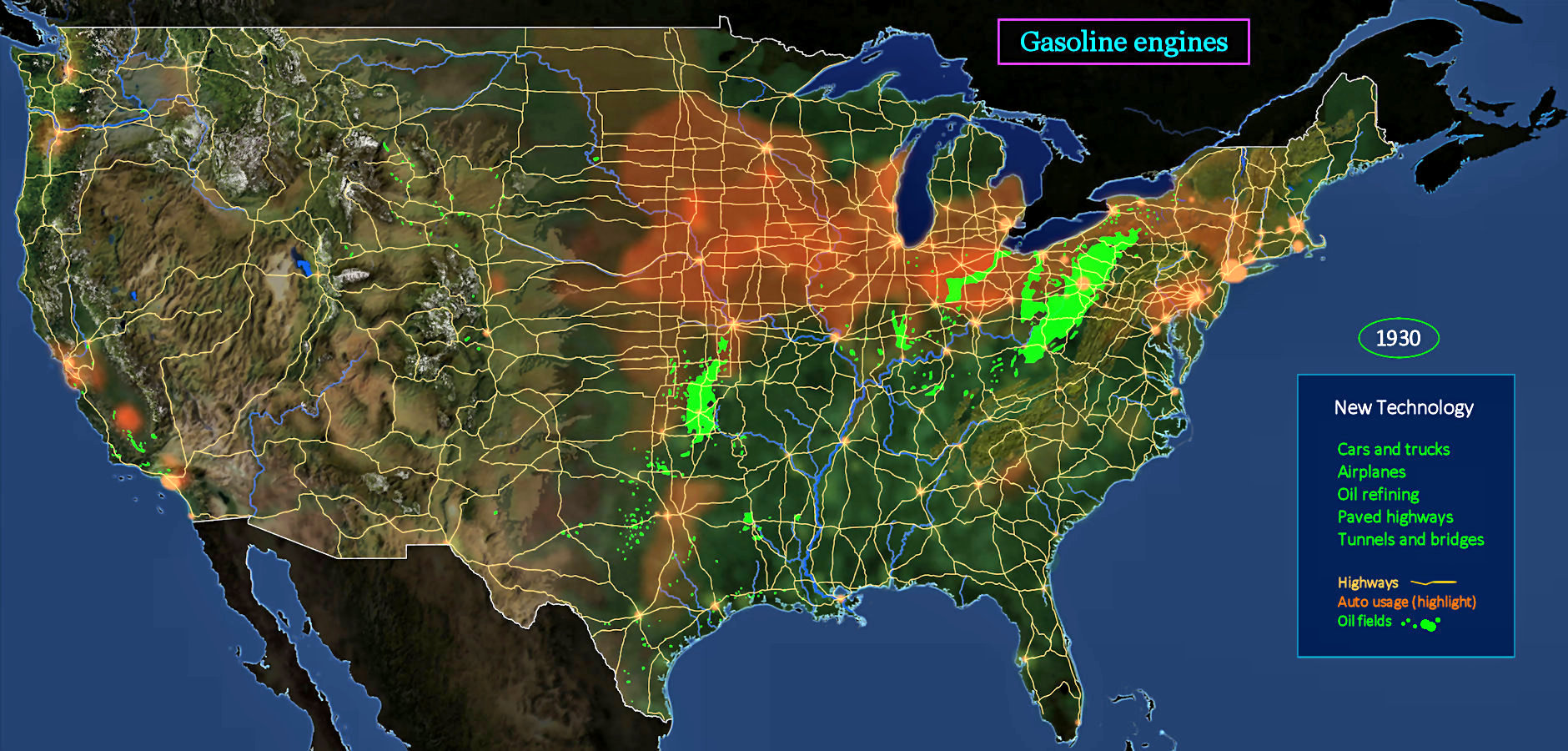
The Hits Keep Coming A whole new wave of change engulfs both urban areas and farms, as gasoline engines are developed to power cars, trucks and airplanes. Happily, huge new oil fields are developed at the same time, to provide the gasoline. The modest Ford Model T evolves into more stylish models, while a newly-upgraded highway system allows Americans to travel from home, on their own, for the first time. Bridges and tunnels cross rivers which previously required ferry boats. This allows New York City to connect with New Jersey, for the first time. Built originally for trains, more tunnels are soon added to support growing car and truck traffic. | |||||||||
| |||||||||
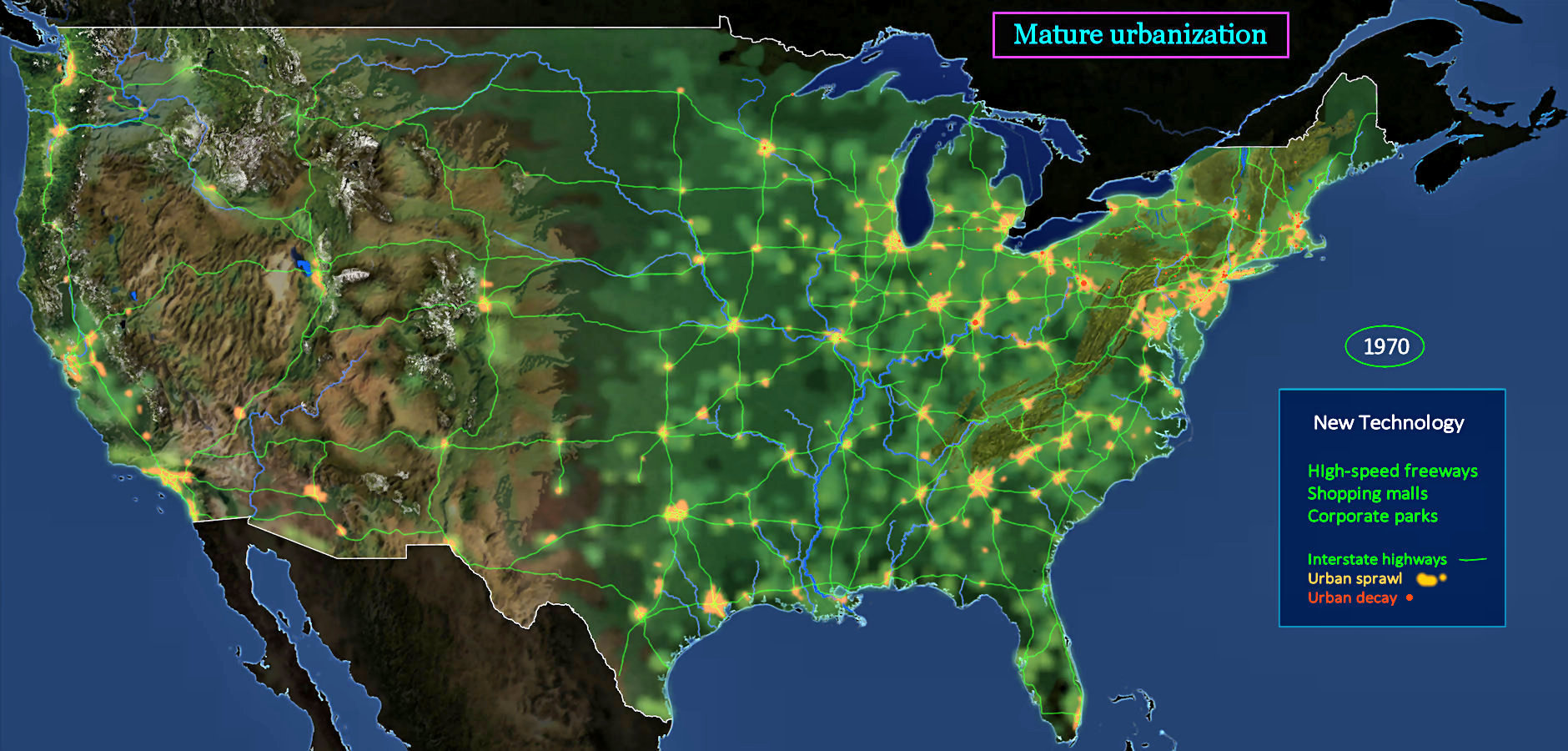
After the War America is shaken out of its Depression funk by the Second World War, and servicemen returning home in 1945 help release pent-up demand. Millions take advantage of the GI Bill to buy homes or get a college education. This results in an unexpected post-war boom, which includes launching a new high-speed road system, modelled on the 'autobahns' built in Germany by Hitler, which impressed then-General Eisenhower at the end of the war. Improved road access speeds up the move from the inner city to the suburbs, which is already underway. Shopping malls and corporate parks further drain inner cities of their more affluent residents, who are buying new homes that fill in around the beltway loops which are now encircling many cities. | |||||||||
| |||||||||
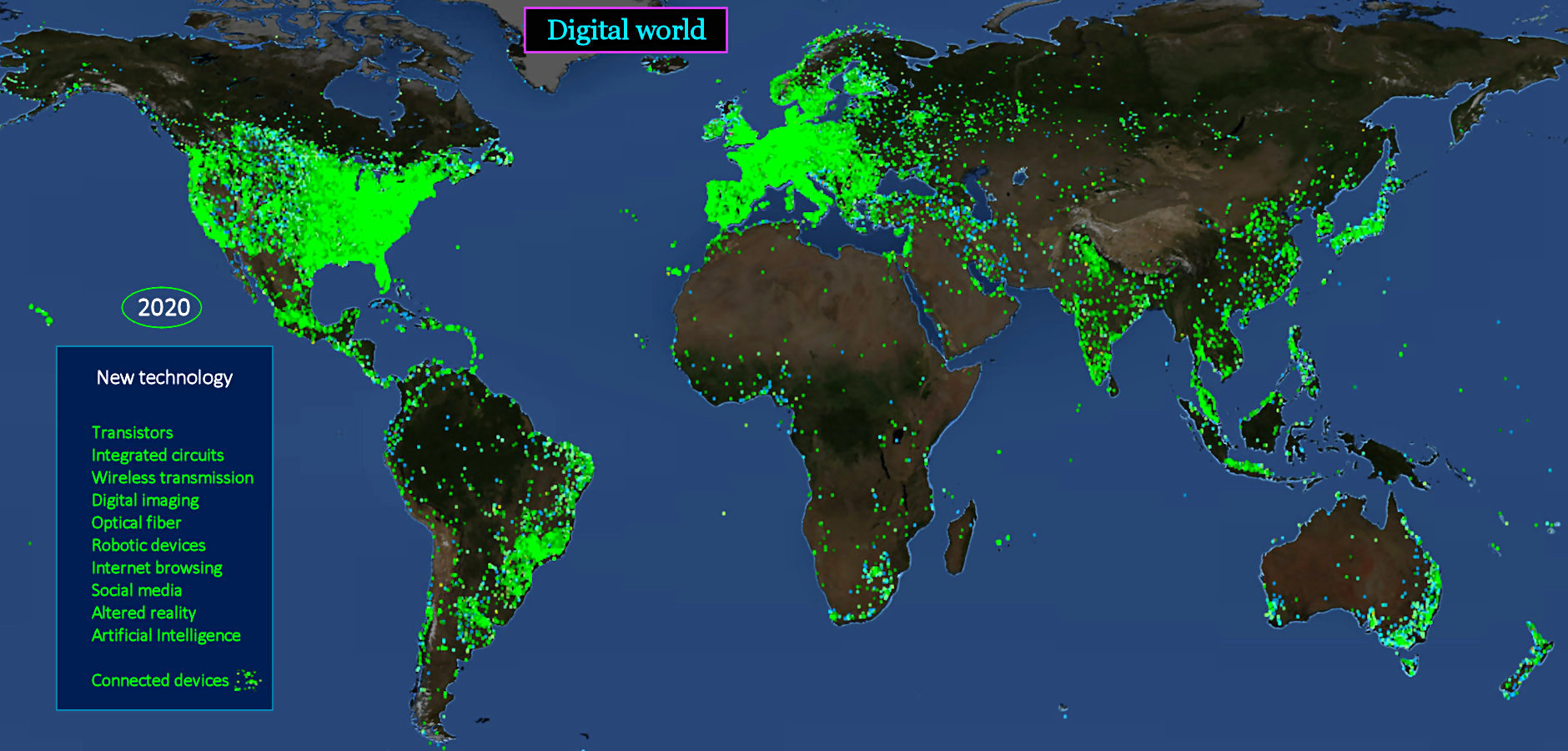
Internet 3.0 This is mankind's new reality. Everything is connected, including most of the world's eight billion residents. Cell phones enable these connections to be maintained while walking around, shopping, or traveling the world. With a wireless connection, there's virtually nothing made anywhere on earth that you can't buy from your own couch, and have delivered to your doorstep. Meanwhile, cameras and hard disks record everything. Forever. This is freedom beyond anything ever imagined, yet people are more anxious and isolated than ever. Maybe we just need more time to adjust. But maybe life has become so digitized, monetized and virtualized that we simply surrender control to remote, all-knowing algorithms. It's simple. You just click 'OK.' | |||||||||
| |||||||||
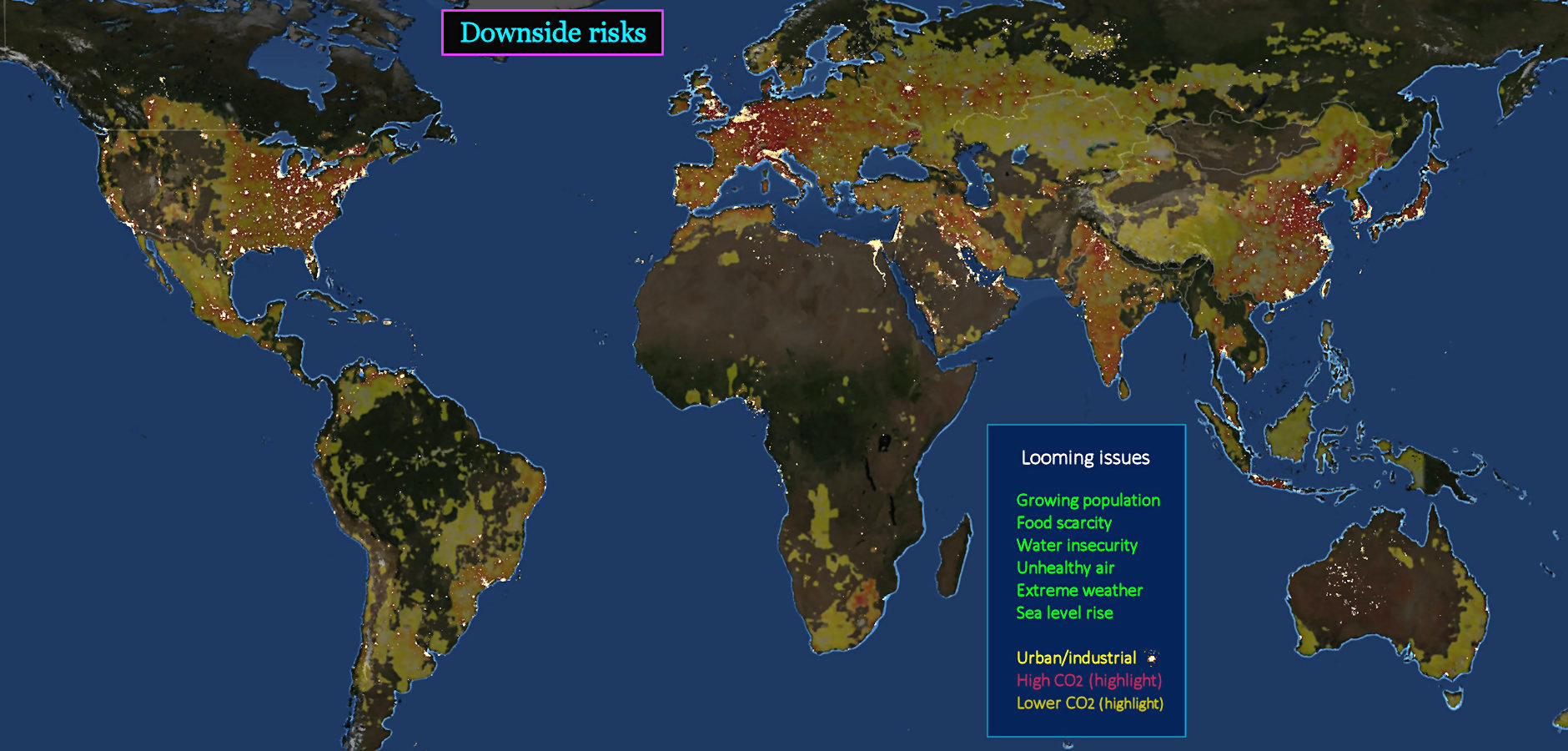
It Comes at a Cost This map shows atmospheric levels of carbon dioxide in RED and TAN highlights. This is the primary greenhouse gas linked to global warming. The RED highlights indicate the highest levels, which are clustered around urban and industrial sites (shown in YELLOW). This makes sense, since transportation and industrial activity are greatest near cities. The other major greenhouse gas is methane, which has a similar emission pattern, but with one difference. Methane emissions are also prominent surrounding major centers of cattle operations. Note that greenhouse gases are also present in parts of the Global South, despite the relative lack of industrial activity. Other issues related to modern economic activity are listed in the box above. | |||||||||
| |||||||||
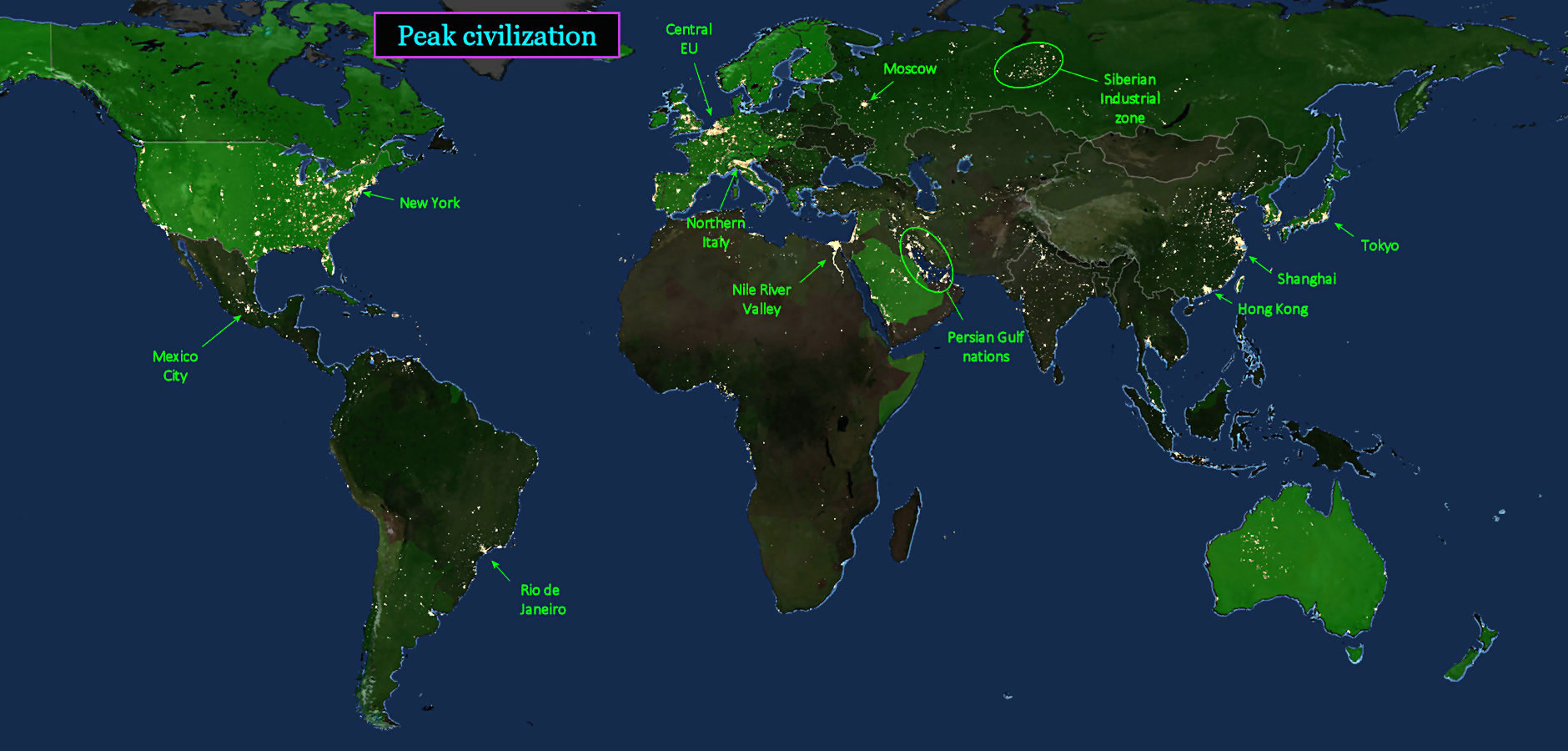
Lighting up the World This is the current view of human civilization, with urban-industrial sites (in YELLOW) superimposed over GREEN highlights indicating relative GDP, the broadest measure of national wealth. At this time, China has lots of YELLOW, but still remains relatively dark, indicating lower levels of general wealth. | |||||||||