
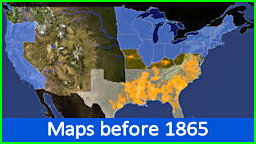
Summary: Maps Early
Page 1: Emerging from the Stone Age
After 300,000 years of gradual migration, humans finally learn to grow their own food, make useful tools from metals in the ground, and use weapons for conquest
Page 2: Thirst for Empire
The Persians are the first to turn to persistent territorial aggression, followed by the Greeks and Romans, before civilization dissolves into a period of chaotic unrest
Page 3: Creating Medieval Europe
With Mongols sweeping in from the east, and Muslims from the south, Europe manages to turn back invaders and stabilize trading networks, while beginning oceanic exploration
Page 4: Seeking Riches
As ocean-going vessels mature, European powers are obsessed with find gold and wealth, beginning a thorough exploration of previously unknown lands in the Americas and Indonesia
Page 5: English Colonies
The English are frustrated to find no gold in their American colonies, but settlers continue to spread up and down the Atlantic coast, establishing towns and tobacco plantations
Page 6: Growing Frustration
The English leave colonists on their own, while focusing on defeating the French for world mastery, and gaining control of America, while driving their colonists to desperation
Page 7: Struggle for Independence
American colonists begin resistance in Boston, managing to drive out the British, who soon return with a much larger force, but can't maintain the momentum of initial success
Page 8: Independence for America
To break stalemate, the British invade the Carolinas, but are eventually trapped and surrender, with help from the French fleet, while the African slave trade reaches its peak
Page 9: Free to Grow
Having thrown off British rule, Americans begin a slow expansion past the mountains, and purchase vast western lands from the French, while technology lays early groundwork for industry
Page 10: Flooding West
Canals and steamboats propel western expansion, while New England conducts brisk trade with China, and Indians are expelled from southern lands, making way for cotton plantations
Page 11: Coast to Coast
Canal frenzy energizes eastern trade, while railroads begin a rapid expansion, the Mexican War adds more western territory, and cotton invades the Deep South
Page 12: Railroad Explosion
Canals are swept aside by the partnership of steam locomotives and telegraphs, while settlers travel by wagon to Oregon, and by clipper ship to newly-discovered California goldfields
Page 13: Irreconcilable Differences
North and South drift apart, as Southerners grow more dependent upon slave labor, while the continual creation of new western states erodes southern political power
Page 14: Early Southern Success
Confederates seize arsenals and forts in quick action, and gain early victories in Virginia under Lee, while the Union makes progress in the west, under Grant
Page 15: Tide of Battle Shifting
Lee continues to outmaneuver Union generals in the East, but makes a costly mistake at Gettysburg, while Grant continues the Union advance down the Mississippi
Page 16: Confederacy Falls under Steady Pressure
Sherman takes Atlanta, cutting the South in two, while the Union blockade continues to bite, finally starving out Lee's army defending Richmond, and forcing surrender