| |
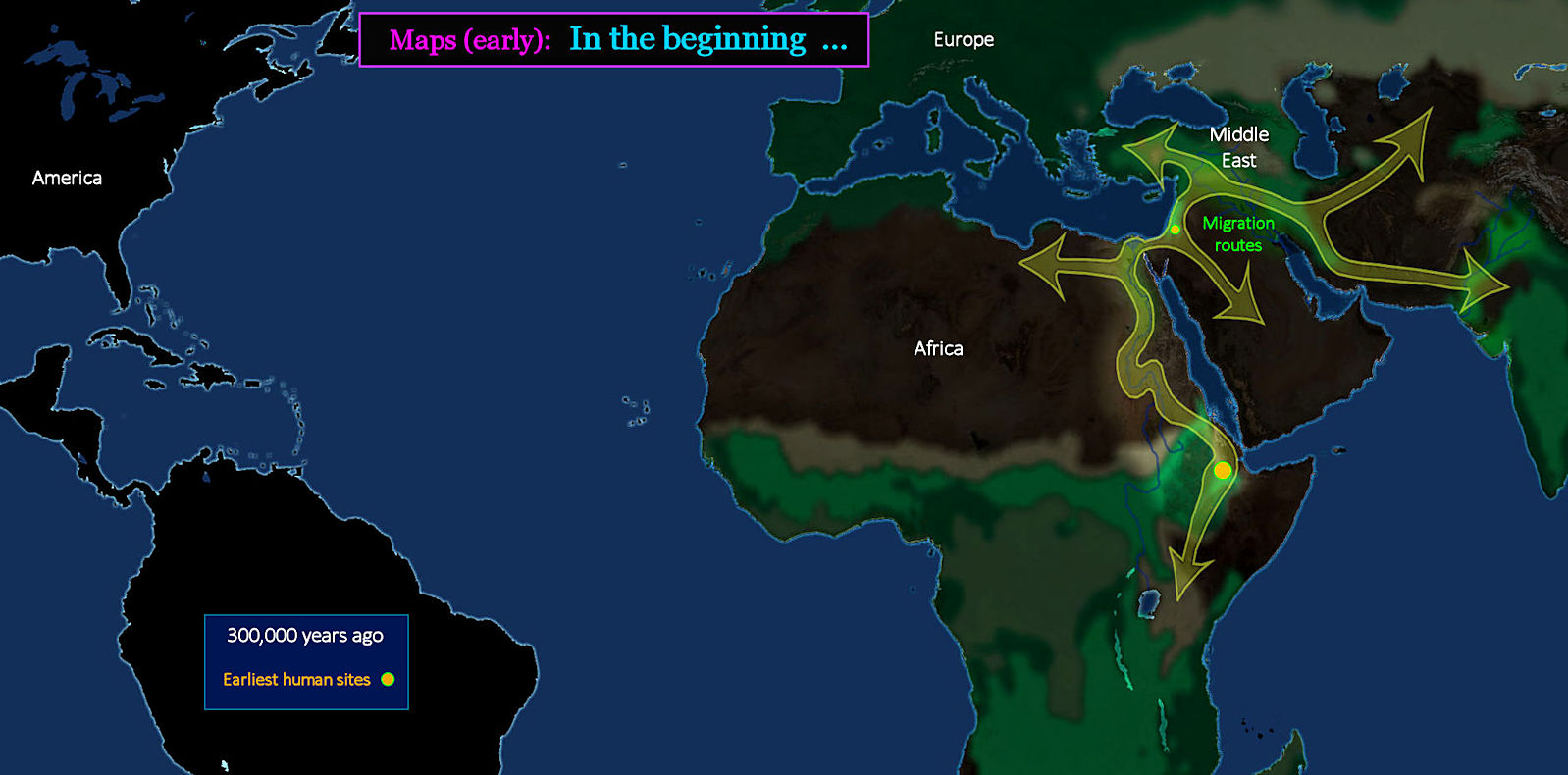
First Human Sites The circles above (in ORANGE) mark sites containing evidence left by the earliest humans so far discovered. The larger circle represents a clump of discoveries in Ethiopia. The smaller circle represents a single site recently discovered near Israel, very near the supposed site of the biblical Garden of Eden. The multi-headed arrow indicates routes taken by the descendants of these first humans, as they spread. |
| |||||||||
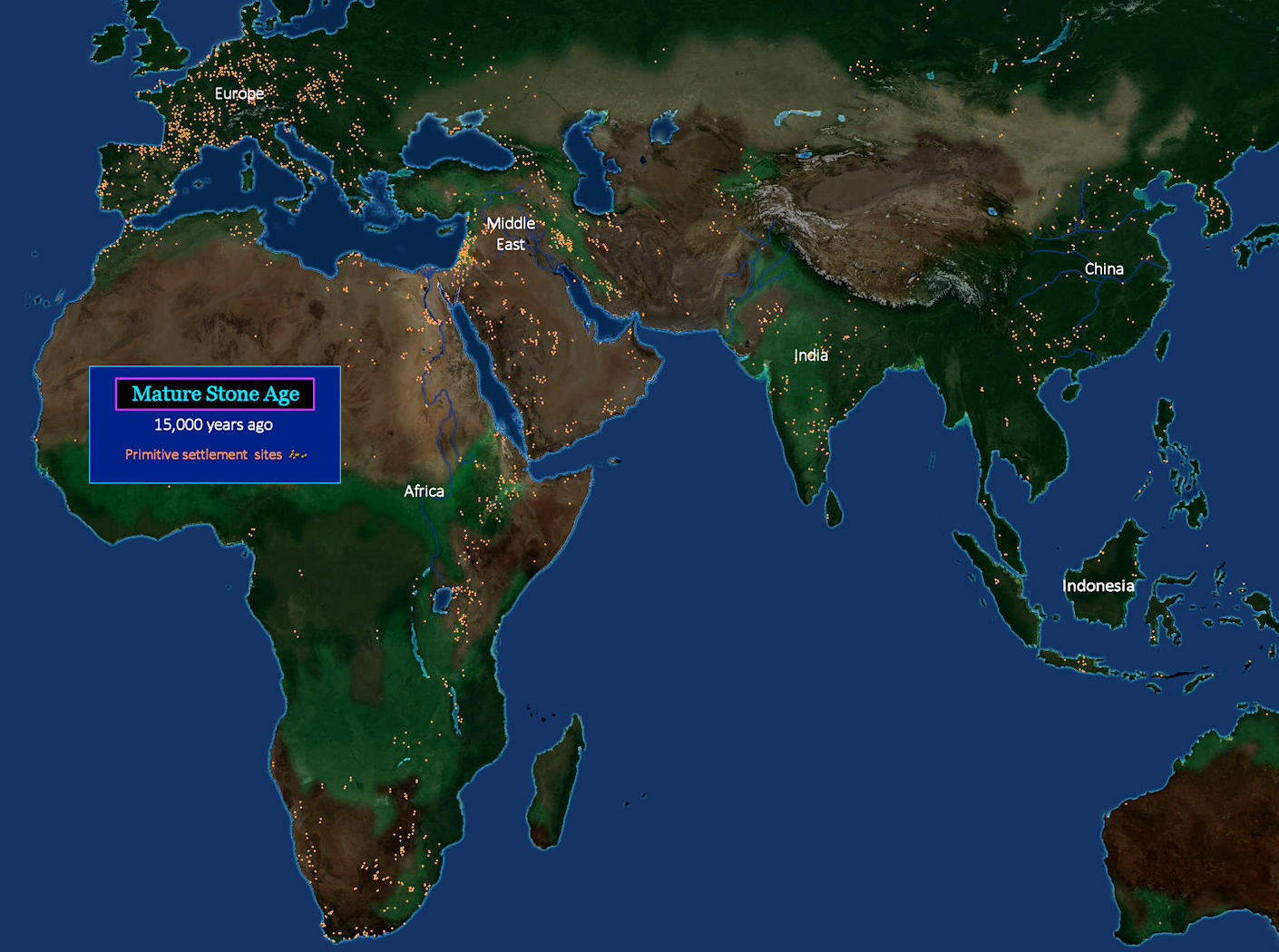
Spreading Everywhere For the first 300,000 years, humans spread slowly in every direction from their original locations, expanding at an average rate of 10 miles per generation. They were stopped by ocean shorelines, but a few managed to reach distant islands in Indonesia. Stone-age humans also penetrated surprising far to the north, considering that even today these regions remain sparsely populated. There are surely other undiscovered sites, in areas that remain largely vacant today. Green areas (above) indicate woodlands. | |||||||||
| |||||||||
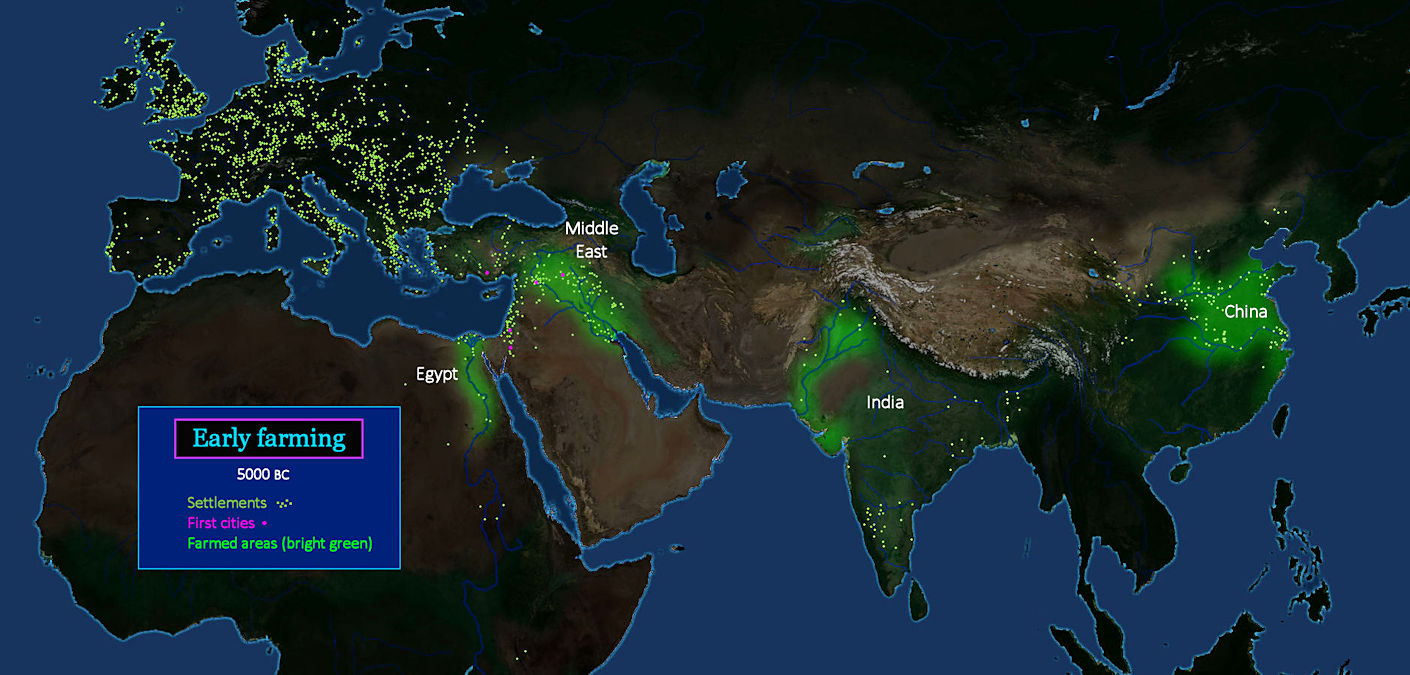
Settling down By 5000 BC, the first evidence of human agriculture is already evident in the broad river valleys highlighted above (light green). For whatever reason (perhaps a gradual depletion of wild food sources), humans gradually abandon their habit of moving about as the seasons change, pursuing the animals they hunt. Instead, they begin to settle down wherever they happen to be, building small huts surrounded by modest gardens, and raising their own livestock for additional food. This is a big change. | |||||||||
| |||||||||
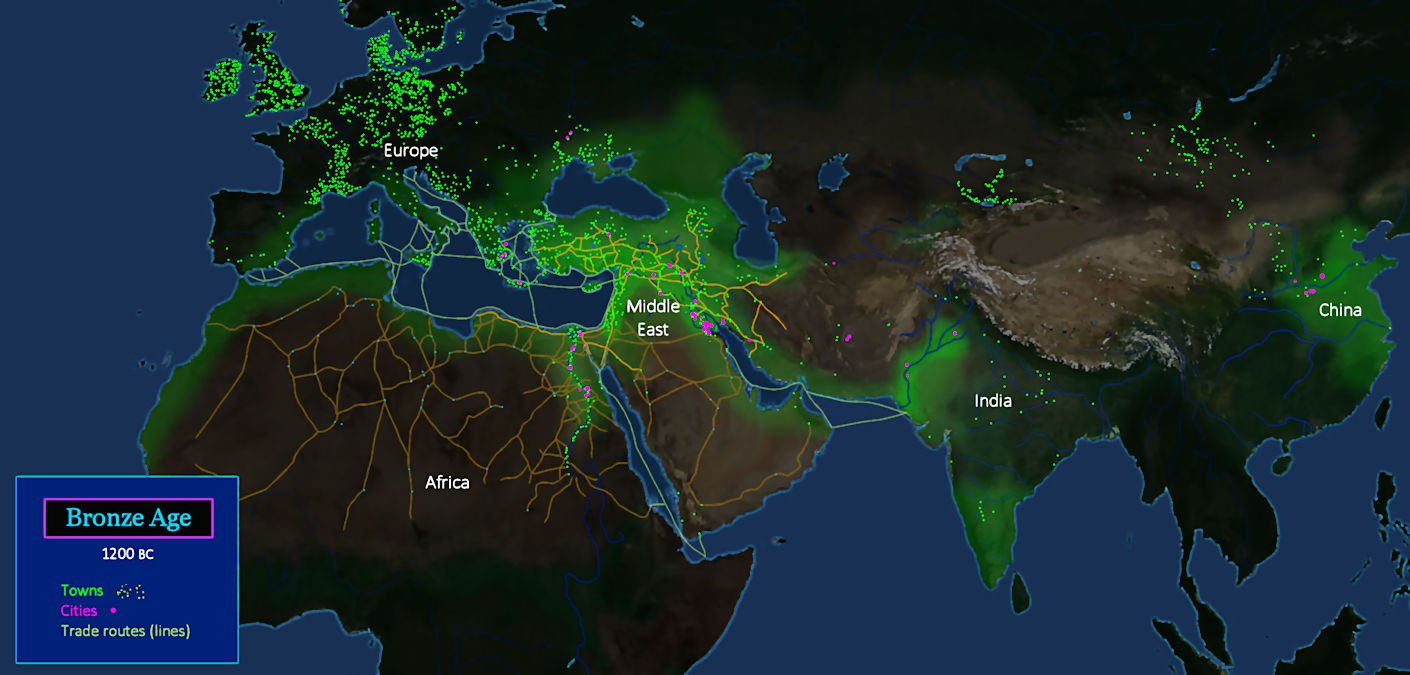
Bronze Explosion The sleepy stone-age world is suddenly and dramatically transformed by the discovery that bronze can be produced by adding tin to copper. Bronze is the first metal hard enough to make really useful tools. Bronze axe heads are able to shape soft stones into building blocks, fueling a spurt in the growth of fortified cities. Axes can also fell trees, and make lumber to build small cargo vessels, enabling the first long-distance trade routes. Shipping connections allow the Arabs to develop a slave trade in Africa. | |||||||||
| |||||||||
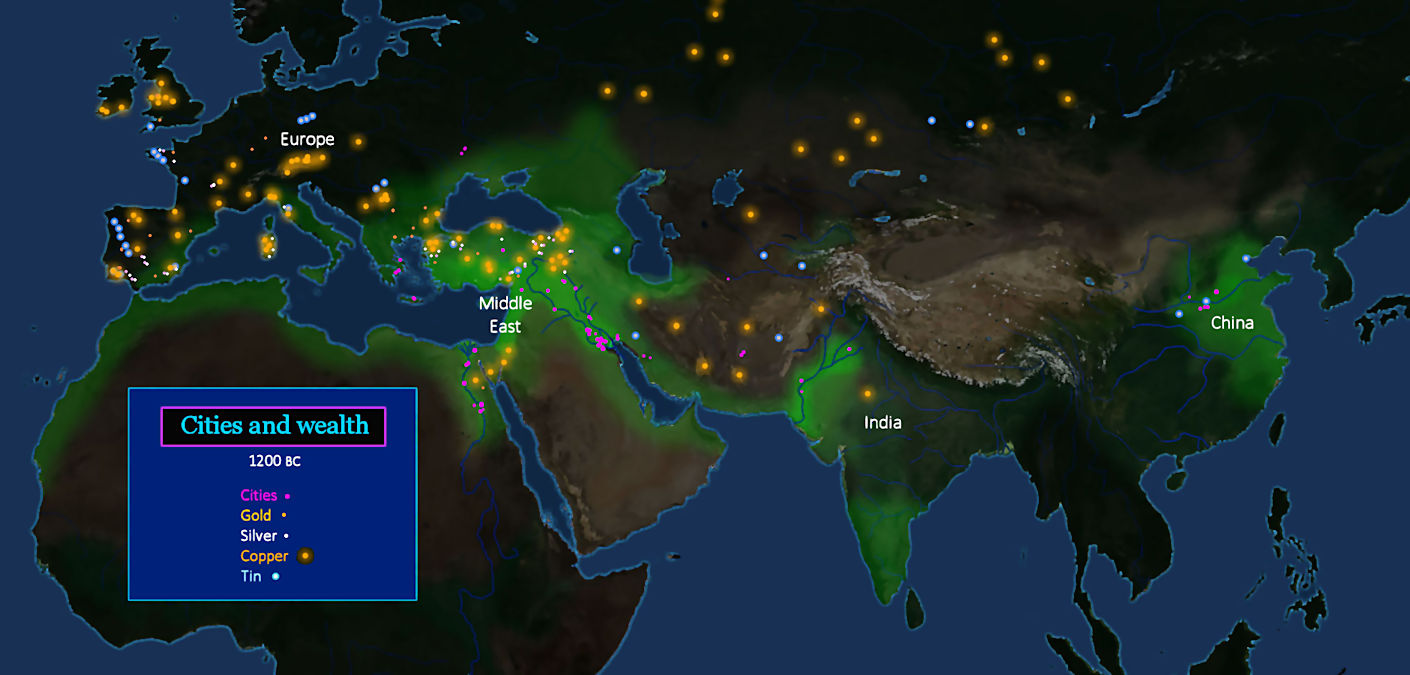
Protecting Wealth This map depicts the same time period, but from a resource perspective. Areas that have access to both copper and tin (the ingredients of bronze) have a big advantage in terms of tooling and weaponry. Cities (RED dots) are the repositories of local wealth, which are often located close to mining sites. Cities generally have administrative centers, managed by elites to protect their wealth. | |||||||||
| |||||||||
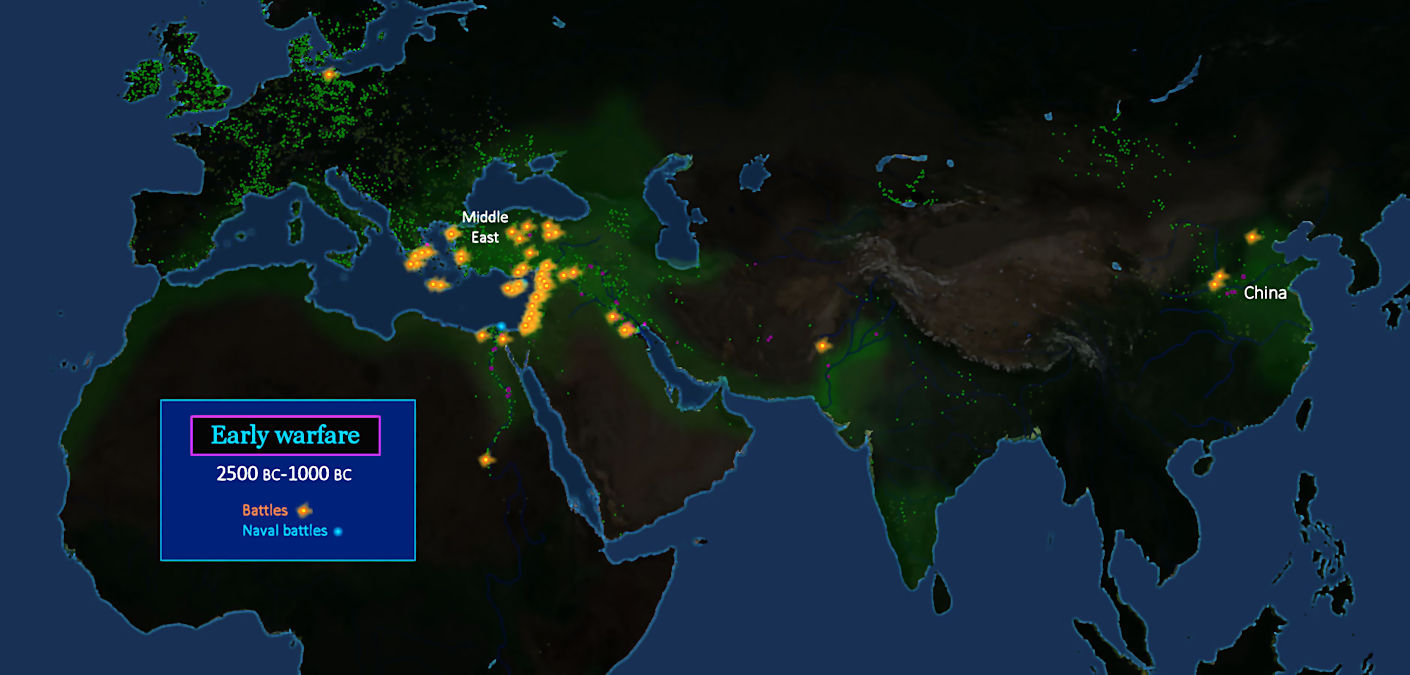
The Downside At the same time that bronze is fueling a robust commercial expansion, it's also enhancing the ability to gain wealth through invasion and theft. Bronze swords and arrowheads usher in a whole new world of deadly conflict, on a scale never before contemplated. History does not record any major battles previous to the Bronze Age. All the conflict shown here occurred during the first 1500 years of bronze-age technology. | |||||||||