| |
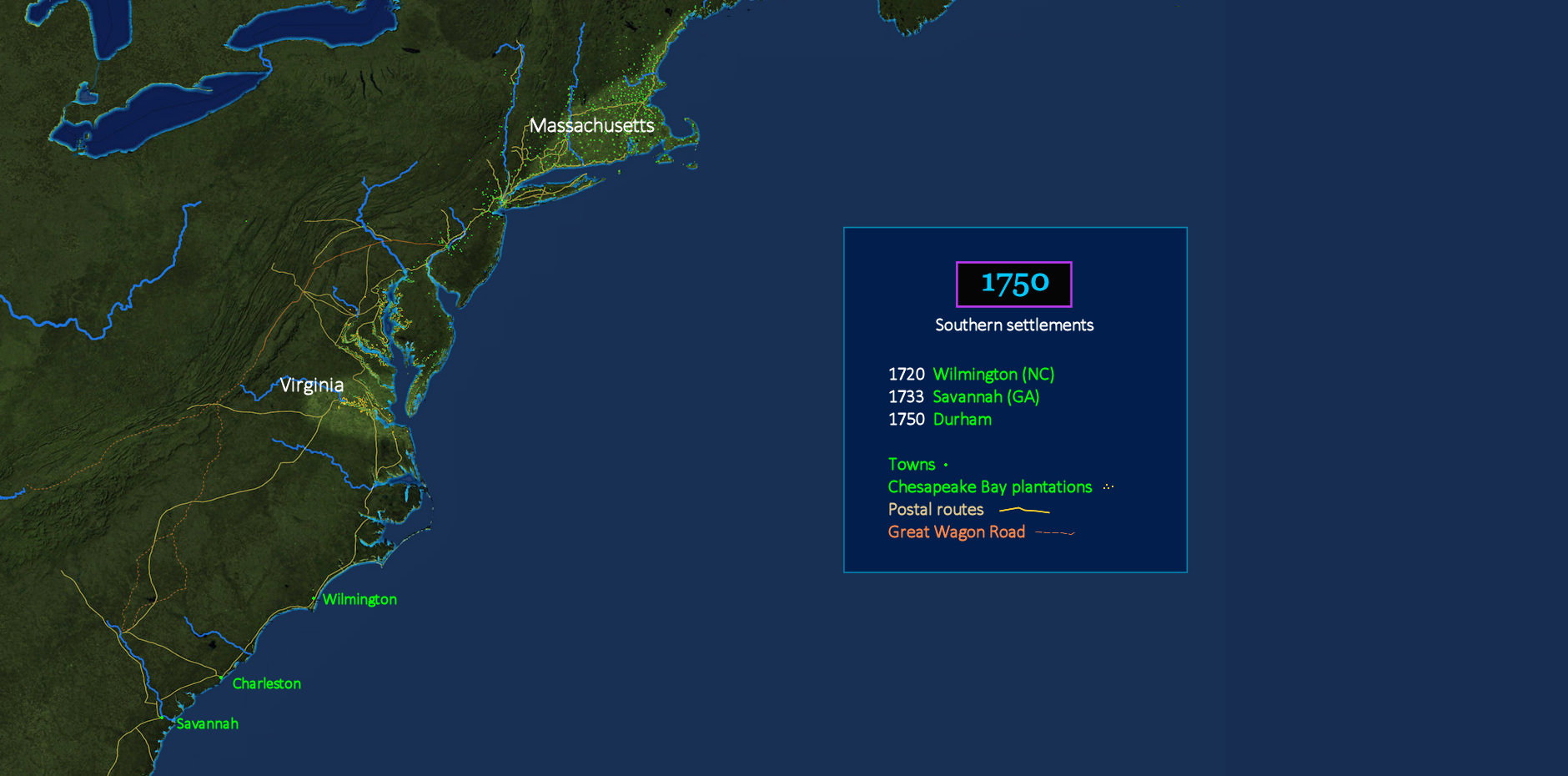
Dependence on Imports The colonies are now linked with a network of postal routes, and managed by a mix of chartered proprietors and royal governors, appointed by the King. The English actively suppress manufacturing and banking activity in the colonies, to keep them dependent upon the mother country. Colonies are only valued for what they can supply back to England. Raw materials. |
| |||||||||
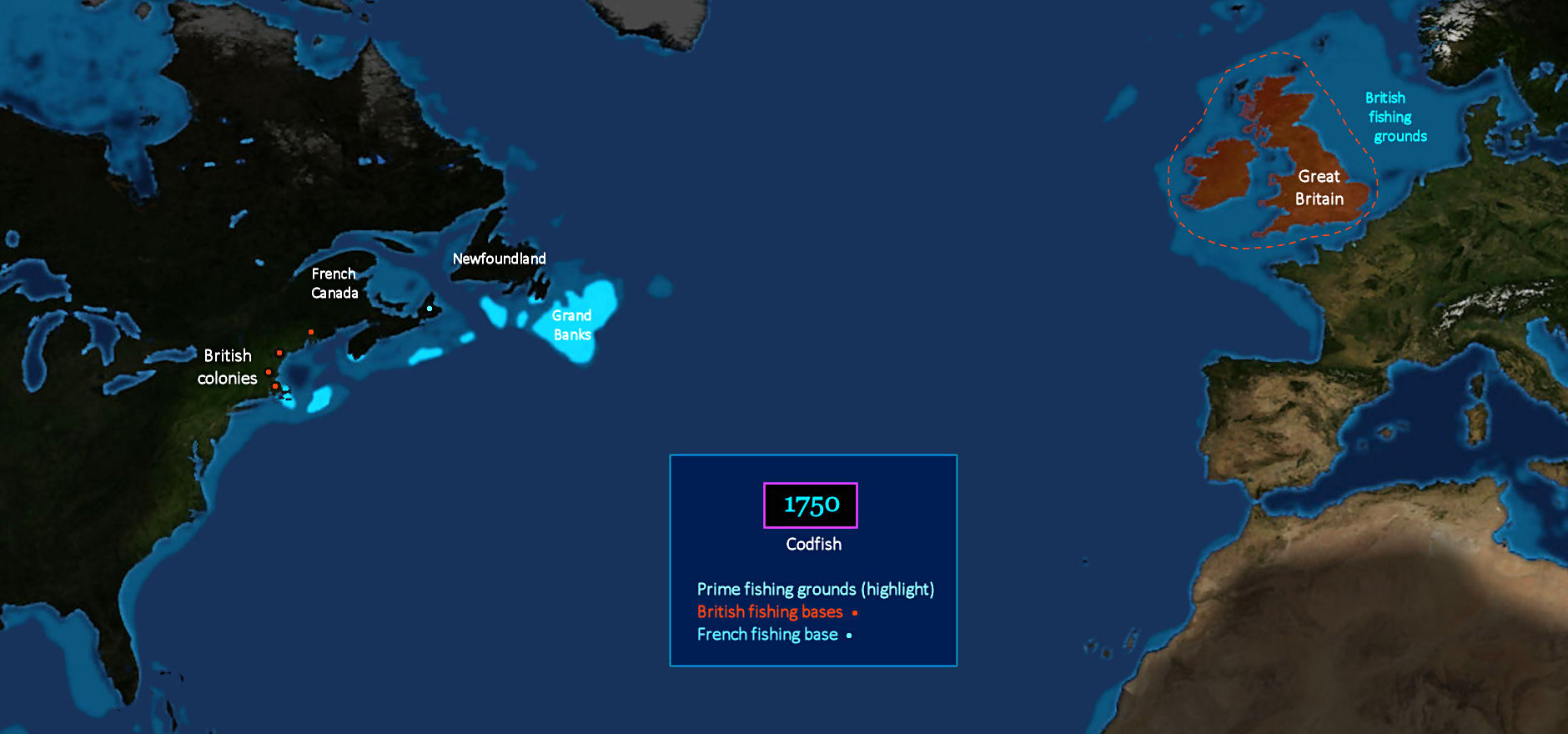
Fish Fight By this time, England has gained control of both Scotland and Ireland, and is now calling itself 'Great Britain,' or simply just 'Britain.' The 'English' are now known as the 'British.' By this time, the fishing grounds surrounding Britain are mostly exhausted, but the abundant cod-fishing grounds off Newfoundland (Grand Banks) are the most productive in the world. A French settlement in Canada is home to a 3,000-boat fishing fleet that competes with English colonies, siphoning off much of the catch. | |||||||||
| |||||||||
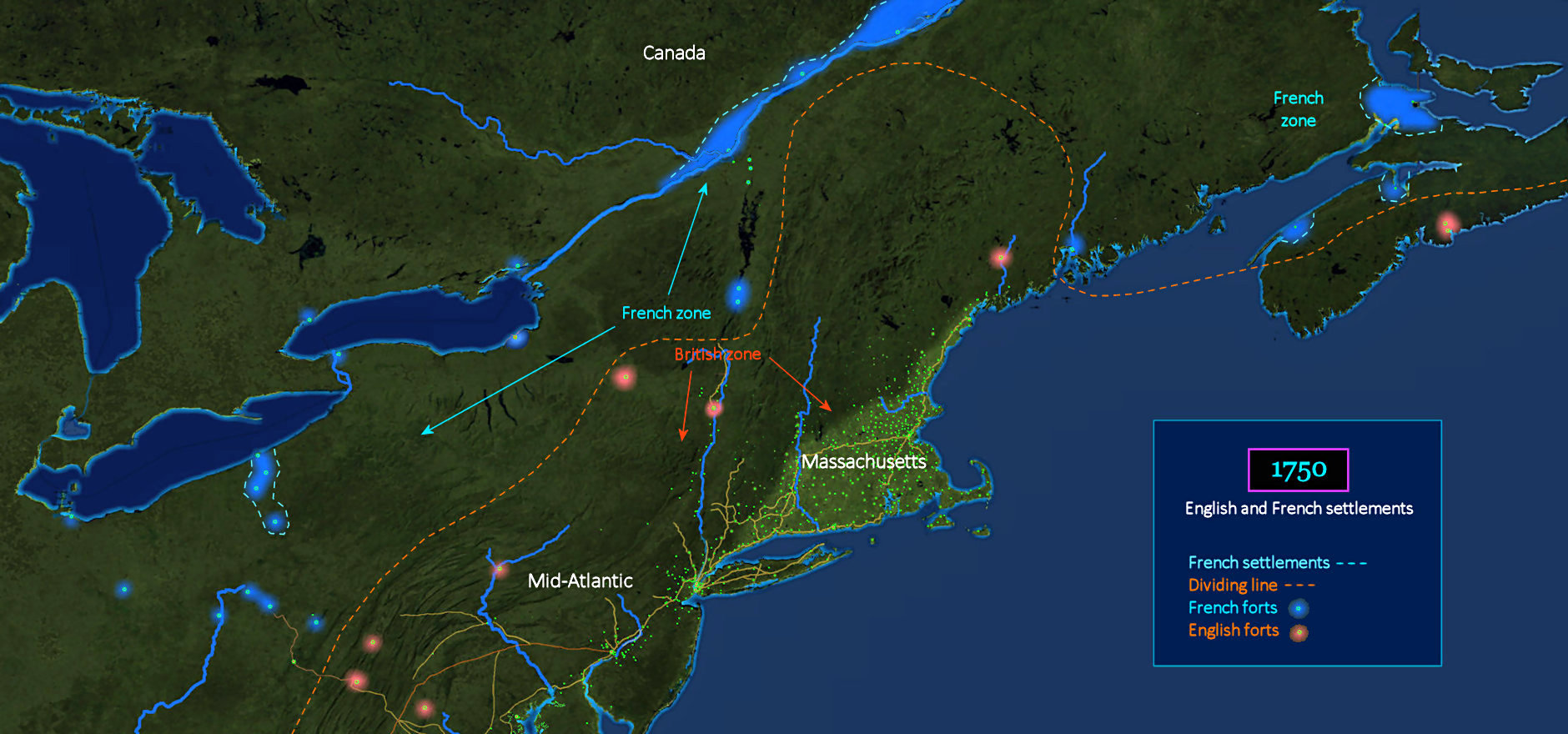
French Colonies The map above shows the French forts and settlements to the north, just before war breaks out with the French. This war is an extension of the much bigger war raging in Europe, with tangled alliances that fall into two camps. One is led by Protestant Britain, the other by Catholic France. The British and French have been fighting each other for mastery of Europe for 400 years. They are now fighting for control of America, as well, in a war called the 'French and Indian War.' | |||||||||
| |||||||||
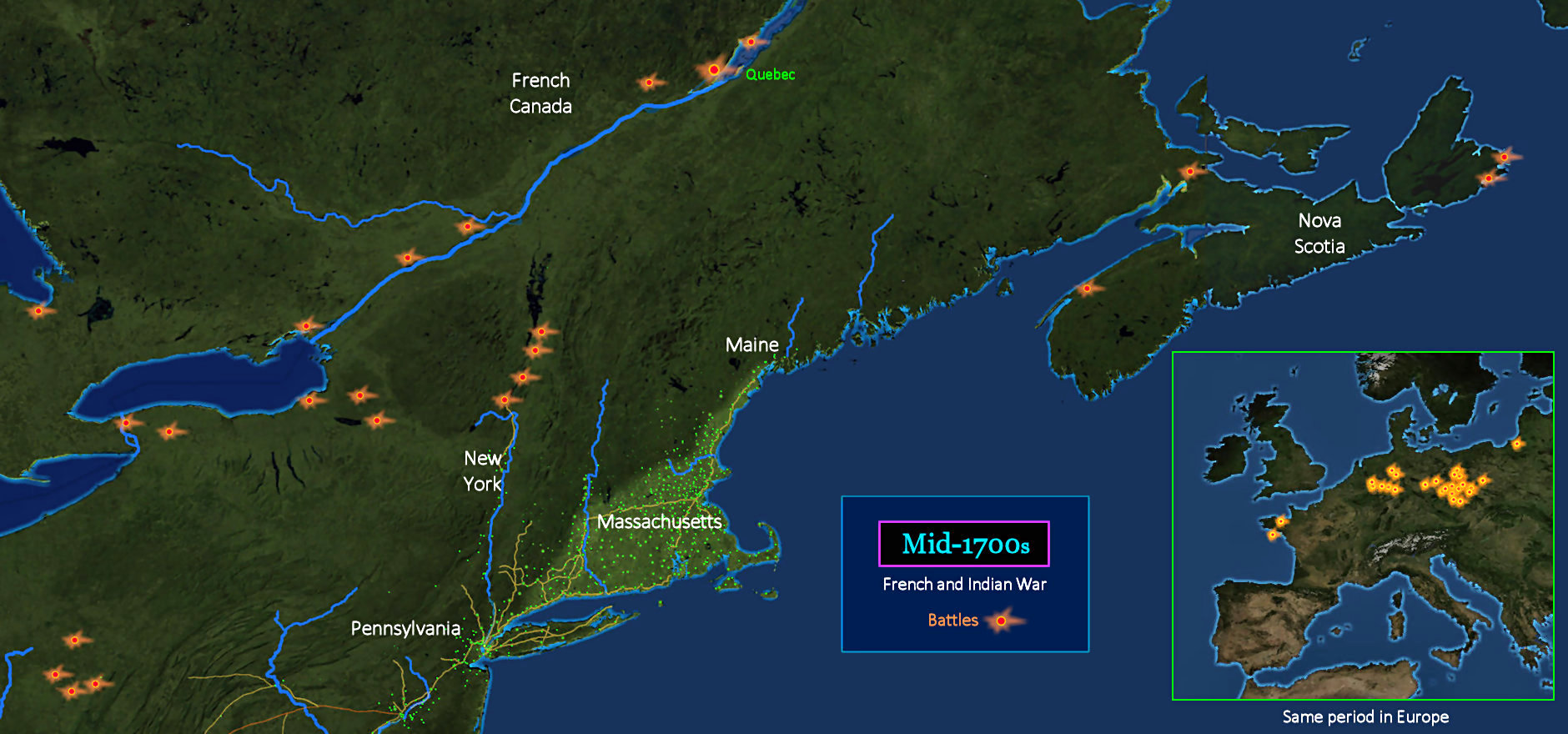
France Driven Out The main map shows battles in the French and Indian War, which is really just between Britain and France, with Indians drawn in on both sides. The nine-year struggle ends with the loss of all French possessions in America. At the same time, the much larger and bloodier conflict in Europe also ends, with the total defeat of France (lower right). France is utterly drained, with its monarchy fatally weakened and the French Revolution not far off. Britain reigns supreme, although it's also nearly bankrupt. | |||||||||
| |||||||||
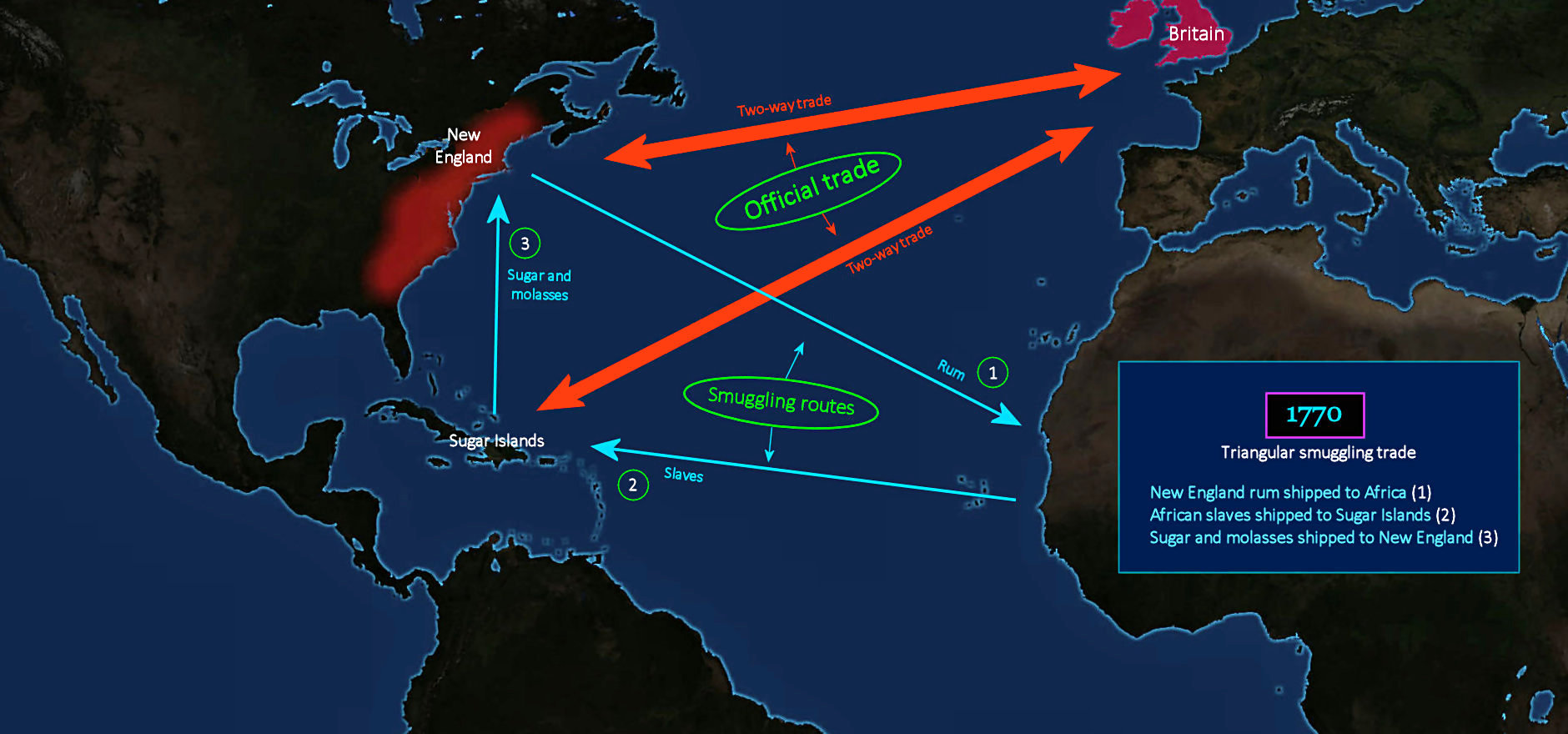
Paying for the War Britain is now faced with a massive war debt. It tries to get its colonies to help share the burden, by forcing colonial shippers to do business only with Britain. This generates extra income at British ports. But the colonists are broke too, now that the great war boom is over, and prosperity abruptly ends. It's followed by a shipping depression, which is most keenly felt in Boston. Colonists turn to smuggling (BLUE arrows) to supplement the rigidly-regulated 'official' British trade (RED arrows). | |||||||||
| |||||||||
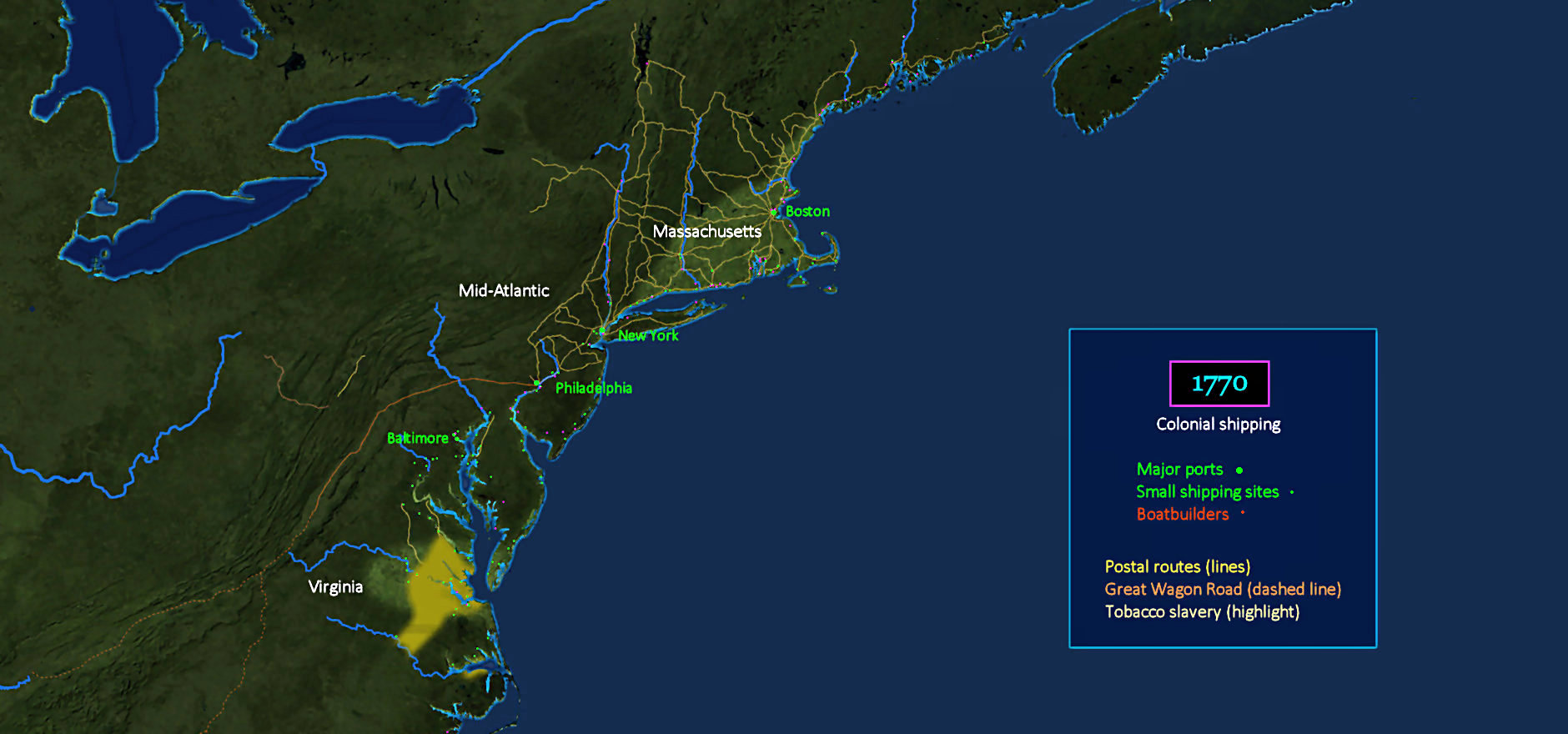
Shipping Squeeze The next 10 years are difficult for the English colonists. Lacking almost all manufacturing capability, they are forced to continue importing manufactured items from Britain. But colonial exports no longer cover the cost of imports. Northern colonists struggle to get by on shipping timber and fish, while the boom years in Virginia tobacco are gone. London bankers manage the accounting for both exports and imports, watching the colonies fall into ever greater deficit. Something's got to give. | |||||||||