| |
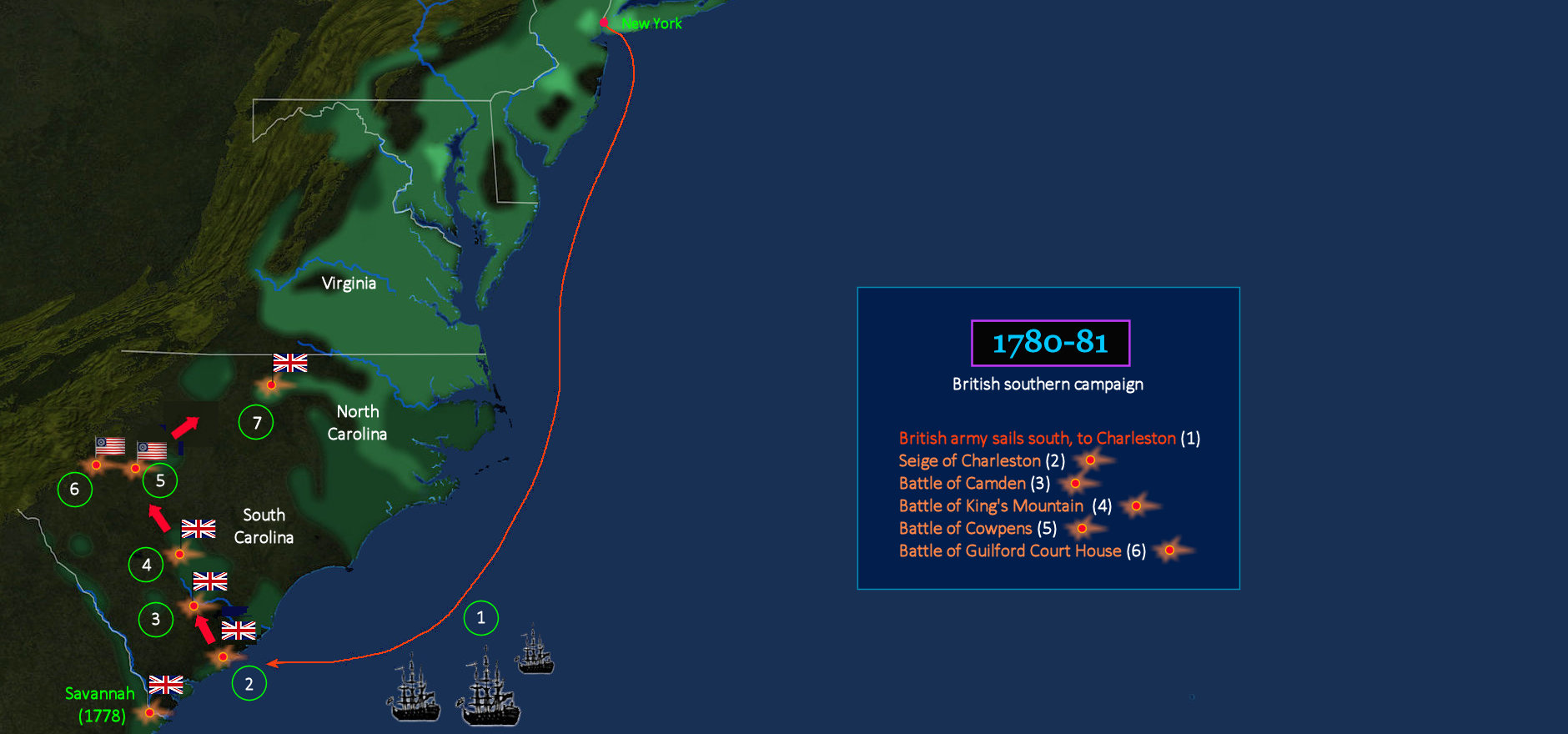
Starting at Charleston After Saratoga, the British capture Philadelphia, but soon evacuate back to New York. By 1780, they decide to try to split off the rural southern colonies. The first stop is Charleston, which surrenders after a 6-week siege, with the loss of 5,000 troops and 300 artillery pieces. This is a devastating blow for the Patriots. The British then penetrate inland, but are unable to quell Patriot resistance. They turn back for re-supply. |
| |||||||||
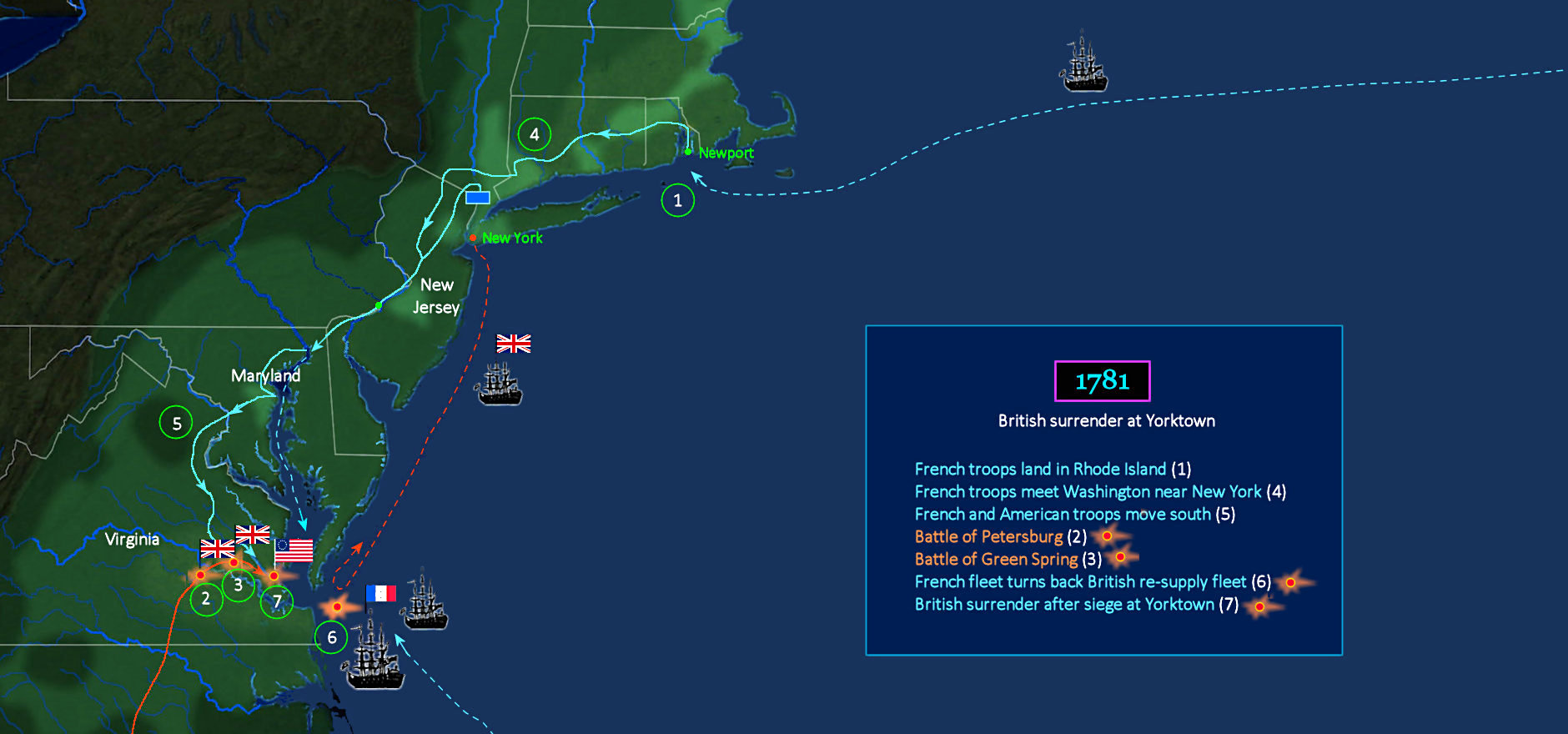
French Fleet Proves Decisive With the promise of French assistance, Washington now plans yet another risky move. He transfers most of his army down to Virginia, together with French troops which have been waiting in Rhode Island, at Newport. The British send a fleet to re-supply their southern army, but it's turned back by the sudden arrival of an entire French battle fleet, from the Caribbean. Without support, the British are trapped, and their entire southern army surrenders at Yorktown. This effectively ends the war. | |||||||||
| |||||||||
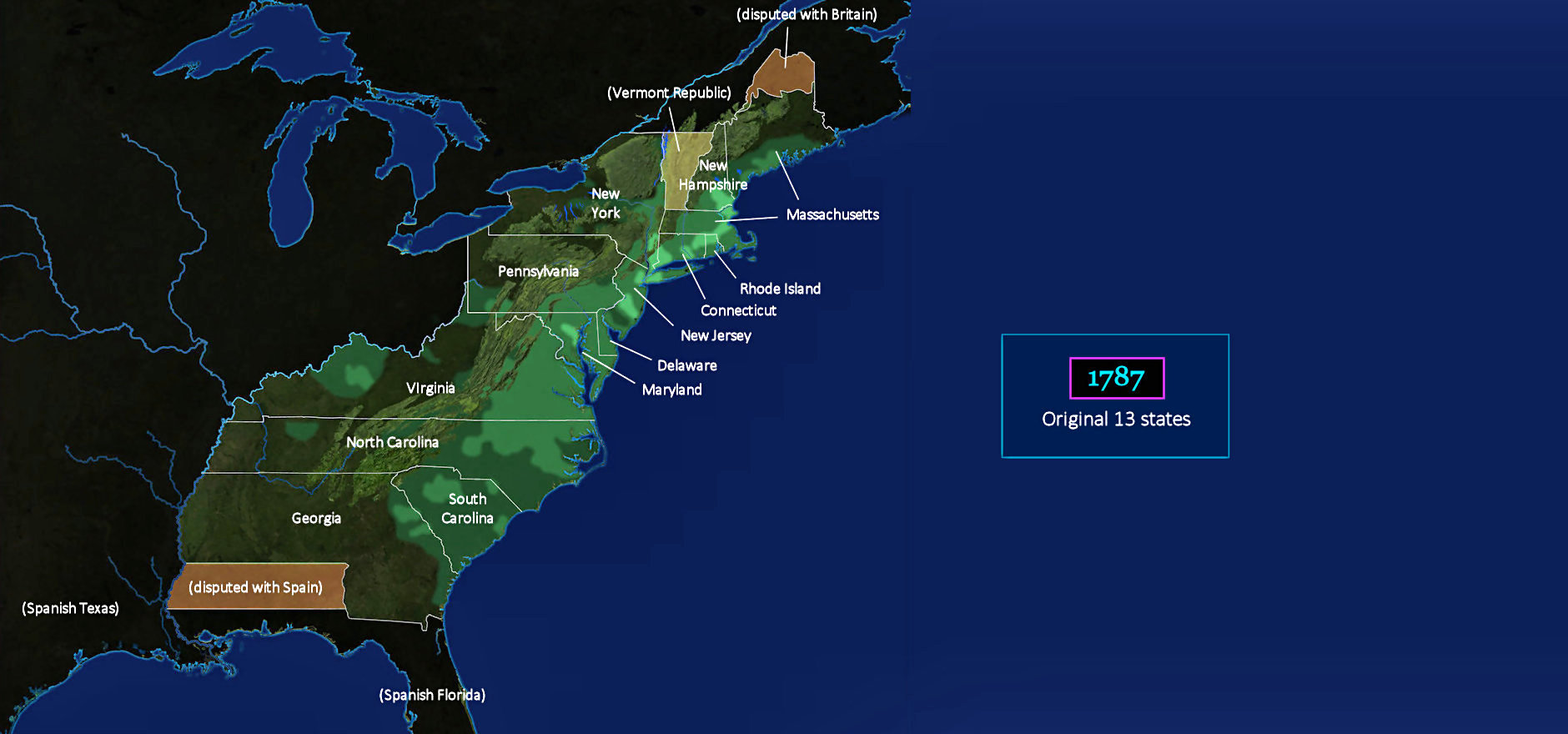
New Rules Needed After the British surrender, America spends the next seven years struggling to manage affairs without an effective government. The states squabble, and fail to deliver needed tax revenue. There are constant money problems, and even a tax revolt in Massachusetts. Eventually, the state legislatures recognize that a stronger central government is needed, and send delegates to Philadelphia to hash out details. In the end, all the states vote to adopt the new Constitution, but often by slim margins. | |||||||||
| |||||||||
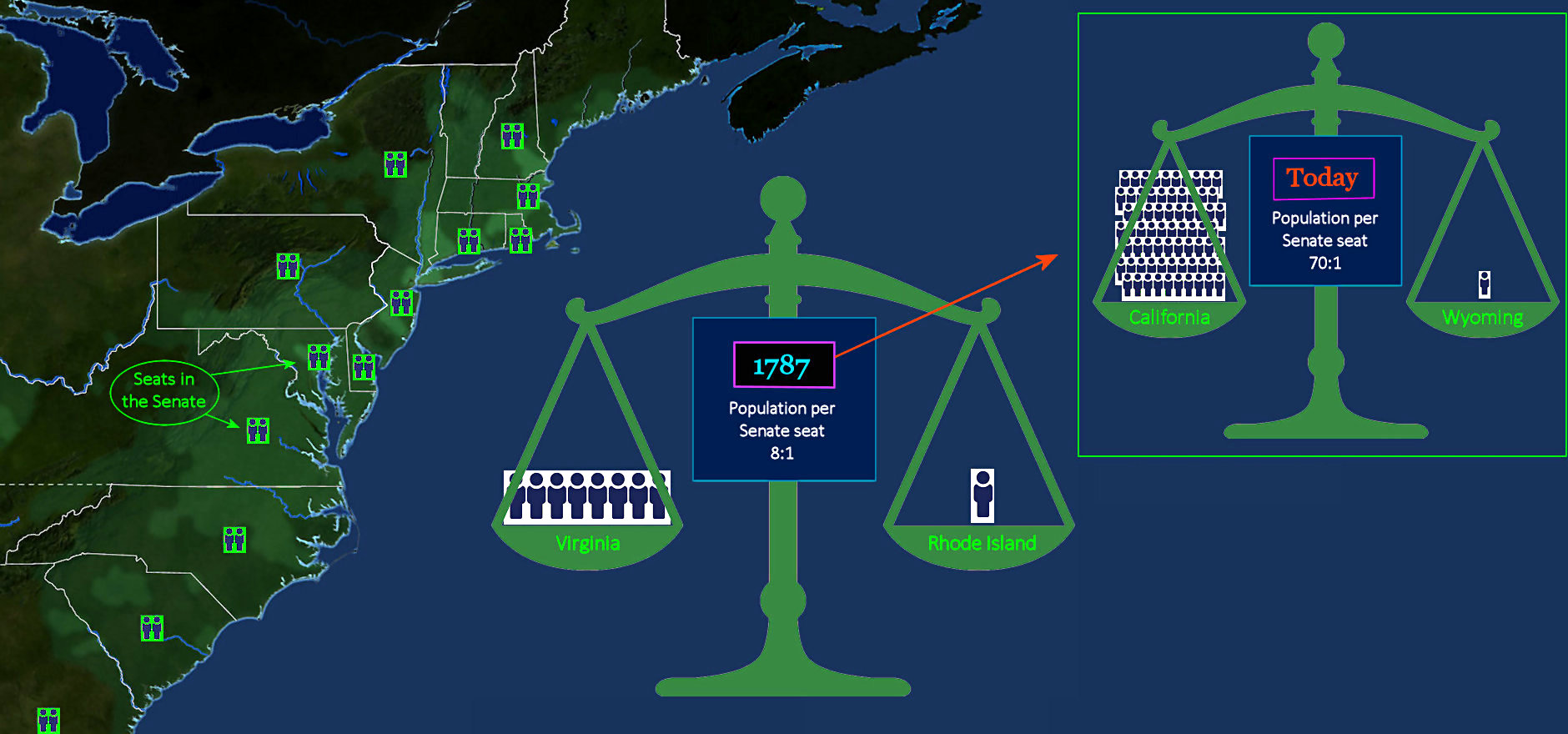
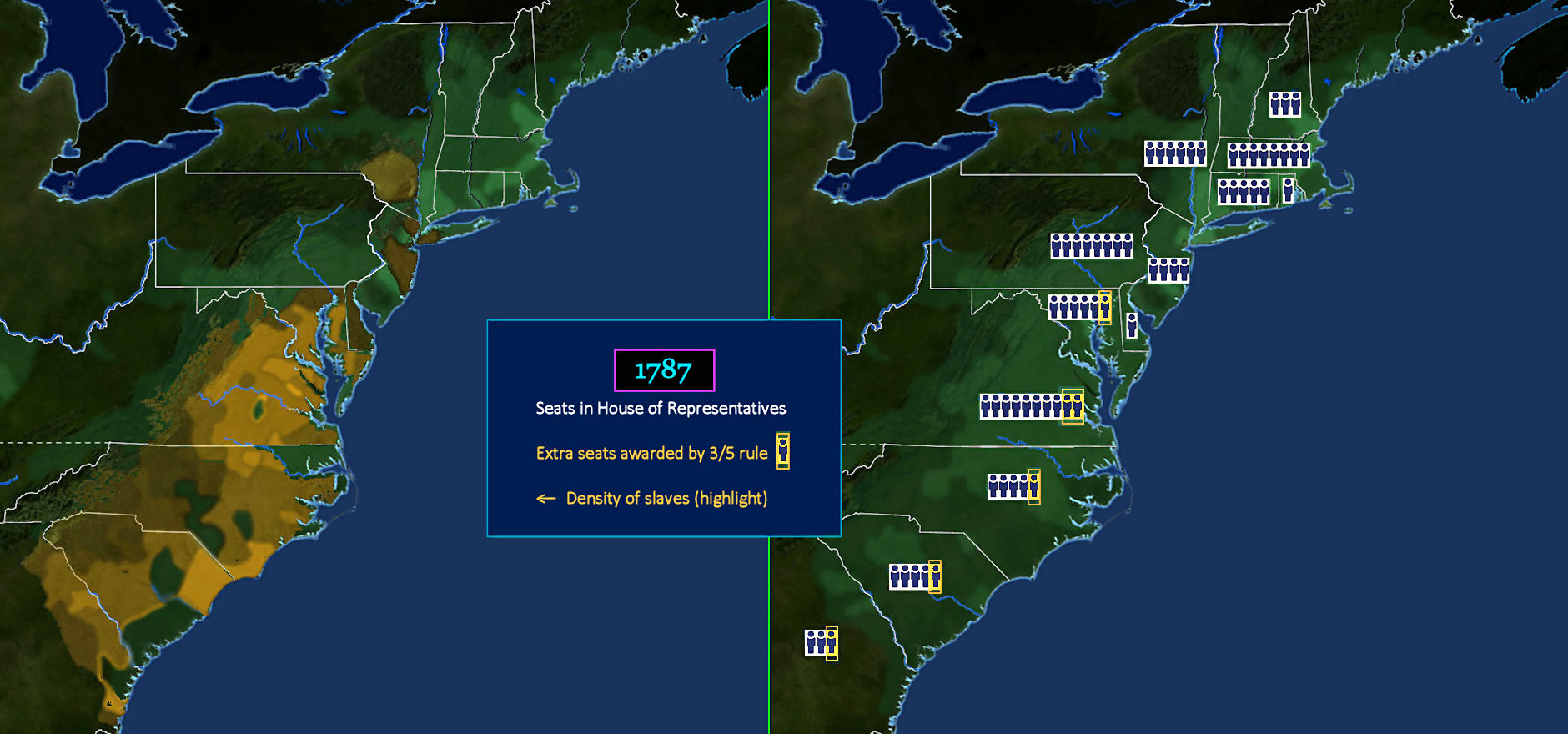
How Many Seats? To get the states to accept the Constitution, compromises are required. All states are given two seats in the new Senate, regardless of size. This satisfies small states, who are fearful of being steamrollered by the big states. The two largest, Virginia and Massachusetts, each have eight times the population of the smallest states, Rhode Island and Delaware. Today, California has 70 times the population of Wyoming, yet both still get two senators. It is unlikely that the founders would have agreed to this. | |||||||||
| |||||||||
Fudging the Numbers To satisfy southern states that northern states won't interfere with slavery, a different bargain is struck. Seats in the House of Representatives are generally awarded based on population. But southern states get a few extra seats by means of a formula that adds 3/5 of the slave population to the white population, before awarding seats. The result is a House with a nearly equal number of seats for southern (slave) states and northern (free) states. This balance is carefully maintained for the next 70 years. | |||||||||
| |||||||||
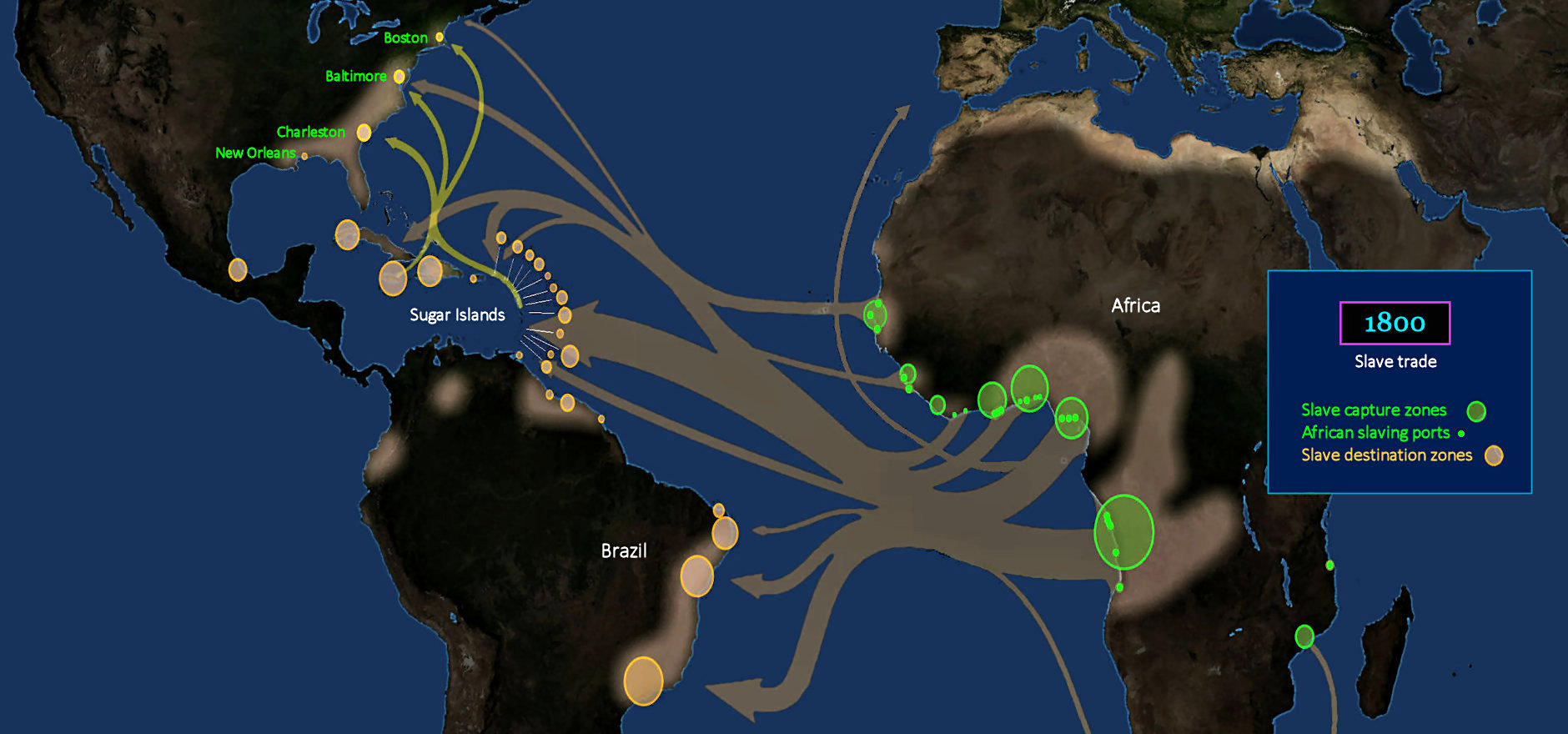
Slave Trade Ending Southern states are dependent upon a continuing supply of slaves. Vessels transporting slaves from Africa spend two months crossing the Atlantic Ocean, during which time 15% of the slaves aboard die, due to unsanitary, crowded conditions. Britain finances the majority of such voyages, but finally outlaws the practice in 1807. By 1820, the trans-Atlantic slave trade shown above has nearly ceased, but not before 12 million slaves have been transported, involving perhaps 50,000 separate voyages. | |||||||||