| |
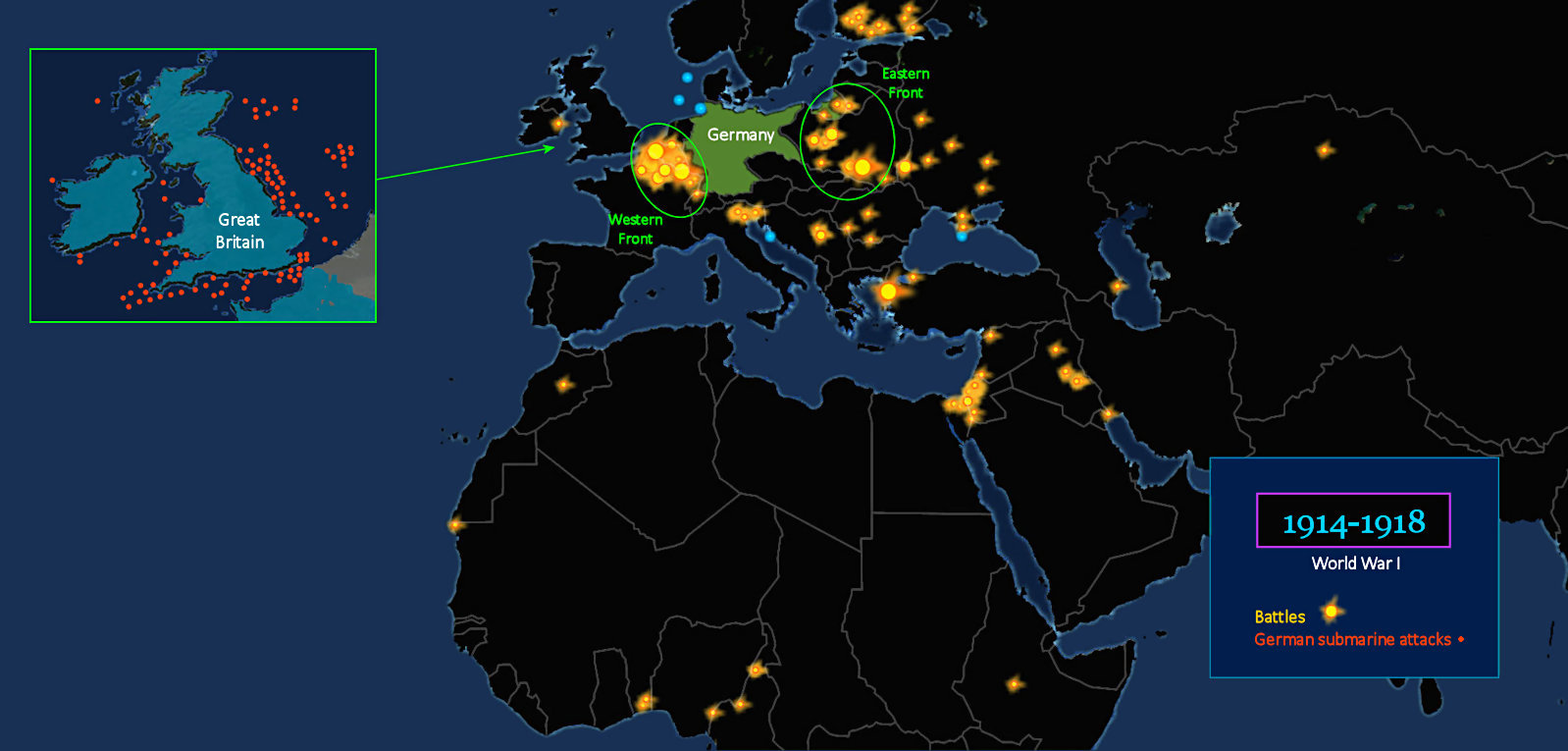
Empires Collide When explaining the origins of World War One in Europe, historians often point to tangled alliances and a general appetite for confrontation. The backstory is the struggle for empire. The great nations of Europe are well aware that empire brings wealth, and the world is being quickly divided up. Falling behind in this contest is not considered an option. The maps summarize the great conflict, including the submarine war. |
| |||||||||
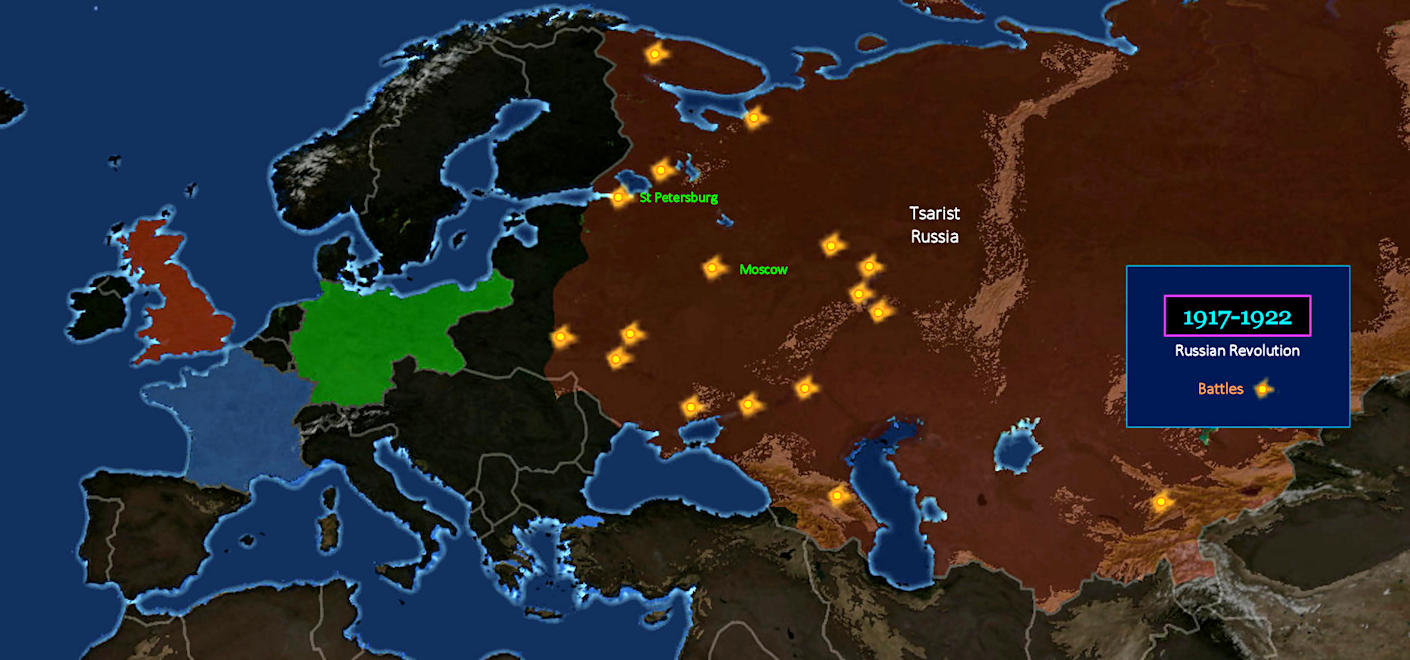
Russia Drops Out The first great nation to exit the contest is Russia, the weakest to begin with. For centuries, the vast Russian territory has been ruled by a succession of aristocratic Tsars, but Russian armies under the Tsar's personal leadership have been torn to shreds by the Germans. Communists disguised as champions of the people grab power, take Russia out of the war, and finally cement their hold on power after three brutal years of civil war. This will have broad consequences in the coming years. | |||||||||
| |||||||||
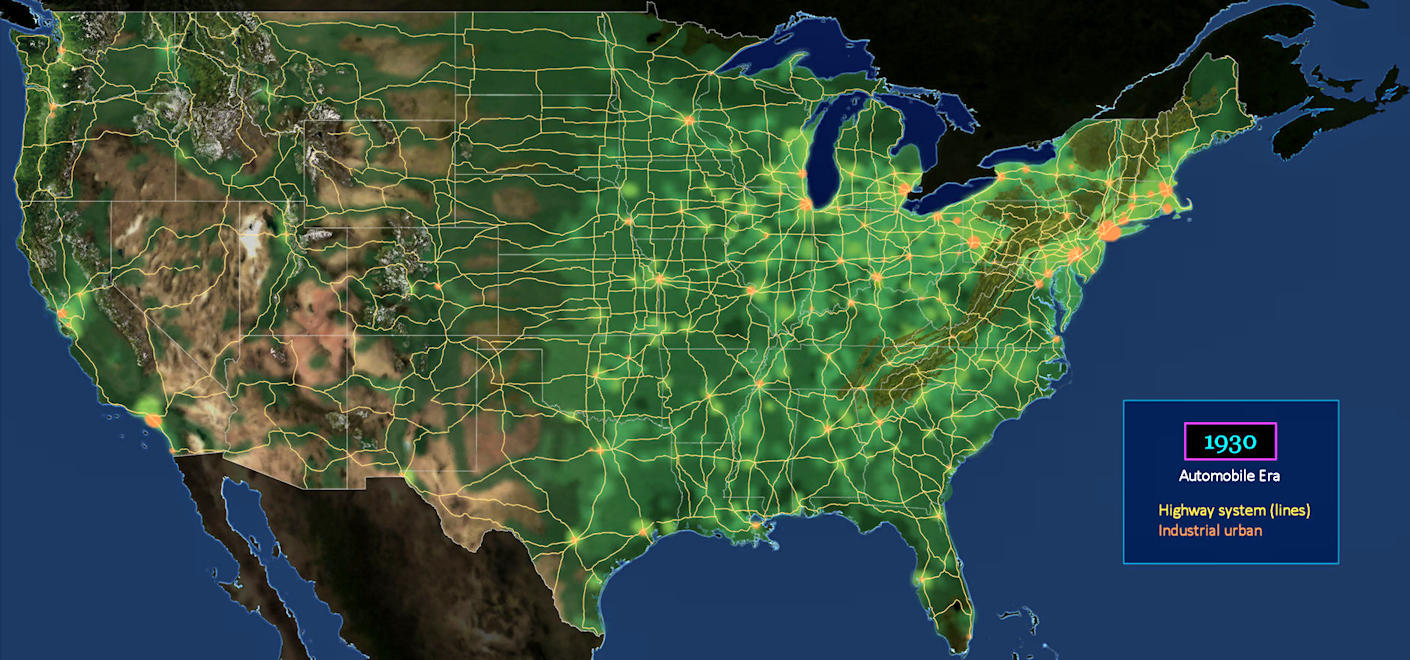
Invasion of the Auto When Henry Ford revolutionizes manufacturing with the moving production line, the economy shifts into high gear. Others, emulating Ford's astonishing success, bring a new level of scale and efficiency to manufacturing activity. Mass production has arrived. Barely 15 years after the introduction of Ford's modest Model T, America has 20 million cars, plus millions of radios, washing machines, vacuum cleaners and sewing machines. It also has a national road system, although most is of the simple two-lane variety. | |||||||||
| |||||||||
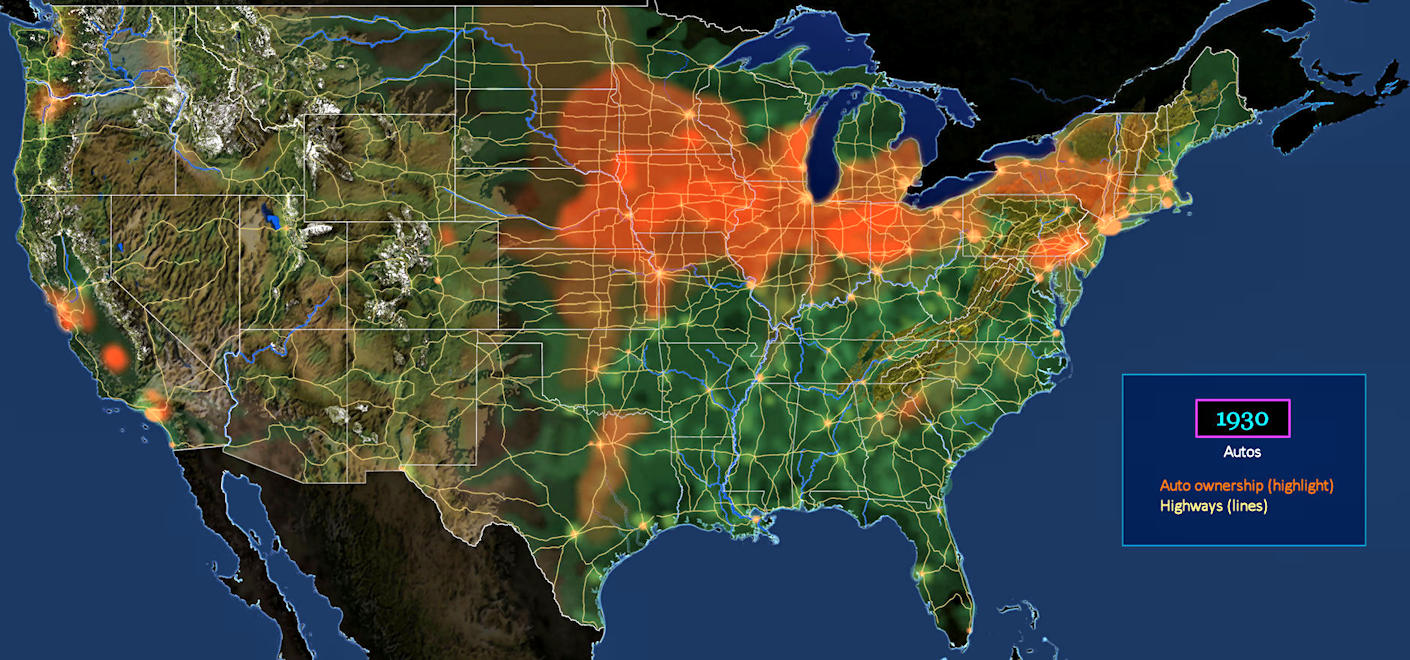
Farmers Buying Cars There are plenty of photos showing traffic congestion in cities. Most Americans are unaware, however, that many cars are actually used on farms. More than half of all farms have a vehicle in 1930, which is far more than have telephones or electricity. Farmers often live many miles from town, and find light trucks surprisingly handy on the farm, replacing horses for hauling things around. The map shows that auto ownership is concentrated in the Midwest, where most cars and trucks are actually made. | |||||||||
| |||||||||
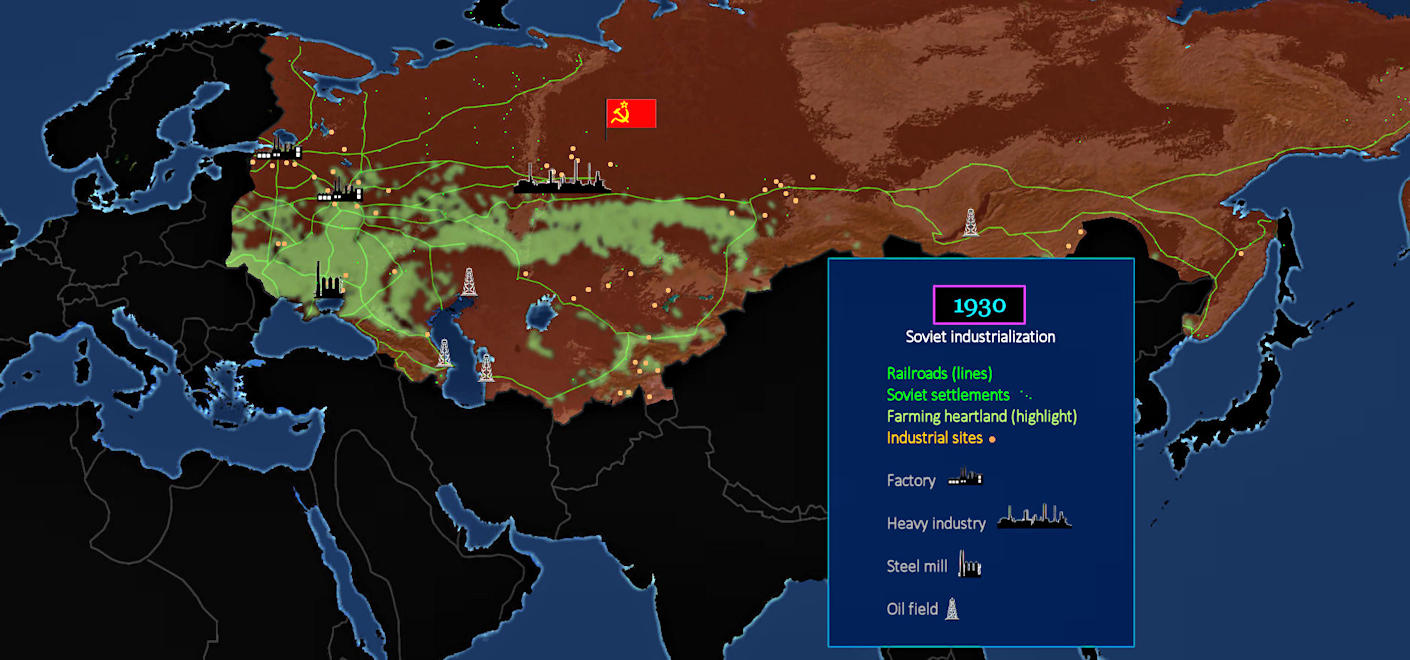
Model for America? Very little information emerges from Russia about conditions under the new Soviet regime, but the story line is compelling. 'From each according to his ability, to each according to his needs' is an attractive concept, and many Americans fall for it during the hard years of the 1930s. Before the illusion is shattered, Russia embarks on a crash program of industrialization under Joseph Stalin. This means factories, tractors and heavy industry, which Russia desperately needed. But it all comes at great cost. | |||||||||
| |||||||||
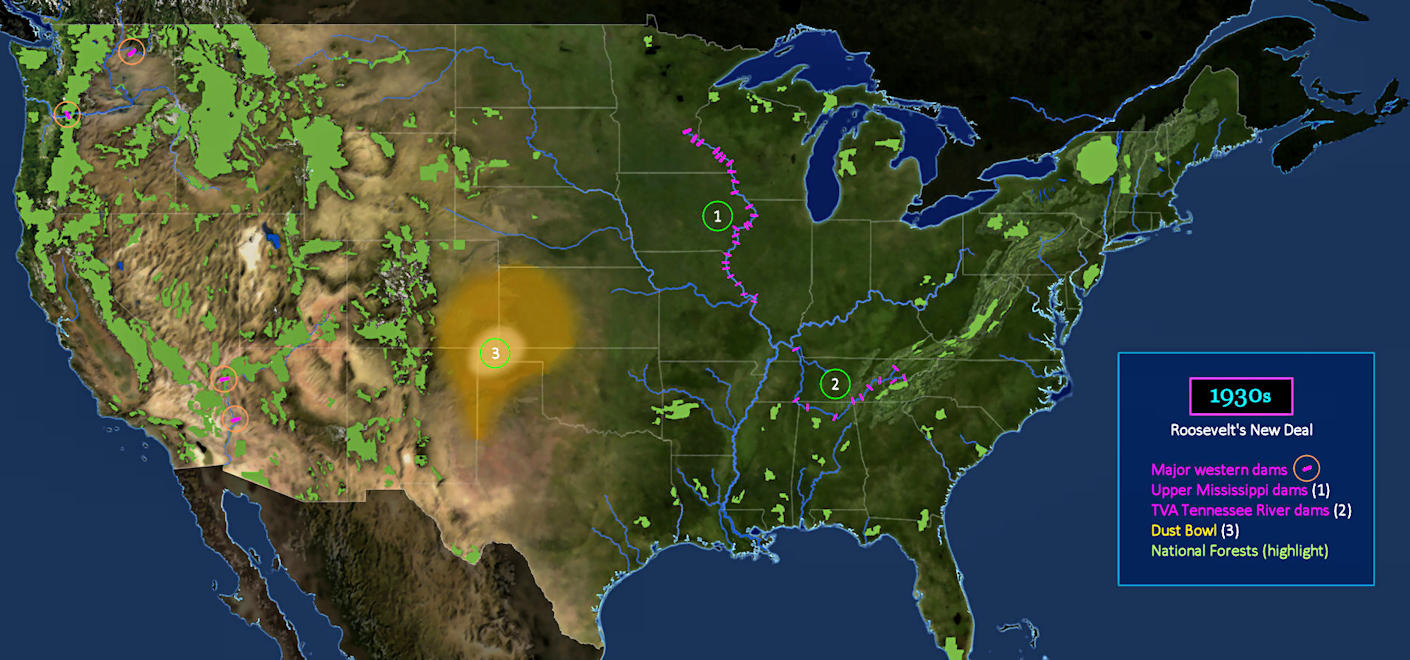
First Big Government Stimulus The Great Depression of the 1930s nearly brings America to its knees. Unemployment grips the cities, while farmers in the Dust Bowl watch their homes fill with sand. Bold action is required, and newly-elected Franklin Roosevelt is the man. Emboldened by the apparent success of Stalin's 5-year plans in Russia, and Hitler's modernization in Germany, Roosevelt uses the federal government to kick-start the economy. When the dust settles, America has dams, electrification, municipal parks and new schools. | |||||||||