| |
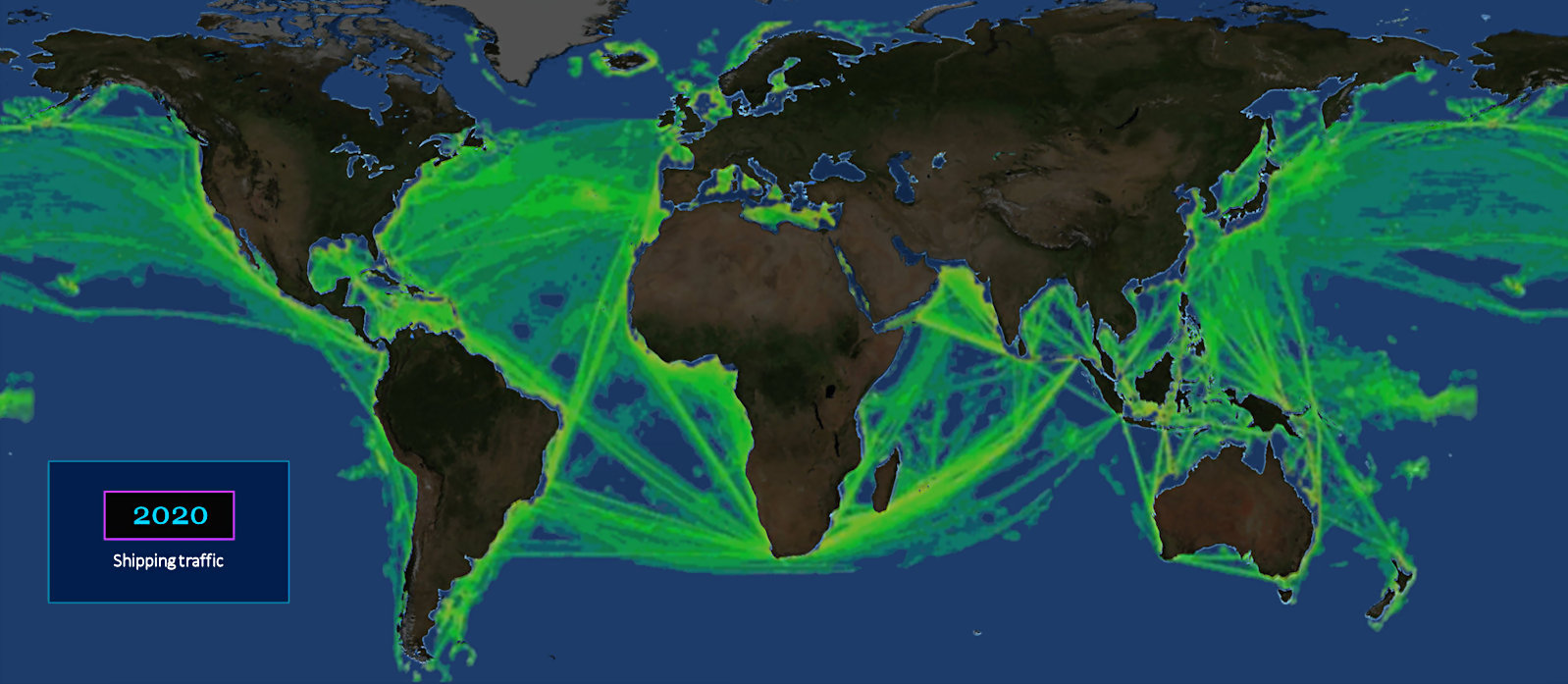
Global Trade The map above shows traffic on the world's shipping lanes, which remains the primary mechanism for moving goods from one country to another. This trend continues to increase, as corporations keep searching for manufacturing sites where labor is cheaper. Nothing beats shipping for the ability to move large cargos great distances at minimum cost, without the need to cross troublesome borders. |
| |||||||||
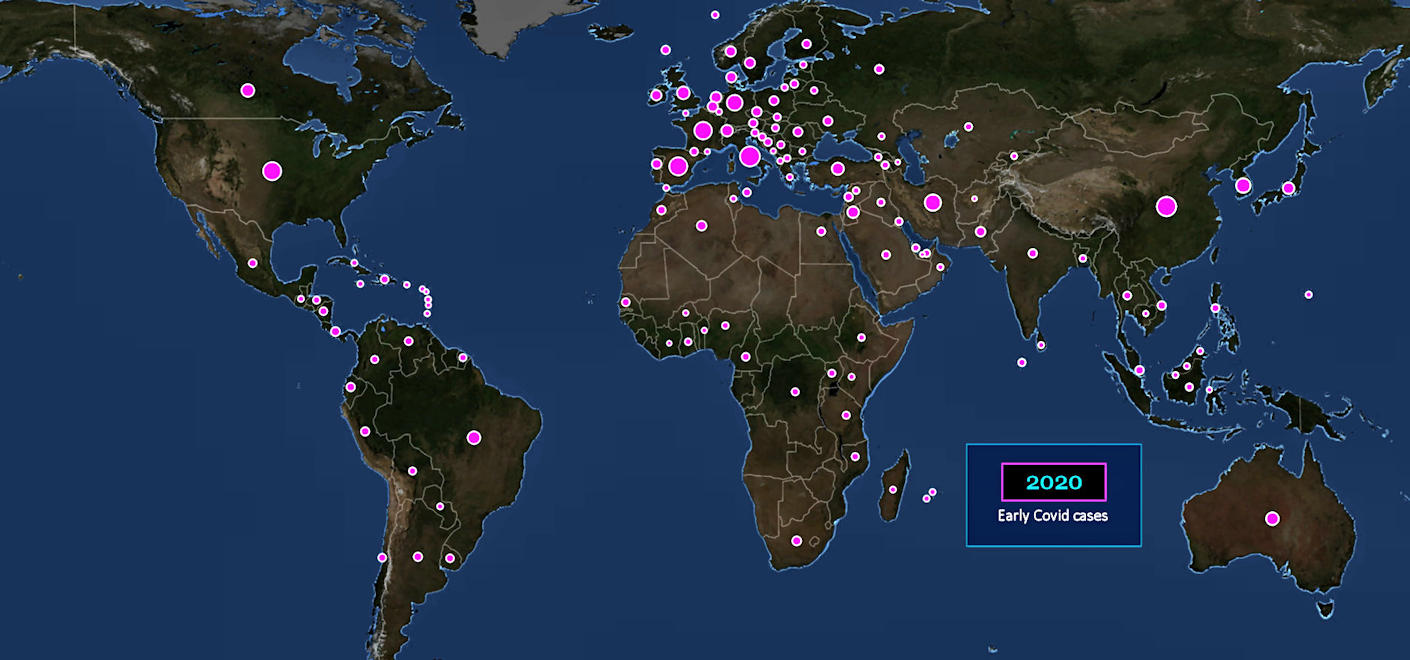
We're All Connected The flip side of a globally-connected world is global vulnerability to threats. Political unrest, economic distress and viral pandemics all cross borders with equal ease. The map above shows Covid infections just a few months into the pandemic. No industrial economy escapes untouched, regardless of actions taken to limit spread of the virus. Interior Africa is spared largely because few people fly there. | |||||||||
| |||||||||
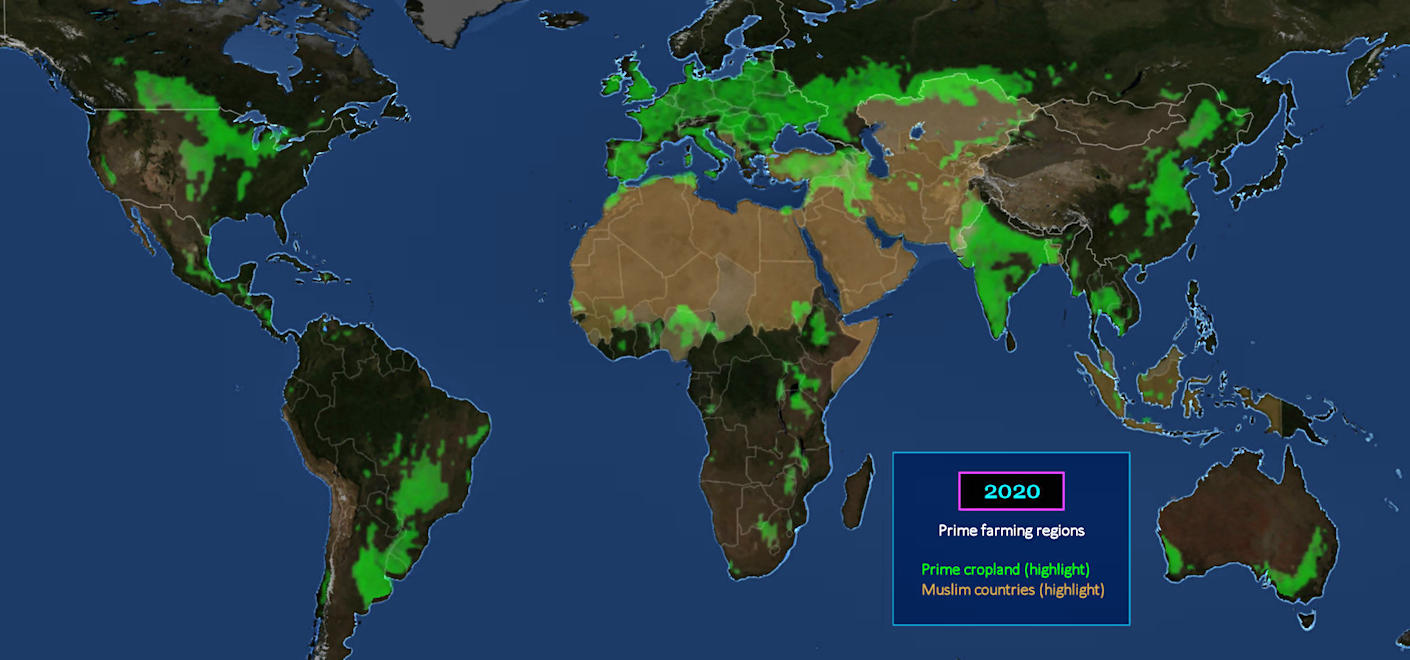
Unequal Food Every person on the planet needs food and water, every day. Even the homeless need to eat, but the world's best farming lands are distributed unequally. The GREEN areas shown above provide the bulk of the world's food, yet the great Muslim region (in TAN), stretching from Africa up towards Mongolia, is mostly a food desert. This is not just a matter of rainfall. With few exceptions, crops only thrive in mild temperatures. India is one of the few semi-tropical regions that shows up GREEN on this map. | |||||||||
| |||||||||
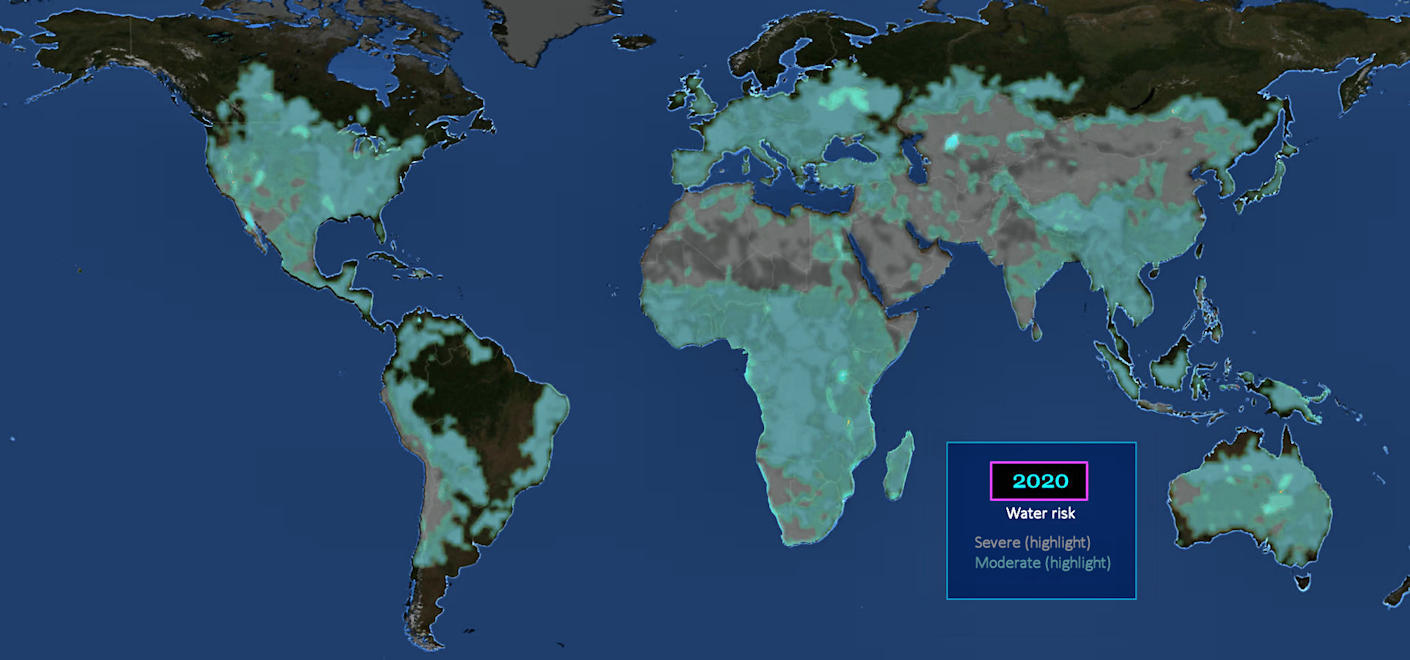
Essential Water Water is even more important than food in sustaining human life, yet the world is increasingly at risk of water shortage. Surprisingly, this includes almost the entire planet, including the US. The BLLUE-GREEN areas above are expanding areas of drought risk. In developed countries, there is additional risk from pollution of groundwater, due to runoff of fertilizer and pesticides, industrial activity and fracking. Much of the world faces growing political unrest related to water scarcity. | |||||||||
| |||||||||
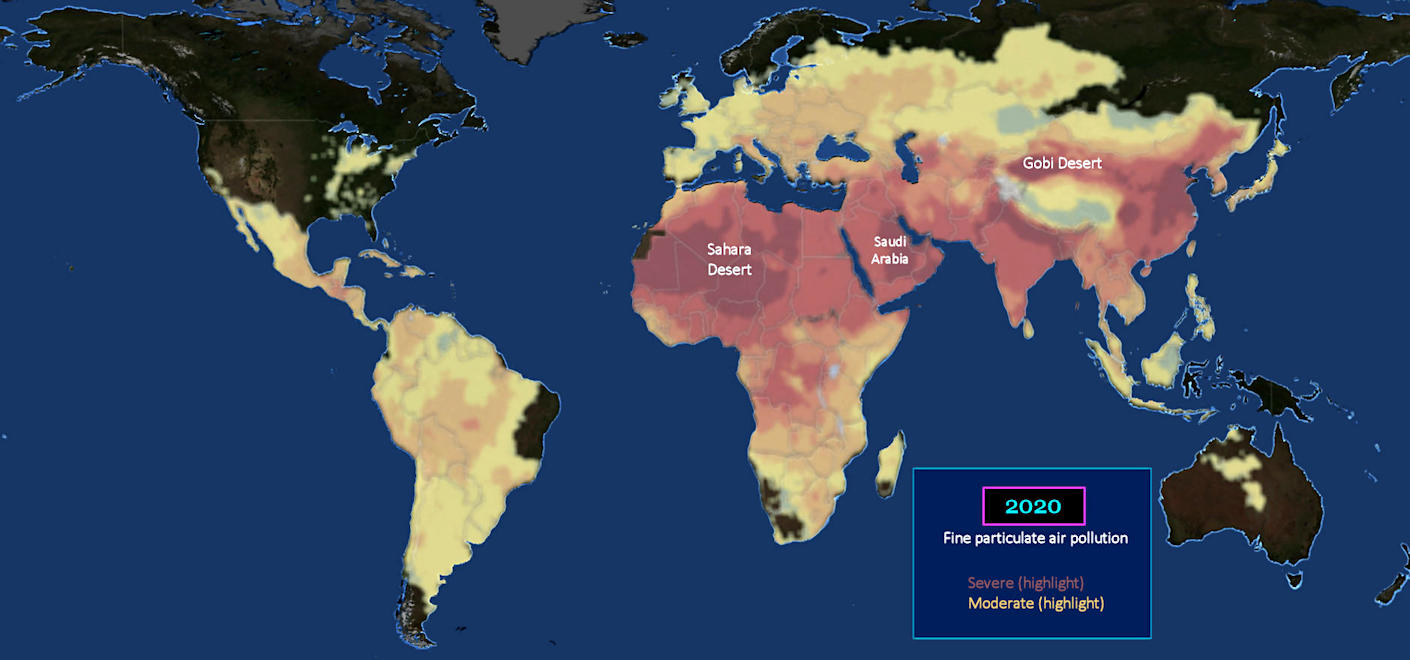
Bad Air This map shows that much of the world is also dealing with air pollution, as measured by the quantity of fine particles of dust floating in the air. The biggest source is dust blowing off desert regions, especially in northern Africa, the Mideast, and Mongolia. Coal-burning power plants are responsible for much of the remaining air pollution, especially in southern China. Only the US and Australia are largely free of this curse. In the US, this is related to enforcement of provisions of the Clean Air Act. | |||||||||
| |||||||||
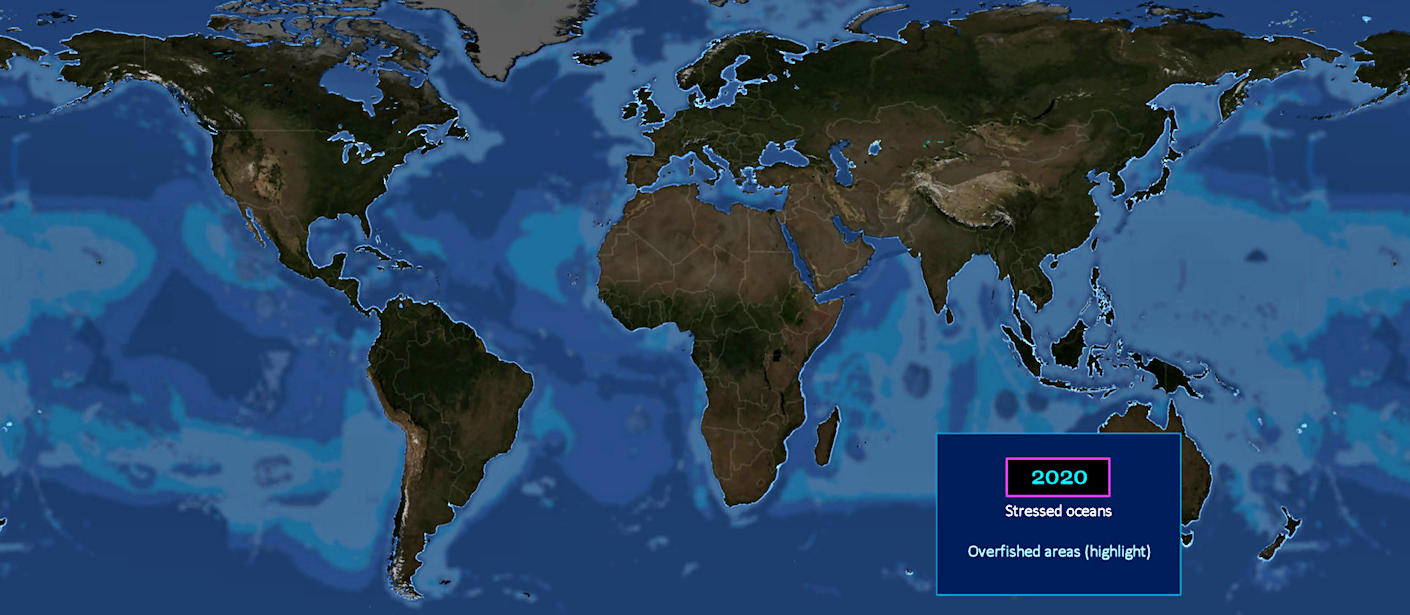
Overfishing The world's oceans are under increasing stress as a food supply. Overfishing (lightest BLUE above) has now spread to all the world's most productive waters. The Asian countries of Japan, South Korea and Taiwan are the worst offenders, scouring the world's oceans with wide-ranging fleets. But Spain, Chile, France and the Philippines are also involved, with important offshore fisheries. | |||||||||