| |
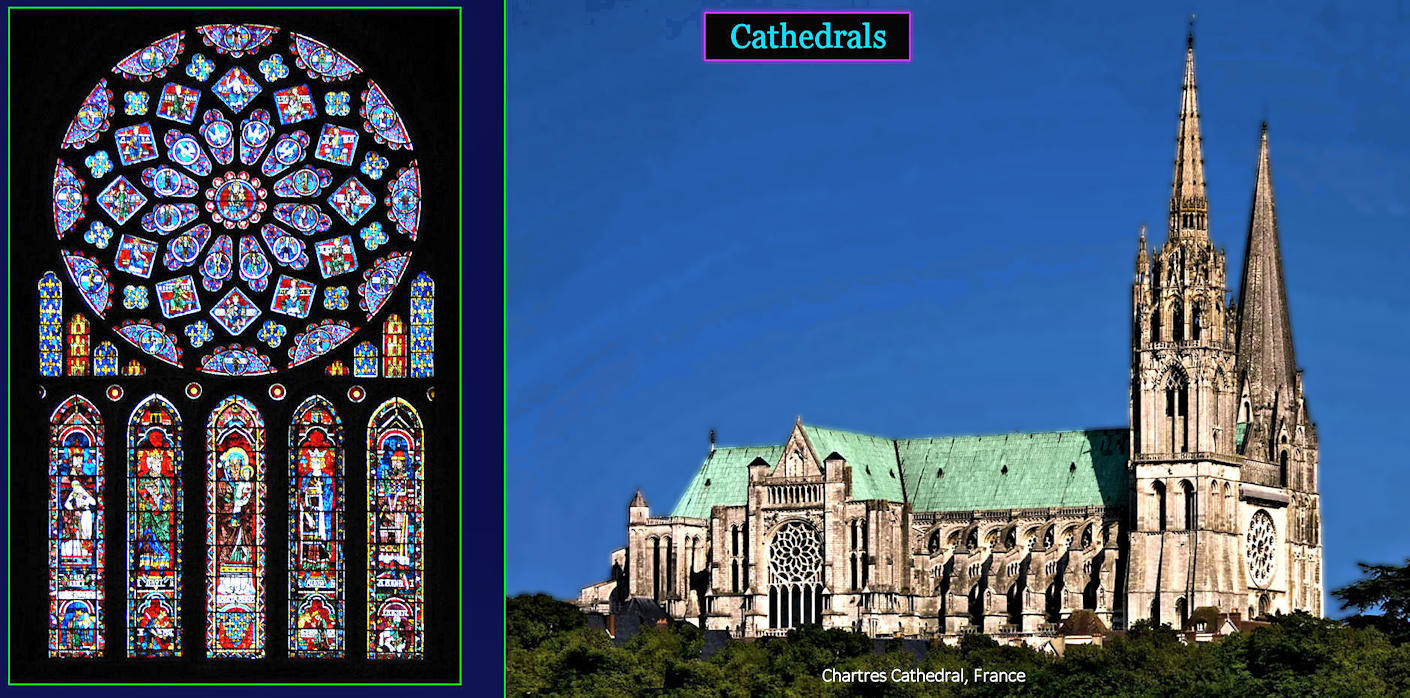
Chartres Cathedral This fine cathedral, with its exquisite glasswork, took 25 years to complete. It stands today, with its towering spires, as the peak of medieval construction technology. |
| |||||||||
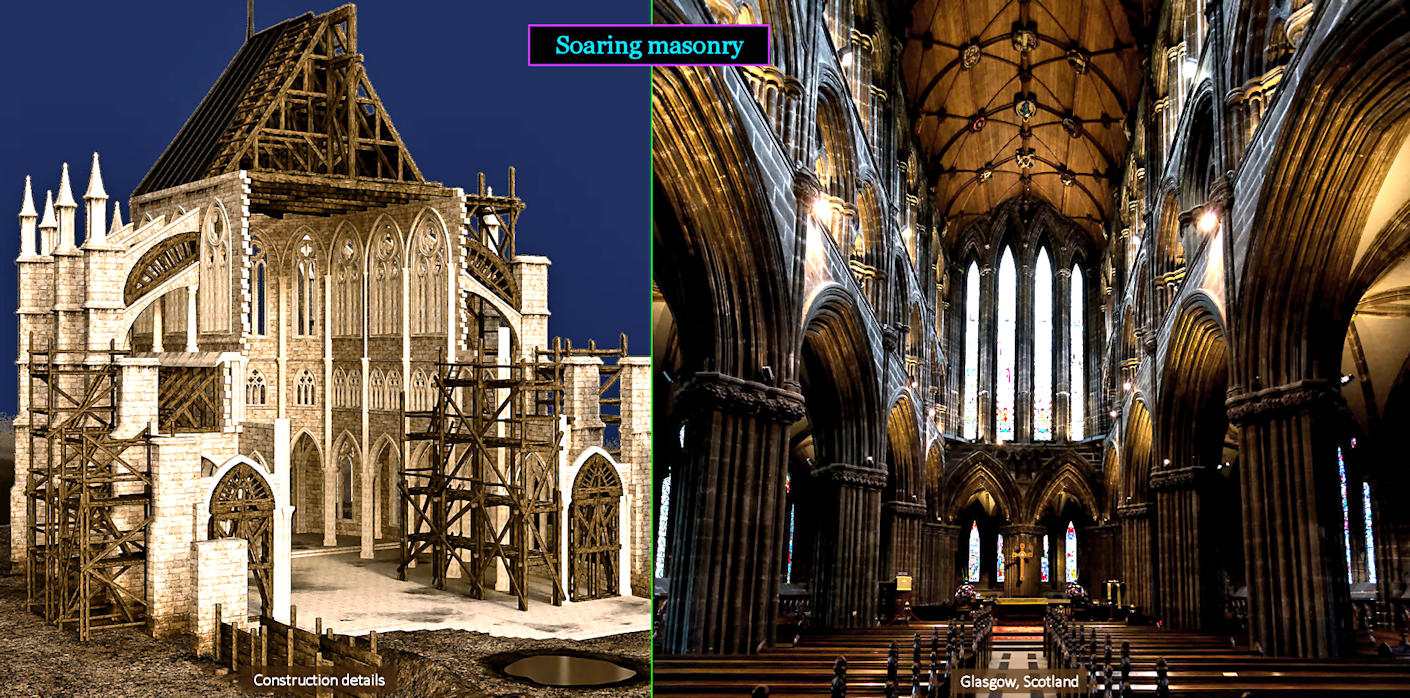
Reaching towards God Enormously high ceilings are the hallmark of cathedral construction. Many are created using perfectly-fitting stones, with delicately angled surfaces. Earlier cathedrals have thicker stonework and sometimes wooden ceilings, like the one shown at right. | |||||||||
| |||||||||
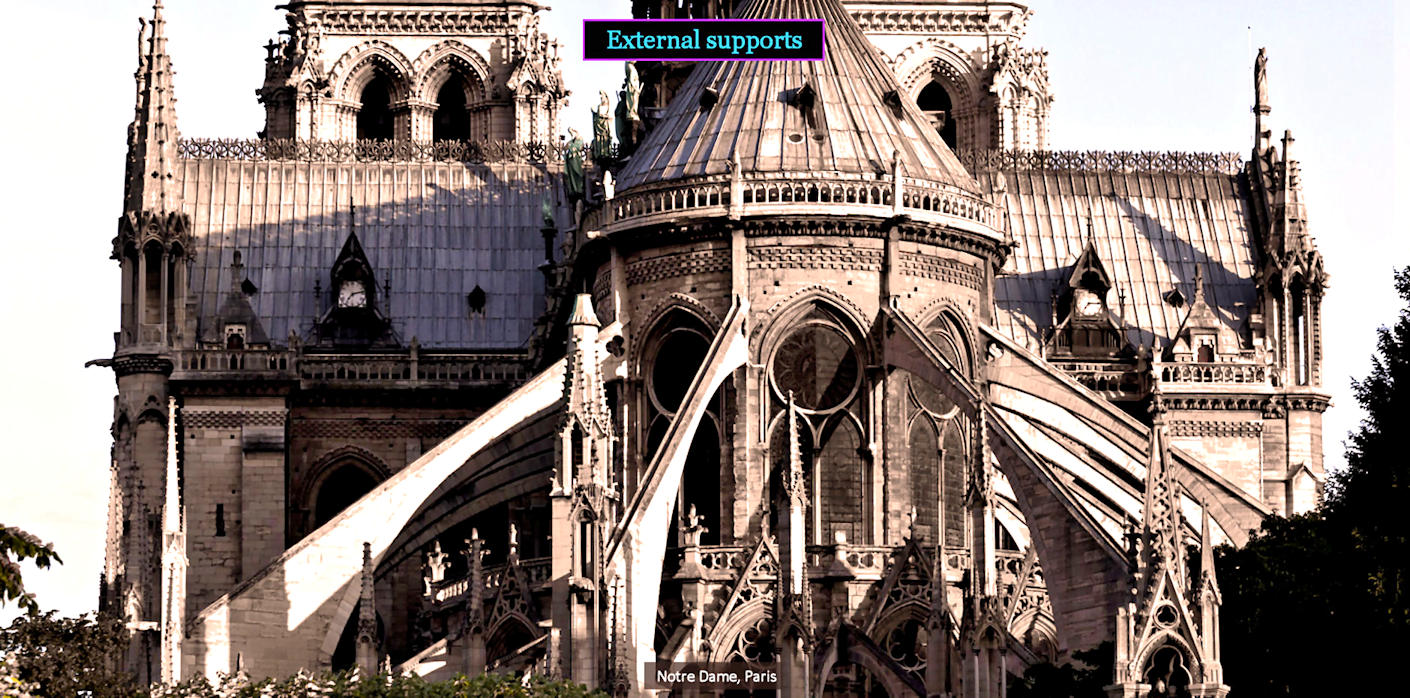
Masterpiece Arguably the most famous cathedral of all is Notre Dame, in the heart of Paris. It takes a full 100 years to complete, and features delicate arched external supports that help stabilize the lofty masonry. | |||||||||
| |||||||||
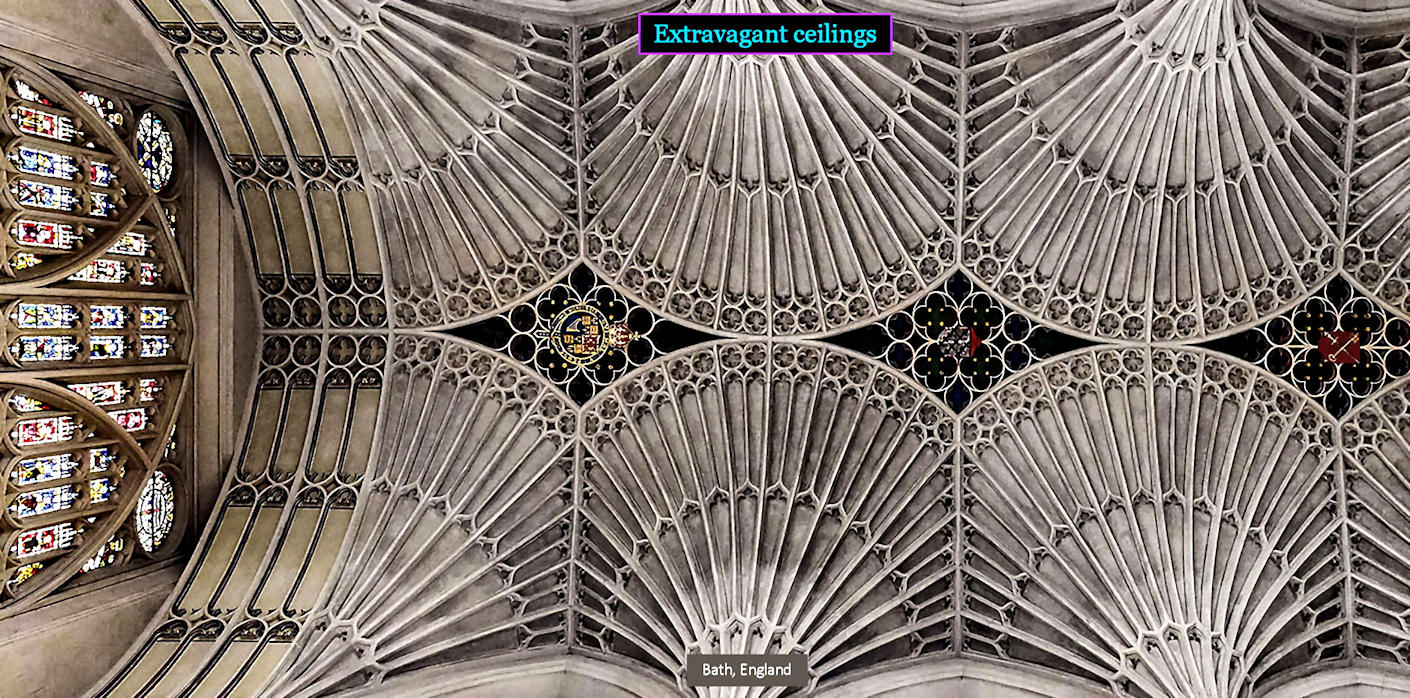
Enduring Secrets The secrets of constructing elaborately decorative ceilings, like the one shown here, remain the subject of debate to this day. If supported solely by scaffolding, the framework would have carried the weight not just of workmen and materials, but all the incomplete masonry as well. Beyond that, the vaulting itself is full of compound, intersecting curves. Consideringly the great height, the scaffolding itself would have been a marvel. Yet it's hard to imagine how else such a feat could have been accomplished. | |||||||||
| |||||||||
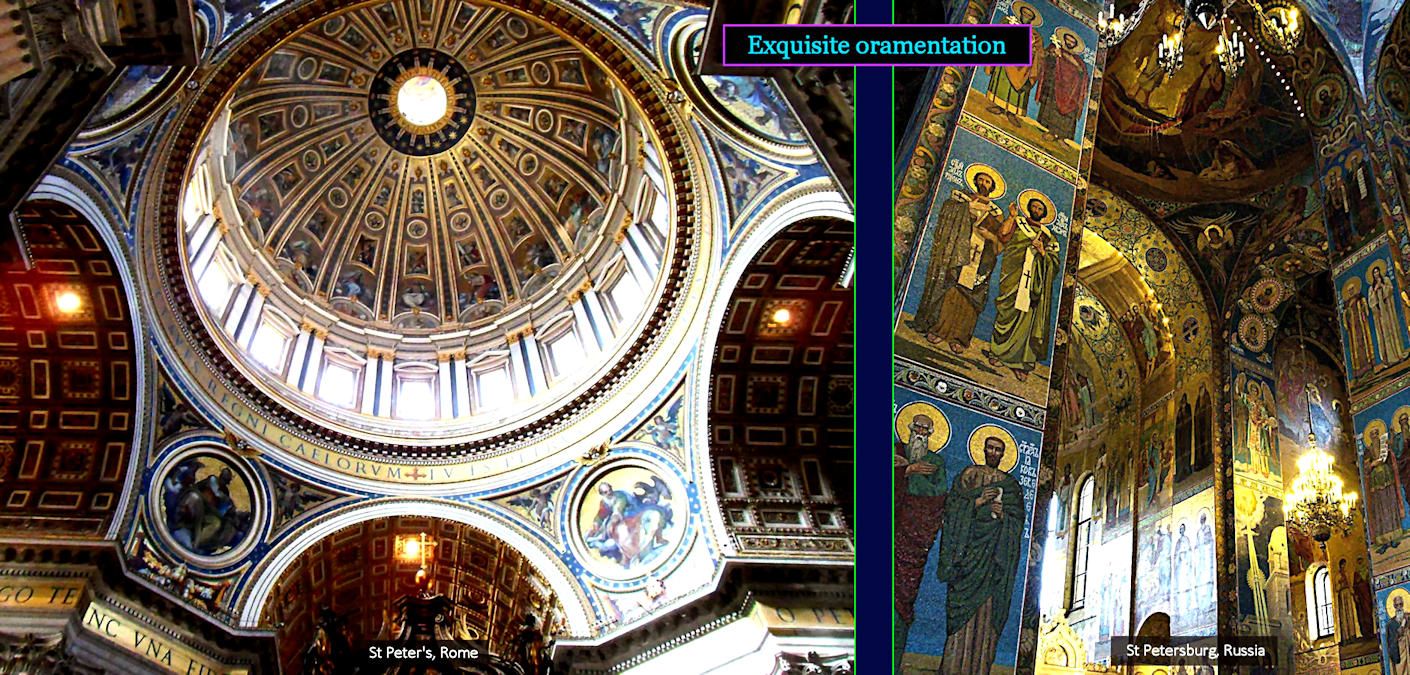
Over the Top As if towering stonework isn't sufficient testimony to the greatness of God, some cathedrals add a surface veneer of color, using paint or mosaic tile, which must have stretched funding resources to the limit. | |||||||||
| |||||||||
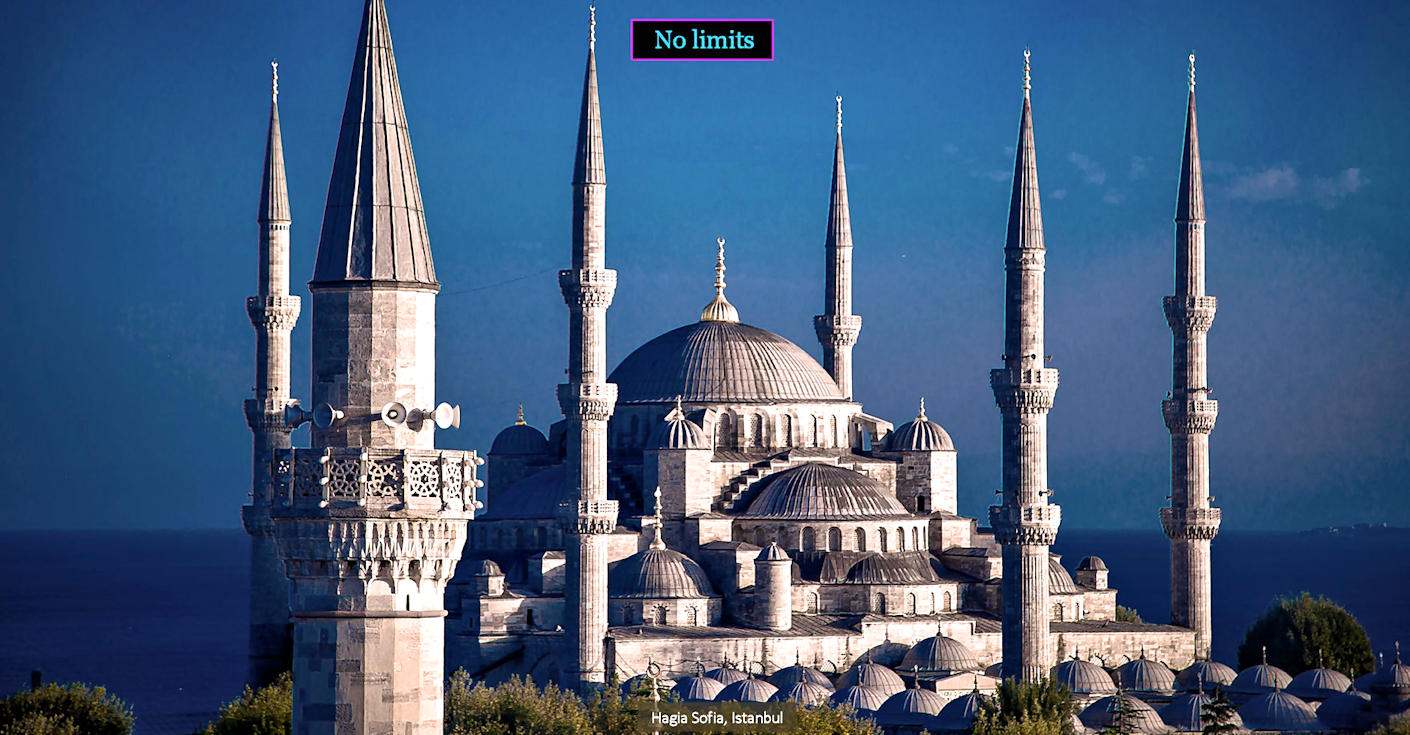
One-of-a-kind This gleaming structure in Turkey was built 700 years before most of the great cathedrals in Europe. Although it is now a mosque, with towering minarets added by the Muslims, it was originally built by the Byzantine Romans, as a great Christian cathedral. | |||||||||