| |
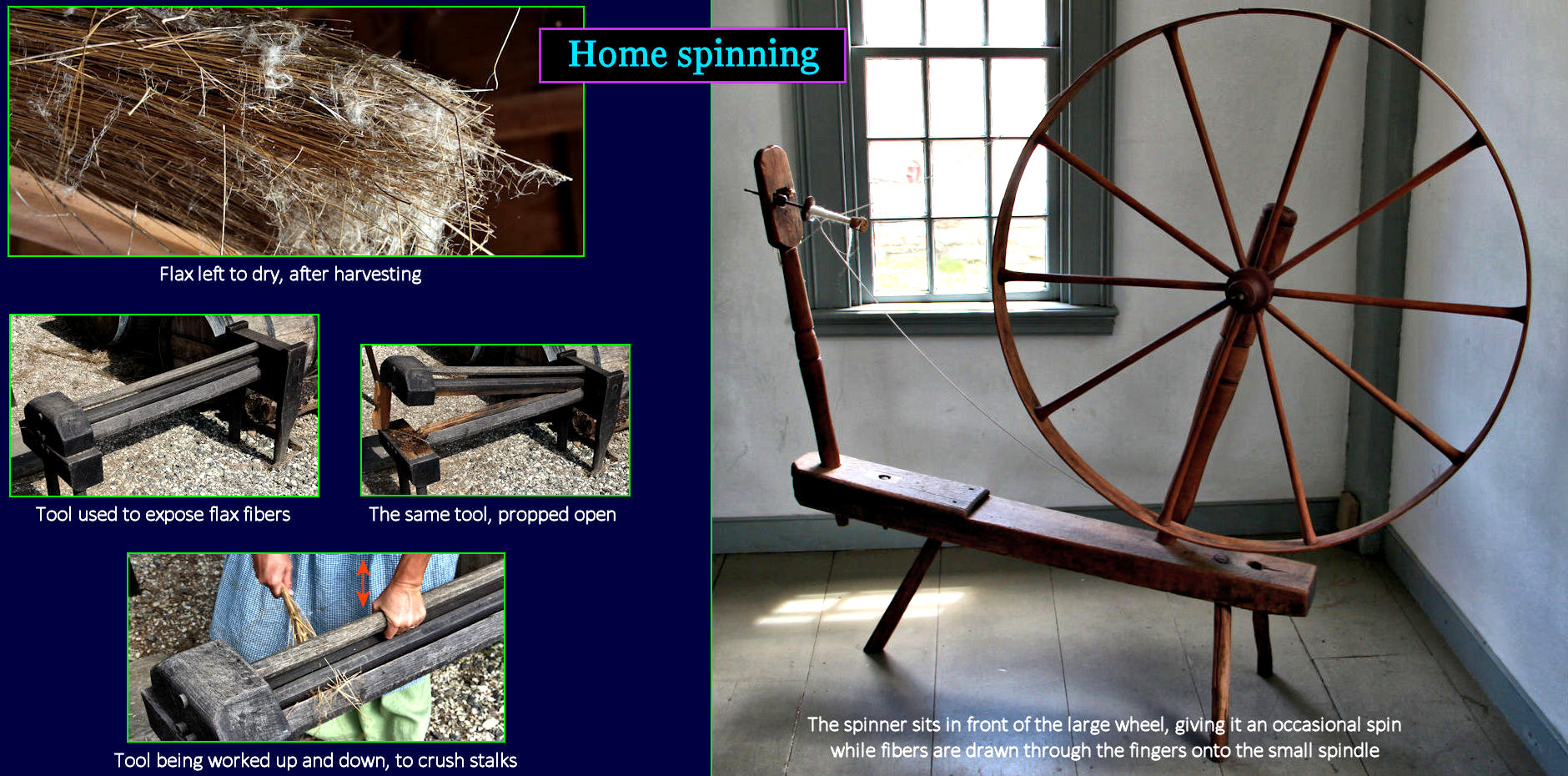
Early Spinning To weave fabric, you start with fibers obtained either by sheering the wool from sheep, or growing flax. Flax is a kind of grass, which is cut and dried (upper left), and then mashed in a simple wooden frame (lower left) to crack the husk and reveal the soft fiber within. The fibers must then be cleaned and combed, before being spun into yarn using a large wheel (right). |
| |||||||||
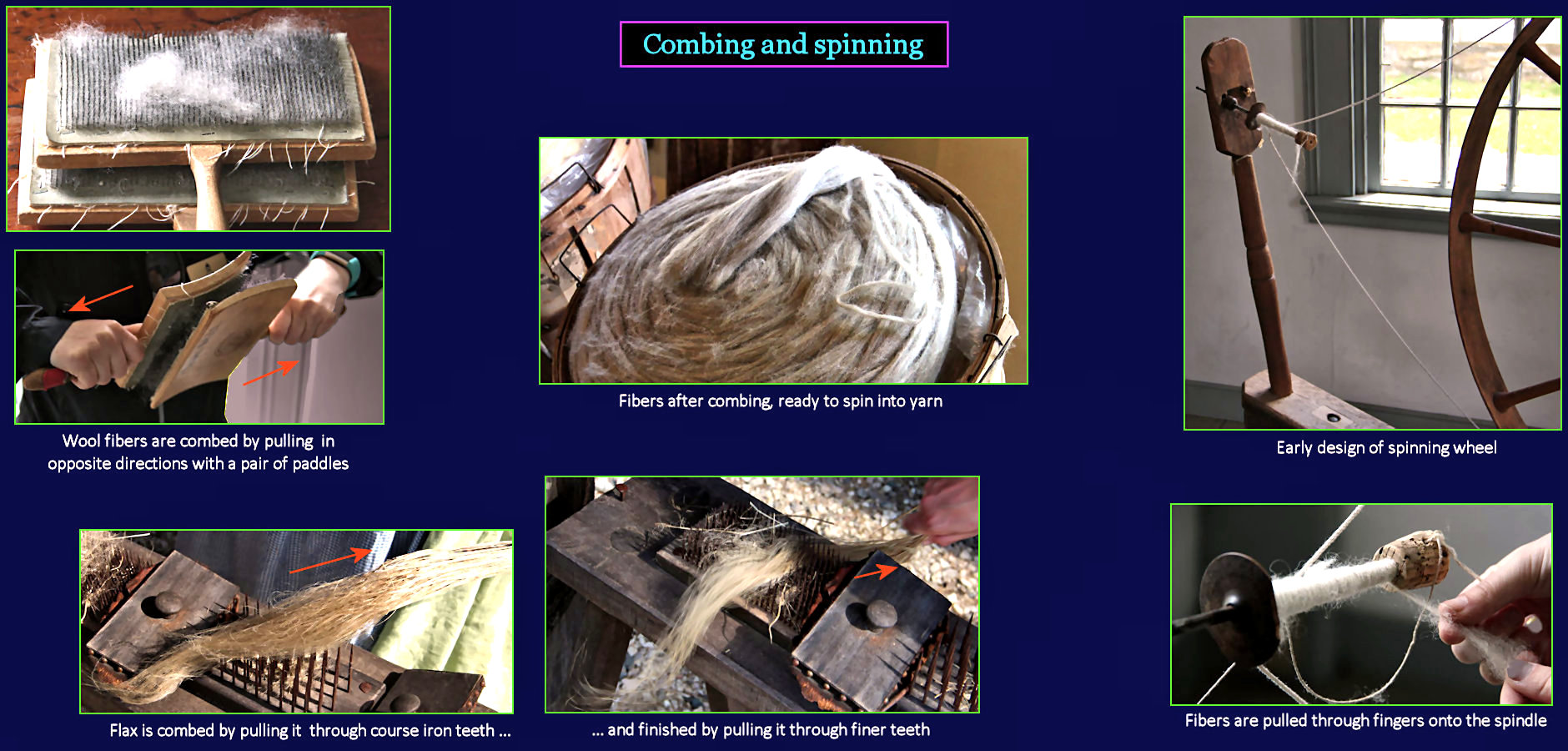
Preparation for Spinning Before spinning, wool must be combed straight using a pair of wooden paddles with protruding metal wires (top left). Fibers from flax also need combing, but are naturally much straighter (lower left). During spinning, the fiber is drawn through the fingers onto the wheel's rapidly-spinning spindle. The fingers and thumb are used to maintain a consistent, very light tension on the fibers, while a subtle rolling motion imparts the twist which helps hold the yarn together (lower right). | |||||||||
| |||||||||
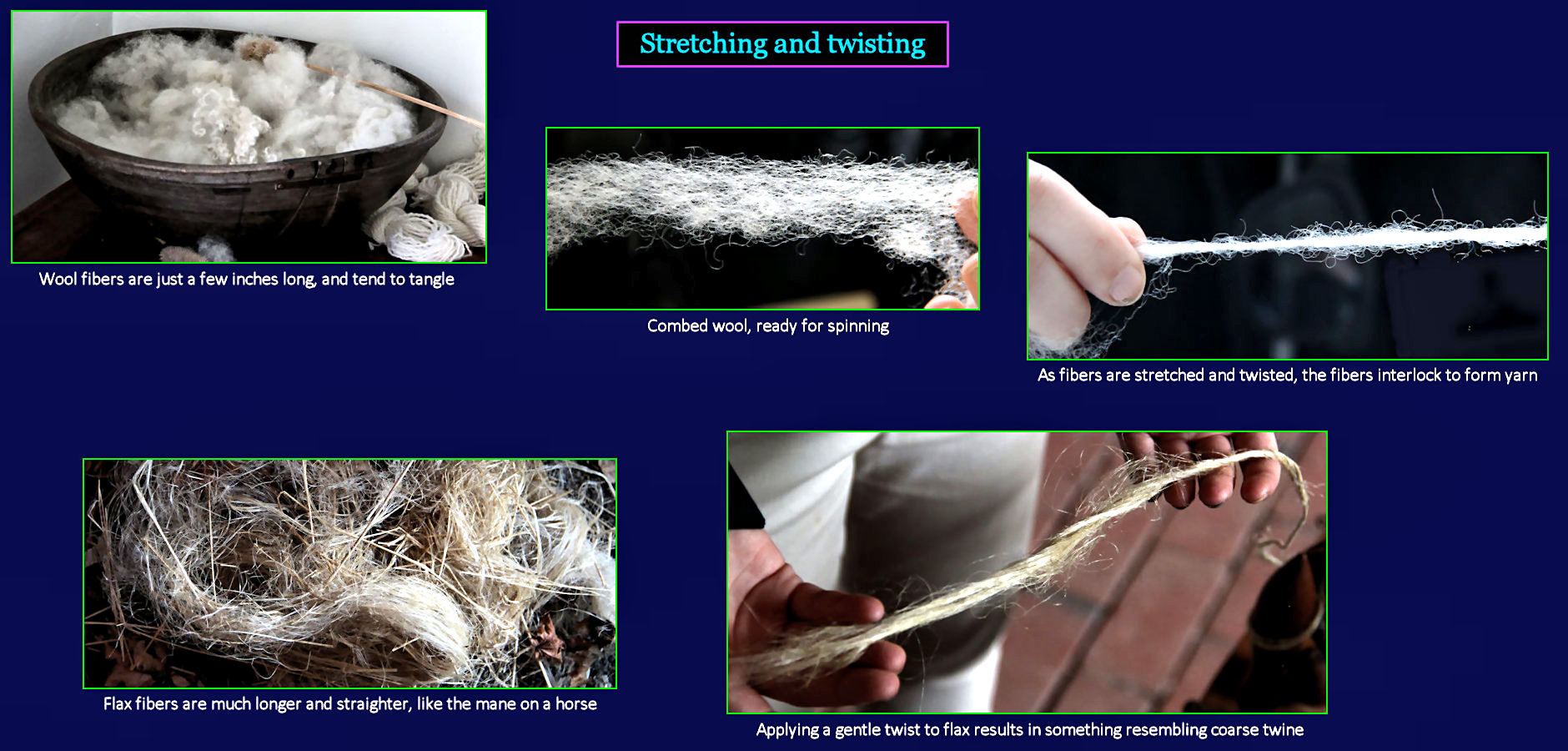
Tension with Twist The trick to spinning yarn is to pull gently, stretching the fibers slightly, while applying a twisting motion that helps each fiber grab onto neighboring fibers, giving the yarn strength. Individual wool fibers are only a few inches long, so they must continuously mingle and tangle, to hold together. The more twist, the firmer the yarn. Cotton wasn't used until the cotton gin was invented, to remove the seeds which come firmly attached to raw cotton fibers. | |||||||||
| |||||||||
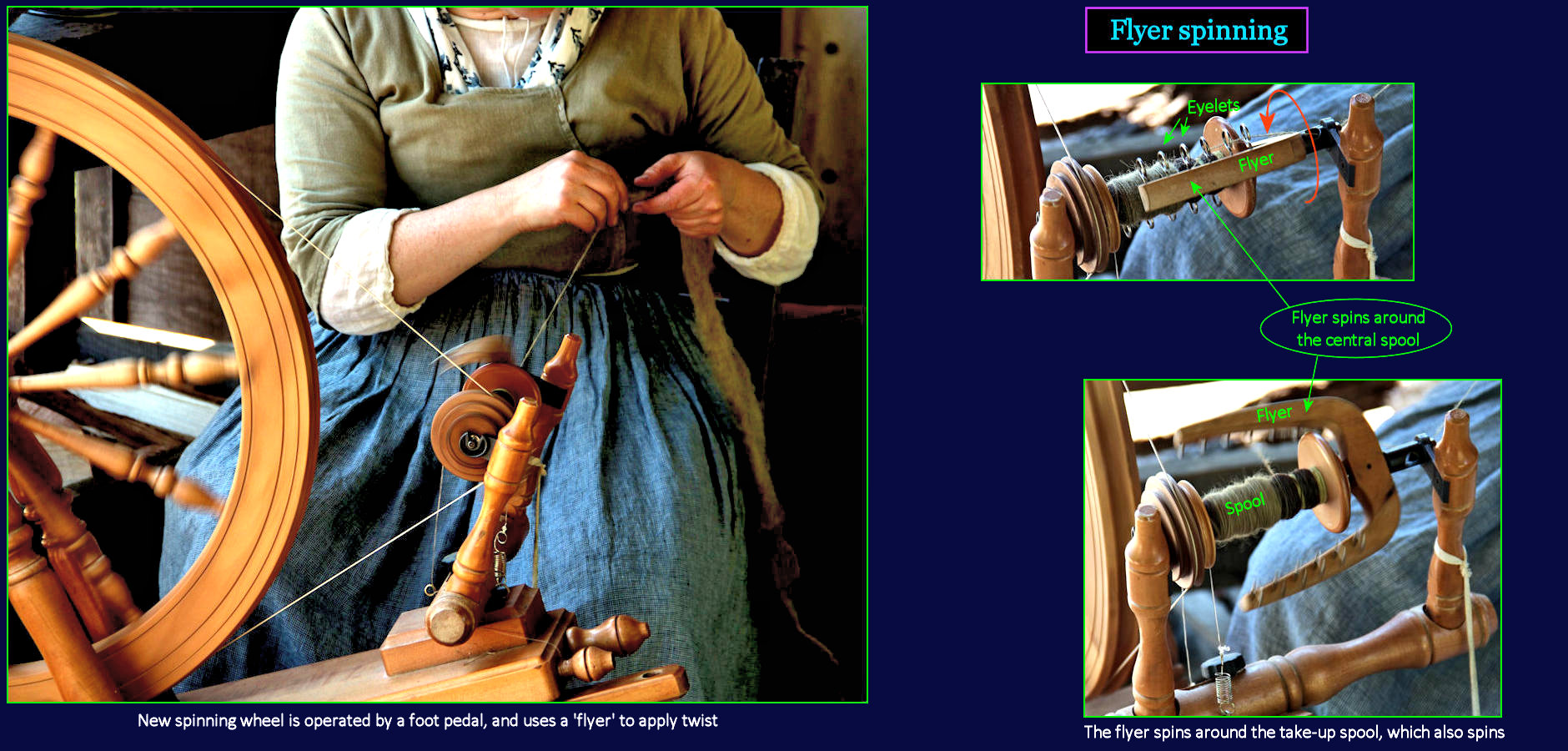
Compact Design Later, smaller spinning wheels have a foot pedal to kept the wheel spinning at a consistent rate, leaving both hands free to feed the fiber. Even more important is the addition of the 'flyer,' a special wishbone-shaped piece of wood that spins around the take-up spool somewhat faster than the spool itself spins. This magically applies a consistent twist to the yarn, as it builds up on the spool. The yarn is periodically moved from one eyelet on the flyer to the next, to guide the yarn onto different parts of the spool. | |||||||||
| |||||||||
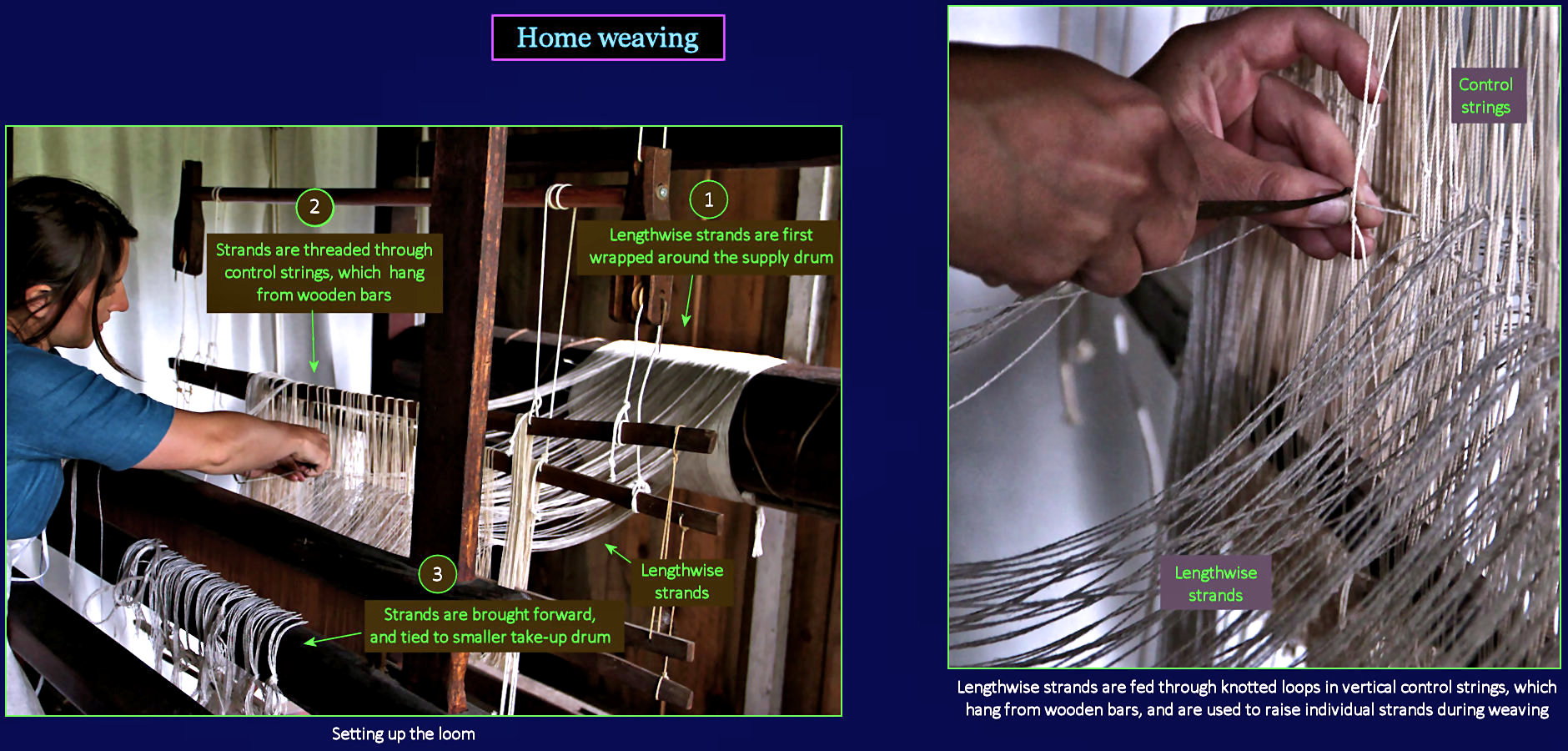
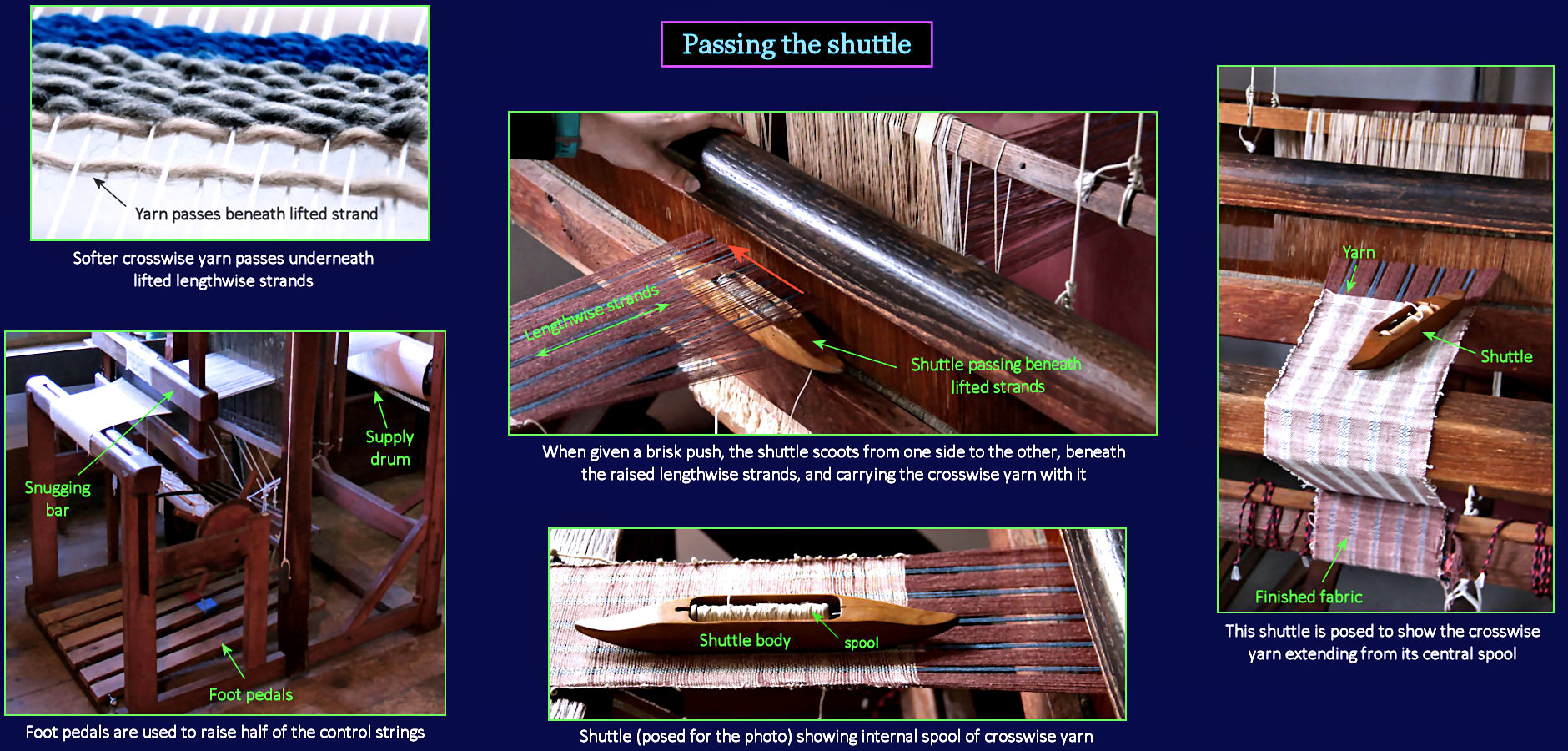
Making Fabric A loom is needed to weave yarn into fabric. It is prepared by first wrapping all the long lengthwise strands onto a supply drum at the rear, then threading each strand through a loop in a control string, and tying it to a smaller take-up drum in the front. During weaving, the control strings on alternate strands are briefly raised, allowing the shuttle to be passed from side to side, underneath. Crosswise yarn is pulled from the shuttle's internal spool, as it passes across (as explained below). | |||||||||
| |||||||||
Back and Forth During weaving, the weaver uses a pedal to lift control strings that raise half of the lengthwise strands, in an alternating pattern. This creates a space above the other (non-raised) strands, which allows the shuttle to be passed beneath (with a sideways push), taking the crosswise yarn with it. A snugging bar (or 'beater') is then pulled forward to snug up the yarn just passed, compacting the weave. On the return pass, a different pedal lifts strands that were not lifted previously, as the shuttle is pushed the other way. | |||||||||