| |
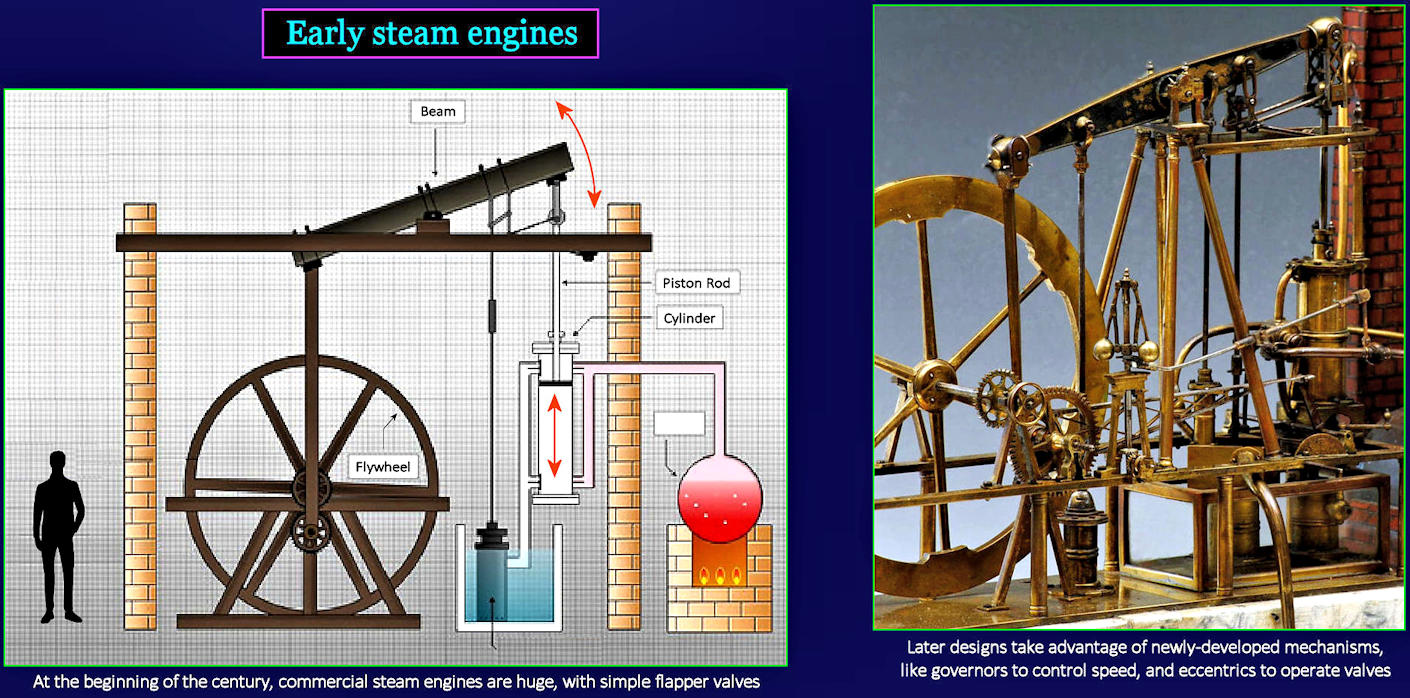
Inefficient Monsters As the 1800s begin, steam engines are only just beginning to show promise. The giants shown here work at very low pressure, with crude valving. Since they were originally designed as water pumps, they operate vertically. The simplest way to transfer motion from the piston to the pump shaft is to use a horizontal beam, which rocks back and forth at the top. |
| |||||||||
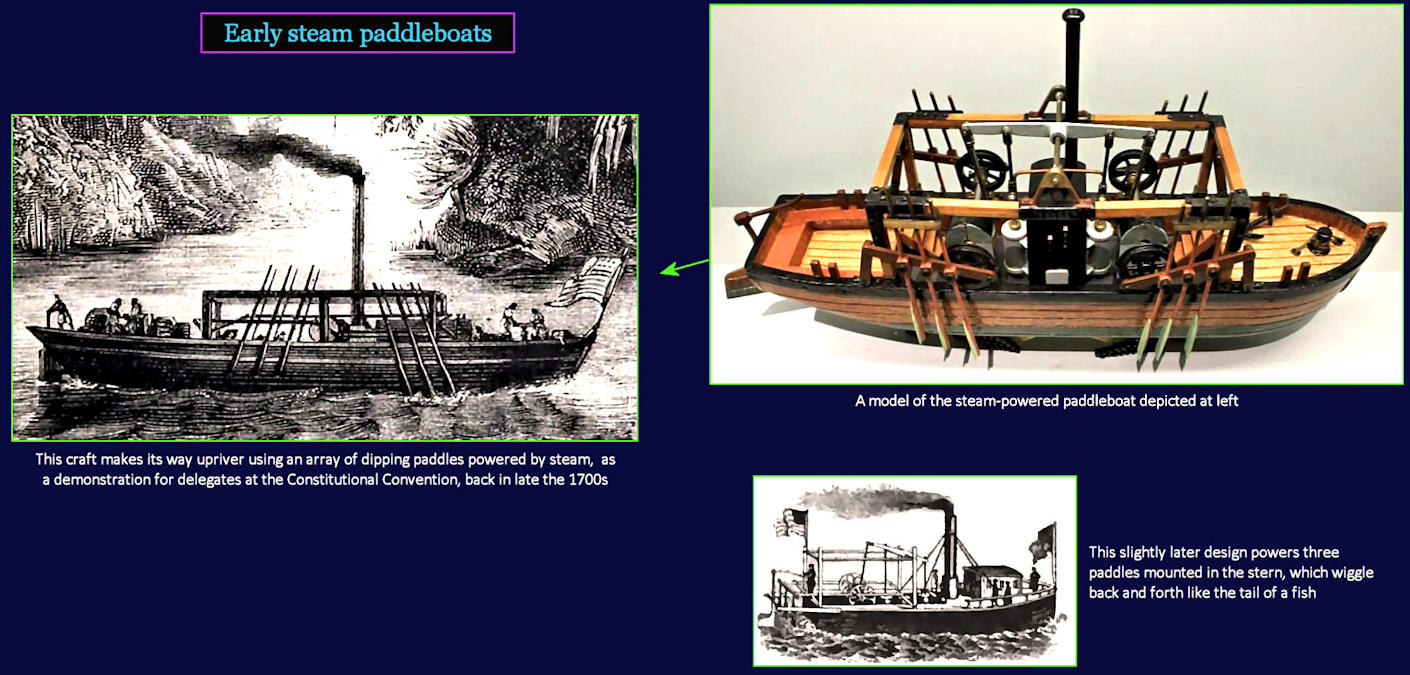
First Attempts As Americans search for ways to utilize the power of steam engines, boats seem to offer a good opportunity. Boats are big enough to carry the bulky engines, and stand to benefit enormously from the ability to travel upstream, against the current. Early attempts are amusing, but help pave the way for future advances. | |||||||||
| |||||||||
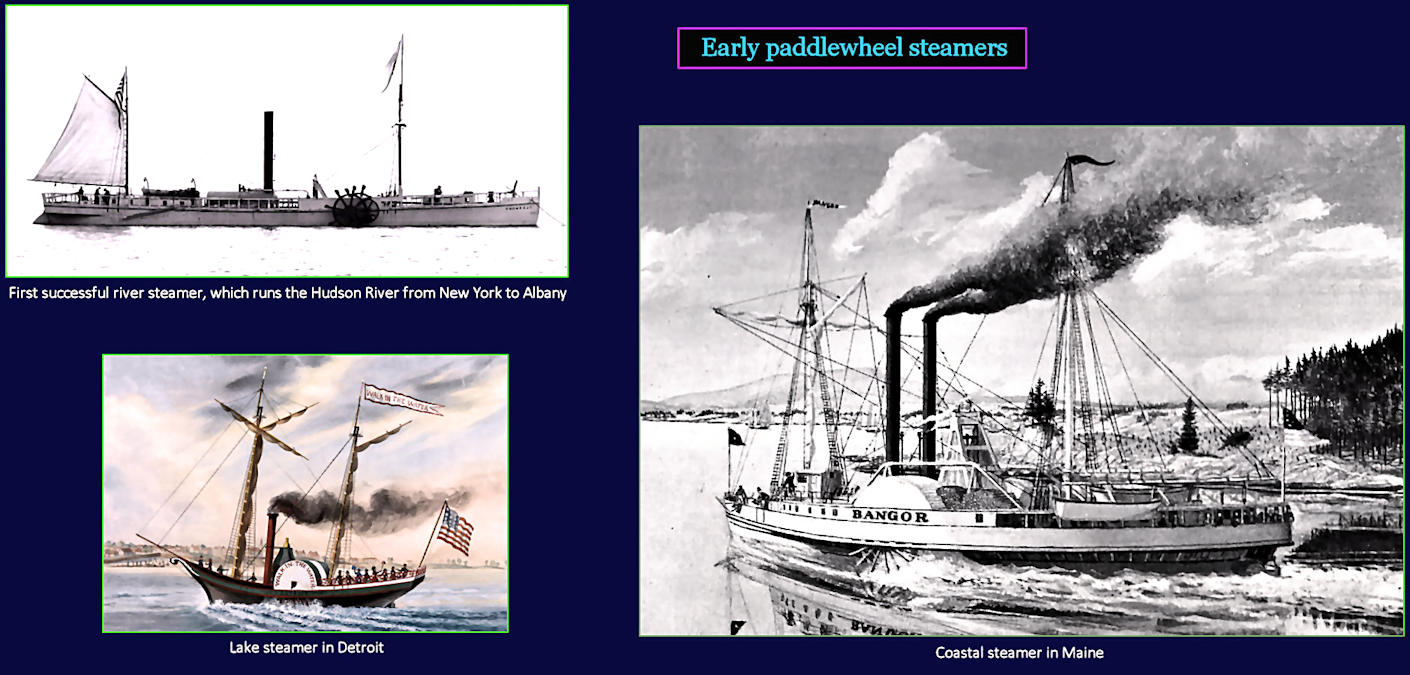
Coastal Workhorse As steam engines continue to improve, paddlewheels emerge as the most practical means of propulsion, before the development of propellers. Besides enjoying the obvious advantage of being able to travel upstream, the emerging breed of steamers can maneuver confidently in the confines of bustling ports. The new ability to approach docks without regard for wind or tide allows the establishment of regularly-scheduled service, for the first time. | |||||||||
| |||||||||
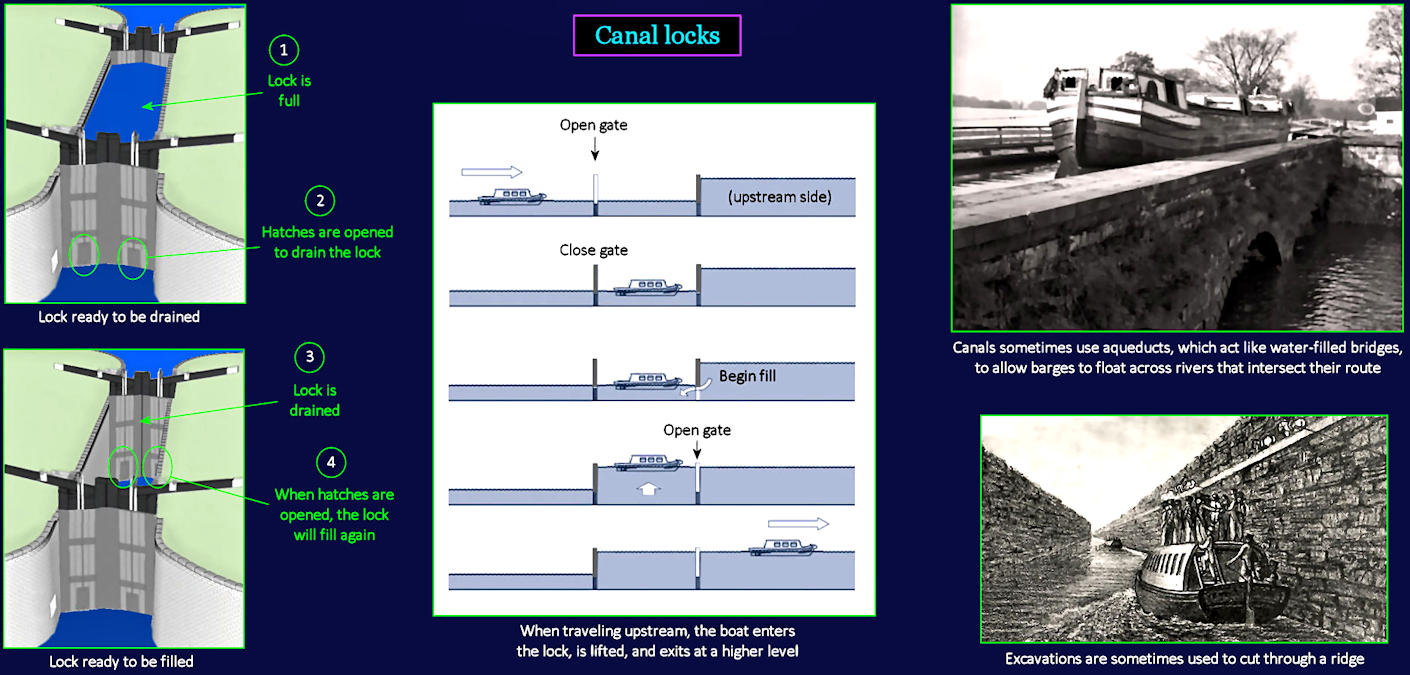
Gravity-operated canal locks Just as steam-power begins to take hold, the success of the Erie Canal highlights a completely different technology. As the first major canal in America, it opens up a new world of opportunity for long-distance, overland transport. While horse-drawn wagons struggle to climb every incline, a single mule can pull a canal barge carrying 20 times the load, all day long at a steady pace. The canal lock is the key. It operates by simply opening and closing hatches, and effectively removes the barrier presented by hills. | |||||||||
| |||||||||
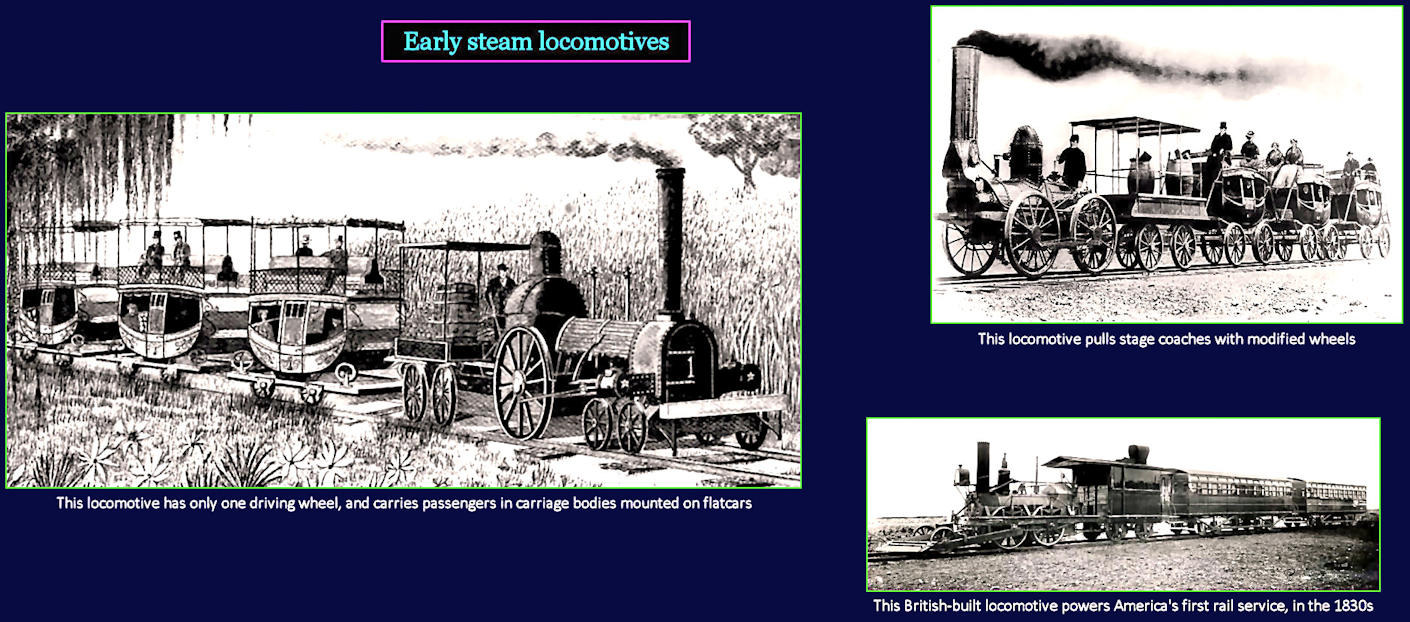
Better Alternative Canals lower the cost of overland transport by a staggering 95%, but there are few routes where they are actually practical. Canals need locks to overcome every hill, but also aqueducts to cross every river. Hilly terrain is almost totally unsuitable. Steam locomotives, by contrast, have plenty of power to climb most hills. They can operate anywhere that track can be laid, allowing connections between almost any pair of locations. The downside is the need to burn fuel, and to build bridges over rivers. | |||||||||
| |||||||||
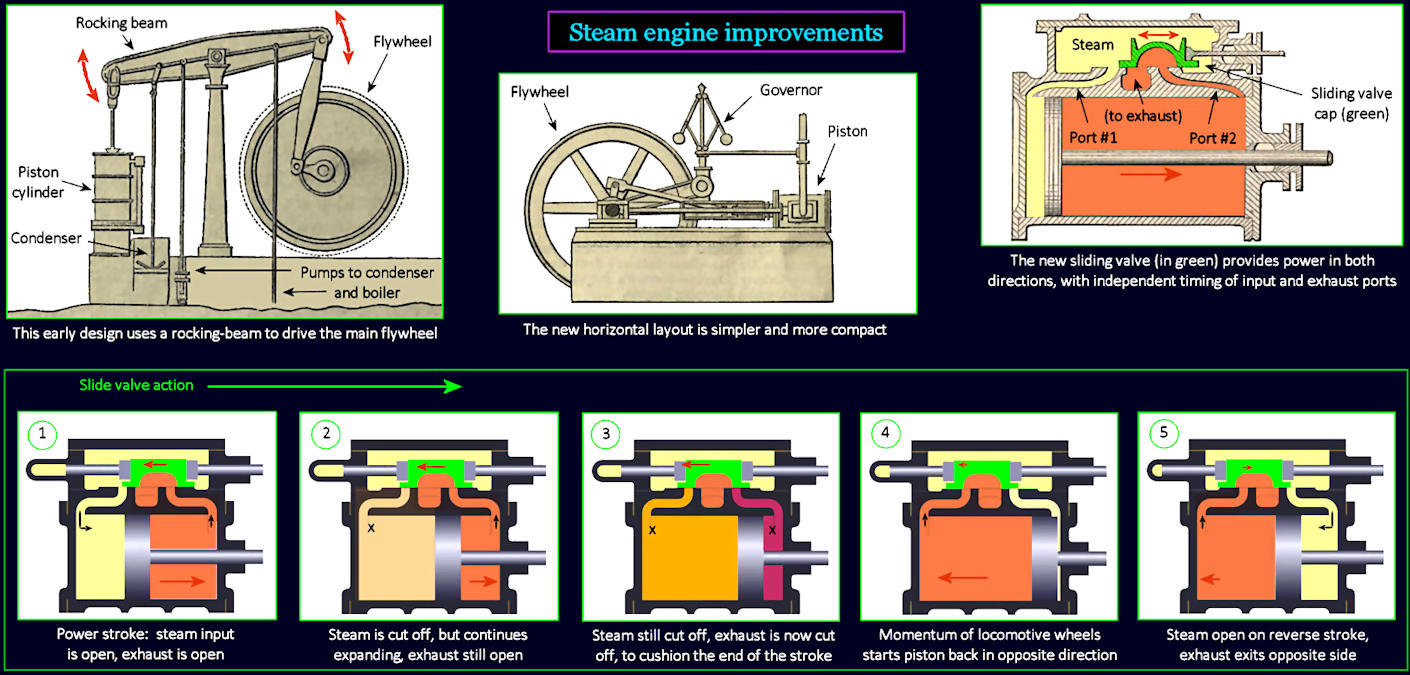
Better Valving Single-stem valves (bottom) are primitive, providing power only on the down-stroke. The new sliding valve (top right) is ingenious, with two ports acting as either input or exhaust, depending upon the valve cap position. In the position shown at top right, steam enters through Port#1, with exhaust exiting Port #2. When the valve cap slides full left, the steam enters Port #2, with exhaust using Port #1. The precise timing of opening and closing depends upon the shape of the lower surface of the valve cap. | |||||||||