| |
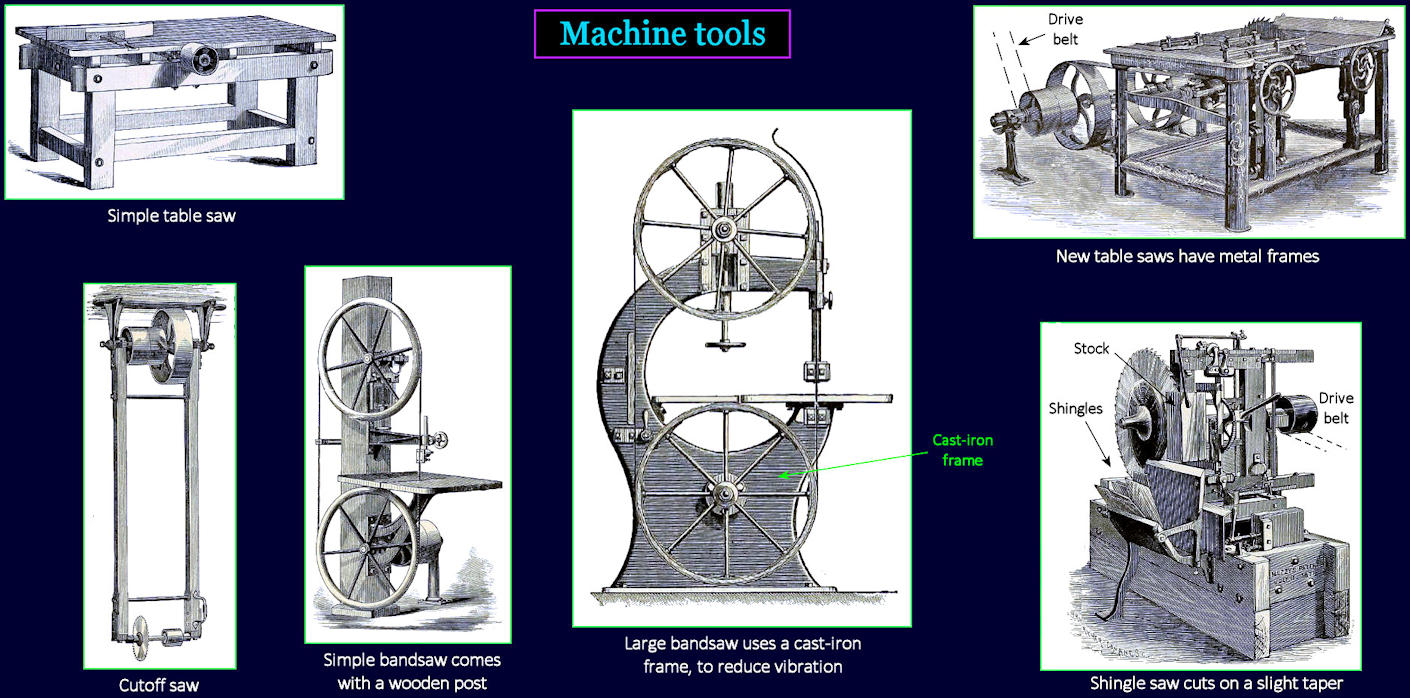
Wood Saws Most woodworking machines are still being built with solid wooden frames, but the large bandsaw shown above (center) benefits from the increased rigidity of cast iron. |
| |||||||||
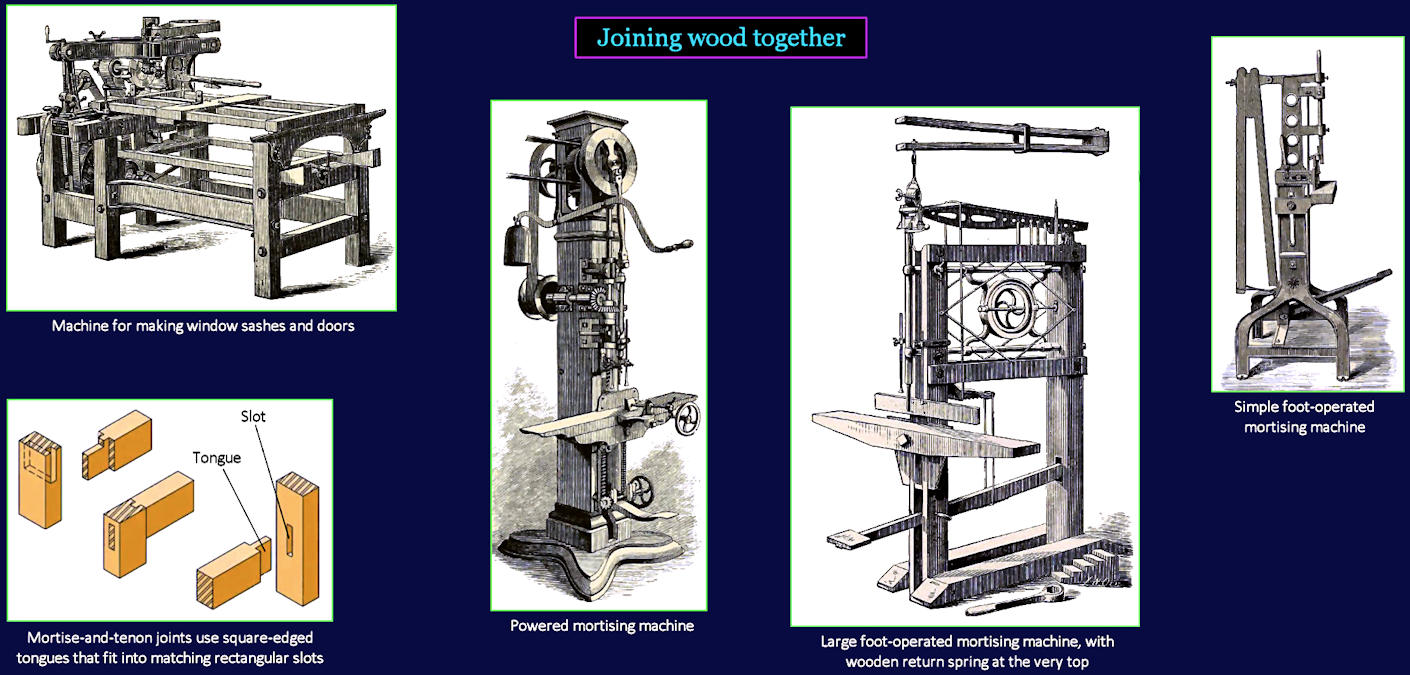
Fancy joinery Along with the new homes comes surging demand for window frames, doors, and paneled construction, which all require special joints to permit tightly-fitting construction without fasteners. A whole array of new machines is created to meet this demand. | |||||||||
| |||||||||
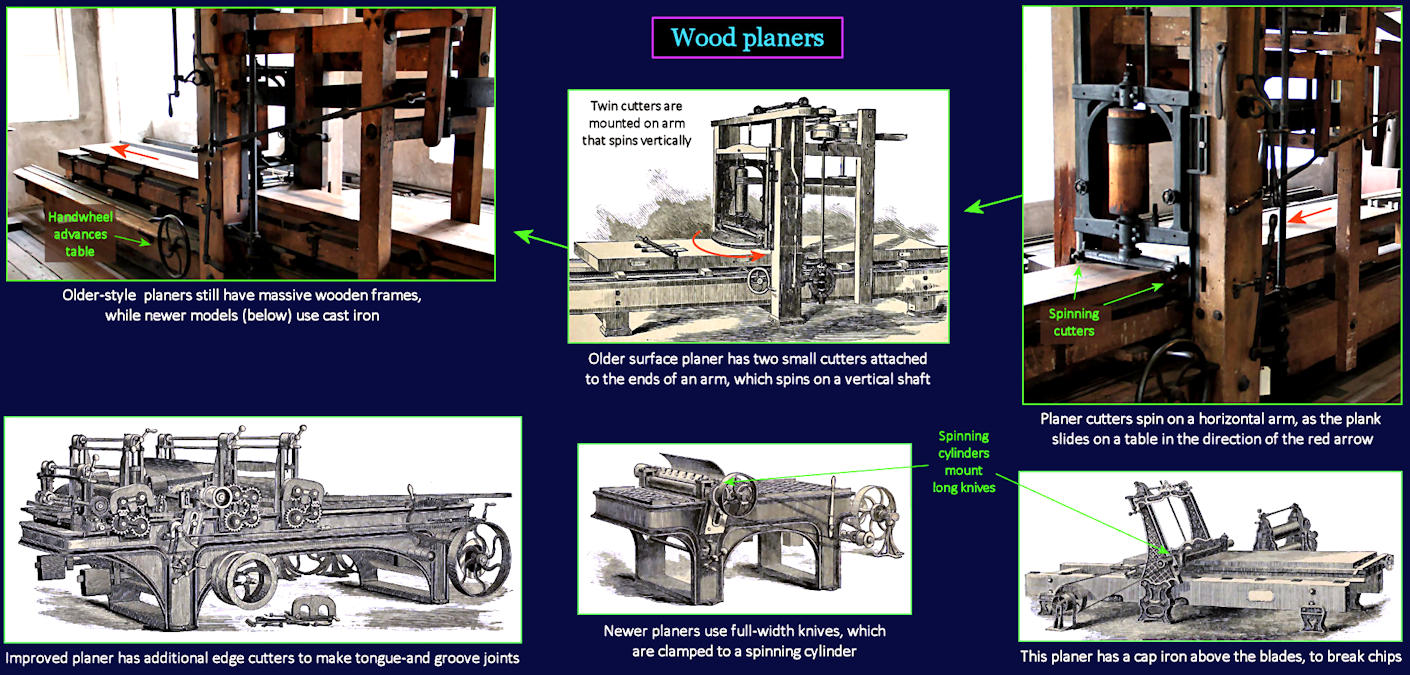
New Breed Machines that smooth the top surfaces of wooden planks have been completely redesigned. Cast-iron frames have replaced wooden beams, while full-width blades now remove material faster, and far more cleanly than small whirling cutters (bottom). | |||||||||
| |||||||||
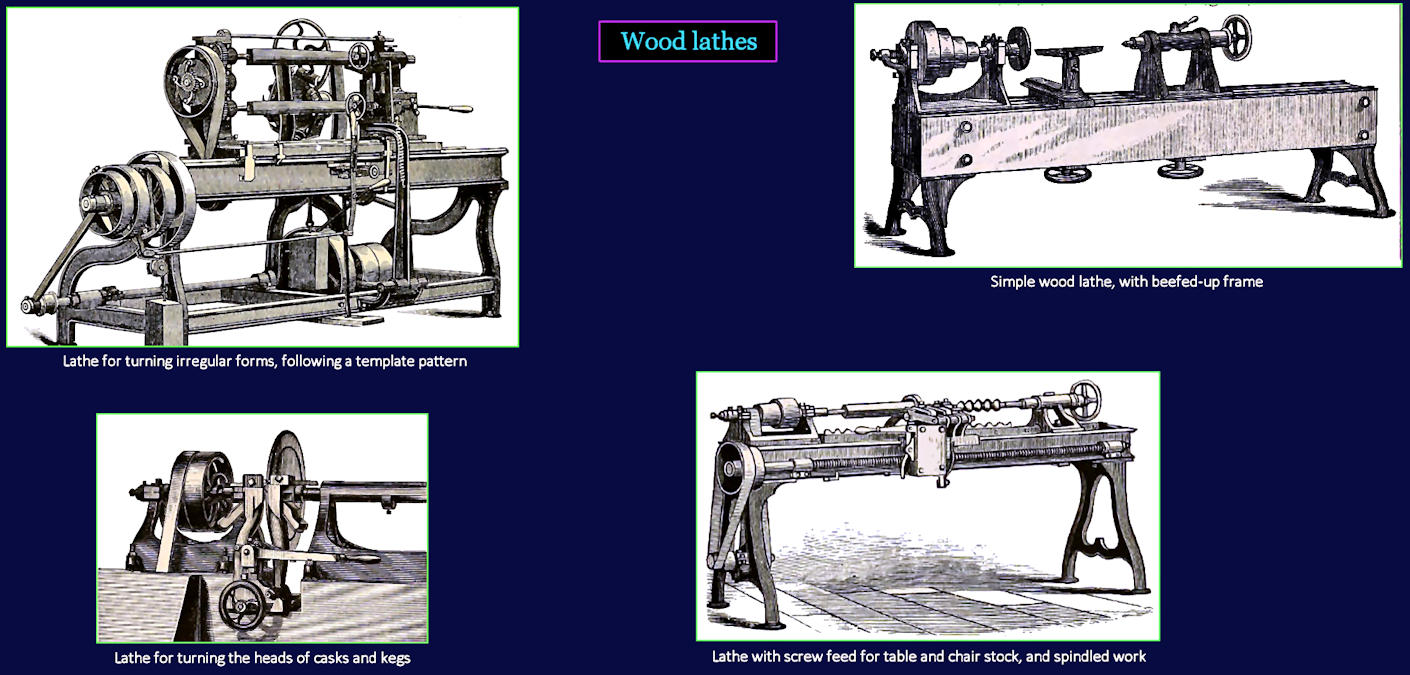
Bigger Operations The basic design of new lathes is similar to older models, but metal frames and large pulleys give evidence that they are being used for higher-speed production. Foot pedals are disappearing. | |||||||||
| |||||||||
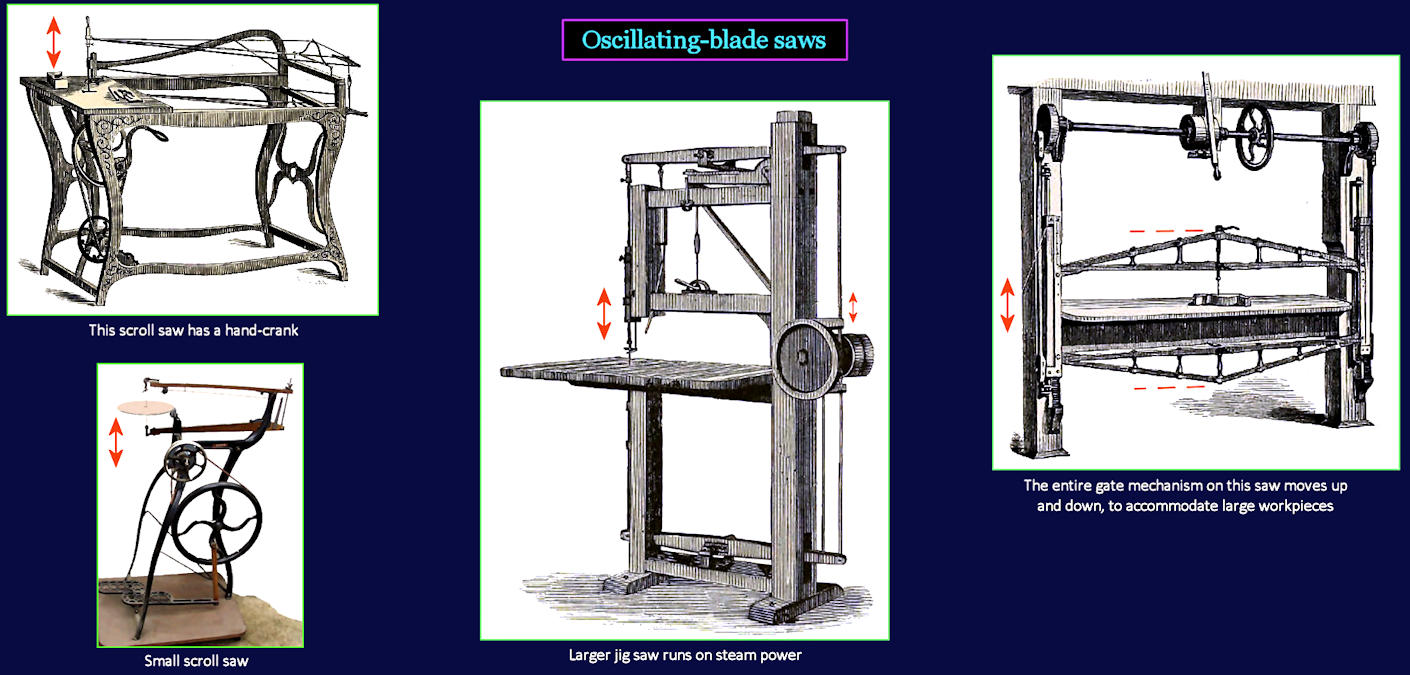
Thinner Blades Thanks to improvements in metal-forming technology, some saws are equipped with very thin, fine-toothed blades used to make decorative scrollwork. Various means are used to create the up-and-down motion of the blade. | |||||||||
| |||||||||
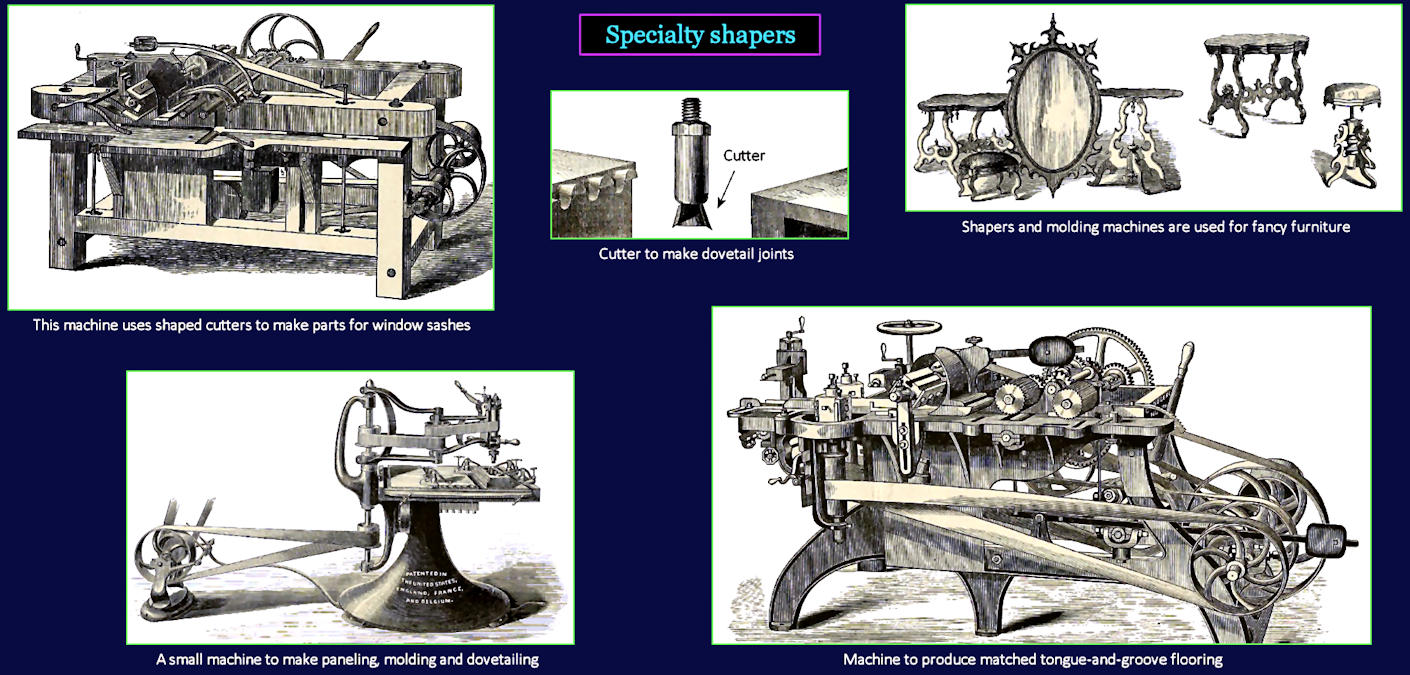
Decorative Shaping The thin wood strips used to separate windowpanes are typical of molding strips in general. Such strips have one or more edges that are rounded over, with graceful decorative profiles made by cutters of the same profile. Dovetail joints used for the corners of drawers use similar cutters. Machines used for profile cutting are sometimes quite complex (lower right). | |||||||||