| |
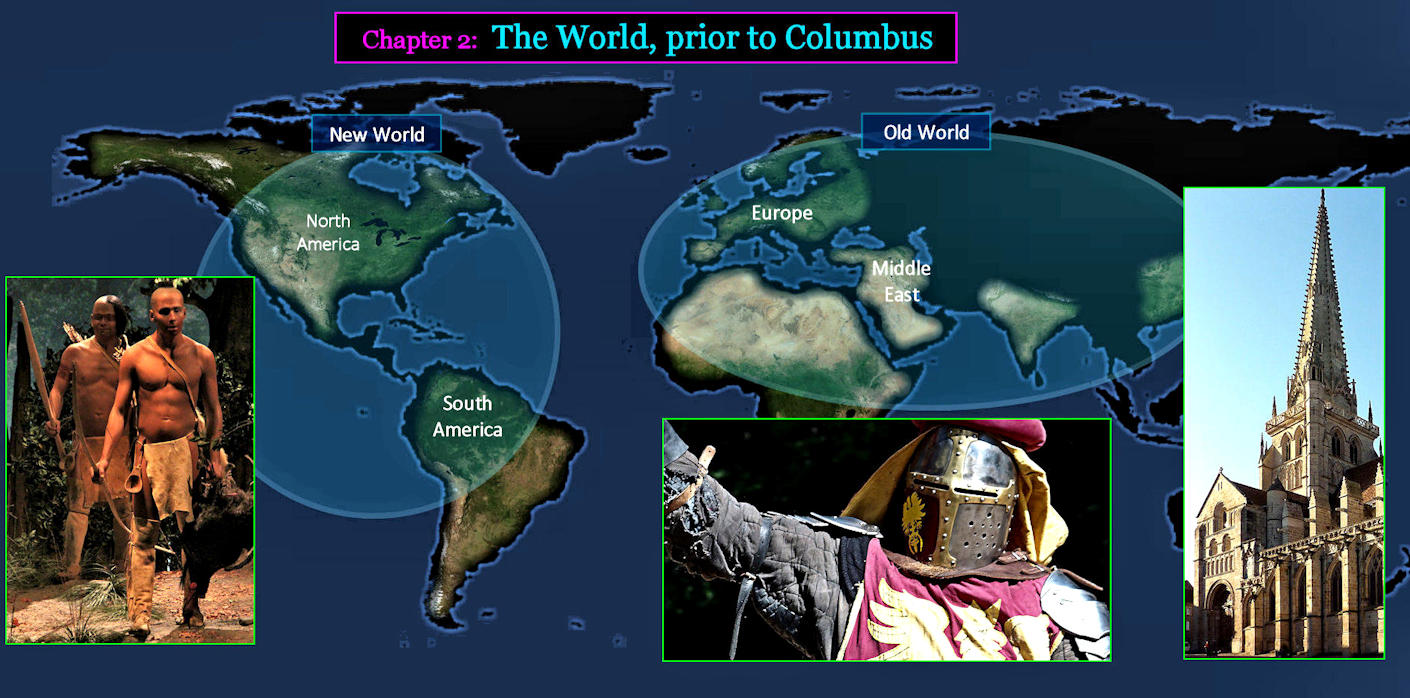
Stone Age meets Western Civilization Indians living in the 'New World' (left, on map) lack technology that has been developing in the 'Old World' (right) for 4,000 years, especially metal tools and weapons. We will use the term 'Indian' in this presentation, because that's the word commonly used at the time. A more accurate term, sometimes preferred by descendants of these people, is 'Native American.' NOTE: This chapter depicts the world prior to the settlement of America. It focuses on business, technology and voyages of exploration. If this doesn't interest you, click on Main Menu (in the navigation bar) to jump ahead to Chapter 3: First Colonies |
| |||||||||
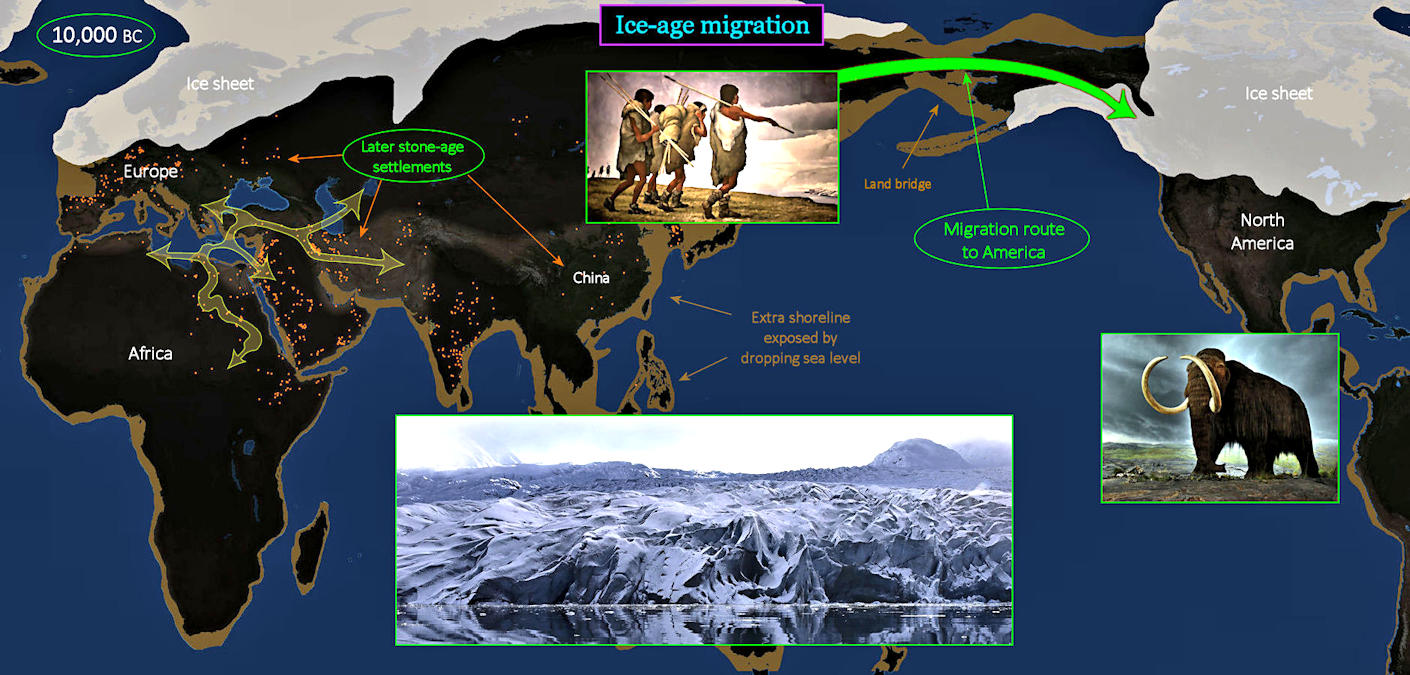
Land Bridge to America The ORANGE dots on this map indicate stone-age settlements at the time ancestors of the Indians first arrive in America. This is at the end of the last Ice Age, when ice covers vast northern regions of the earth (shown in WHITE). With so much water locked up in ice, sea level all over the world drops by several hundred feet. Newly-uncovered land extends far out from the previous shoreline (BROWN zone). This exposes a new pathway to America, and humans begin to cross over about 20,000 years ago. | |||||||||
| |||||||||
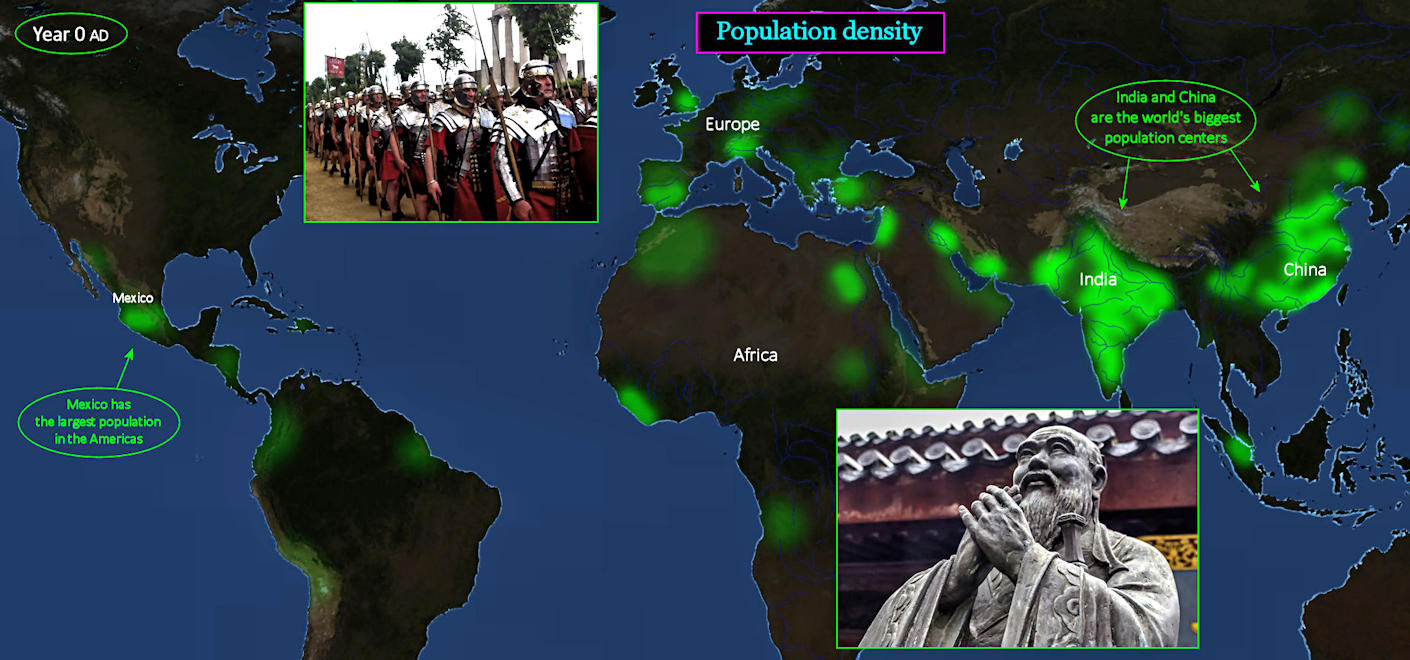
Rome, China and India This view shows population density during the early years of the Roman Empire. Brighter GREEN highlights indicate greater population density. Most people at this time are living in China and India, where they have built impressive early civilizations. Europe, by contrast, is more thinly populated, with hardly any cities. The Roman Empire unifies Europe for a time, with impressive engineering accomplishments, but eventually falls apart under pressure by loosely-related Germanic tribes to the north. | |||||||||