| |||||||||
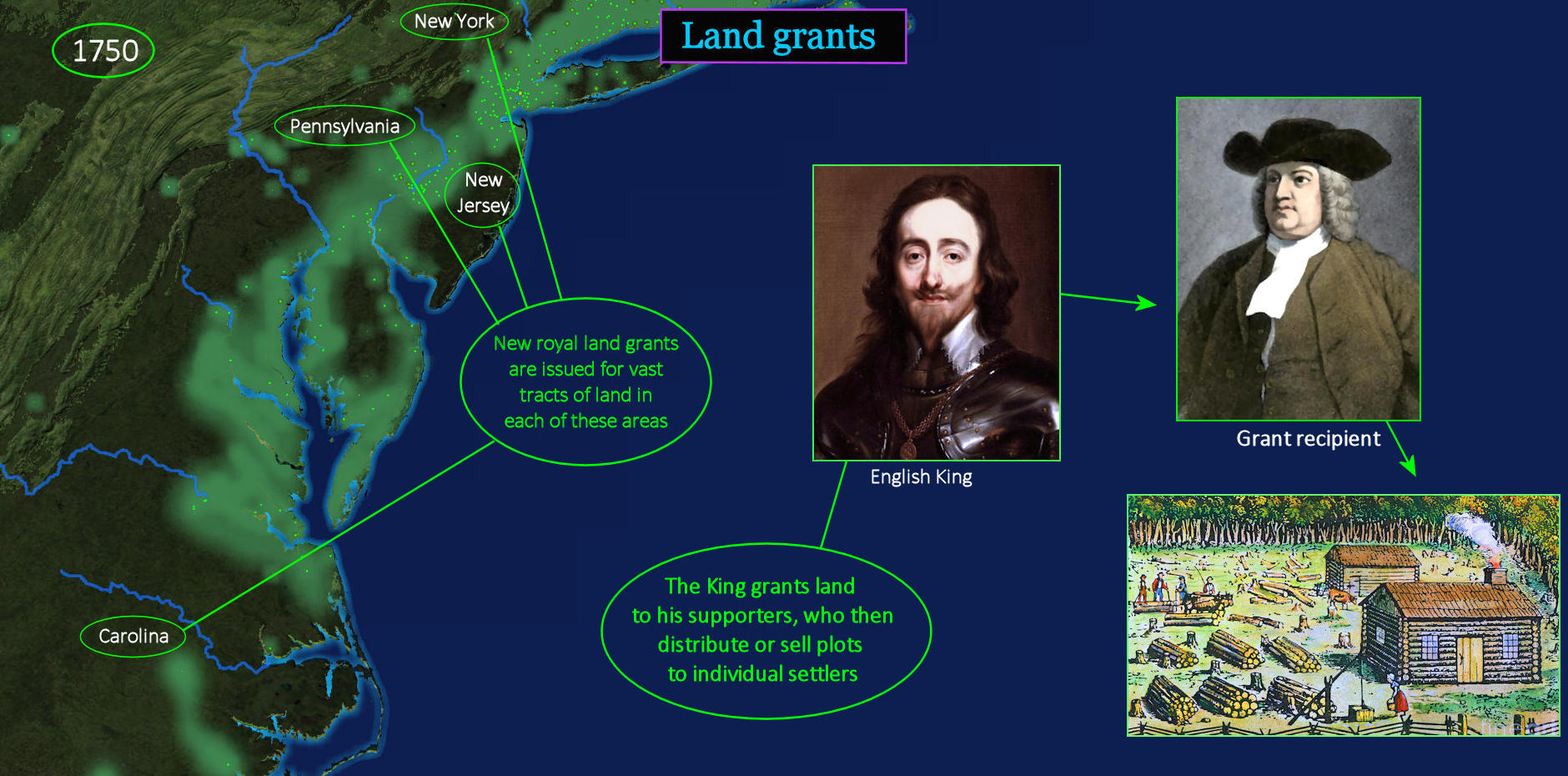
Encouraging Wider Settlement By 1750, settled areas have spread to fill in most of the North, but the South is still slow to develop. The King has recently given new grants of land, in areas labelled above, to promote more settlement. The grant recipients then give plots to the first settlers, and sell plots thereafter. Settlers often agree to trade years of free labor for up to 100 acres of land. | |||||||||
| |||||||||
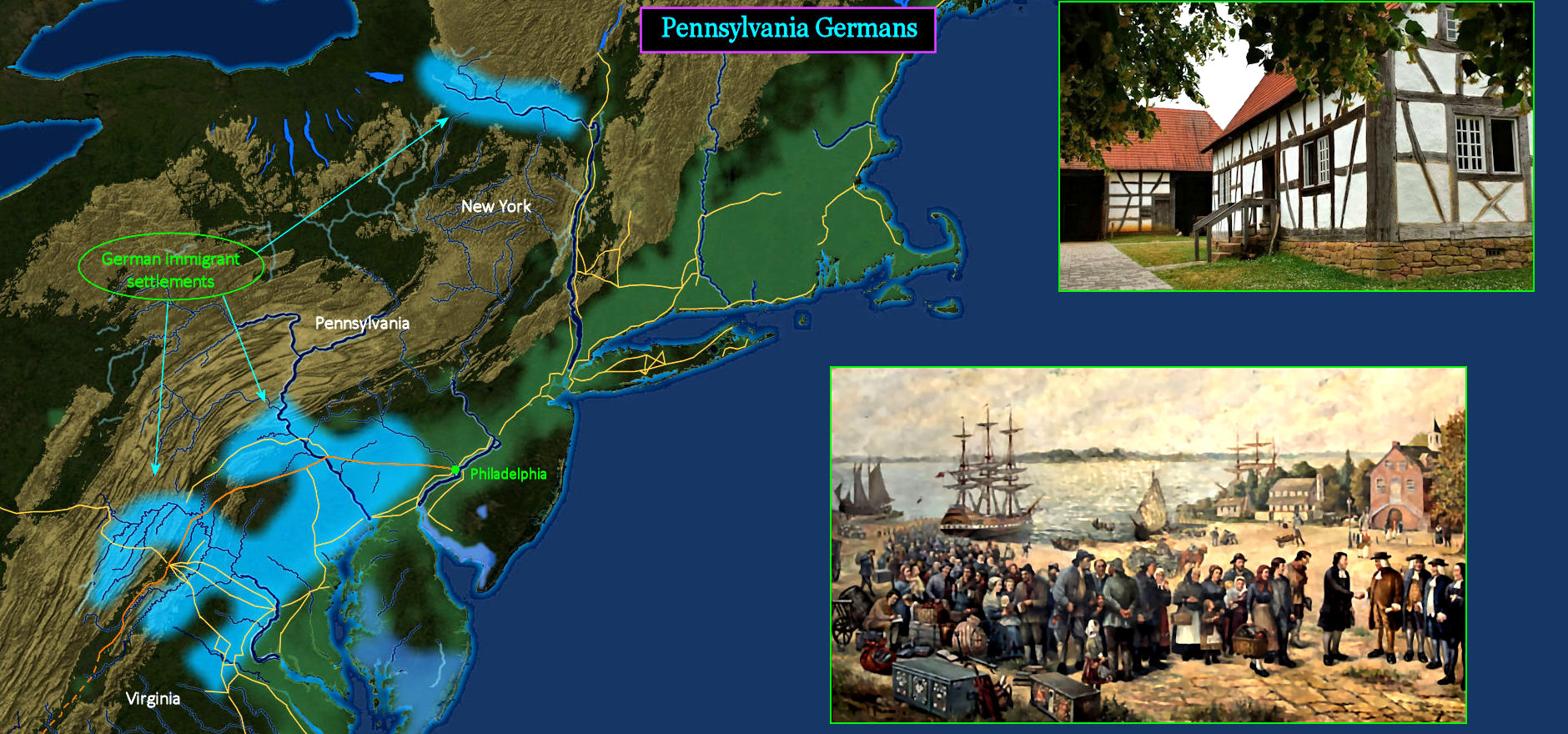
Non-English Arrivals This period is shaped by the first great wave of immigrants to America who speak no English. Germans come flooding into Philadelphia (lower right), fleeing war-torn Europe. From there, they flow west to found new farming communities, where their descendants are still commonly called the 'Pennsylvania Dutch,' though most are from southern Germany. A smaller group settles in upstate New York. There are 100,000 German settlers by the late 1700s, which is nearly 5% of the total population. | |||||||||
| |||||||||
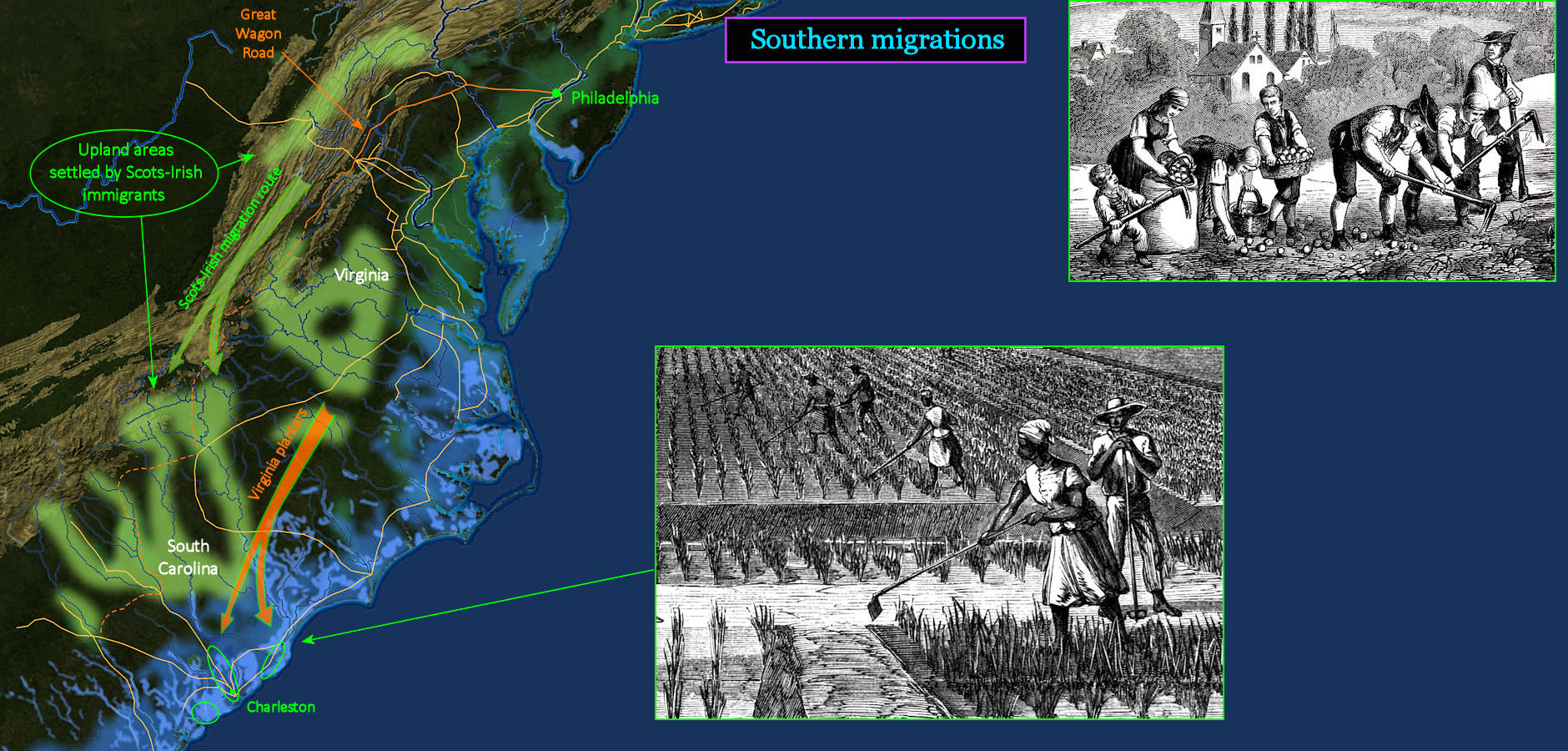
Opening up the Carolinas Tobacco remains king in Virginia, but requires a large plantation and many slaves to make a good profit. It also wears out the thin Virginia soil very quickly. These factors drive many smaller planters out of the tobacco business, to establish rice plantations along the coast of South Carolina, where swampy areas extend far inland (BLUE areas). Rice grows in standing water. Meanwhile, Scots-Irish immigrants (top right) come down the Great Wagon Road from Philadelphia, to settle along upland rivers (GREEN). | |||||||||