| |
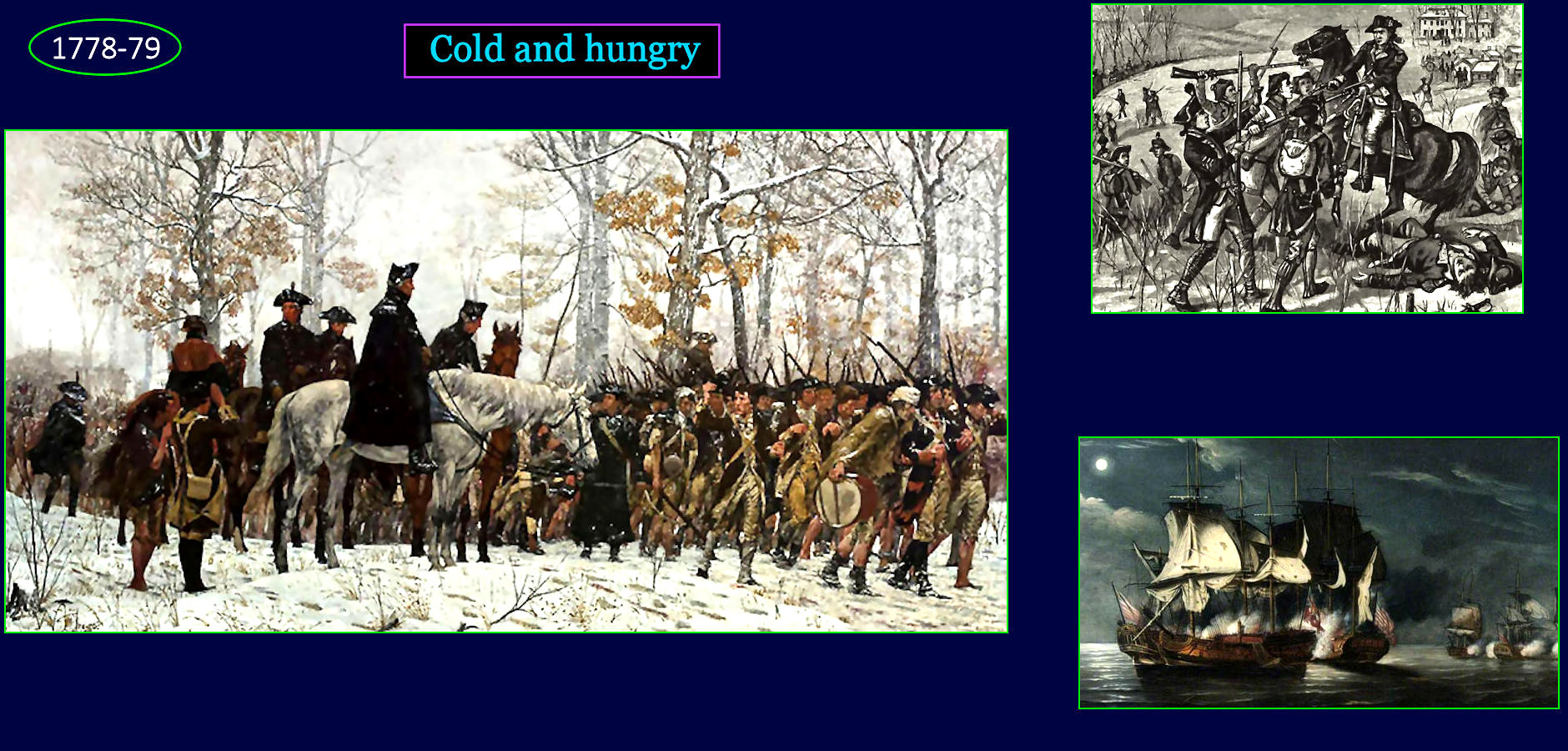
Hard Winter After indecisive battles in New Jersey throughout 1778, morale in Washington's army has fallen to a new low by winter. Public support for the war, now in its third year, is declining. A pair of troop mutinies highlight the delicate condition of the American forces (top right). Meanwhile, an American captain boosts spirits by managing to defeat a much stronger British squadron. |
| |||||||||
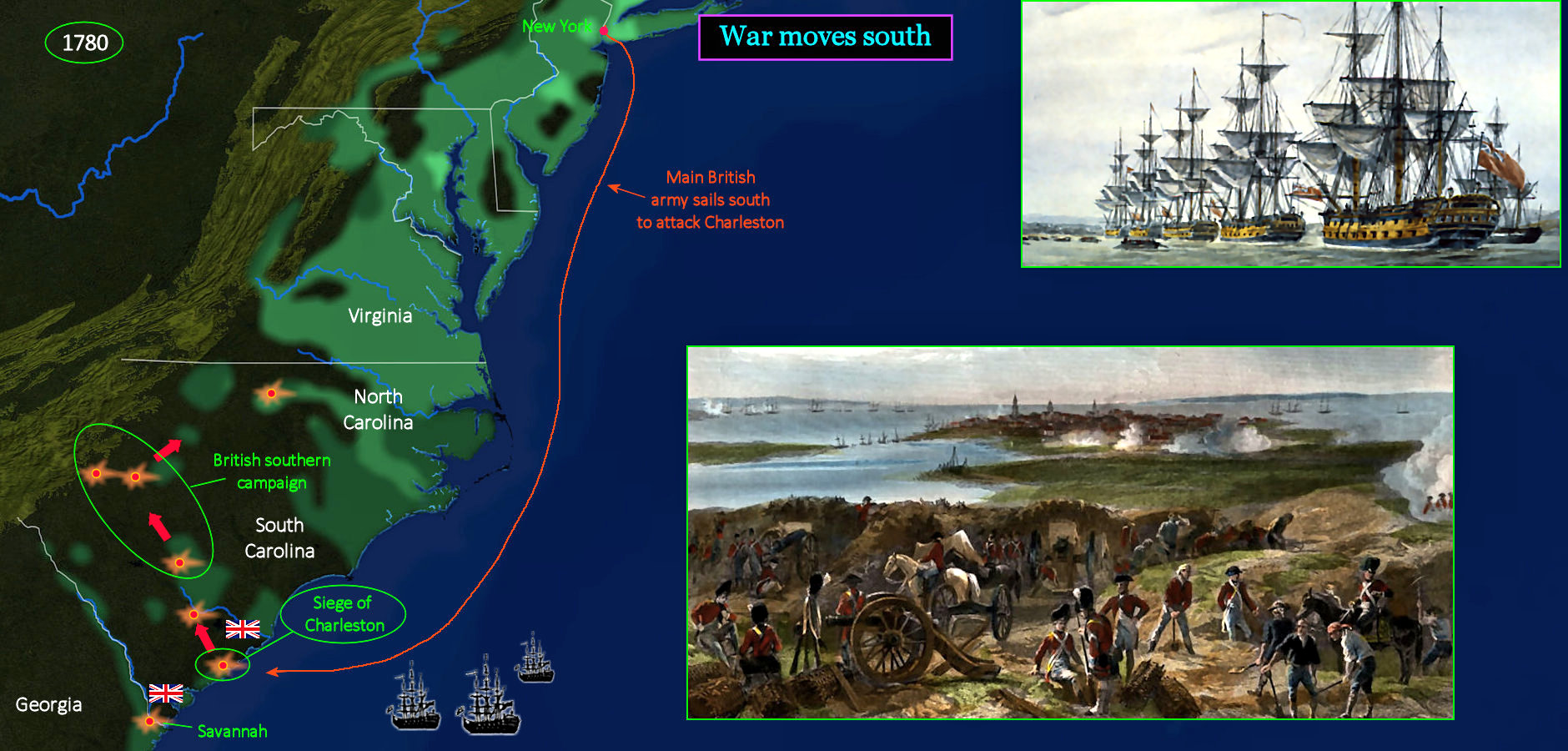
Charleston Surrenders By 1780, with stalemate in the North, the British turn their attention to South Carolina, hoping to split off the entire South. They have already taken Savannah, and now launch a full-scale invasion, starting with the important port of Charleston (lower right). A six-week siege ends with surrender, and the capture of the entire 5,500-man garrison. It's the worst American defeat of the war. But the British are stubbornly resisted as they move inland, and finally head back to the coast to await re-supply. | |||||||||
| |||||||||
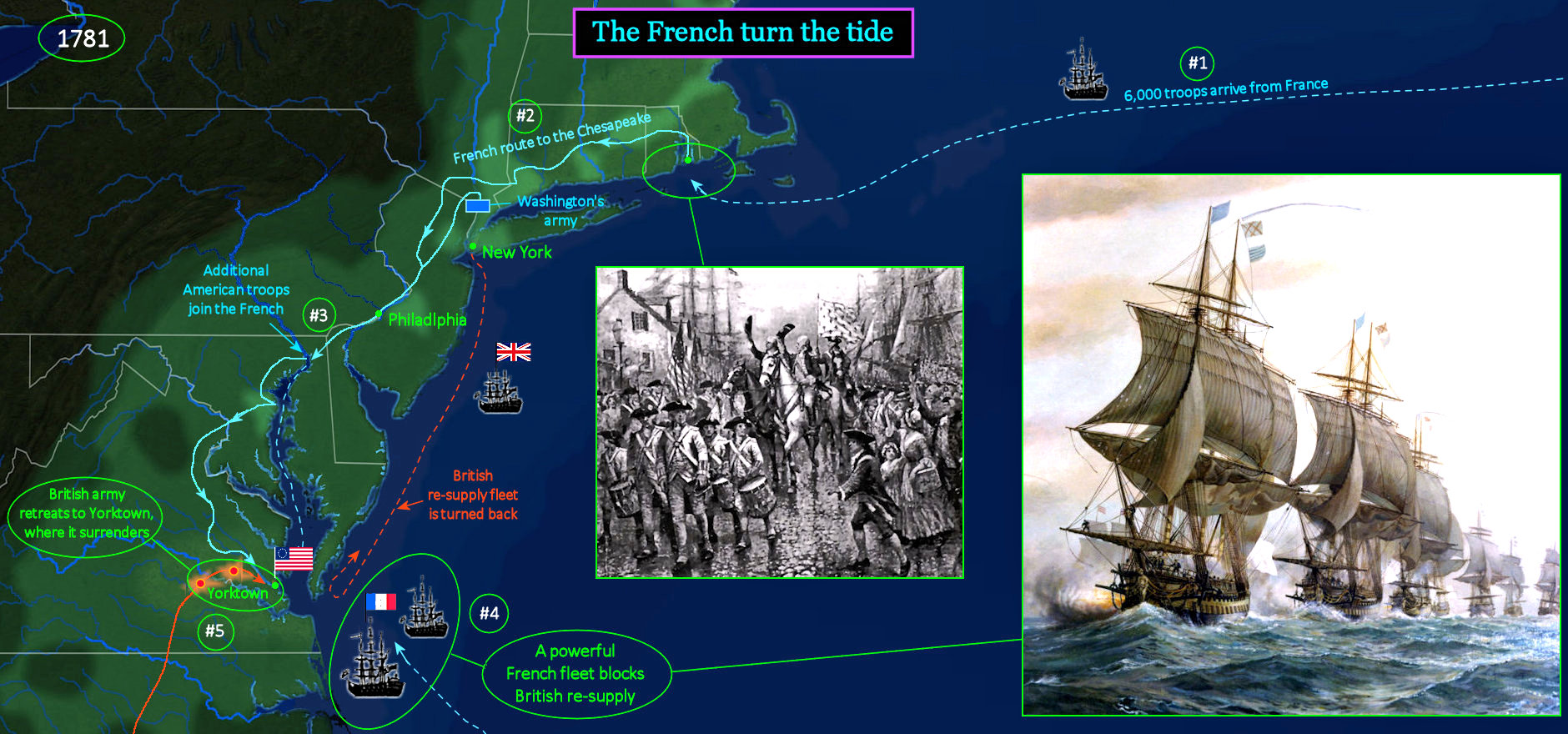
Trapping the British Honoring their alliance with America, the French now send 6,000 troops to Rhode Island (#1), and march around the British stronghold at New York to reach the Chesapeake. Along the way, they join up with the bulk of American forces. But the real muscle is the French fleet, which sails north from the Caribbean to turn back the British fleet attempting to re-supply the troops waiting at Yorktown. Left stranded, the entire British army is forced to surrender, and the war is effectively over. | |||||||||