| |
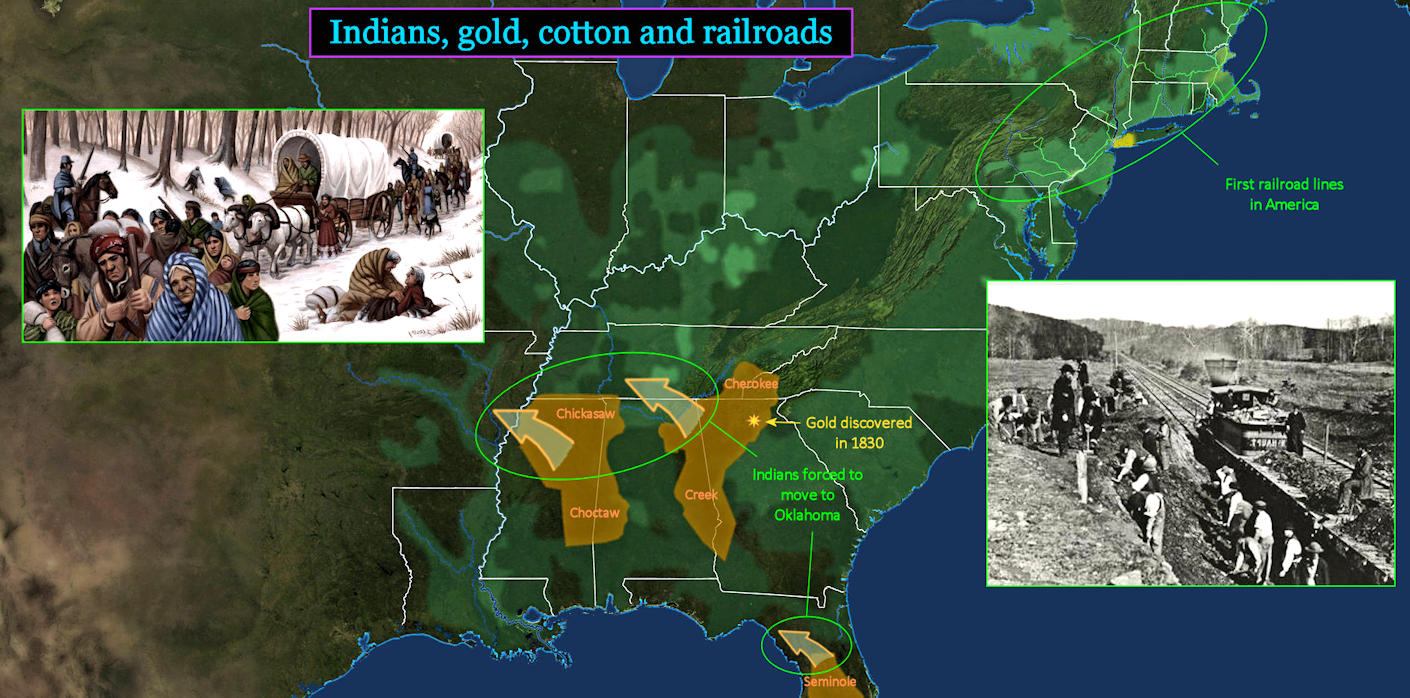
Moving Indians Out Relations are stable and peaceful until gold is discovered on Indian land. It takes just six months for Congress to order the US Army to march Indians from southern states, including some that have adopted the clothing and customs of Whites, off to the Oklahoma Territory. This is on the far side of the Mississippi River, and many die along the way. |
| |||||||||
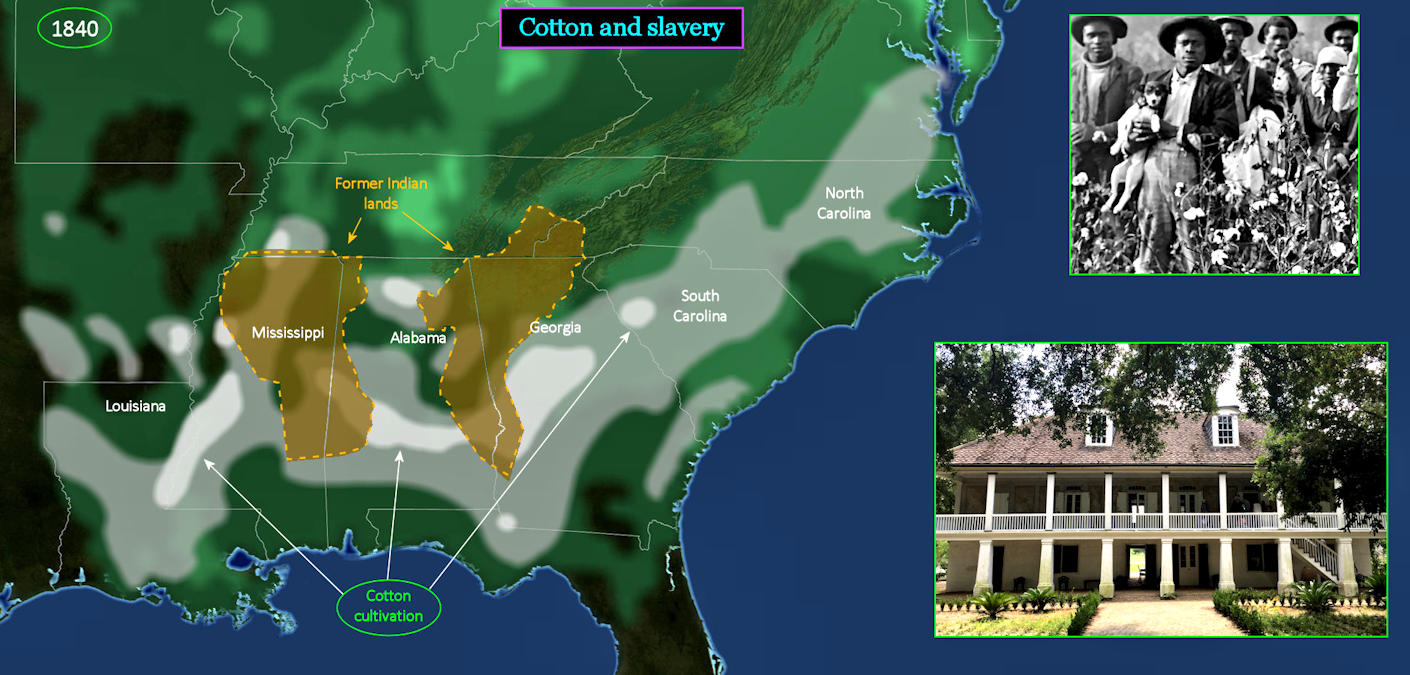
New Cash Crop With the Indians gone, vast new cotton plantations now sweep across the Deep South, bringing with them the misery of slavery. This is the era of the great plantation houses so handsomely depicted in Gone with the Wind. The cotton boom creates a sudden new wave of wealth, fostering a graciousness of living that has largely died out on older Virginia tobacco plantations. Cotton is king, and it rains money in the South for 30 years, until the Civil War brings an abrupt end to the entire system of plantation slavery. | |||||||||
| |||||||||
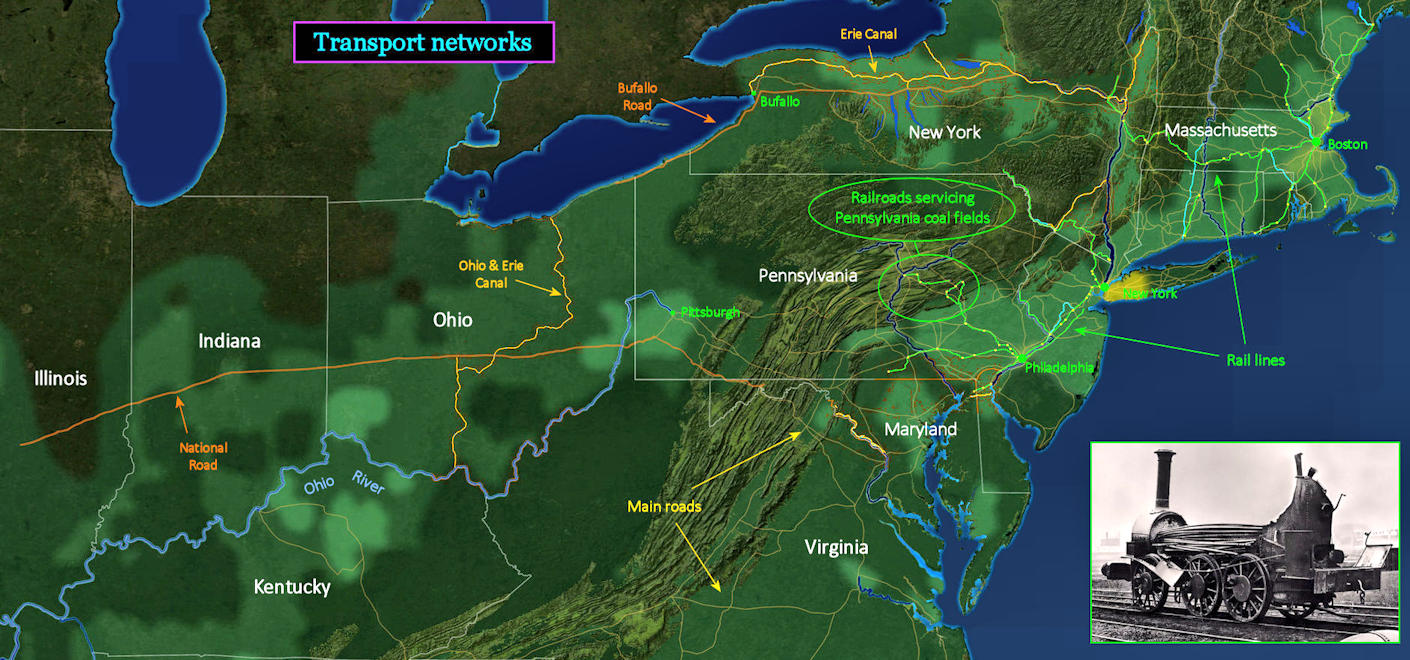
Railroads, Canals and Roads The GREEN lines indicate railways in operation by 1840. Canals are shown in ORANGE, while faint BROWN lines are major roads. The new National Road (deep ORANGE) reaches all the way to Illinois. The railroads are built to connect major business centers. But it quickly becomes apparent that every railway station along the way (YELLOW dots) has a magical effect on land values. Prices go up fast, anywhere near a station. Locomotives still sometimes explode when boiler pressure gets too high. | |||||||||