| |
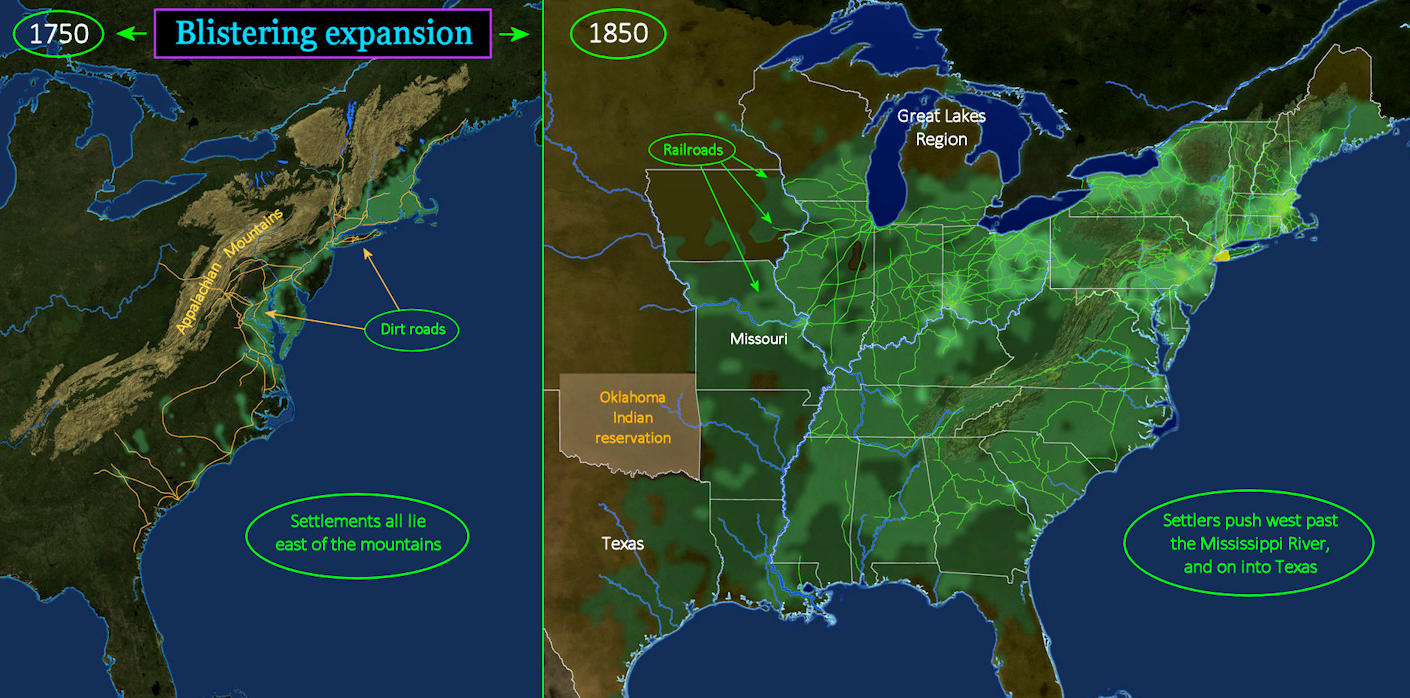
Pushing West The American population is growing at an astonishing rate, increasing more than 30% every 10 years. Almost all the pioneers heading west are coming from the original 13 states. New immigrants arriving from Europe play almost no role. This is home-grown expansion, fueled in equal part by the availability of virgin land, and the means to get there by train and steamboat. |
| |||||||||
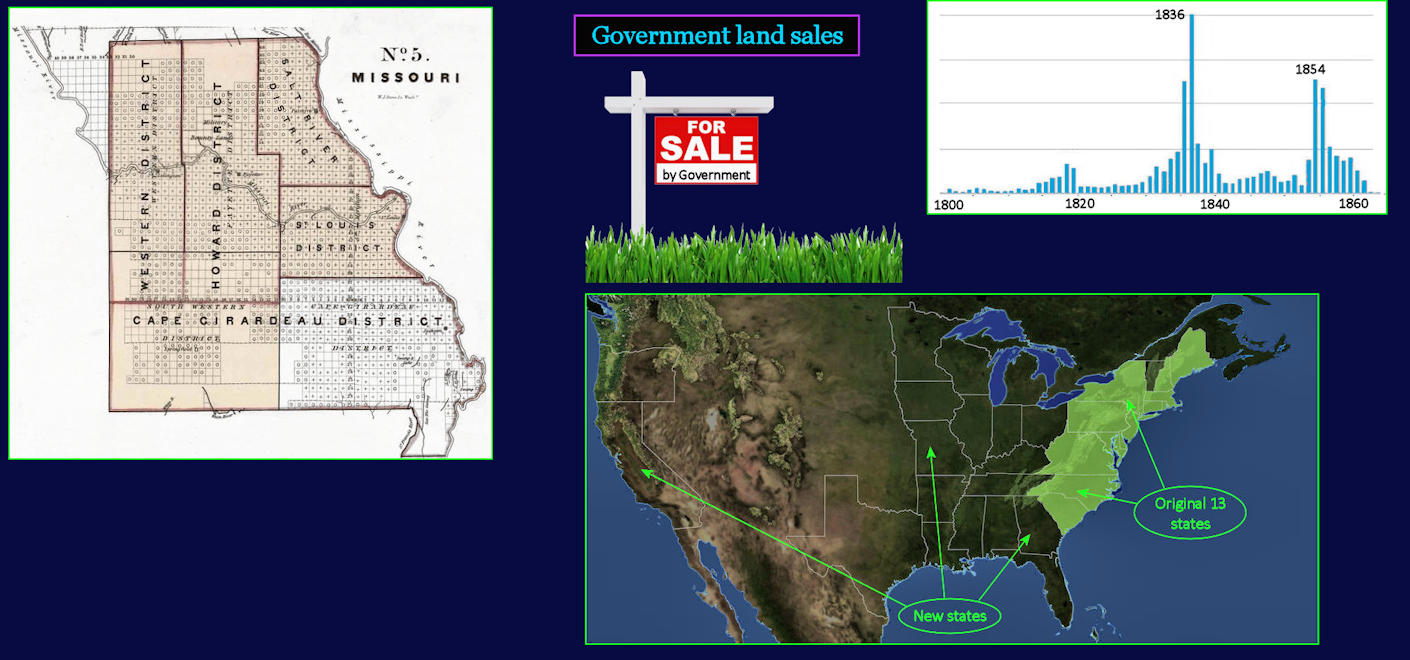
Land, Dirt-cheap The rapid settlement of western lands is encouraged from the start by the national government. Unable to manage all the land transactions itself, the government instead surveys the land, divides it into large blocks, and then sells off these blocks for almost nothing. Even so, the minimum block size is far too large for a single family, so land speculators move in first. They form 'land companies' that later sell off lots of just a few dozen acres, to individual settlers. | |||||||||
| |||||||||
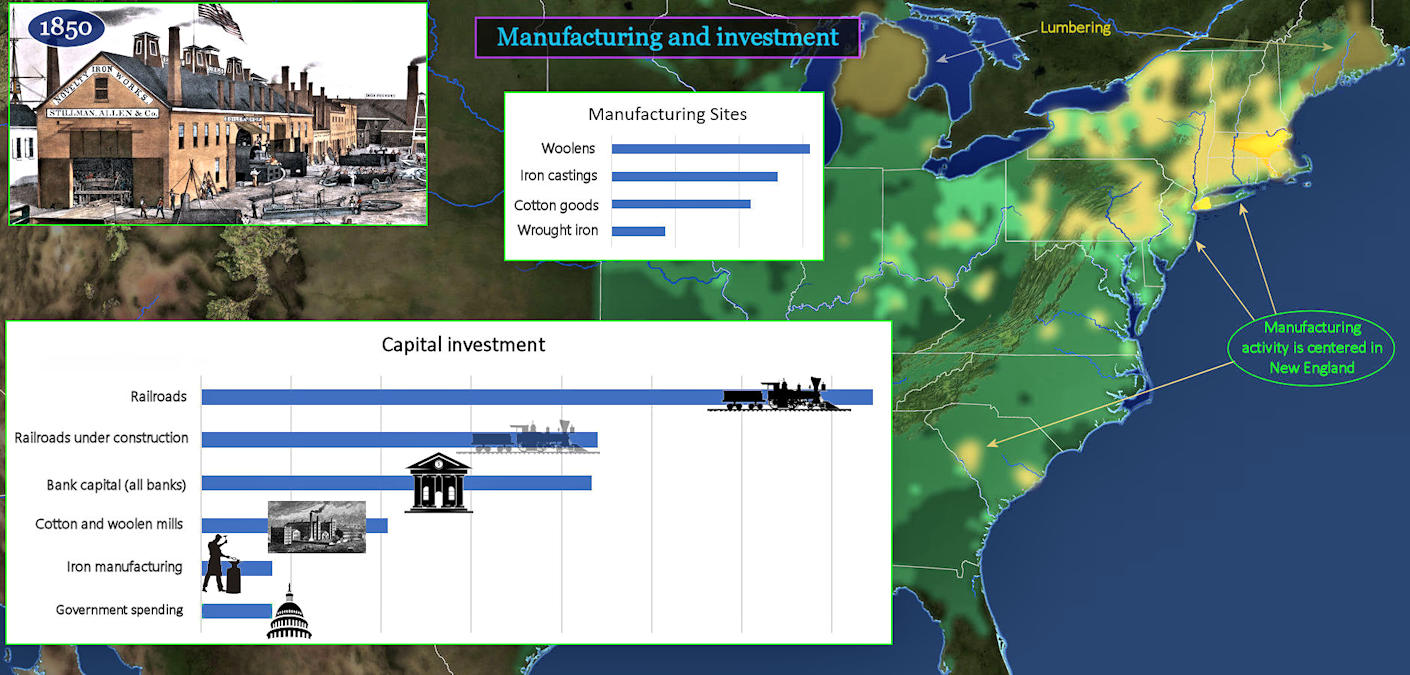
Railroads Lead the Way The top chart shows the most common manufacturing businesses in 1850. The top four categories involve either textile mills (wool and cotton) or iron (castings and wrought iron). The map shows that manufacturing activity (YELLOW highlights) is centered New England, with its many textile mills. The lower chart shows that the great bulk of new investment is being channeled into railroads, either existing or under construction. Commercial banking comes next, surpassing both mills and iron. | |||||||||