| |
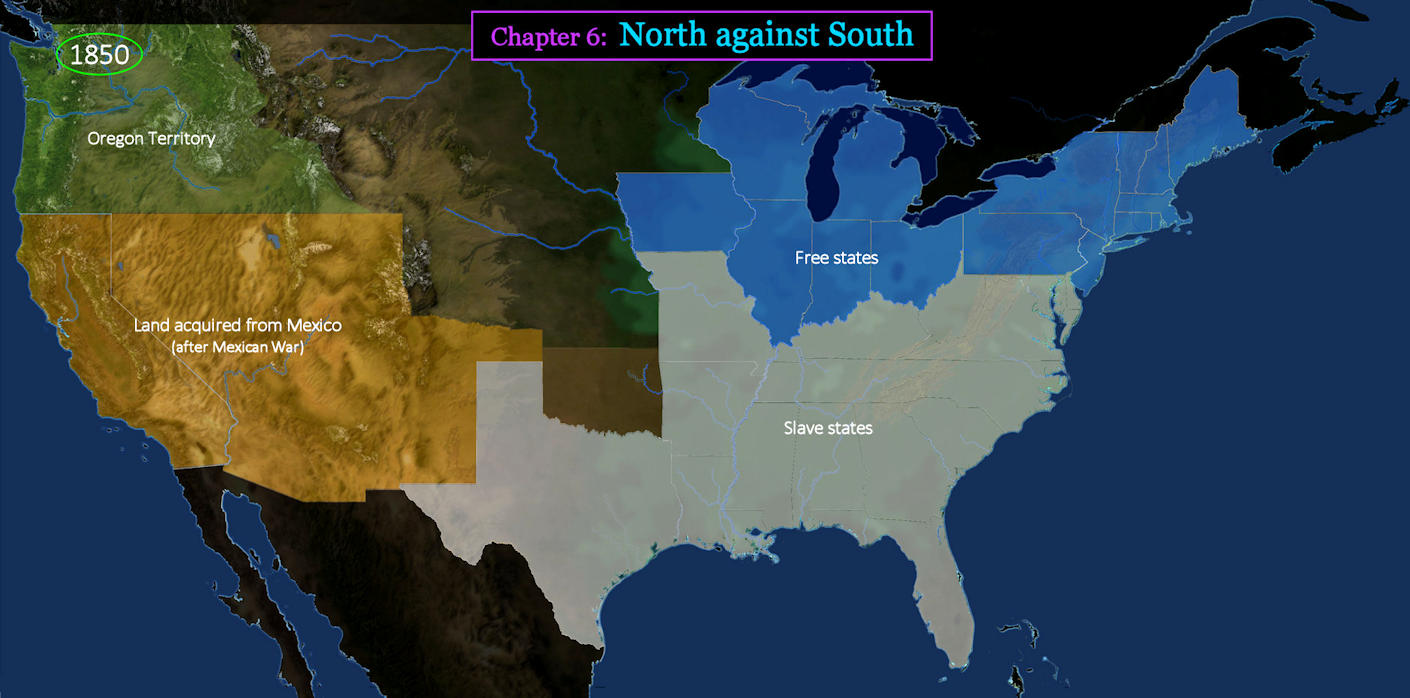
The Slavery Question The problem for the South is how to ensure the continued spread of slavery into the wide-open western territories. Pro-slavery states still control both houses of Congress, and the Supreme Court is headed by a Southern slave-holder. But if new western states are admitted as free states, the South could lose control of Congress. |
| |||||||||
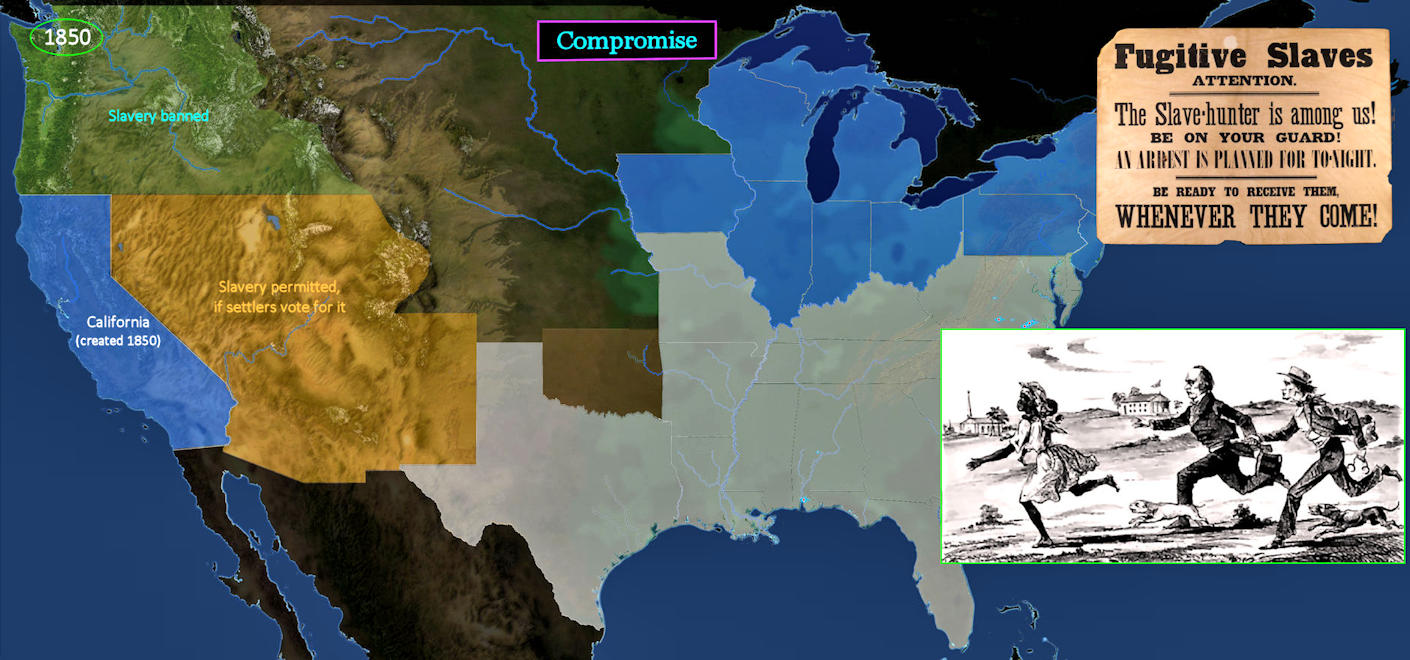
Maintaining Balance The Compromise of 1850 attempts to maintain the balance by admitting California as a free state, and allowing settlers in any state formed from former Mexican territory to vote whether to accept or reject slavery. In order to sweeten the deal for the South, a new Fugitive Slave Act is included to help Southerners catch runaway slaves, no matter where they are found. This is an effort to stem the continual stream of escaping slaves, who use a set of trails dubbed the 'Underground Railroad' to reach neutral Canada. | |||||||||
| |||||||||
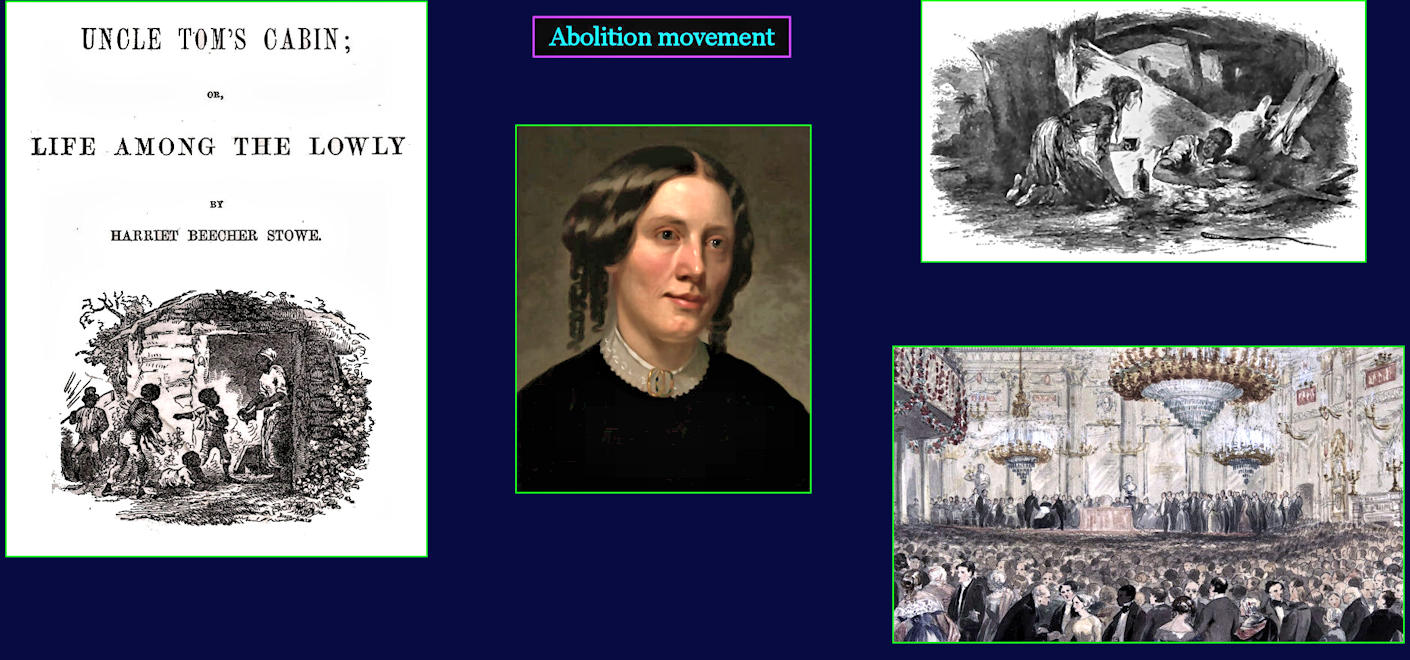
Spark that Ignites a Flame The Fugitive Slave Act is extreme. It levies enormous, unpayable fines for failure to help capture runaway slaves. But this largely backfires, as Northerners are indignantly resistant. Within a year, 39-year-old Harriet Beecher Stowe (above) publishes a story personalizing the plight of slaves, and portraying slave masters as evil brutes. Called Uncle Tom's Cabin, it becomes the first American publication to go viral. It boosts the cause of 'abolitionists,' who seek to abolish slavery entirely (celebrating, lower right). | |||||||||