| |
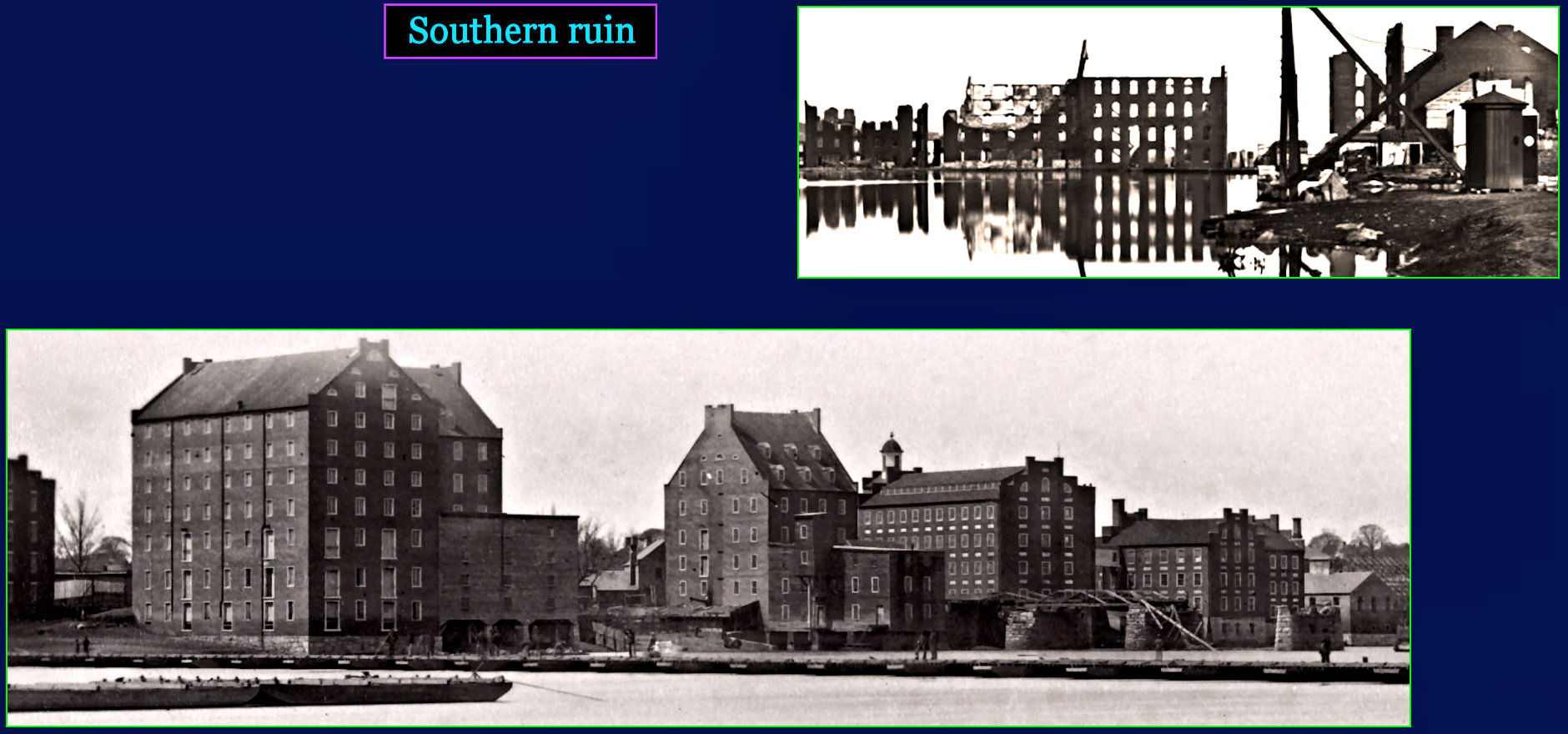
Rebuild from What? The South's decision to fight is a catastrophe. Southerners may have believed that Lincoln would just let them go, without a fight. But once it became clear he wouldn't, it would have been far wiser to just accept the eventual disappearance of slavery. Instead, Southerners receive nothing for their slaves, and no help repairing the immense damage to their infrastructure. |

| |||||||||
Whacked The upper chart shows growth in wealth for the period between 1850 and 1860. Somewhat surprisingly, all four regions are growing at almost exactly the same rate, averaging 130%. Wealth has more than doubled in these 10 years, everywhere. The lower chart shows the growth rate for the following ten years, including all the war years. In the South, wealth has been cut in half, due largely to the uncompensated loss of its slaves. | |||||||||
| |||||||||
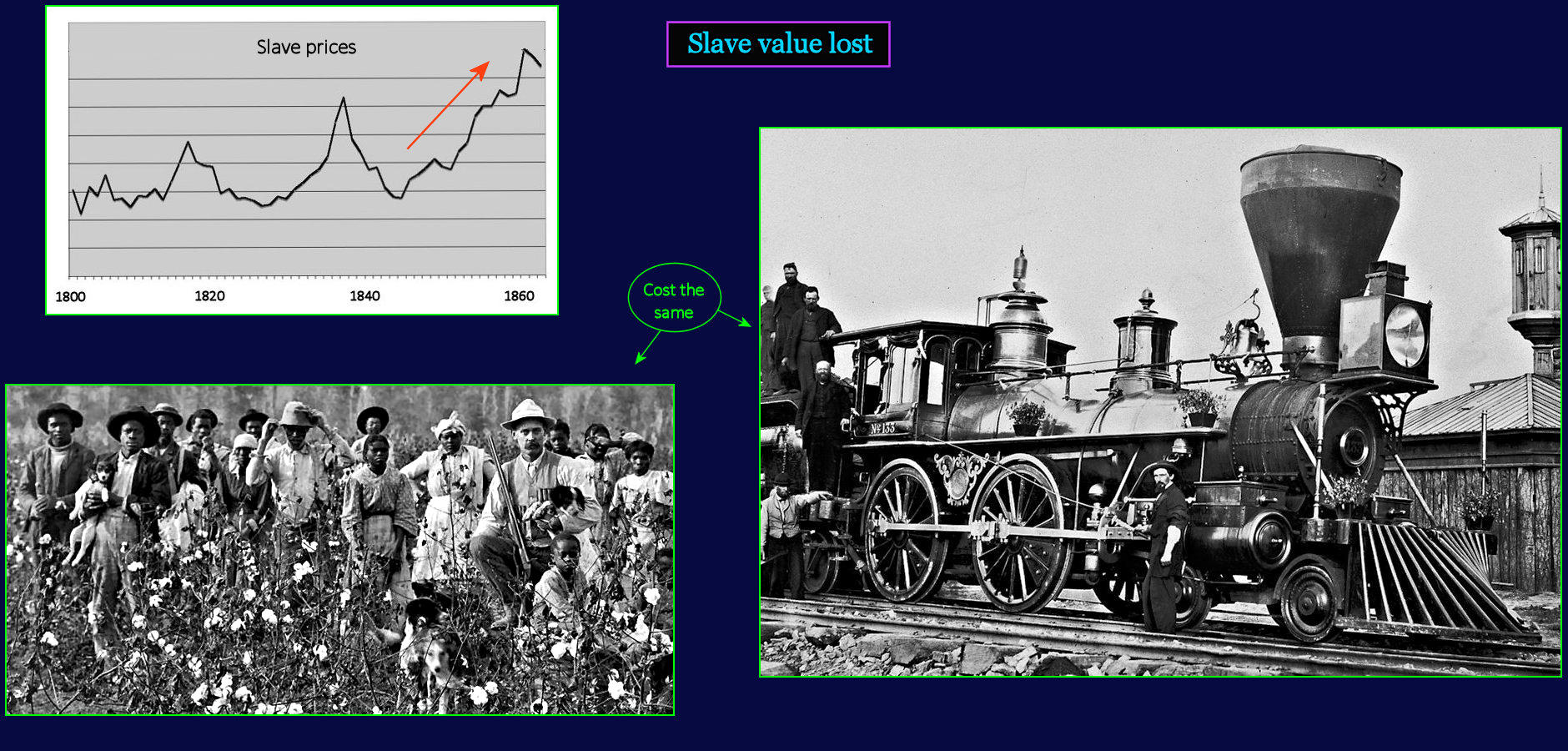
Valuable Assets It is important to realize just how valuable slaves have become. By the beginning of the Civil War, 13 slaves cost about as much as an entire steam locomotive. While most Southern families own no slaves at all, about 10% own more than six. Almost a quarter of all slaves work on plantations, with the typical cotton plantation owning between 20 and 30 slaves. This is equivalent to the value of two locomotives. The largest 1% of plantations own slaves with a value equivalent to at least 10 locomotives. | |||||||||