| |
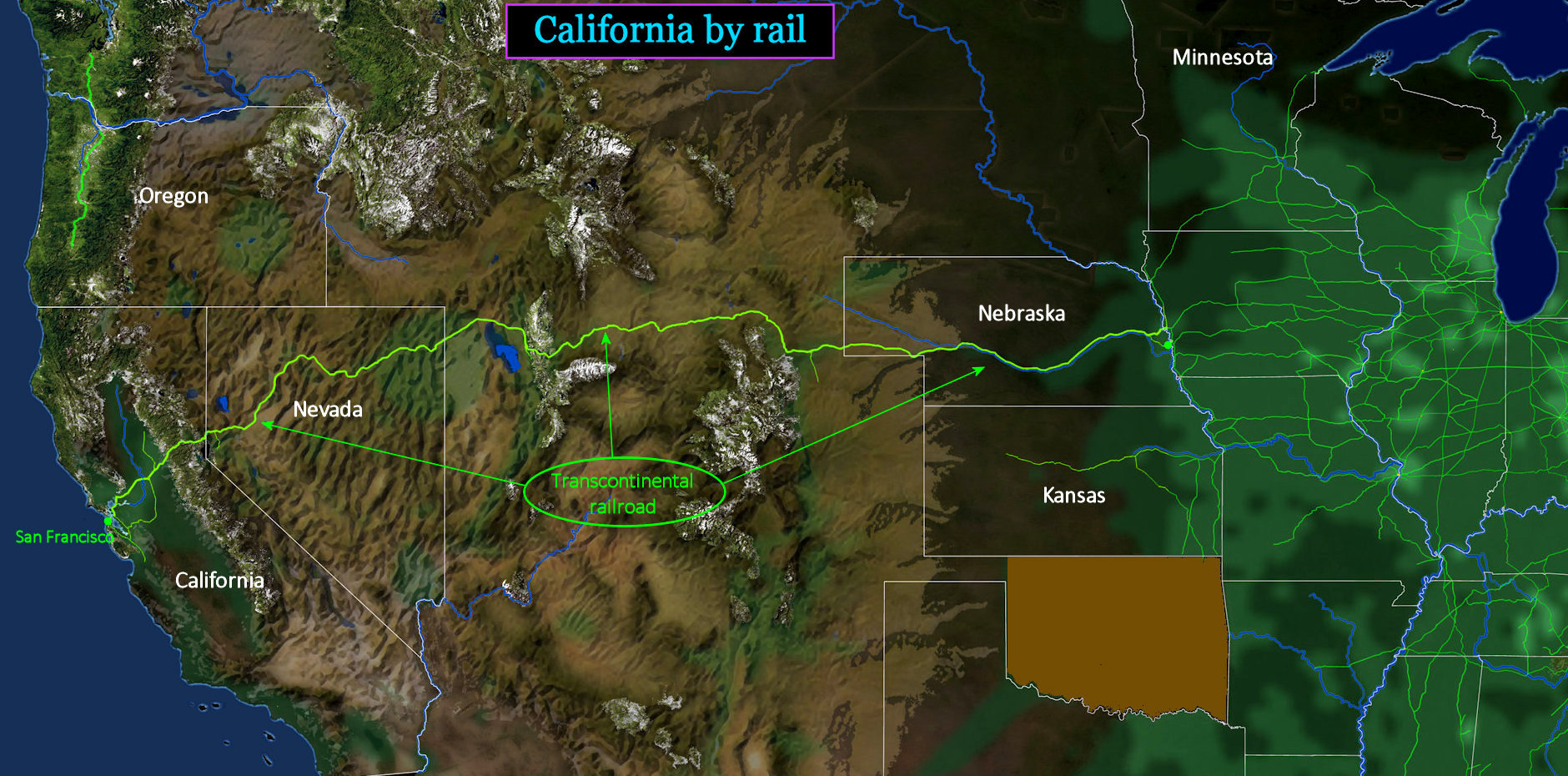
Transcontinental The transcontinental railroad jumps over the mountains to connect California with the rest of the country. The federal government contributes land along the entire route, half of which is given to the railroad companies, along with subsidies. The new line is owned by the government but operated by the railroads, making it America's first big 'public-private' partnership. |
| |||||||||
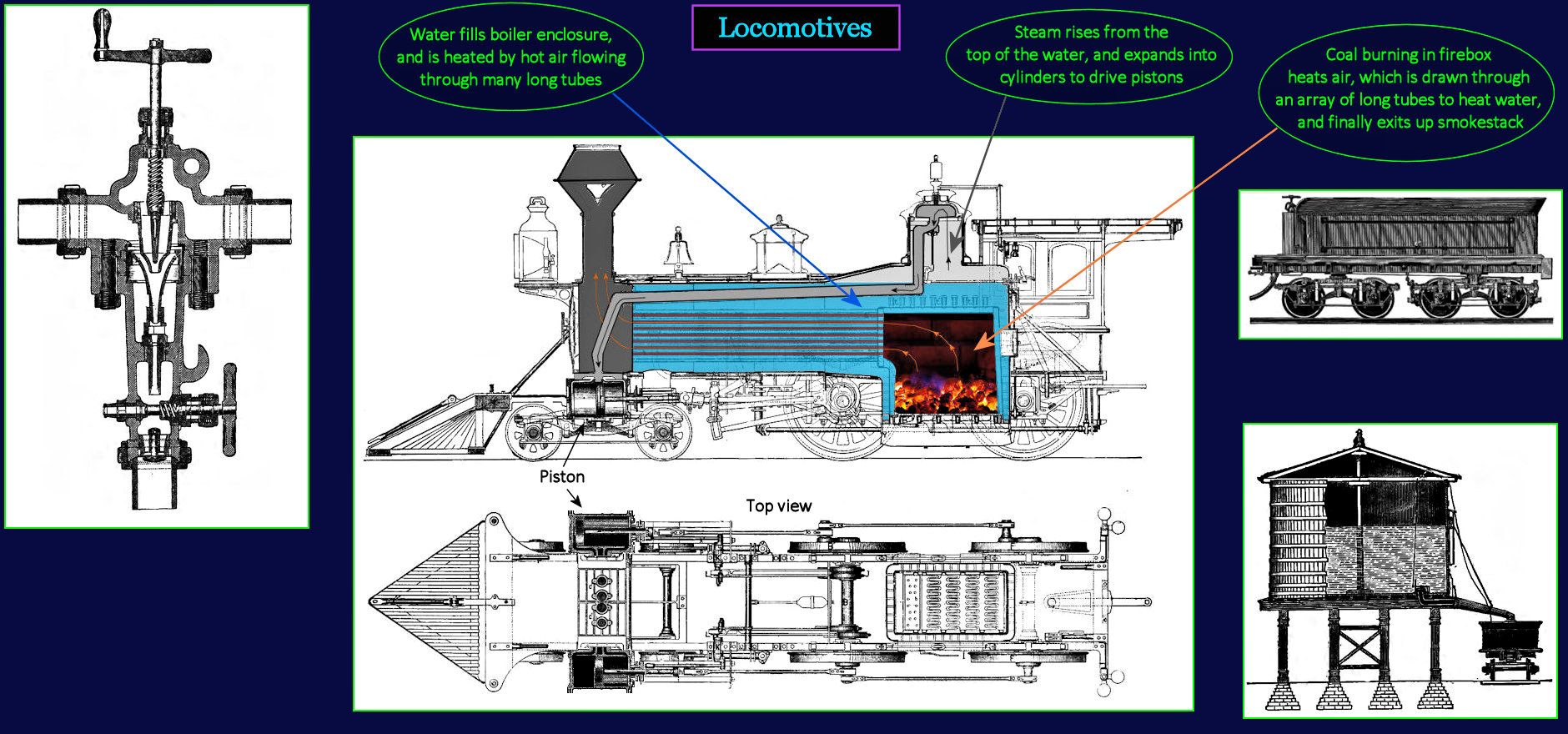
Harnessing Steam Steam locomotives are the most sophisticated mechanisms in America. Heated air from burning coal is drawn forward through water in the boiler tank (BLUE highlight), which heats the water. Steam rises from the boiling water, and is directed through pipes into pistons, which power the main drive wheels. The firebox has to be frequently fed with fresh coal from the tender, which is directly behind. At the same time, water boiling off as steam has to be continually replaced from a reservoir, also in the tender. | |||||||||
| |||||||||
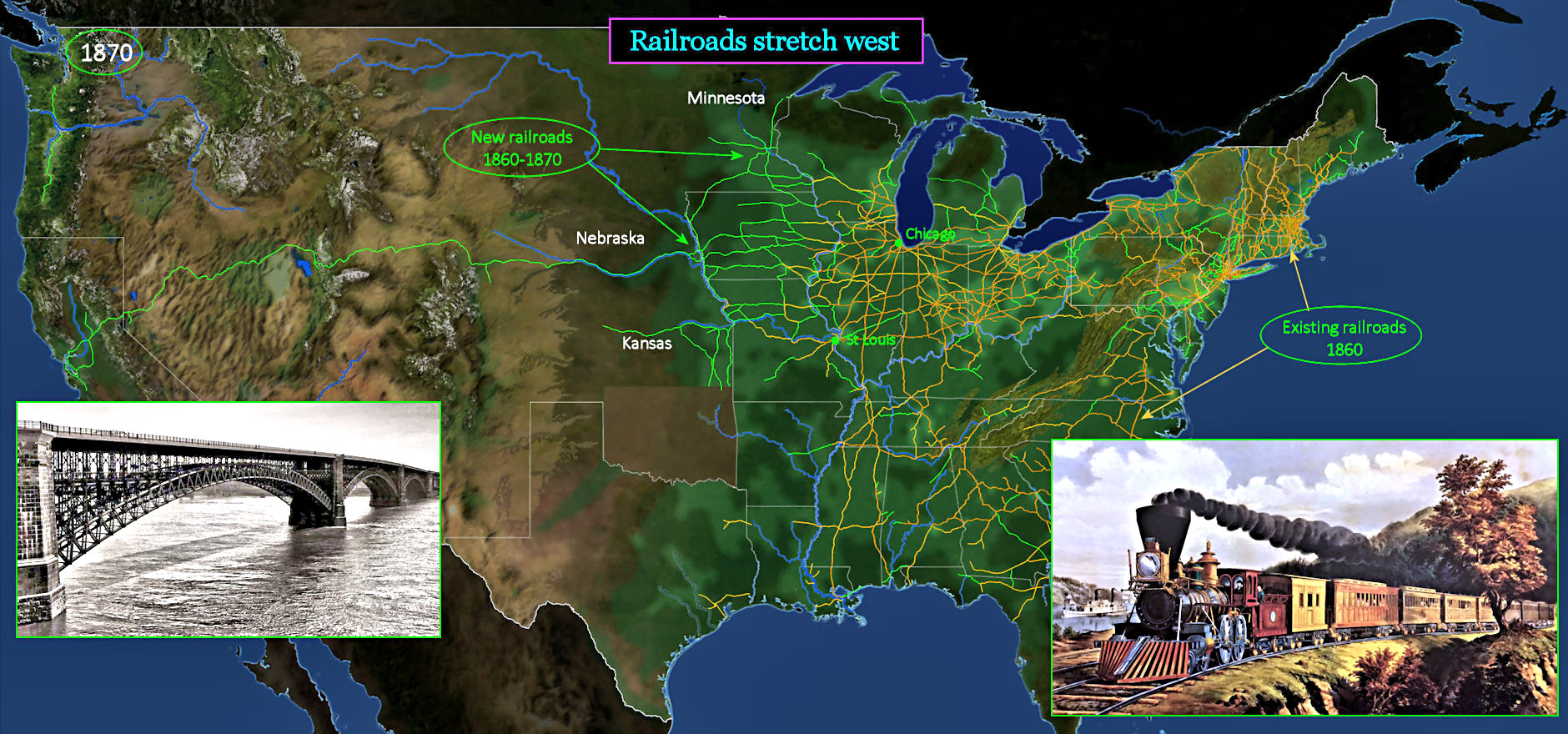
Jumping the Mississippi GREEN lines on the map are railroads built between 1860 and 1870. ORANGE lines are older routes. The great bulk of the new routes extend west into the fertile farming region that butts right up against the great American prairie, which is a much drier, north-south zone running down through Nebraska and Kansas (dark on this map). Settlers are now streaming into these states, just as they had into every other region during the continuing push west. This drives up land prices, and everyone makes money. | |||||||||