| |
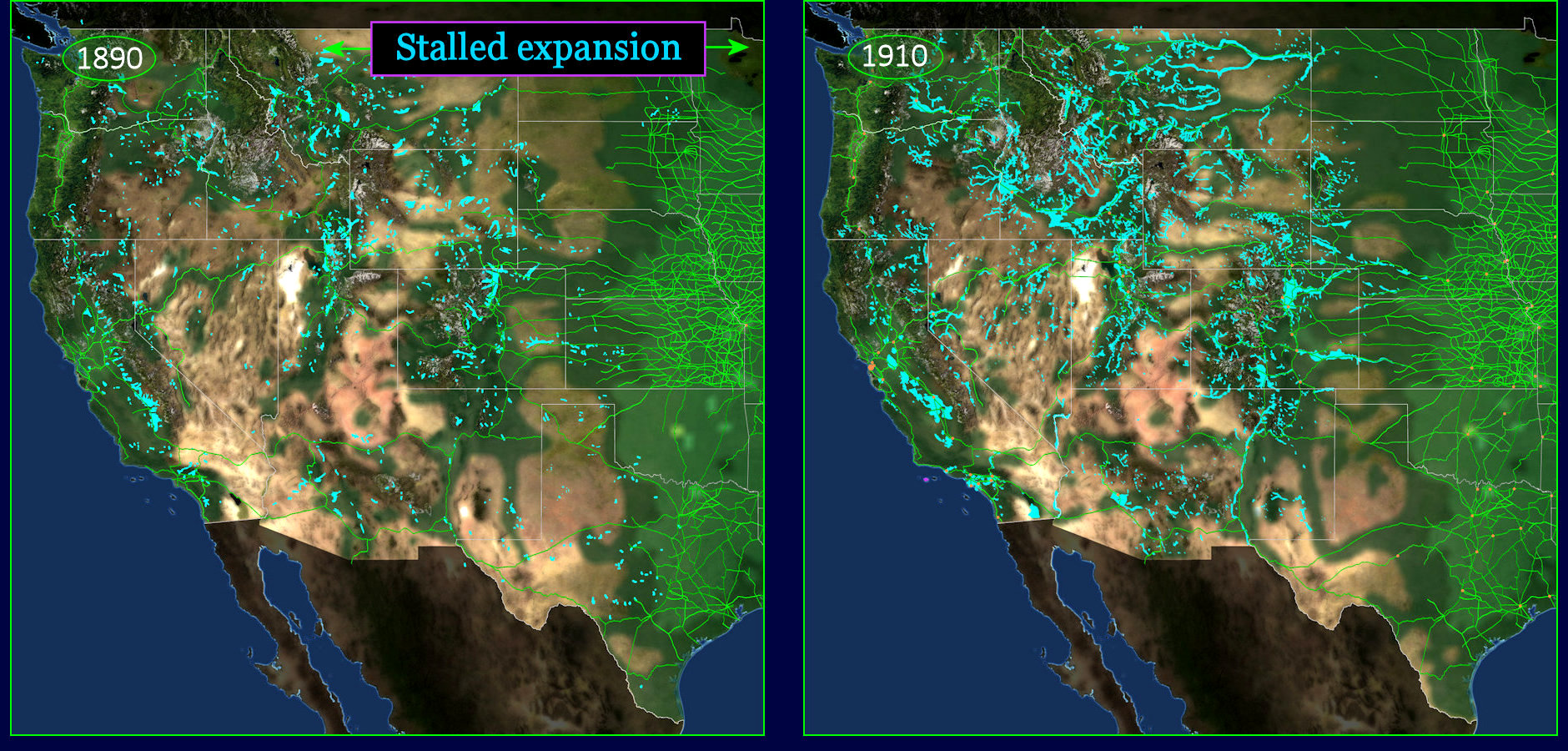
More Irrigation The only real difference between these two maps is in irrigation, which has tripled in extent. Earlier irrigated areas were mostly near the base of mountain ranges, benefiting from runoff of mountain snow. Later irrigation relies increasing on the use of steam pumps, near major rivers. There are a few new railroad lines, but the main period of rail expansion is now over. |
| |||||||||
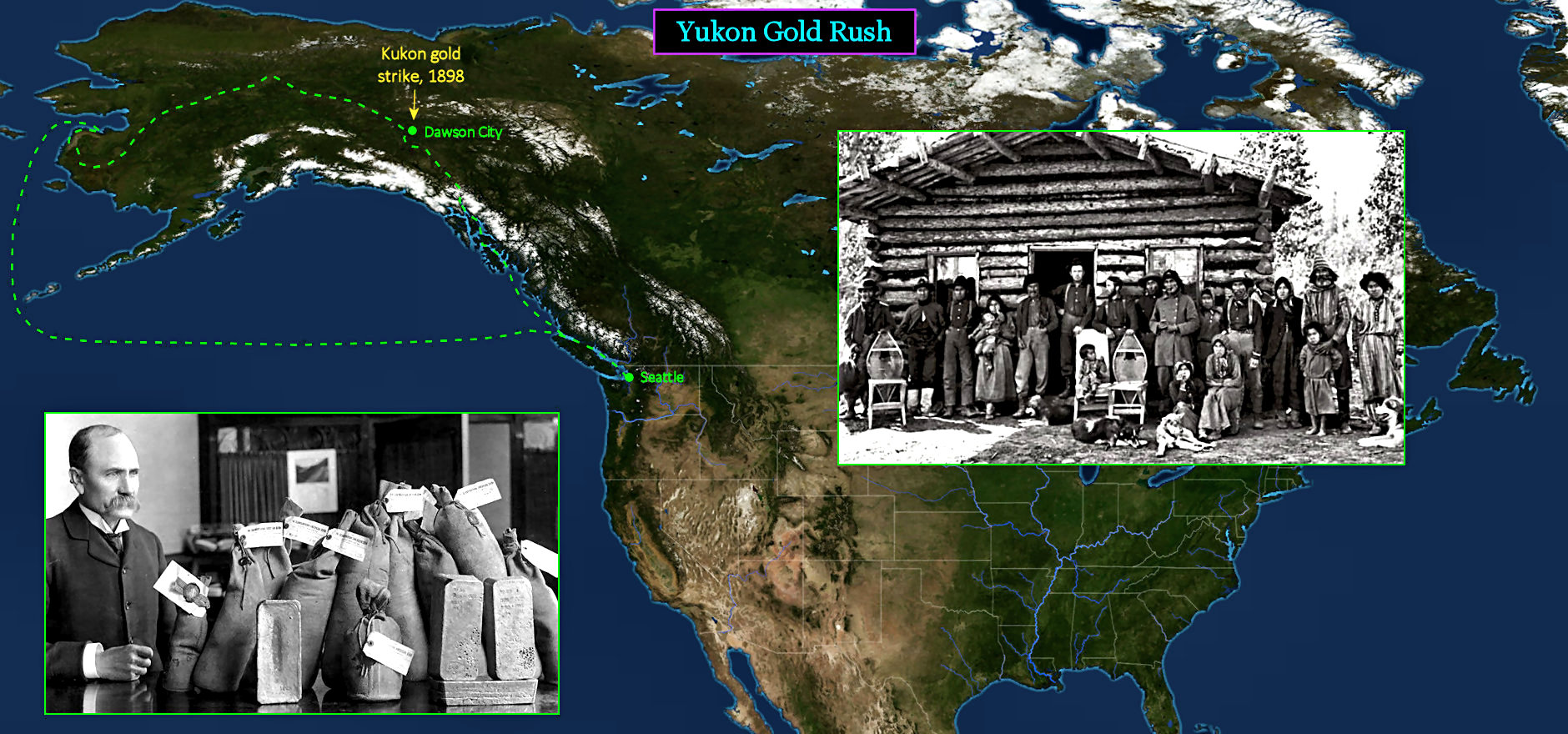
Northern Gold The discovery of gold in Alaska, far to the north, creates a sensation. The long way around is an all-water route, heading straight west before turning north and then hooking back to the western tip of Alaska. From there, travelers take a steamboat all the way to Dawson City, but only before the river ices up. The shorter, more direct route requires trekking 40 miles with a year's worth of supplies, which typically requires 30 round-trips, on foot. Amazingly, some 30,000 men accomplish this feat in the first summer. | |||||||||
| |||||||||
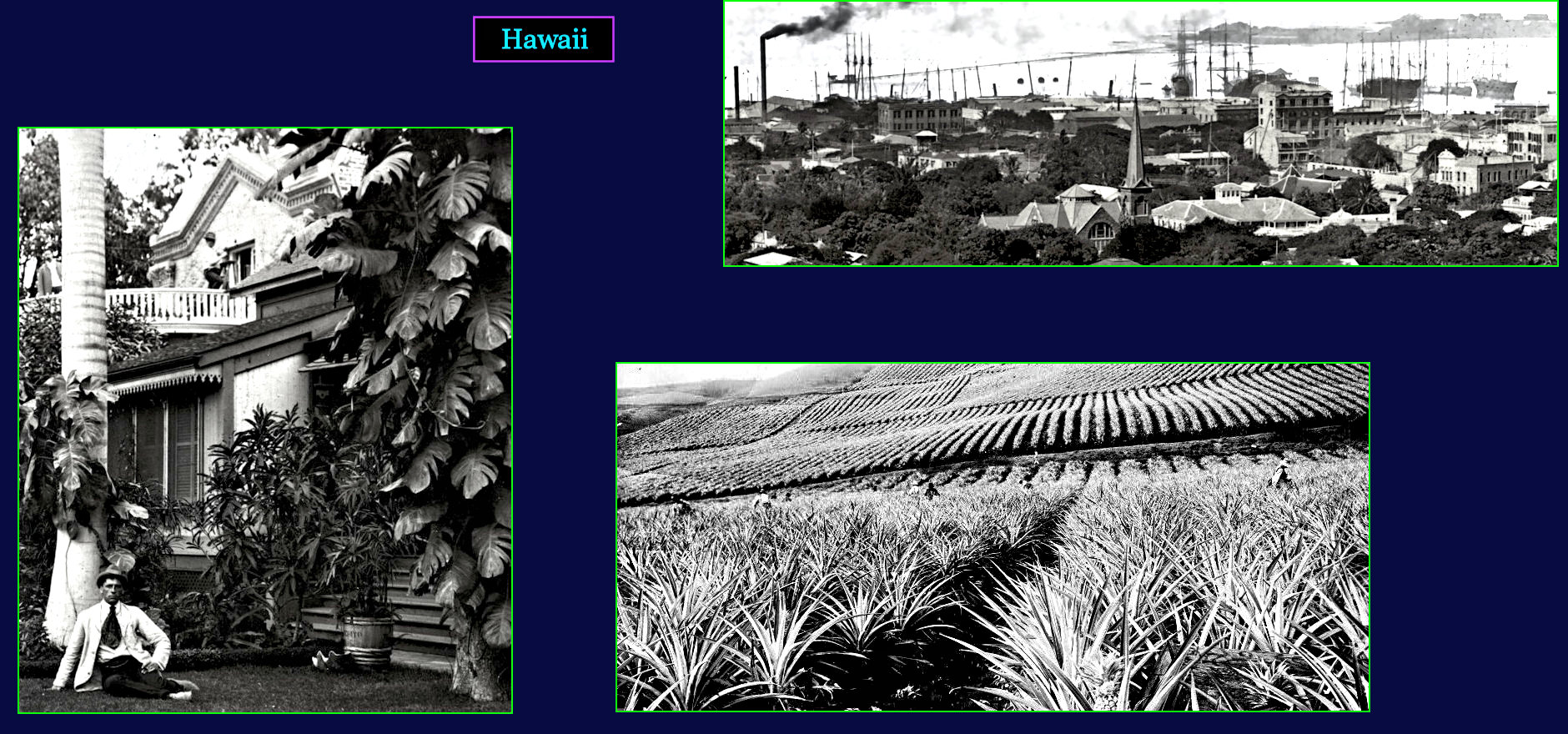
Pacific Expansion In the same year that gold is discovered in Alaska, America seizes the formerly-independent kingdom of Hawaii, after a coup staged by a group of Euro-American business leaders. Sugar has been the main export product of Hawaii since the arrival of Europeans, 100 years earlier, and is now the mainstay of the economy. Large sugar plantations and processing plants are owned by foreigners, including Americans. The island containing Pearl Harbor is deemed a vital American interest by military planners. | |||||||||