| |
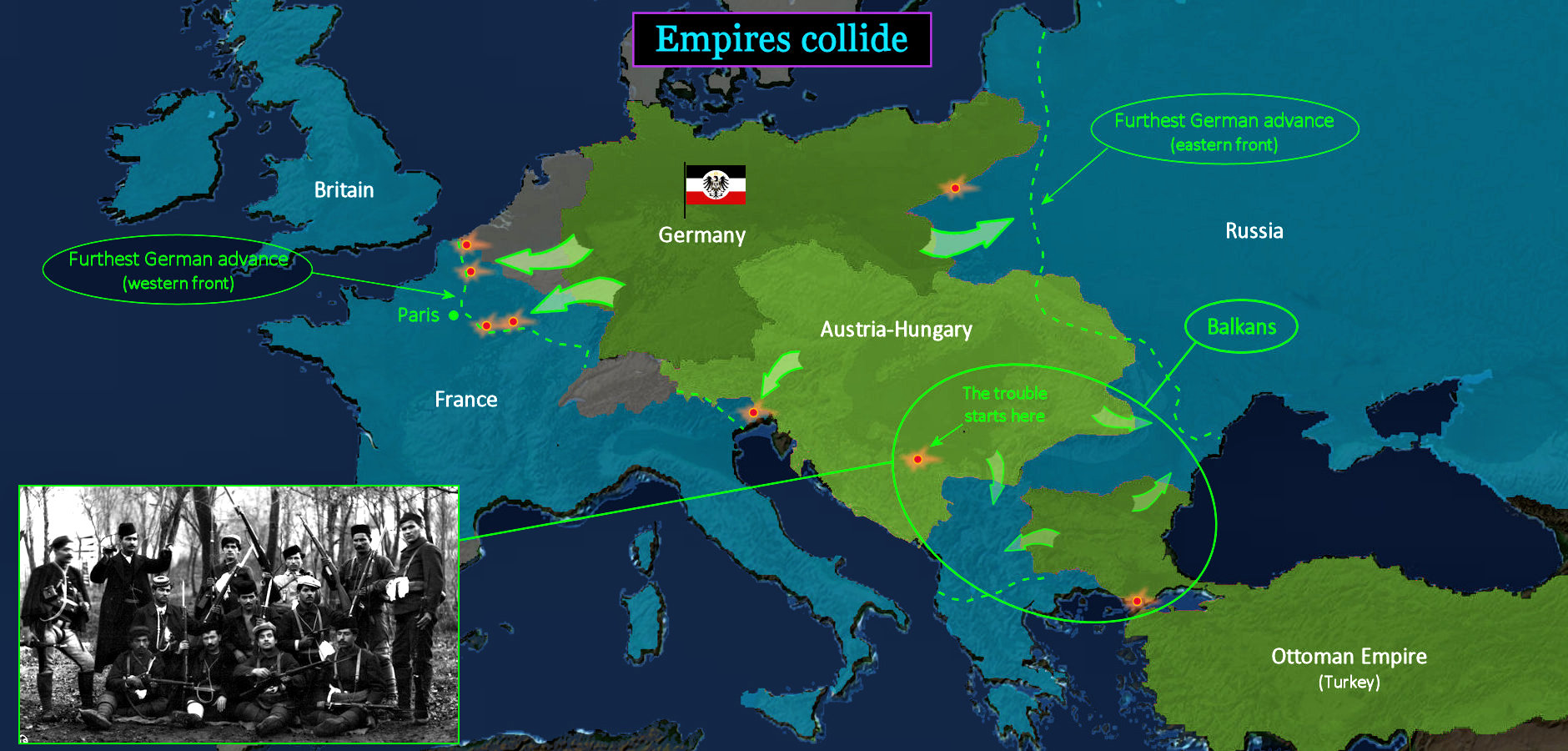
War That Goes Nowhere All the major European powers are drawn into the war in the early days, based upon a tangle of pre-existing alliances. After the initial chaos, Germany joins forces with German-speaking Austria, and the tottering rump of the Ottoman Empire (Turkey) (in GREEN). They're opposed by the 'Allies' (in BLUE), meaning Britain, France, Italy and (to the east) Russia. |
| |||||||||
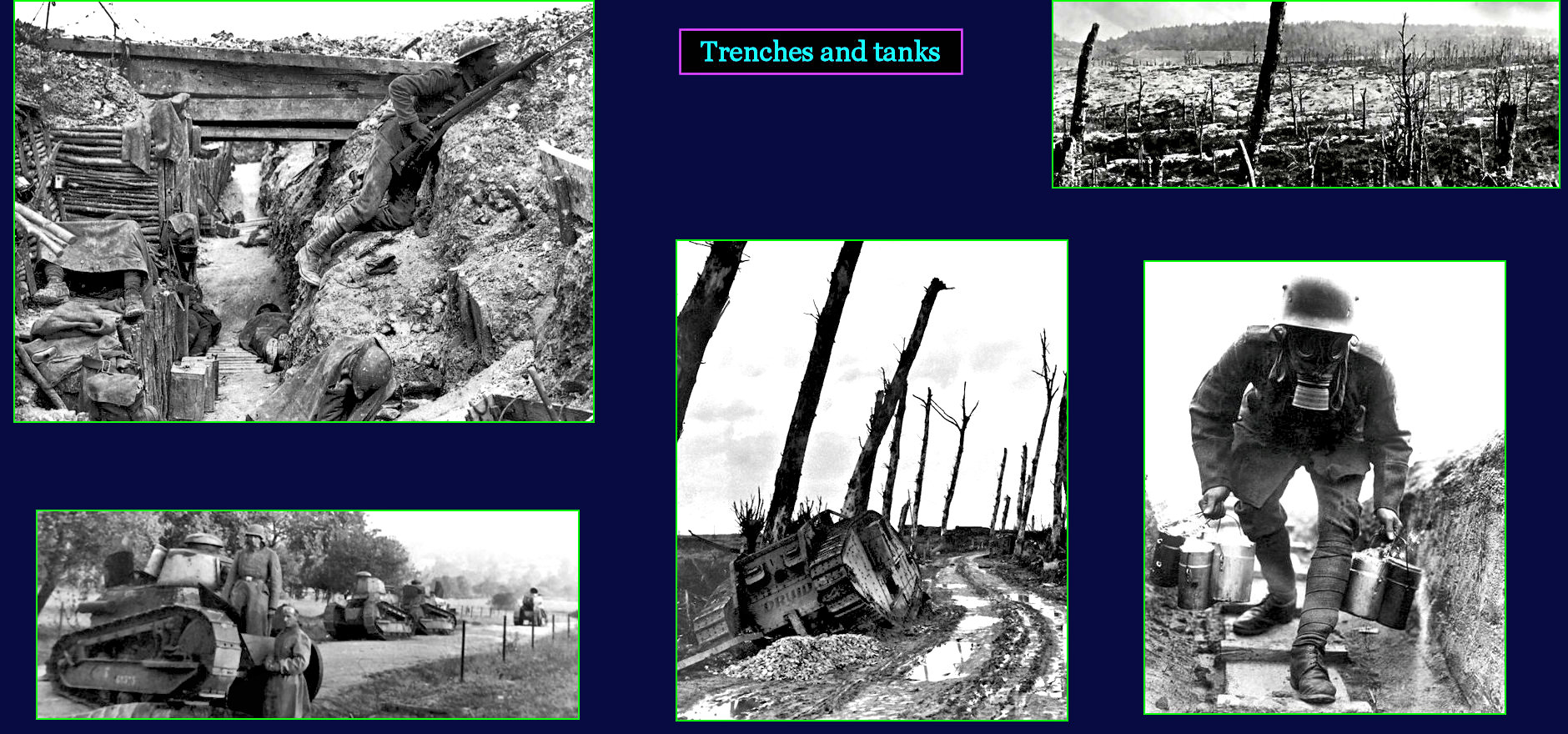
The New Trench Warfare Most memorable photographs from World War One document the horrors of continuing trench warfare east of Paris, on the so-called 'Western Front.' Both sides experiment with small battlefield tanks, which offer protection from withering machine-gun fire. By the end of the war, casualties on the Western Front total a staggering 13 million. Beyond that, many soldiers returning home from the battlefields are permanently scarred by amputations, 'shell shock,' and recurring nightmares. | |||||||||
| |||||||||
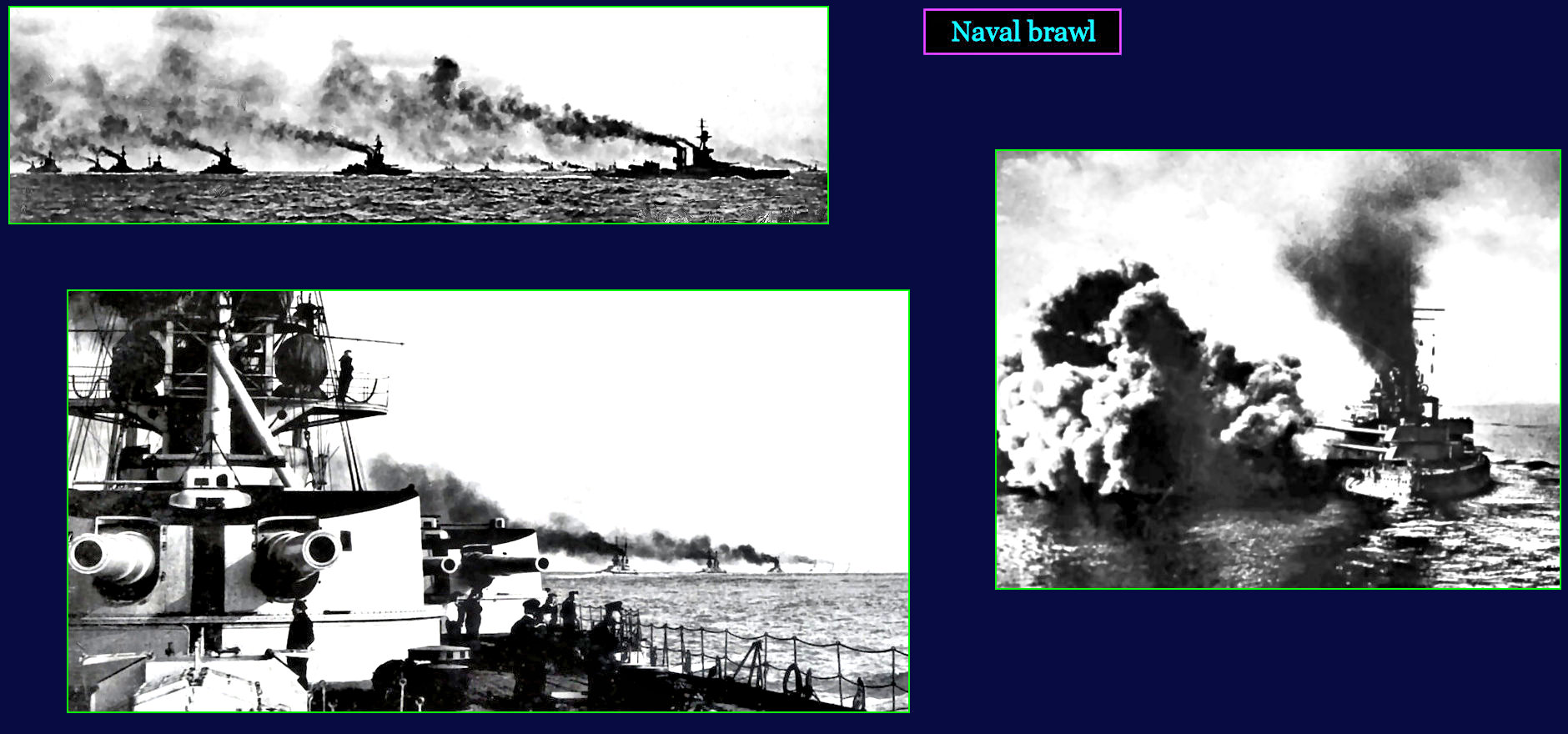
Battle Fleets Finally See Action Both sides have large fleets of modern battleships, but they play little role in the war. Britain has the largest fleet, which the Germans try to whittle down using submarines. When this fails, they send their entire fleet to sea , hoping to lure out a smaller British squadron. Instead, Britain also sends out its entire fleet, meeting the Germans in the titanic Battle of Jutland. The 'fog of battle' hampers operations on both sides, with limited visibility and confused communications. The German fleet is forced back to port. | |||||||||