| |
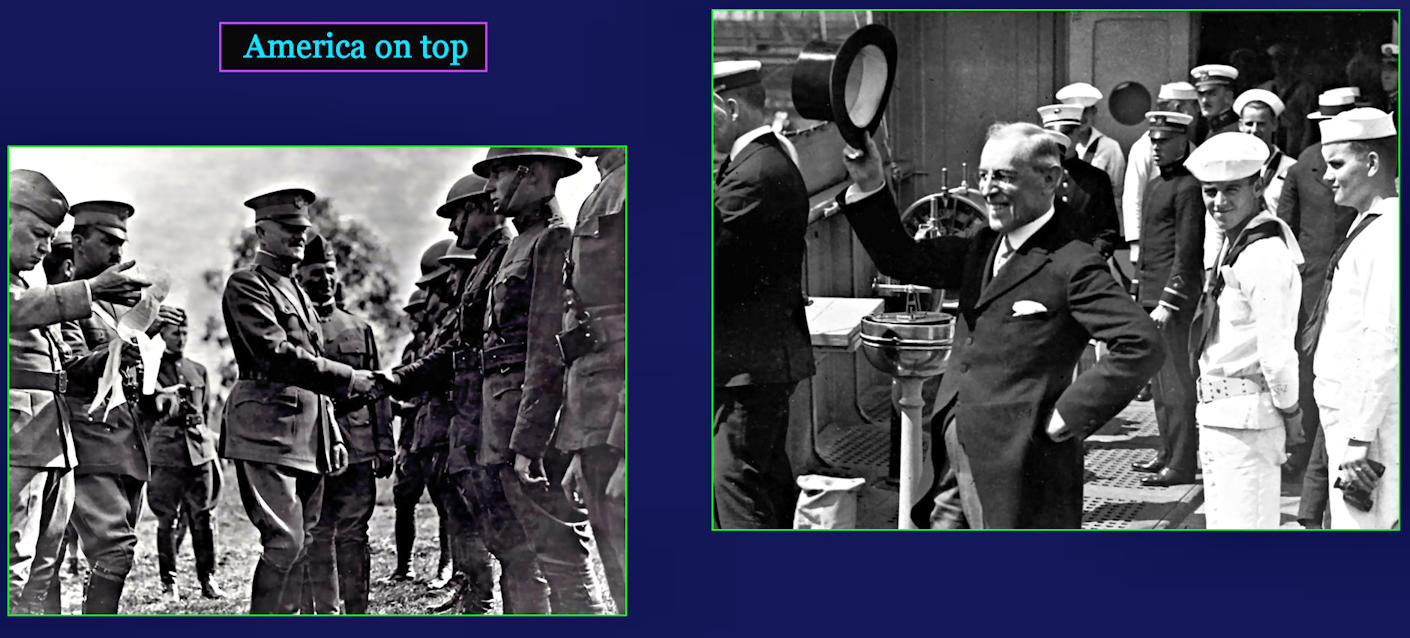
After the War America enjoys a huge boost in pride for the key role it plays in defeating the Germans. There's no damage to the American homeland, and every prospect for growing leadership in world affairs. By contrast, Europe has virtually bankrupted itself during four long years of war. America also has large war debts, but no damage to repair. |
| |||||||||
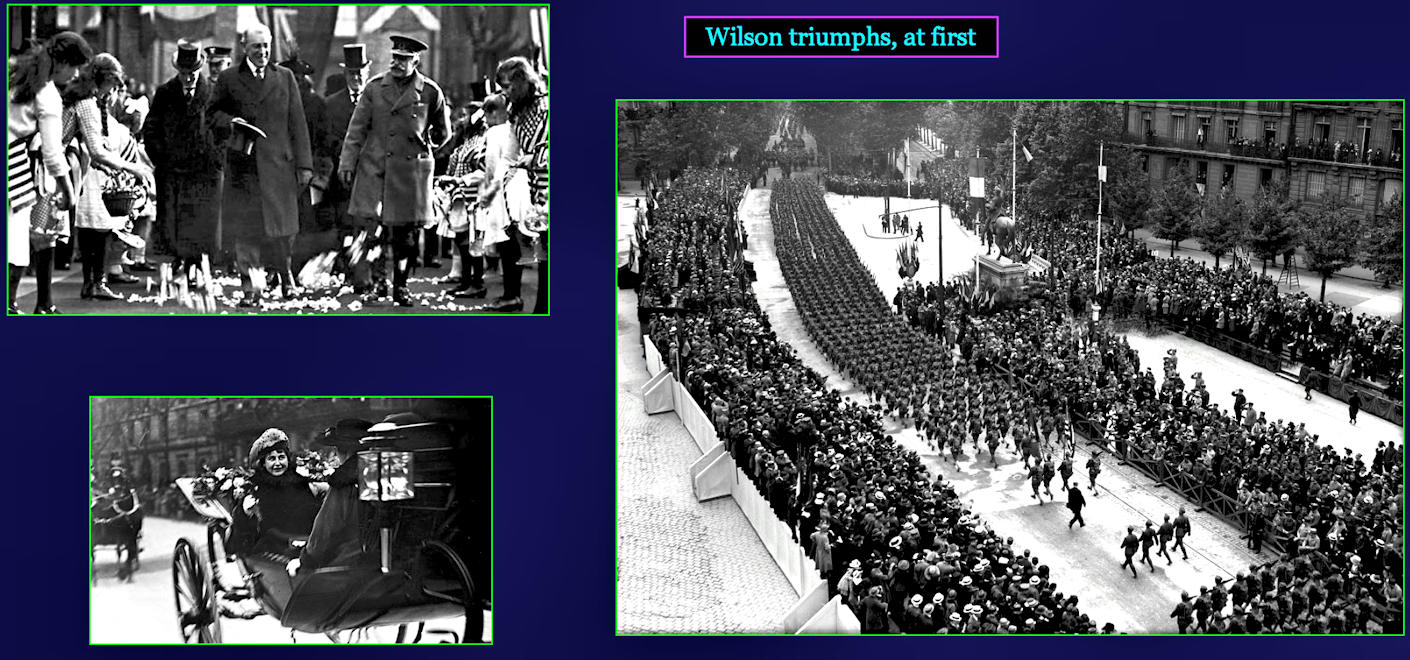
Wilson in Paris No one is more astonished than President Wilson at the enthusiastic welcome he receives upon his arrival in France. Celebration is in the air, with grand parades viewed from royal coaches. It seems he can walk on water. The enthusiasm dissipates, however, when he presents his cumbersome 14-point plan for peace, which British and French leaders ignore. The horrible war is all Germany's fault, they argue, and Germany should pay through the nose. | |||||||||
| |||||||||
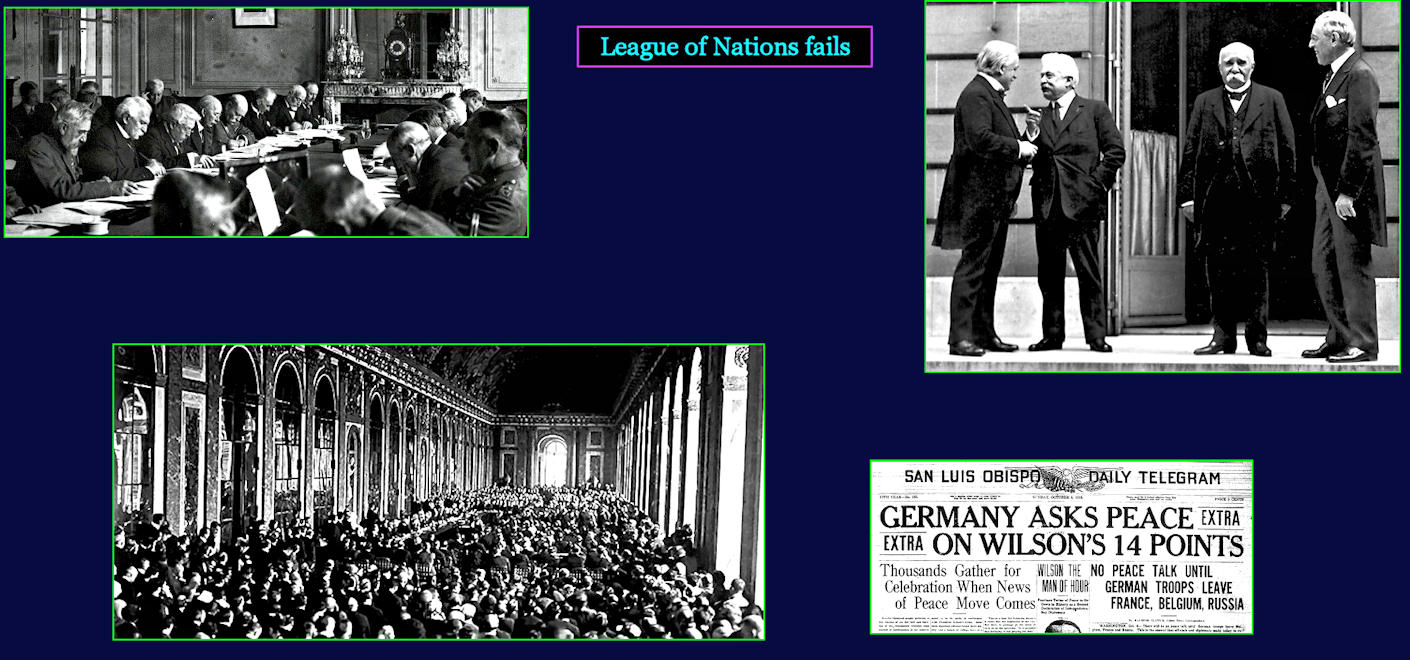
Ominous Failure It takes six months to finalize details of the peace treaty ending the war, which is hashed out in the Versailles Palace. German delegates are not even allowed to participate, and the punishment eventually imposed on Germany is considered excessive by many. Six months later, the much-heralded League of Nations is created to maintain a lasting peace in Europe. But despite President Wilson's strong support, America refuses to ratify the treaty. The League declines over time, and is finally abandoned. | |||||||||