| |
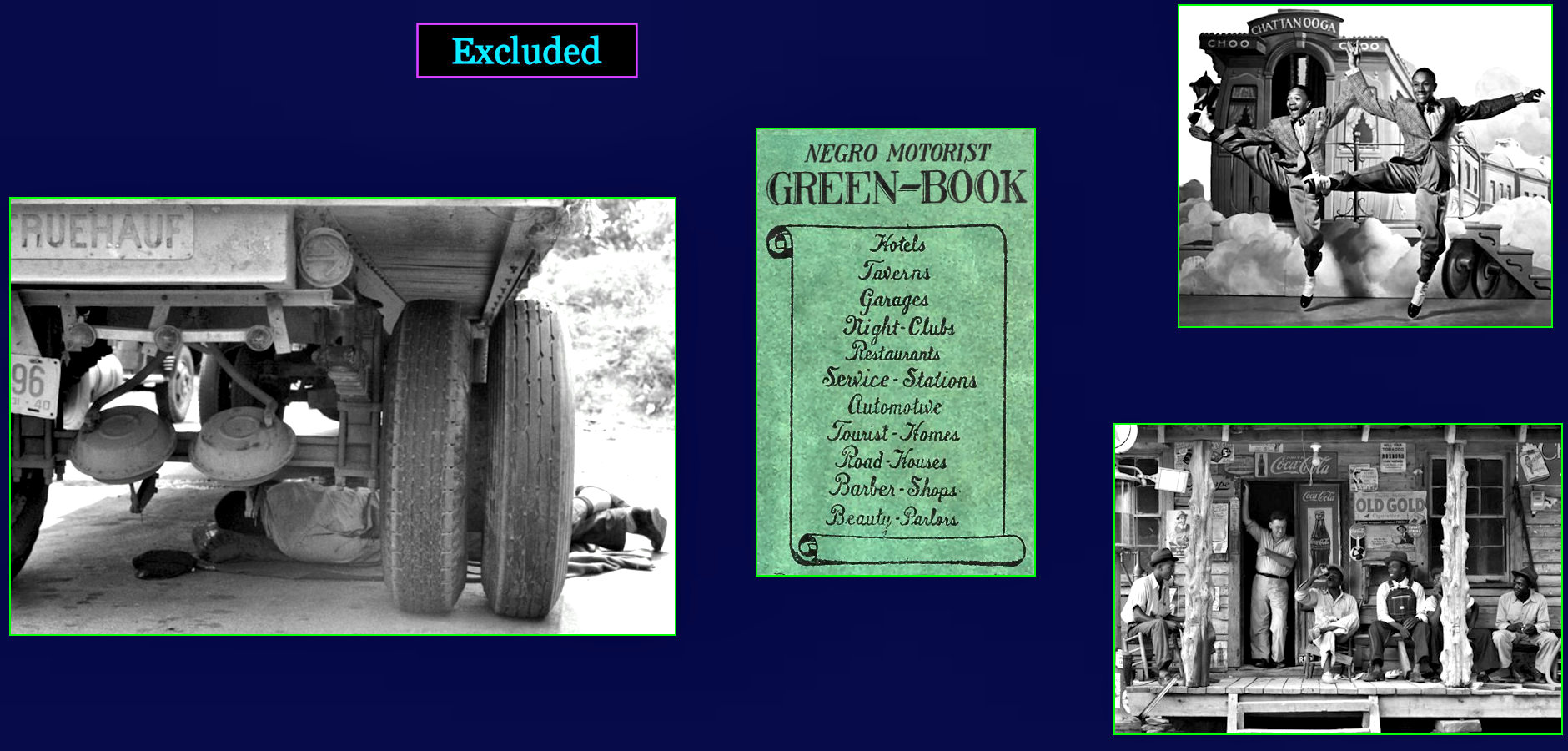
Inequality The judicial theory of 'separate but equal' may sound reasonable, but it certainly doesn't describe America in the 1940s. Separate, yes. Equal, hardly. The discrepancies show up in a thousand ways, epitomized by the Green Book (center above). In some places, black truck drivers can only rest under the shade of their own trucks (top left). |
| |||||||||
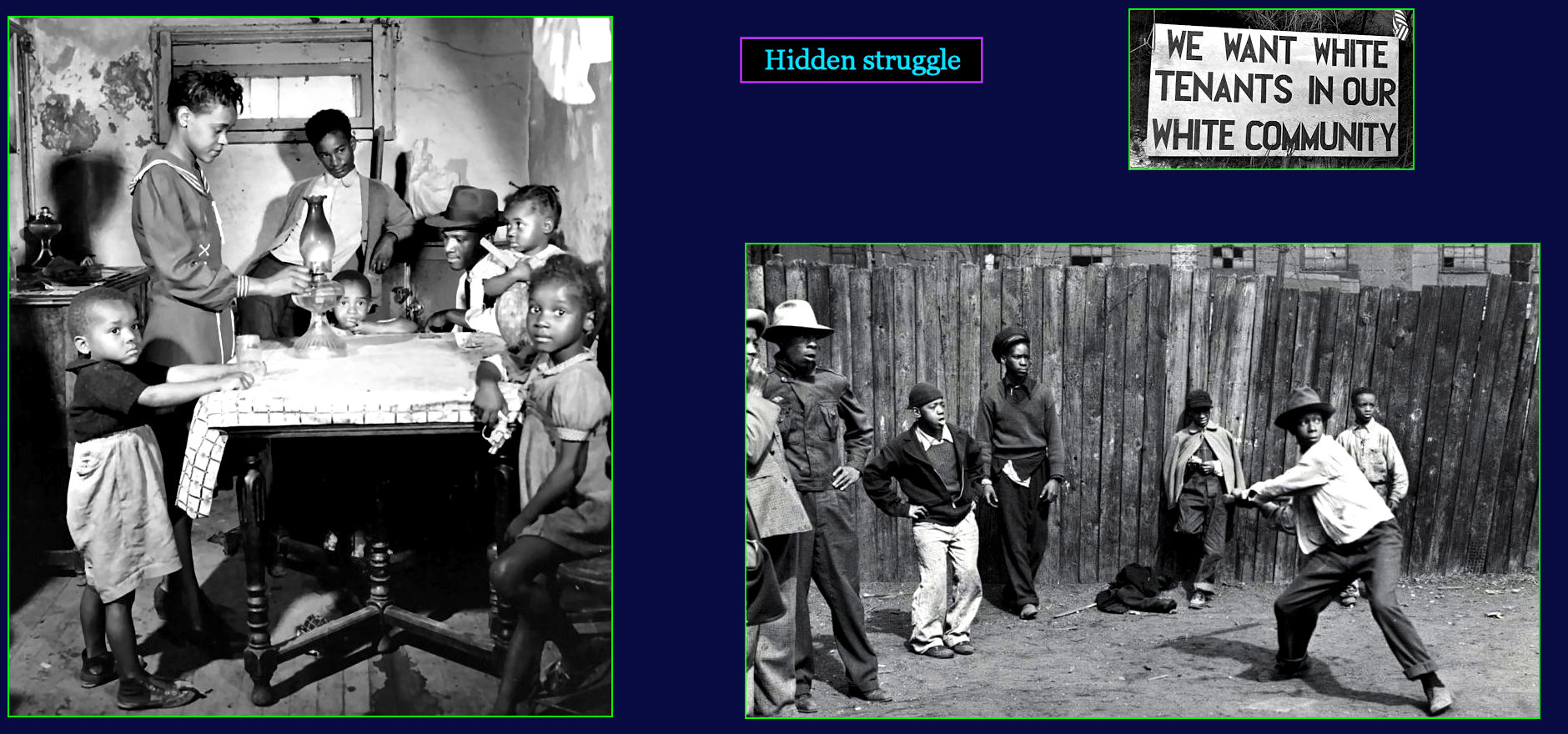
Behind the Curtains There's very little press coverage of life in the black community during the Depression. For a variety of reasons, the average unemployment rate for Blacks is three times higher than for Whites. Yet, in photographs of bread lines and soup kitchens, very few black faces are visible. This may be related to hard feelings left over from the 1920s, when Blacks first started streaming north, competing with Whites for automotive jobs. In any case, the struggle for survival in black communities is largely hidden from view. | |||||||||
| |||||||||
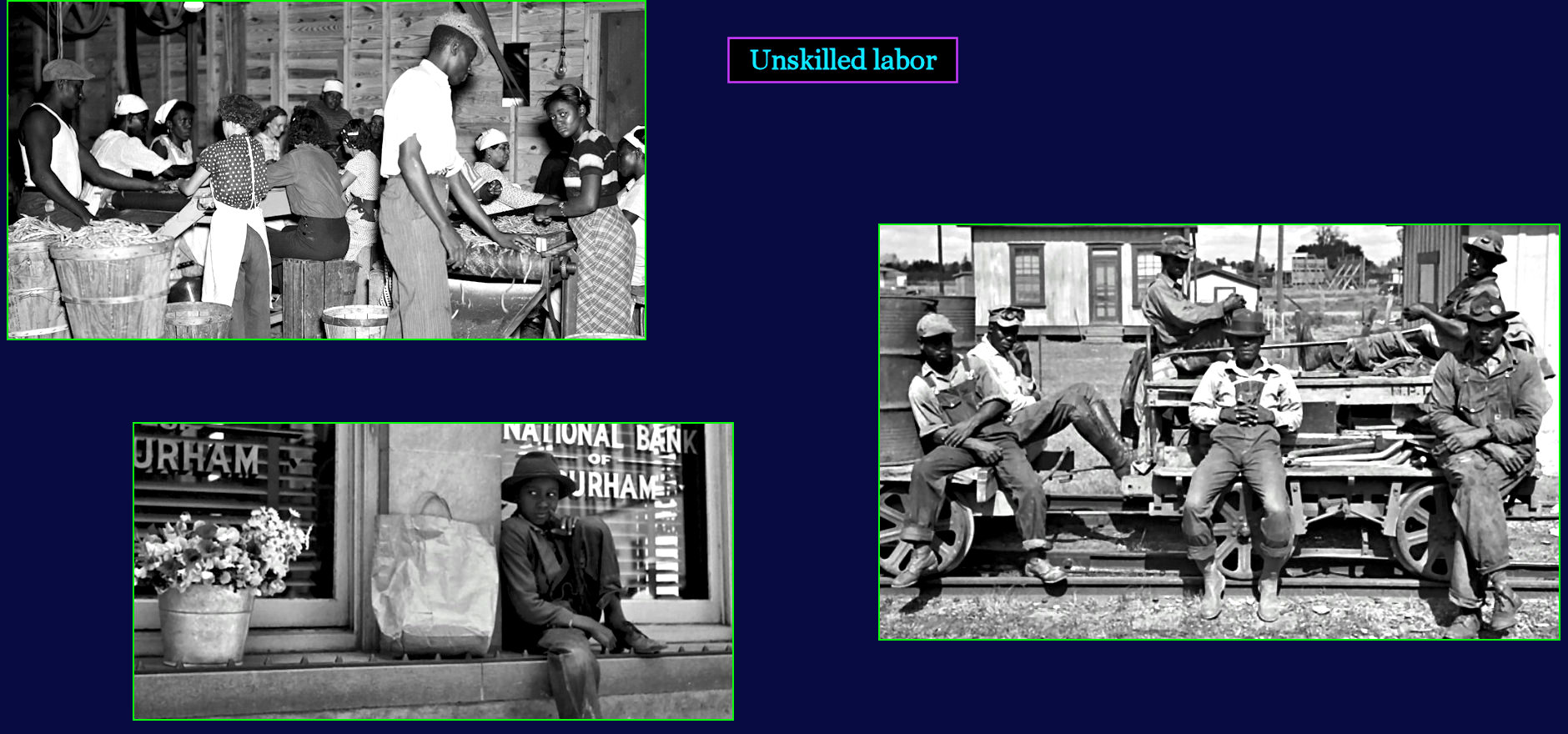
Few Choices Among the many obstacles that keep Blacks in depressed conditions is the reality that good-paying jobs are not open to them. They don't have the education for good positions, or schools where they can get such education. Most can't travel to a job, because they don't have a car. Many simply walk to nearby fields, or produce-packing houses, but many others remain jobless. This seems to confirm the widespread notion that Blacks are simply too stupid or lazy to get a job. Or so it seems, to many Whites. | |||||||||