| |
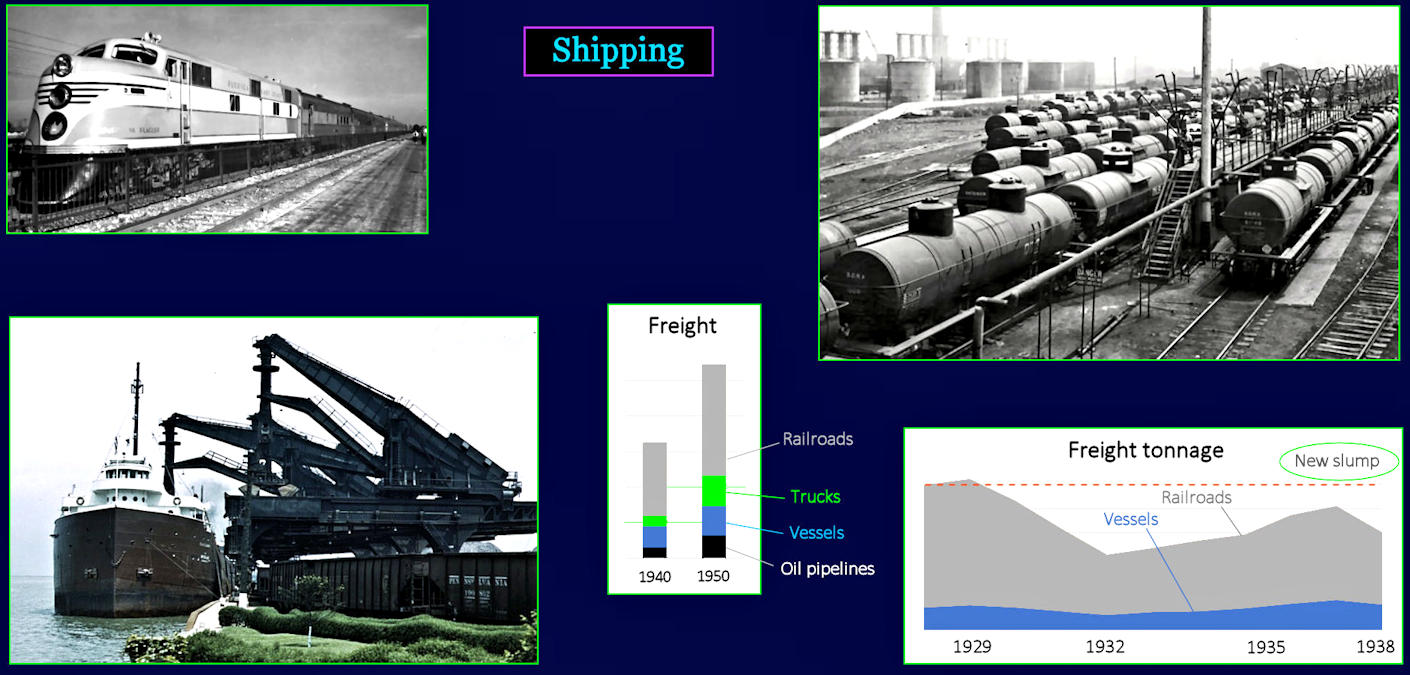
Railroads Still Dominate Traffic With competition growing, railroads begin to introduce big new diesel locomotives (top left) to replace older coal-driven engines. Rising demand for oil is driving increased production of tanker cars (top right). Freight shipped by water remains steady, due to the low cost. The smaller chart (center) shows two new categories of freight carriers. Trucks and pipelines. |
| |||||||||
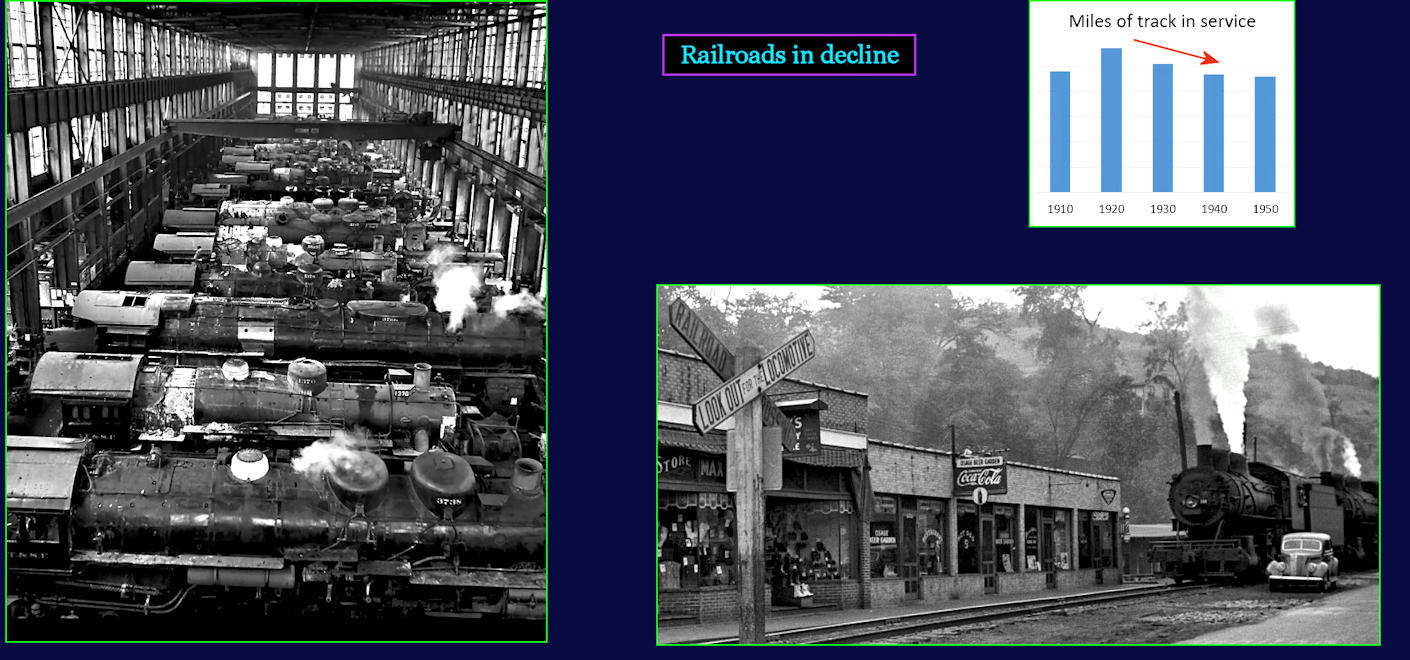
Rail Mileage The slow decline of American railroads is displayed in the chart at top right. It shows a long-term reduction in miles of railroad track in service, beginning in 1920. For the first time, newly-abandoned track is being removed faster than new rails are being laid. Somewhat surprisingly, this begins a full 10 years before the crash that sets off the Depression. By 1930, there is no longer any demand for new steel rails, while the total number of railroad freight cars in use has dropped by an astonishing 30%. | |||||||||
| |||||||||
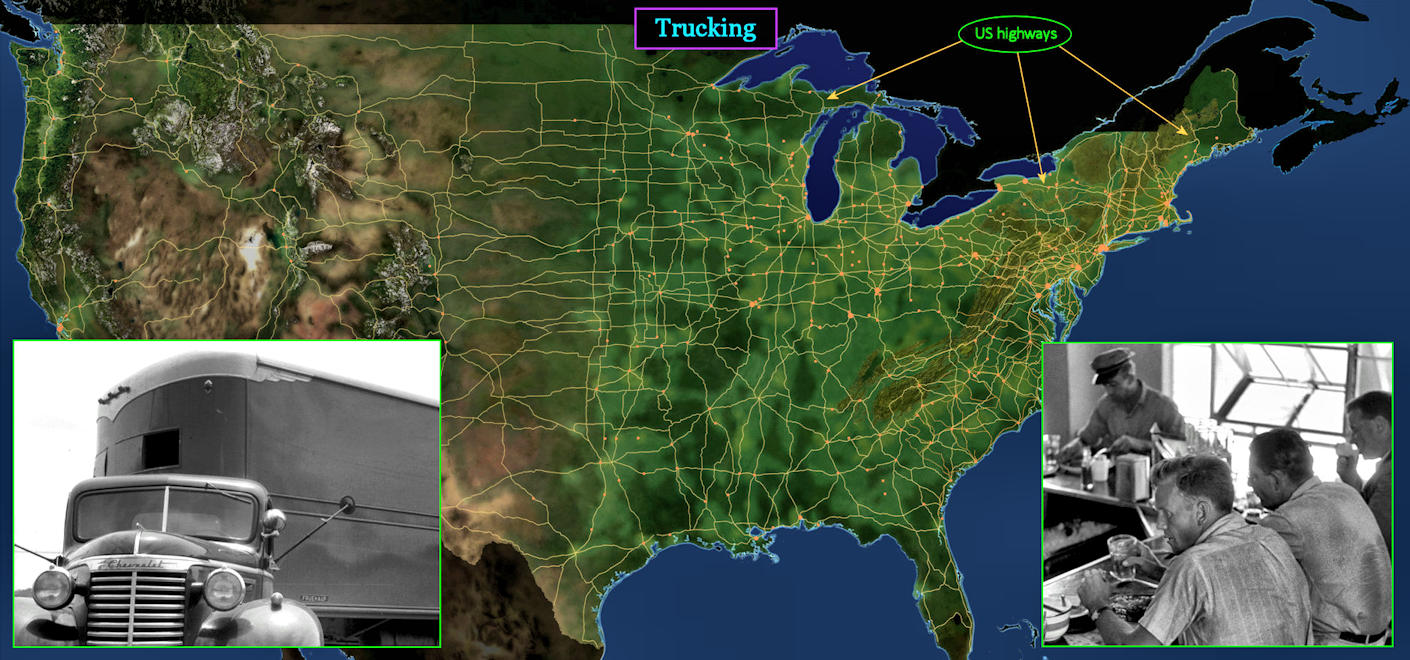
Truckers, Before Interstates The federal government rolls out the newly-renumbered highway system in 1926, including some that are still dirt. These have now been paved, thanks to New-Deal funding. New trucks are appearing in a 'semi-trailer' design (lower left). These rigs, common today, have a short cab, with motor and driver, and a separate box-like trailer. This permits loading the trailer at leisure, to await later pickup. This concept is very similar to today's 'shipping container,' which is now standard on freighter vessels. | |||||||||