| |
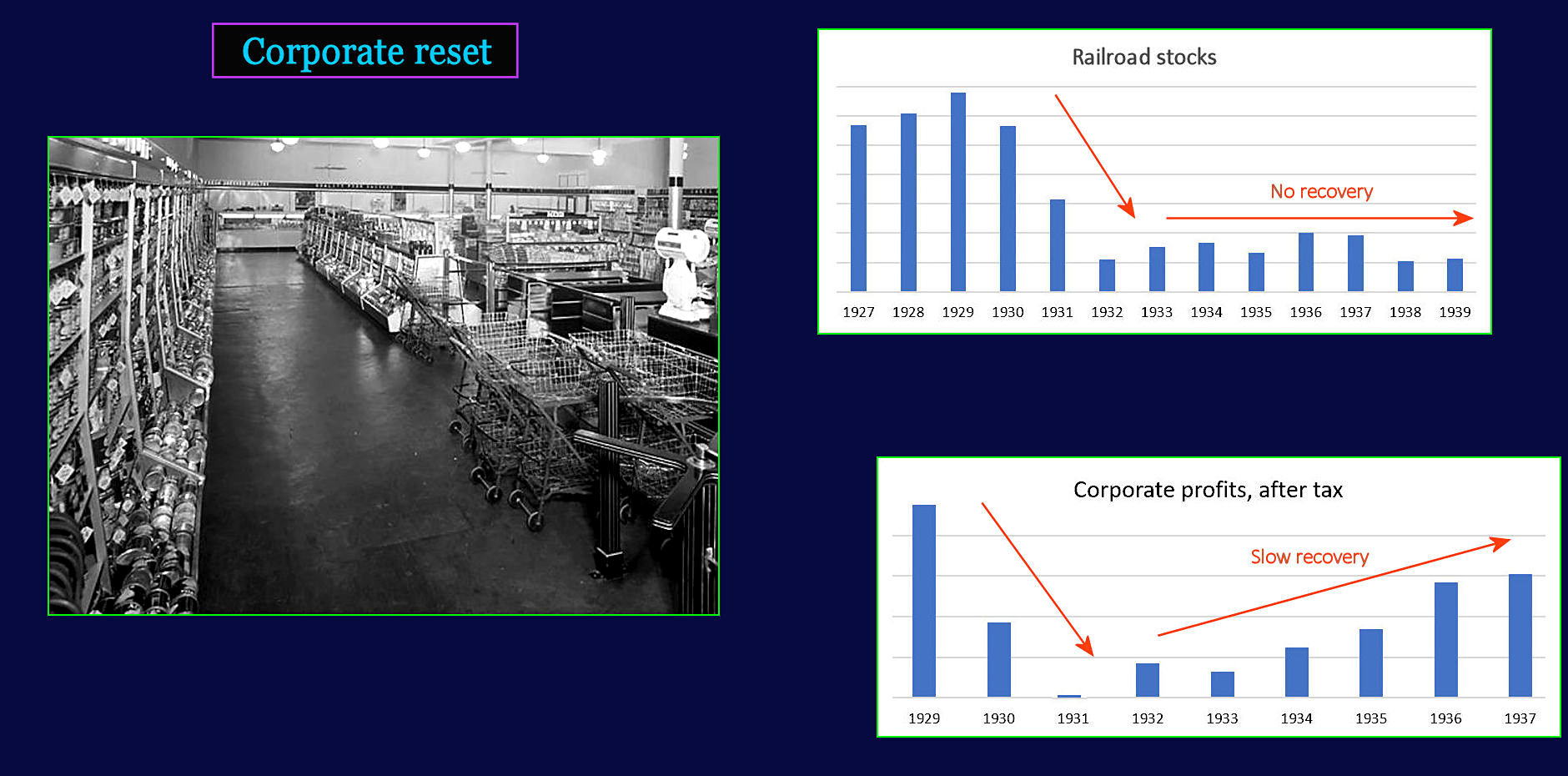
New Focus on Customers The charts above illustrate the problems facing business. Most serious is the flat-lining of railroads (top right), which hurts steel first, and then manufacturing in general. The first reaction is to let workers go. After that, companies sacrifice profits (lower right). Now, they introduce handy new shopping carts, making it easier for consumers to spend money (top left). |
| |||||||||
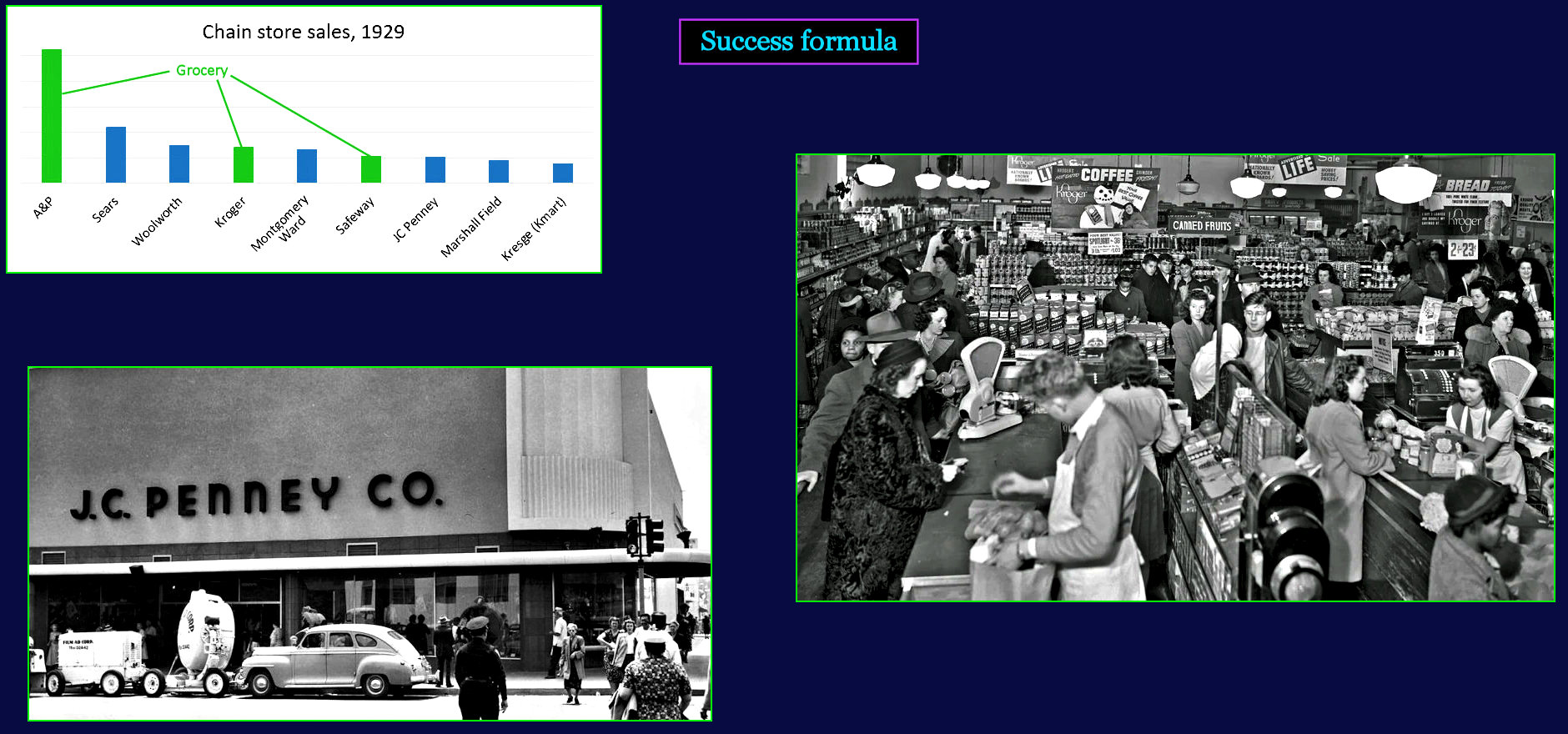
Mass Retail The beauty of chain stores is simplicity. Once you work out a successful formula for products and floor space, you can replicate it thousands of times, in thousands of locations. The important thing is having the right formula. The chart shows that the dominant chain store is the grocer A&P. By a mile. The A&P formula involves severe cost-cutting, which allows the chain to open stores in 15,000 locations. Then, it closes half these stores, opening instead 1,100 upsized new 'supermarkets.' Sales increase by 50%. | |||||||||
| |||||||||
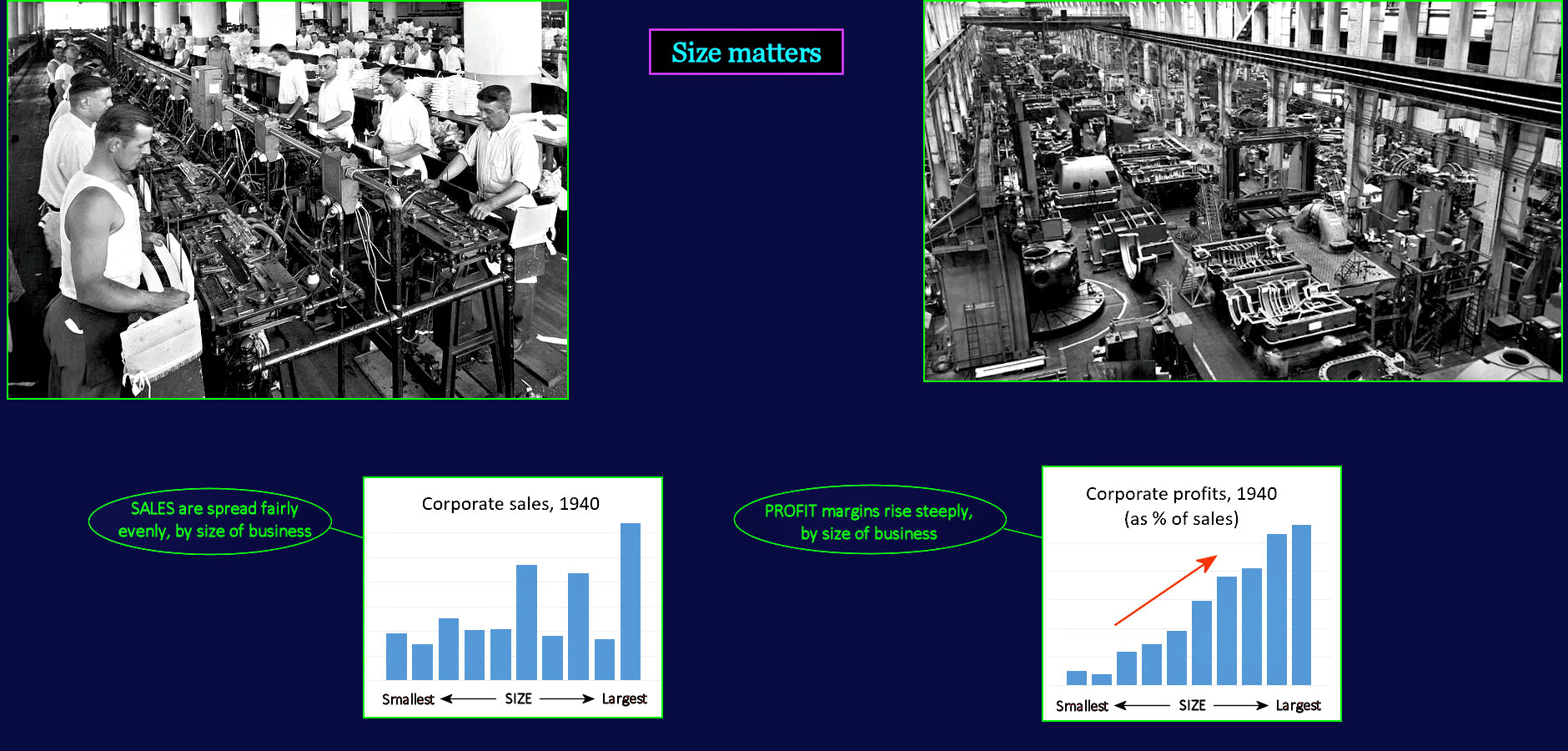
Bigger is Better The rate of corporate bankruptcy barely rises at all during the Depression. This is due largely to the ability to shed workers, as orders decline, but another factor is the unstoppable trend towards bigness. The larger the company, the more effort can be focused on improving efficiency. The left-hand chart shows that sales are fairly evenly distributed, by size. The right-hand chart shows that profitability rises in a straight line. Profits for the smallest are nearly zero, while those of the largest average 11%. | |||||||||