| |
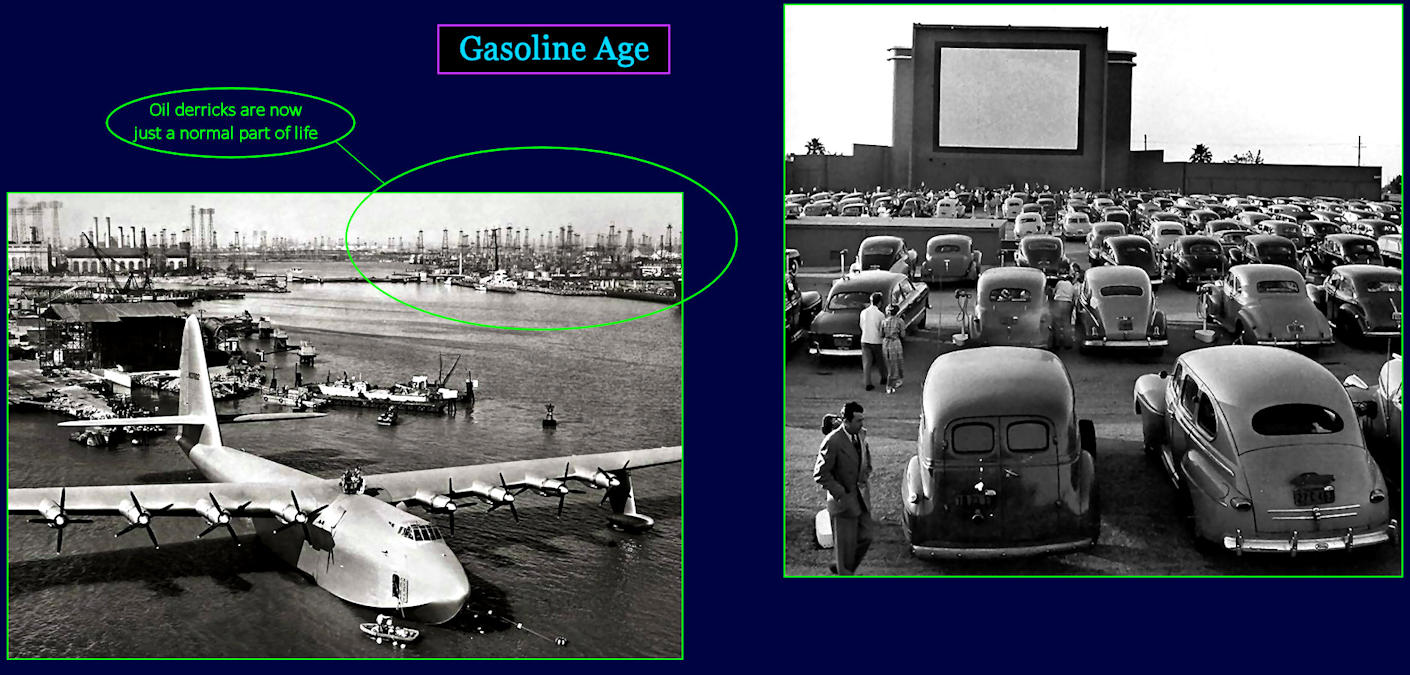
New American Cocoon By 1940, America is beginning to look past the long, dark days of Depression living. Most businesses are back to near pre-Depression levels, and families are settling into the hum of a newly-motorized world. For many, this means driving to work. Cars are now completely enclosed driving machines, with living-room comfort. People are doing all sorts of things in their cars. |
| |||||||||
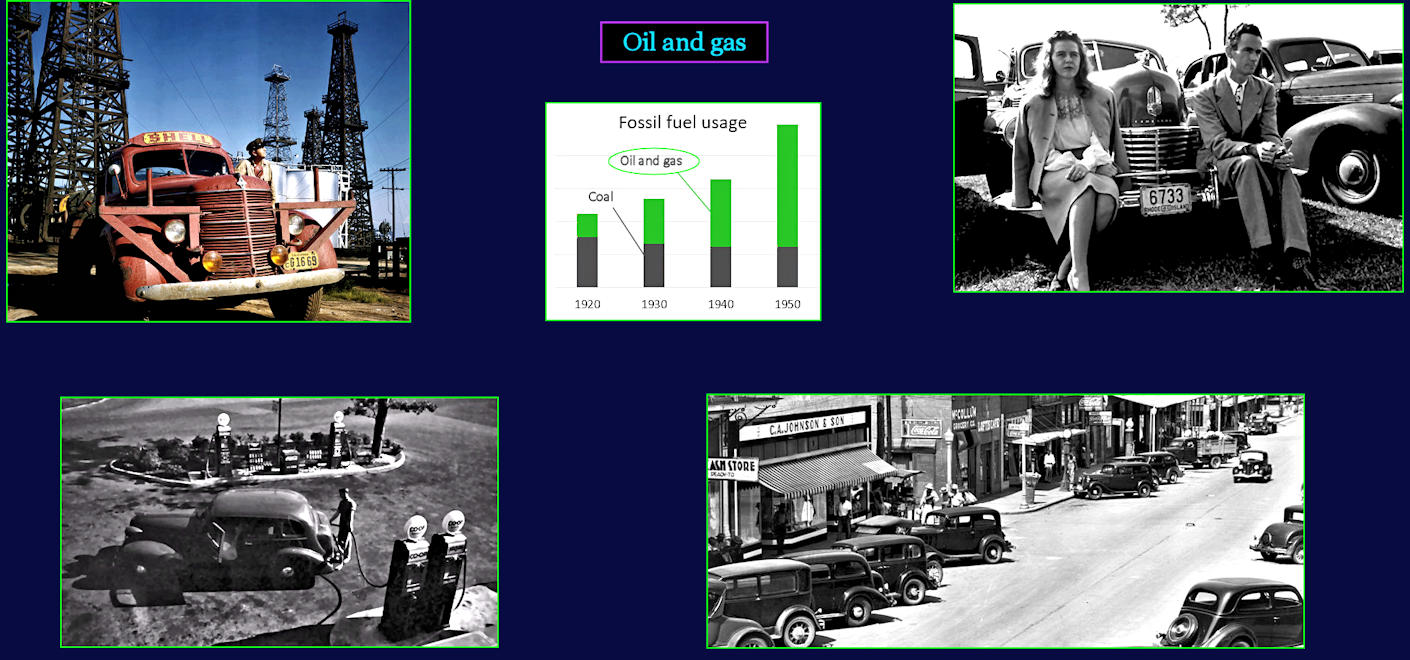
Liquid Fuel All equipment needs some kind of fuel to provide energy. For a full century, that fuel is coal, which is used to heat the water in boilers to power locomotives and industrial steam engines of every description. But gasoline does away with the need for a firebox to keep water boiling. Once the old dirt roads are paved over to create the first highways, the onslaught of motoring is unstoppable. | |||||||||
| |||||||||
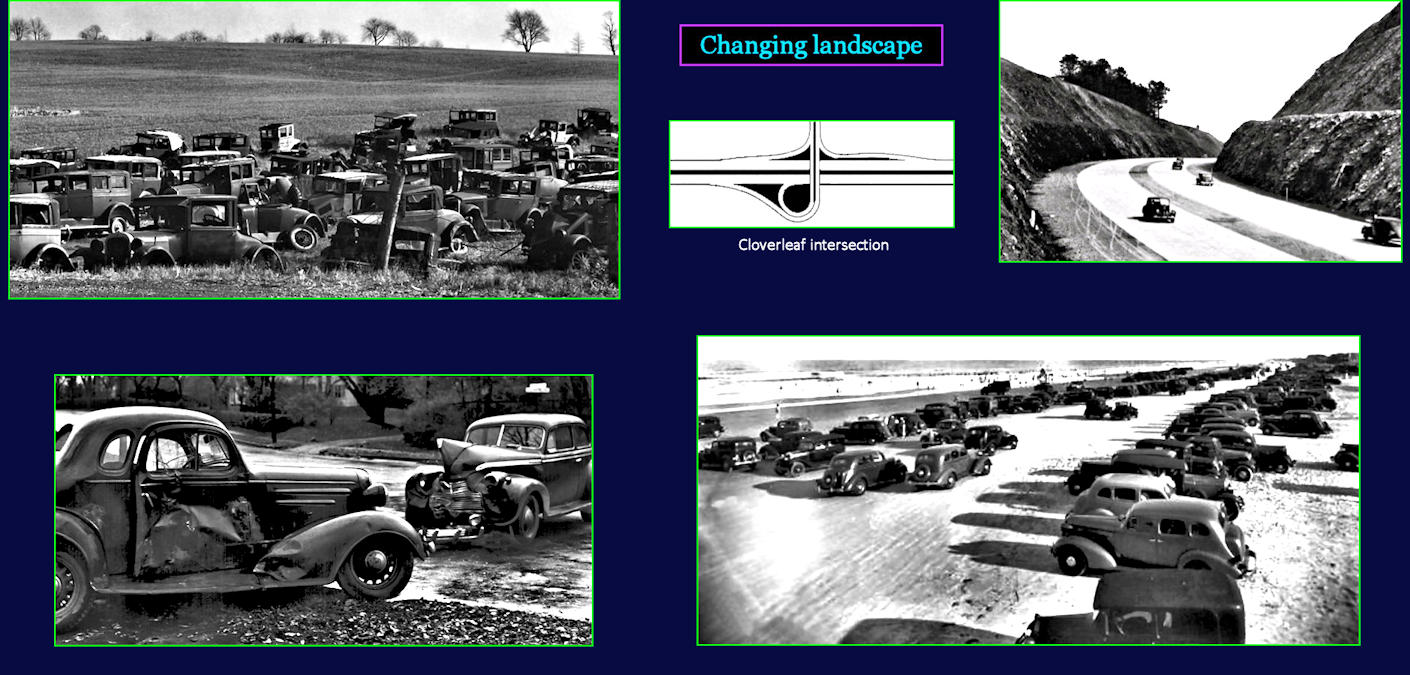
Taking Over the Landscape By the 1940s, the yearly flood of three million new cars is introducing new problems. Growing numbers of cars sold in previous years are beginning to wear out, making unsightly auto junkyards a necessity (top left). Accidents are also becoming more common (lower left). New 'limited access' highways, like the Pennsylvania turnpike (top right), and the Merritt Parkway in Connecticut, are designed for high-speed travel. This is achieved by replacing intersections with widely-spaced 'cloverleaf' entrances and exits. | |||||||||