| |
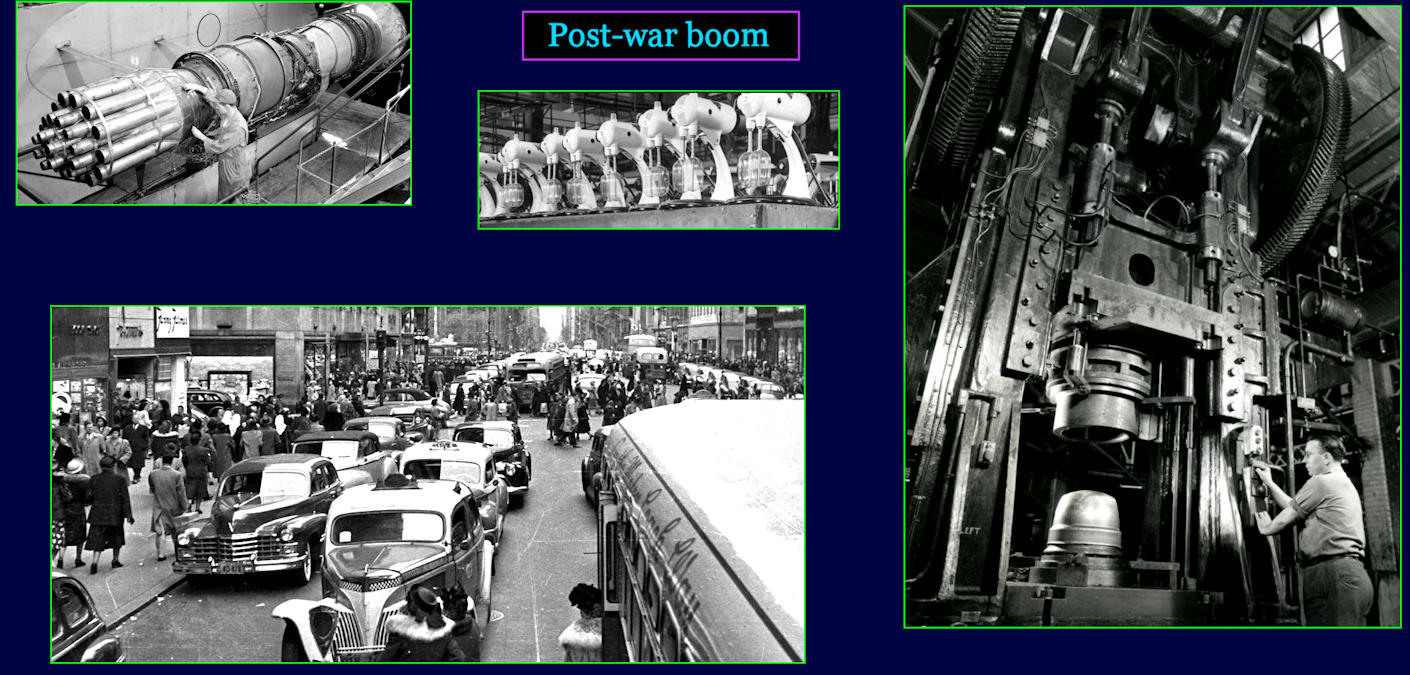
Welcome Home As soon as the war is over, and servicemen have returned, America converts its industry back to peacetime production. With no further need for tanks, bombers or warships, manufacturers begin flooding the economy with cars, washing machines, vacuum cleaners, and (now) TVs. Wartime rationing is over, and families are beginning to release pent-up purchasing power. |
| |||||||||
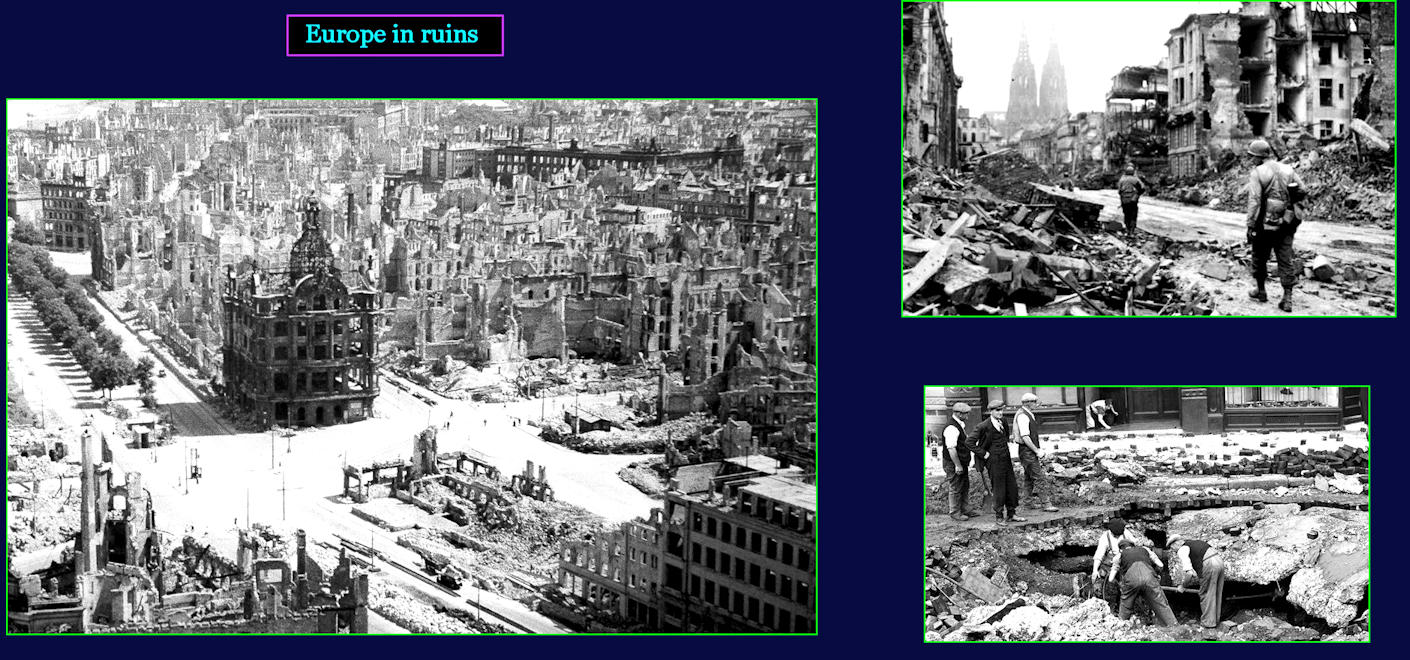
Flip-Side of the Coin Meanwhile, Germany is a hopeless wreck from end to end, with all its industrial cities heavily damaged. London has its own special curse, the result of late-war attacks by thousands of V-1 'buzz bombs,' and much more dangerous V-2 rockets. Humanitarian problems are also huge. Food is scarce, and there are 15 million German-speaking people without homes. America comes up with the Marshall Plan, sending direct aid to help Europe rebuild. | |||||||||
| |||||||||
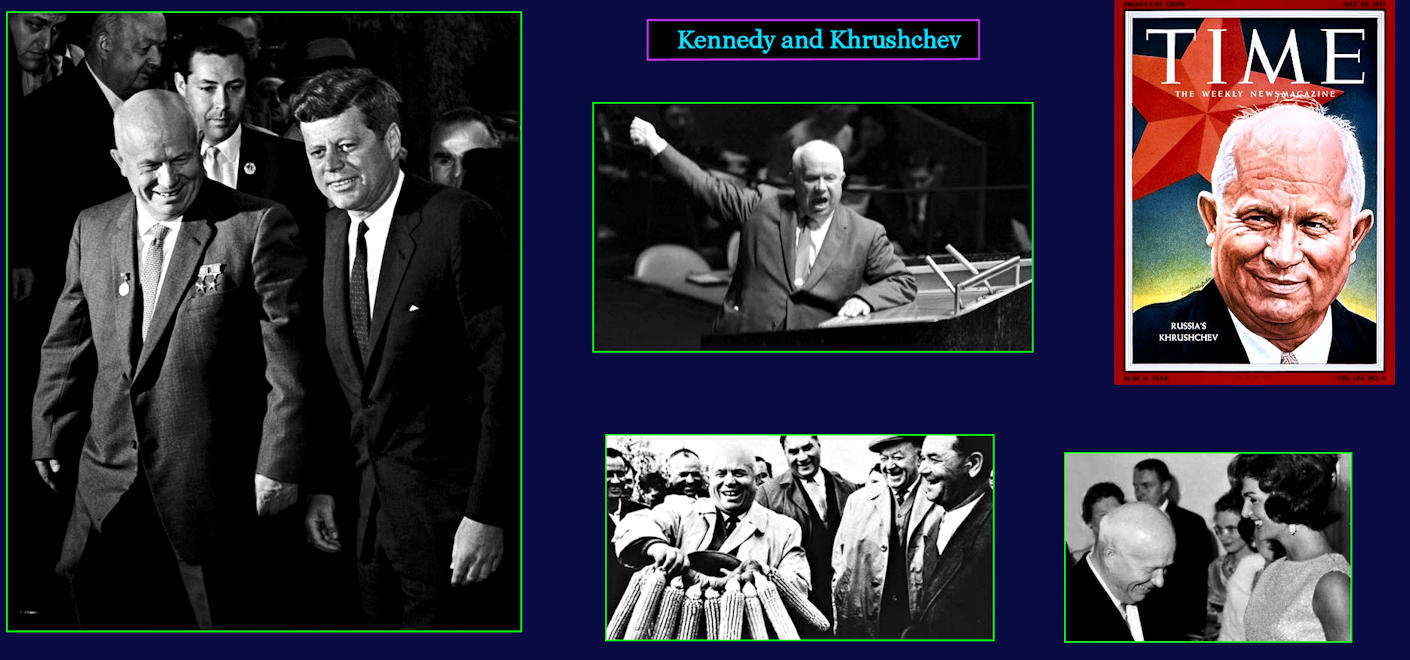
Contest of Will The Cold War rivalry with the Soviets becomes far more real when they select a brash, pugnacious Nikita Khrushchev to replace Stalin, who finally dies. Suddenly, Khrushchev is everywhere on the news, taking jabs at America, and seeming to taunt America's young and untested president, John F. Kennedy. Khrushchev has boldly promised to 'bury' the US. He continuously boasts that the Soviets are pulling ahead of America, having just surprised the world by detonating their own atomic bomb. | |||||||||