| |
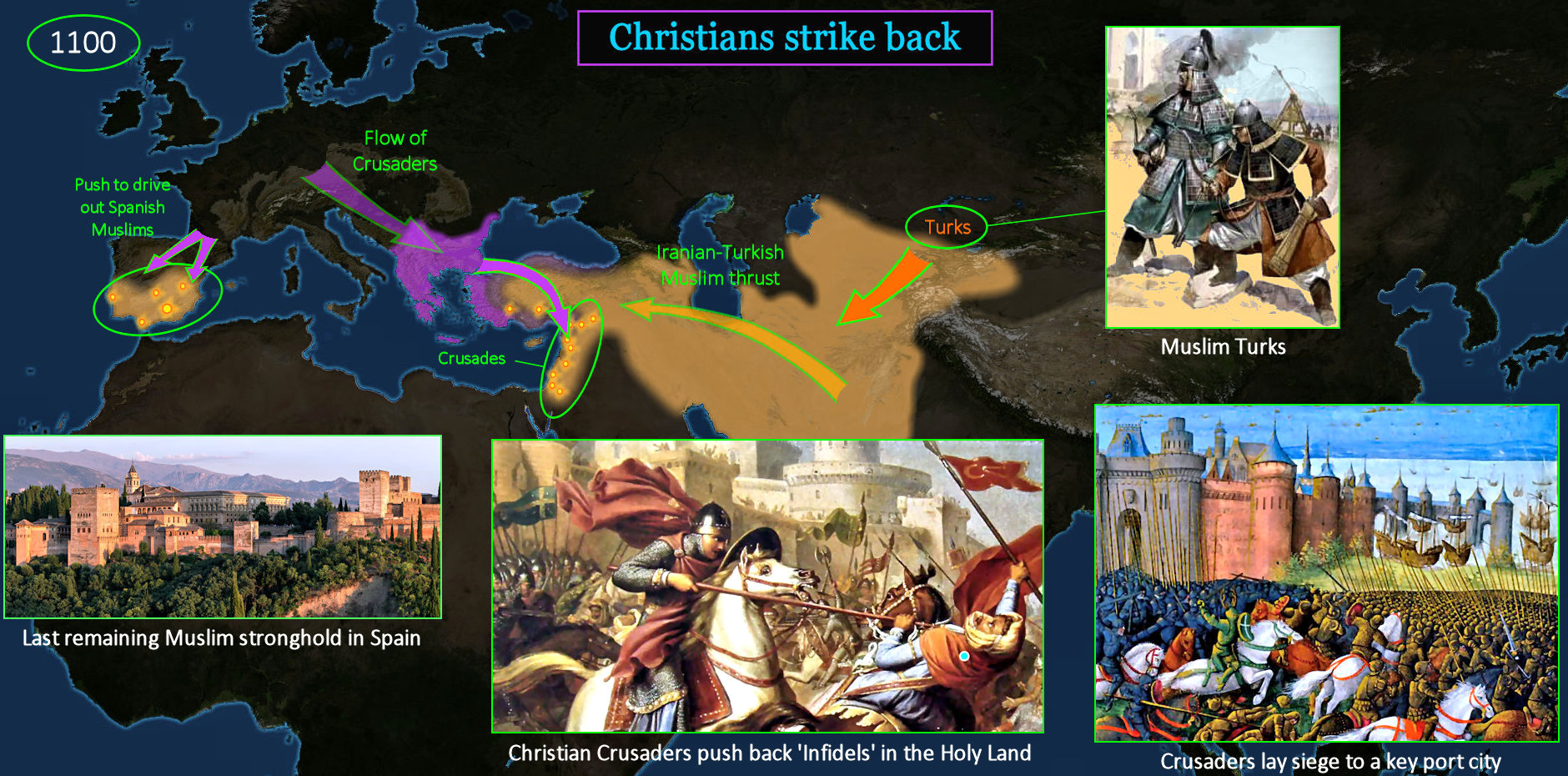
First Crusade The First Crusade attracts 100,000 idealistic Christians with little idea of what is in store. They meet with success in the first battle, but are quickly depleted by starvation, thirst and disease. Heroically (or foolishly), they press on, taking the Muslims by surprise with the commitment to their cause. Before the Muslims can properly prepare, the Crusaders retake Jerusalem, massacring thousands during the following two-day rampage. The Muslims don't make the same mistake when other Crusades arrive, in later years. None are successful. |
| |||||||||
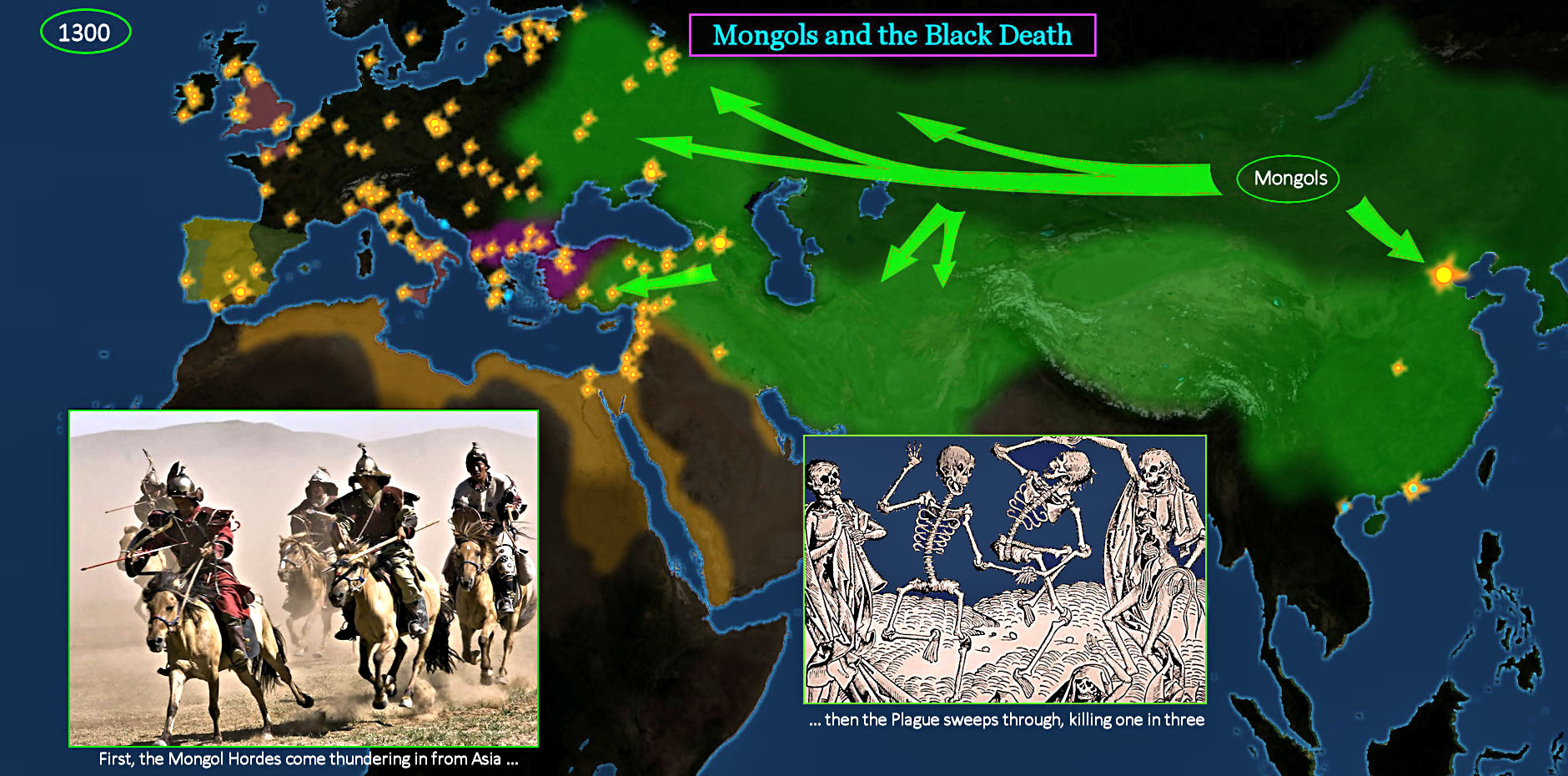
Mongol Hordes and Plague The Dark Ages grow darker yet in the 200 years following the First Crusade. Jerusalem quickly falls back into Muslim hands, and seven more Crusades into Muslim-held territory all fail. The Fourth Crusade is particularly disastrous, as Crusaders unexpectedly turn on Constantinople itself, trashing the already-weakened city. Then comes the lightening invasion of horsemen from far-eastern Mongolia. Extending earlier conquests under Genghis Khan, the Mongols sweep across thinly-populated regions of Russia, before encountering strong resistance in Poland, which they are able to overcome. The Mongols eventually lose momentum, and split into factions. Soon after, the Bubonic Plague (Black Death) ravages Europe, killing perhaps one-third of all Europeans. | |||||||||
| |||||||||
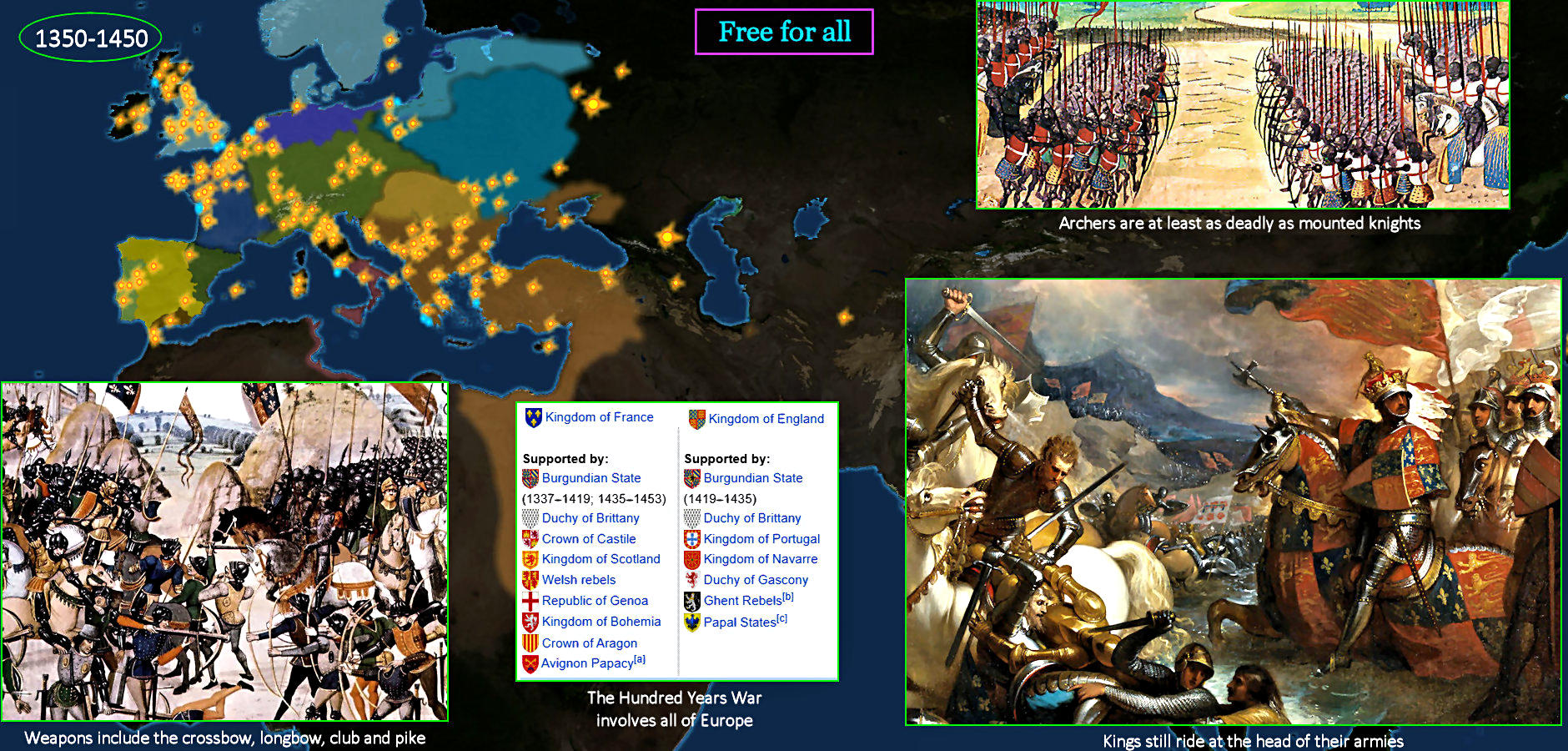
Hundred Years' War The century that follows the Plague is consumed with a never-ending, multi-headed monster called the Hundred Years' War. The French head one great faction, while the Norman-English head the other, attempting to lay claim to the portion of northern France (today's Normandy) that they already inhabit. The carnage of this war far surpasses anything previously known. English longbows are pitted against noble French knights, with a sprinkling of crossbows, long-handled pikes and primitive field artillery. When fighting finally subsides, The English and French remain entrenched as the two top powers in Europe. The Germans, by contrast, won't unite as a single nation for another 400 years. | |||||||||
| |||||||||
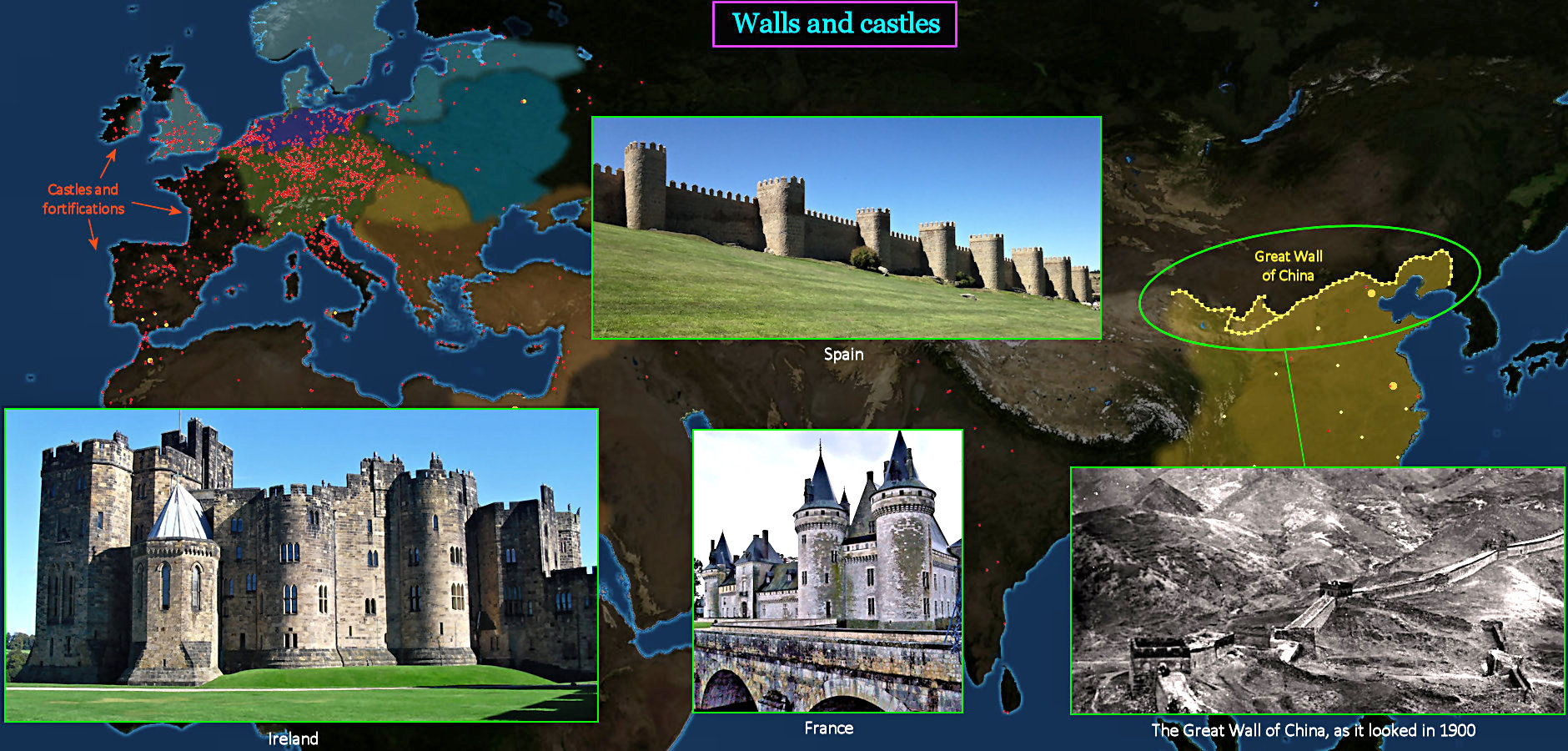
Walls and Castles The Europe that emerges from the preceding centuries of battle, plague and pillage is a landscape bristling with walls, castles and stone fortifications. Apparently, no one feels safe. Even in far-away China, rulers pour resources into the impossibly-long Great Wall of China, in their attempt to keep the terrifying Mongols from returning. Mounted knights and archers are still the most powerful military units, but their days of dominance are coming to an end. Cannons small and light enough to be mounted on wheels, and moved about the battlefield, are beginning to appear. There is also early experimentation with pistols and musket-like firearms. The coming trend will be battle waged by gunpowder. | |||||||||
| |||||||||
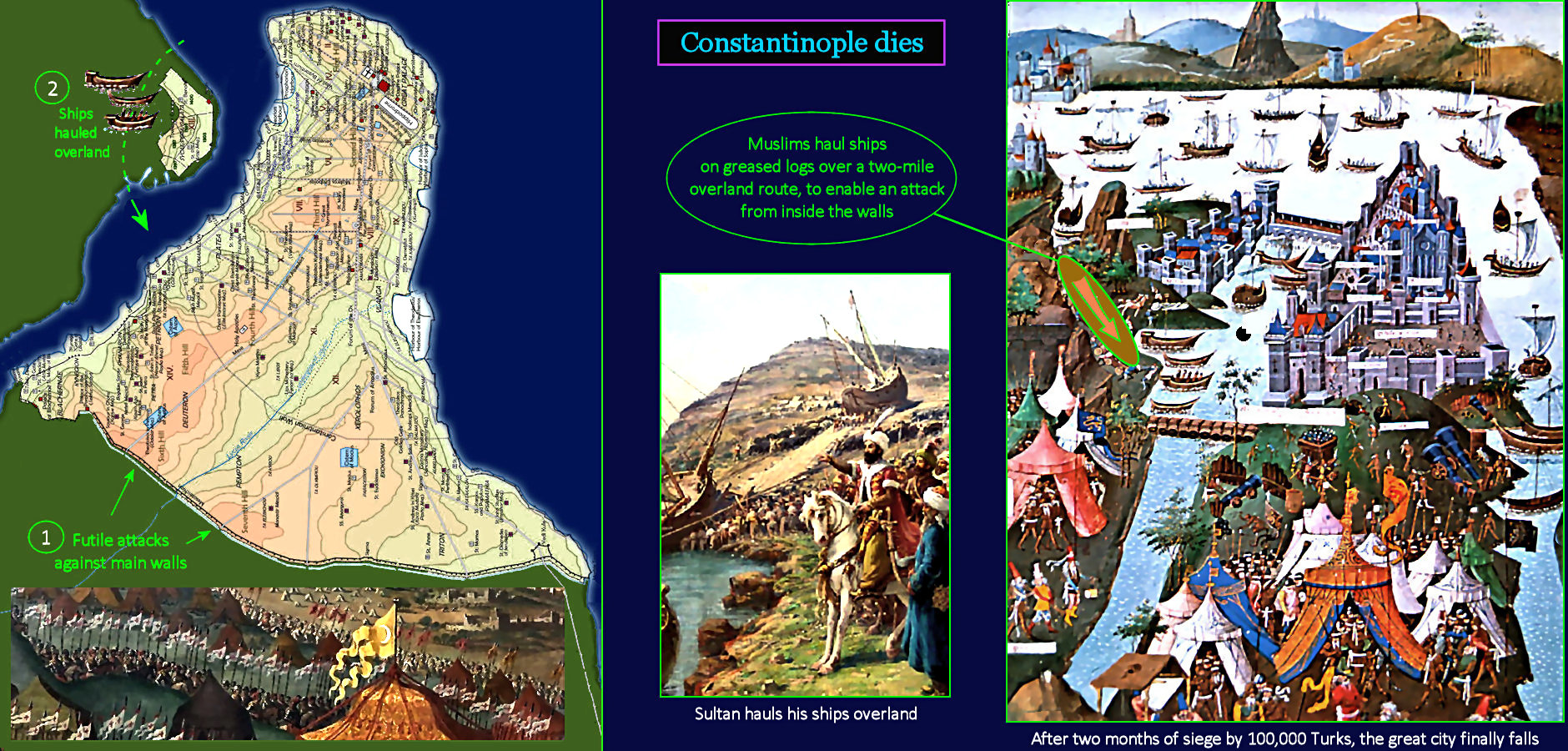
Constantinople Falls to Turks The immediate threat in Europe is renewed Muslim aggression against Constantinople, which is hanging by a thread. It has never fully recovered from its sacking at the hands of the Fourth Crusade, and is outnumbered twelve-to-one by the Turkish Sultan's great army. Even so, it takes two months to overcome the defenders. After suffering very heavy losses in the vain attempt to breach the main walls (1), the Sultan finally hauls his ships overland, bypassing the wall (2). When the city finally falls, it's sacked for three days, and its 30,000 remaining inhabitants are sold into slavery. This is a body blow to Christian Europe, opening the door to Muslim conquest of Bulgaria, and the entire Balkan region. | |||||||||
| |||||||||
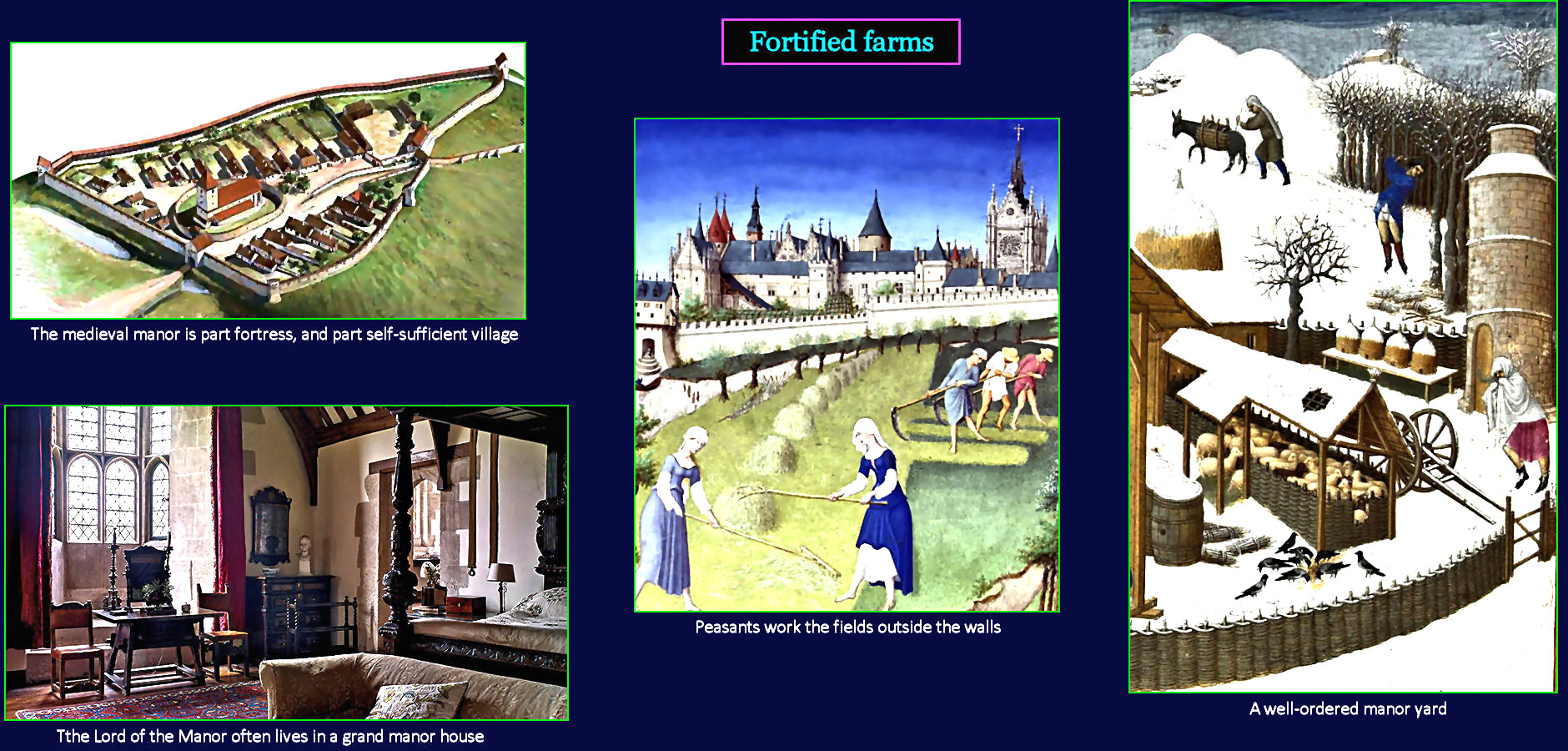
Medieval Life During this period, Northern Europe was settling into a kind of fortress-based farming, with landless peasant farmers living in housing provided by local noblemen. The nobles had been granted great swaths of land in return for a promise to come to the aid of the king, when called. Secure in their fortified manors and castles, the nobles collected a modest percentage of the crops raised in their fields, as rent. There was no paper money, and very little coin, which created a need for somewhat elaborate accounting. Christians, like Muslims, were forbidden by their religion from charging interest on loans. But both were happy to let Jews handle the accounts, as long as they didn't display their growing wealth too publicly. | |||||||||