| |
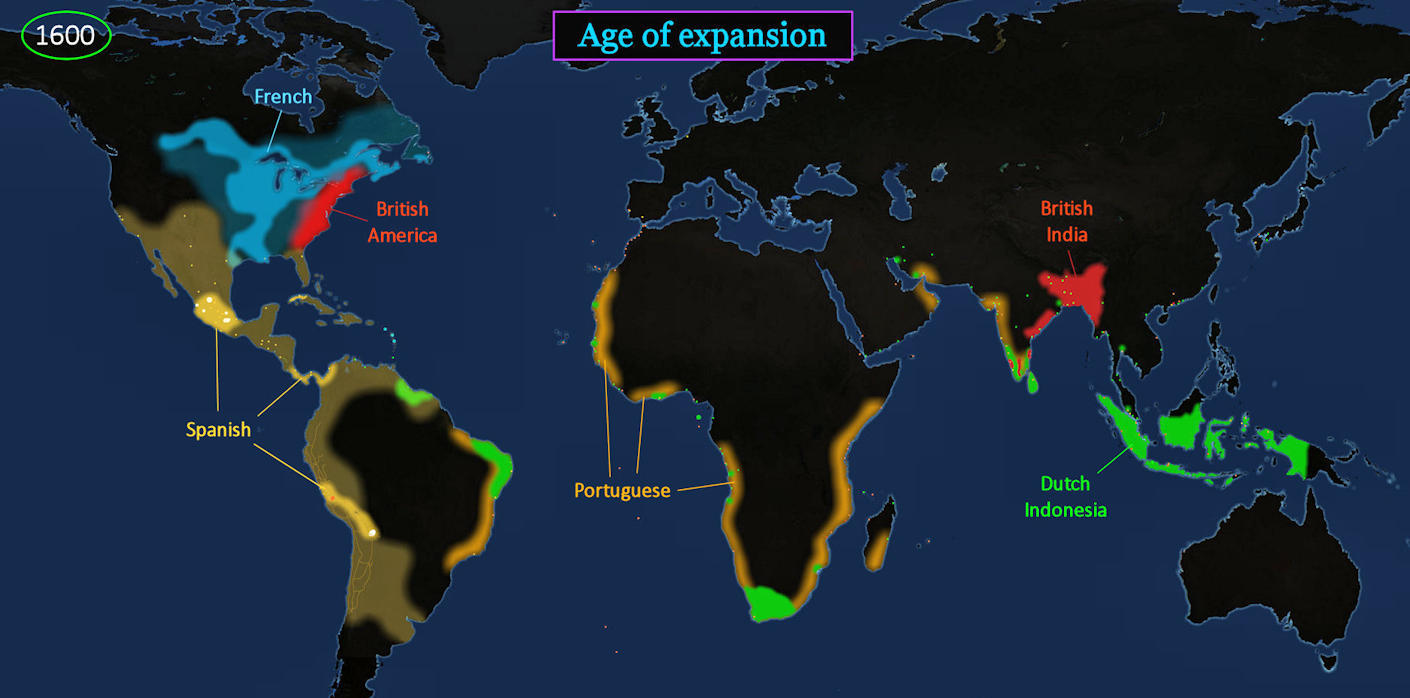
Expansionism The zones of colonial control shown above gradually firm up after an extended period of economic rivalry. Early arrivals have the advantage at selected sites, but claims are largely ignored later, as sea power becomes the decisive factor. The English take New York from the Dutch merely by sailing in with a squadron of frigates, and demanding surrender. The British and Dutch separately muscle Portugal aside in the Indian Ocean, with powerful armed vessels operated by large commercial corporations. Portugal is left with its slaving operations in Africa. |
| |||||||||
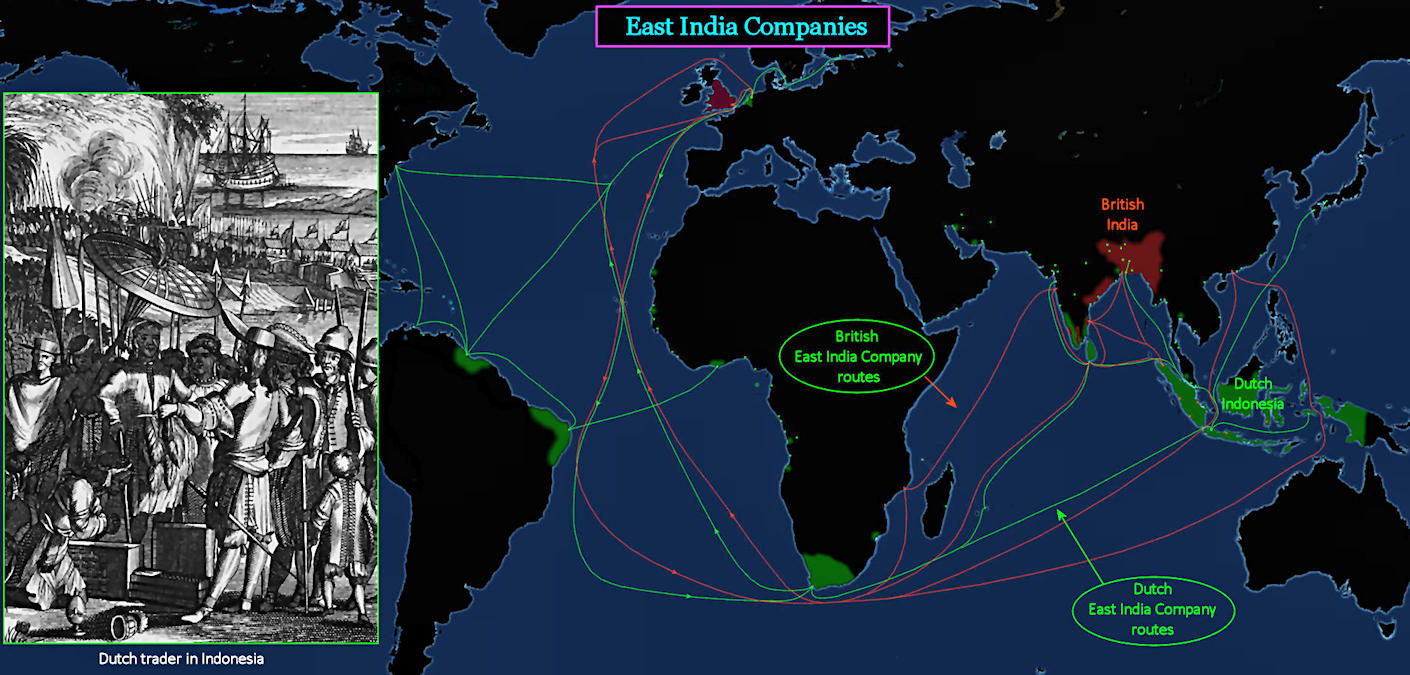
Trading Companies The new factor in all this expansion is the emergence of the first great corporations worthy of the name. The Dutch East India Company, and its mirror-image British East India Company, both use modern financing techniques to build giant global franchises based on stock ownership. This is new. Instead of local merchants pooling their resources to launch a venture, the trading companies offer shares of the company for sale, right at the start, to any potential investor. Shareholders can be located anywhere, as they don't participate in the actual operation of the company. If the company does well, they get a dividend. This opens up India, China and the Spice Islands to industrial-strength exploitation, with outsized profits that pour in for many years. | |||||||||
| |||||||||
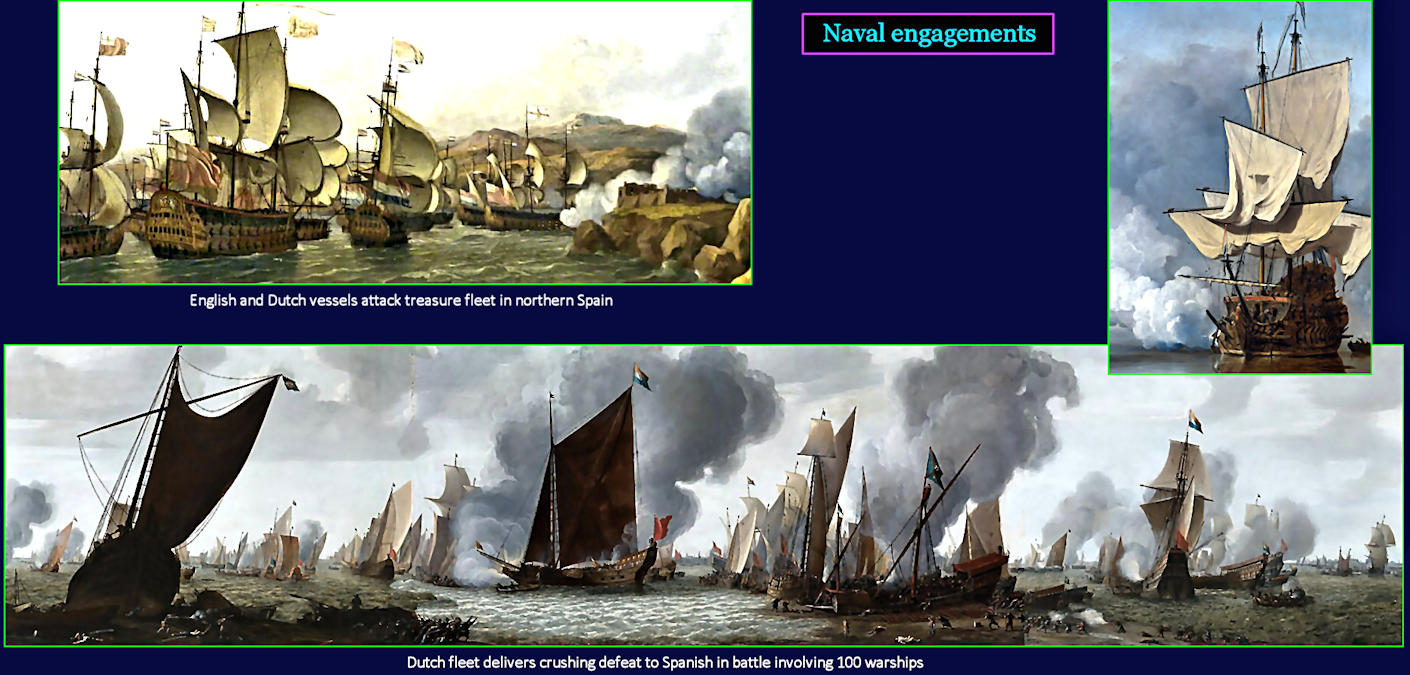
Naval Power The key factor is naval power. The British and Dutch are the best seamen, with the best warships, and actually spend most of the 1600s fighting each other, at sea. They fight four separate naval wars that continue right through the American Revolution in the next century. The Dutch get the better of the fighting until the very end, but during the period both countries are able to equip their trading companies with armed merchantmen that barely differ from pure warships. France and Spain built fleets as well, but have less battlefield success. Despite the small size of their homeland, the Dutch are able to extricate themselves from the grip of mighty Spain, largely through naval power which they are able project all the way into Spanish waters. | |||||||||
| |||||||||
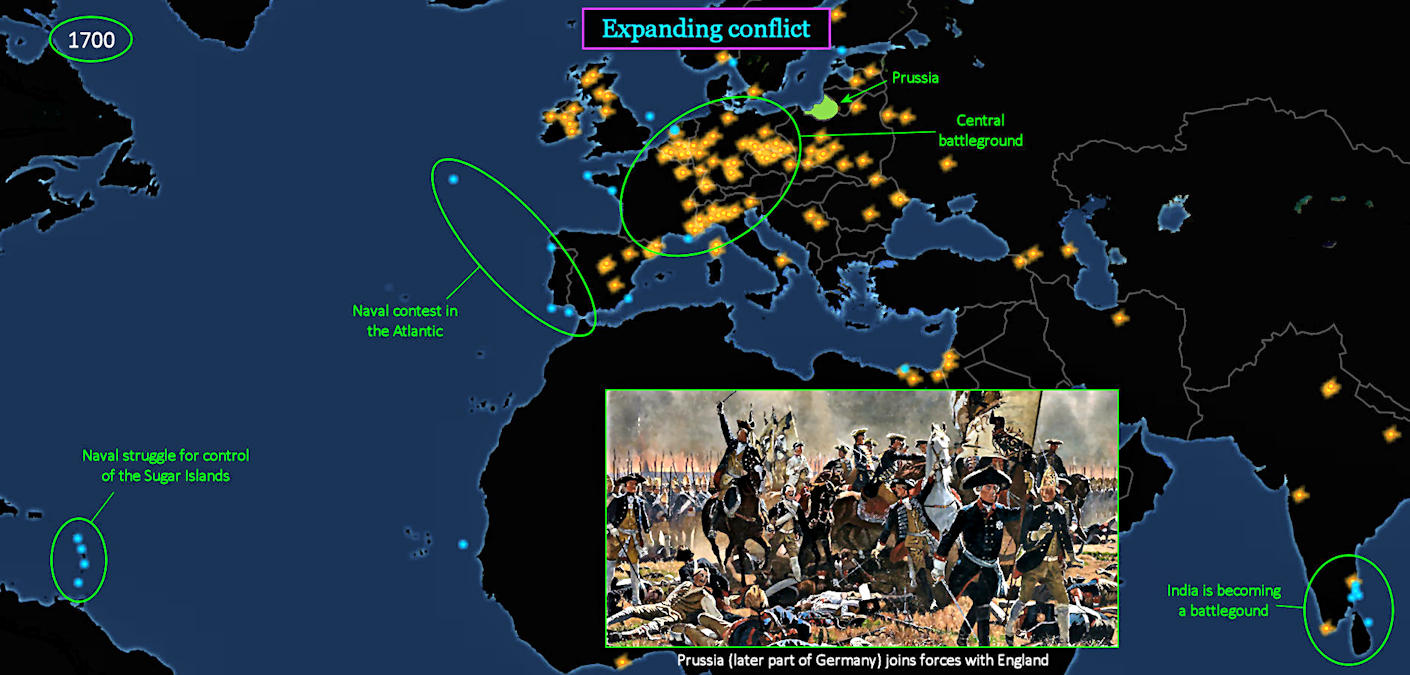
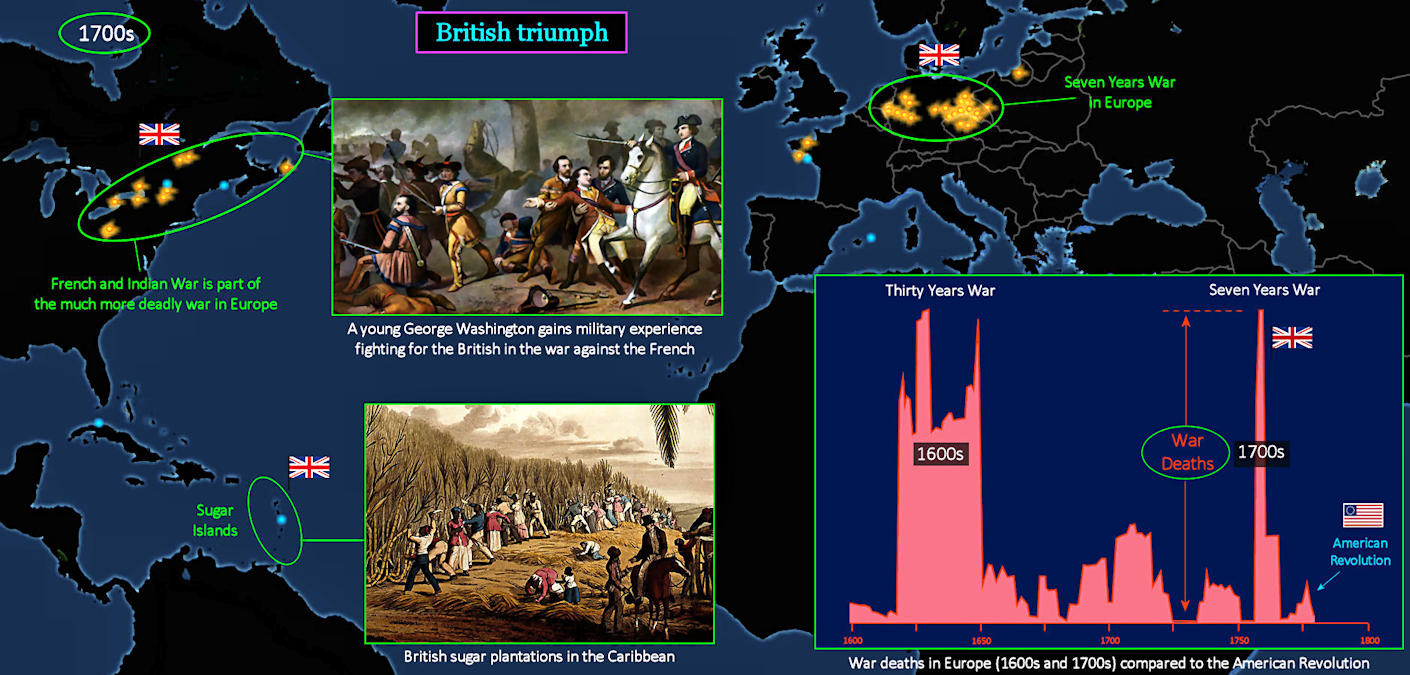
Seven Years' War Warfare on the continent continues straight into the 1700s, though at a somewhat less ghastly pace. Still, by mid-century the British and French are at it again, in a mighty conflict just as intense as during the previous century, but much shorter. This is the Seven Years' War, which again involves most of Europe, broadly grouped into two familiar camps. Catholic France against Protestant England. The war rages all over the globe, including India, the Caribbean, and North America. The result is a resounding British victory, which leaves France stripped of her American colonies. Britain rules the world, but at a cost. She is so financially weakened that bankruptcy would likely been the result, had Britain lost the war. Bankers do not extend loans to losers. | |||||||||
| |||||||||
Britain Reigns Supreme The British triumph over France is total, although the cost is high. The battles fought in America, during the French and Indian War, are really just part of this much bigger European war. The final peace settlement awards all French colonies in America to Britain, while France retains claims to land west of the Mississippi. The war also consolidates British control of the Sugar Islands in the Caribbean, just off South America. These islands are home to huge plantations of sugar cane, which is grown almost nowhere else. Plantations are owned by Europeans, who vie continually for control of the islands, and enjoy handsome profits for many years. Many African slaves originally shipped to sugar plantations in the Caribbean are later trans-shipped to America. | |||||||||
| |||||||||
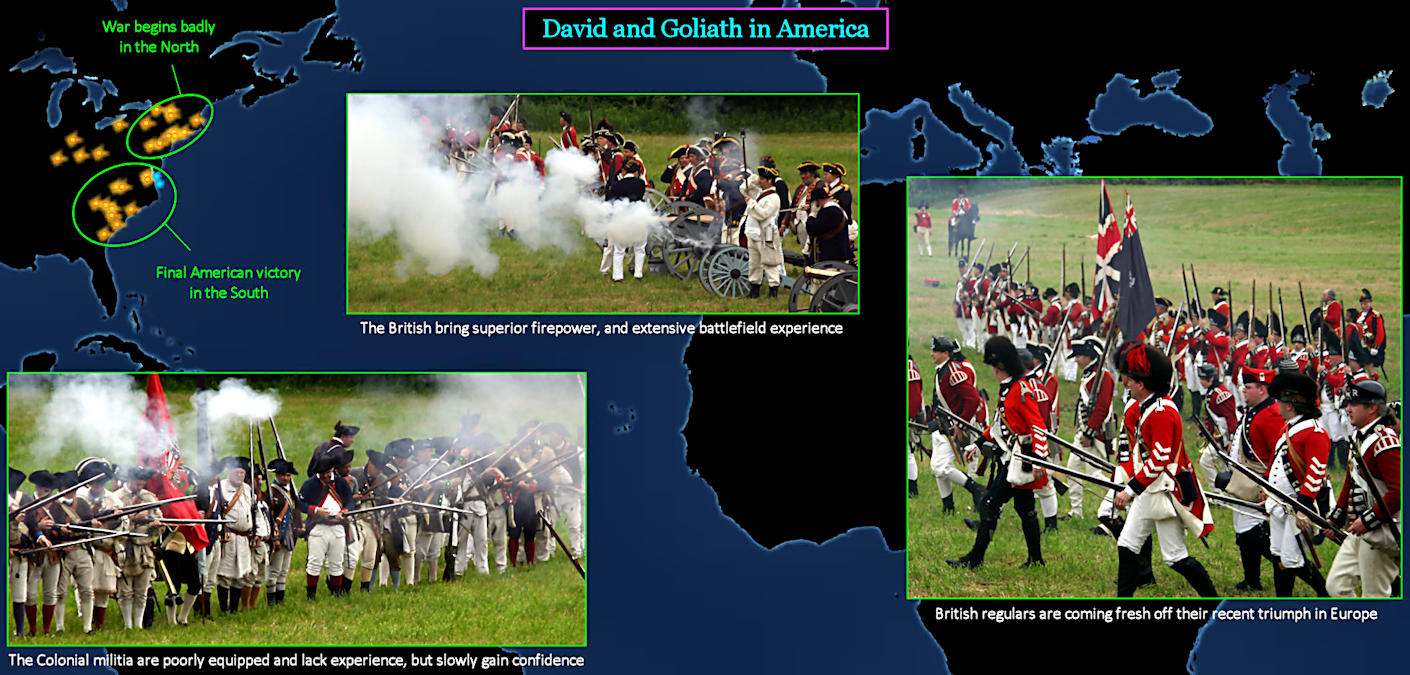
Americans Under Pressure Britain has won the war, but faces unexpected difficulties in America after it ends. Britain enacts a whole series of measures intended to persuade her colonies in America to help pay back her groaning war debt. But the colonies are also in poor financial shape, now that the great boon of war spending is suddenly over. The strain is most acute in Boston, which depends almost entirely on shipping for income. Britain clamps down on this shipping, to extract some of the income for herself, and in the end drives the Americans to revolt. The colonists don't stand much of a chance, but seem not to notice. After an initial success driving British troops from Boston, they face a long slog to final victory in Virginia, achieved with substantial French aid. | |||||||||