| |
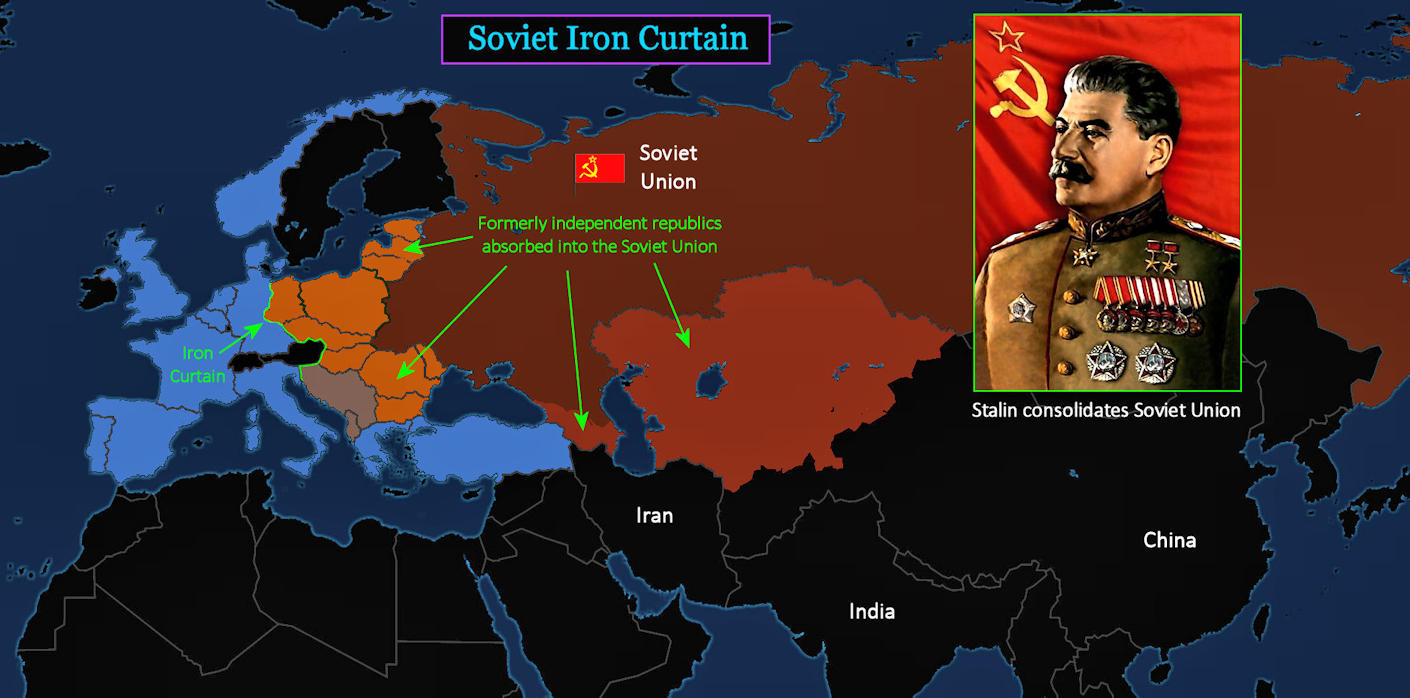
New World Order When Germany surrenders, the Soviets control all the area shown above. This includes the Soviet heartland (darkest RED) plus thinly-populated areas to the south (lighter RED) and all the countries of Europe located east of the German midline (in ORANGE). None of these former republics is ethnically Russian, though most are essentially Slavic, like Russia. At the far western edge of this territory, the Soviets establish a nearly impenetrable boundary, which cuts off communication with the rest of Europe. This comes to be called the 'Iron Curtain.' |
| |||||||||
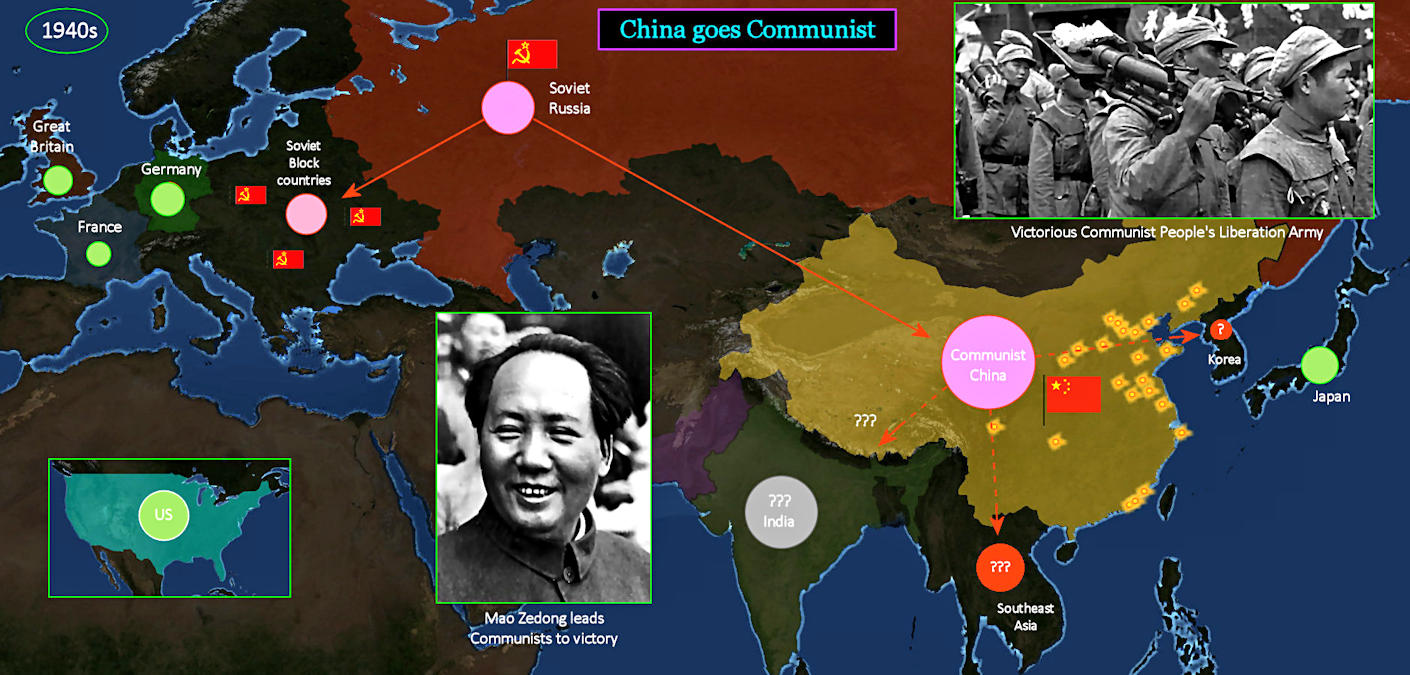
Rise of China Stakes in the Cold war are raised soon after the appearance of the Iron Curtain, when communists in China are finally able to overcome American-supported Nationalists. This ends a titanic civil war begun 20 years earlier, with armies on both sides numbering in the millions. The communist victory comes as a shock, as few Americans have been paying much attention. But the Chinese population is so huge, that there are now twice as many people living in communist countries as in Western democracies. The size of the circles on the map indicates relative population in 1950. Note that India, the other great center of population, is second only to China. Americans become suddenly hysterical that the virus of communism might soon infect India, as well. | |||||||||
| |||||||||
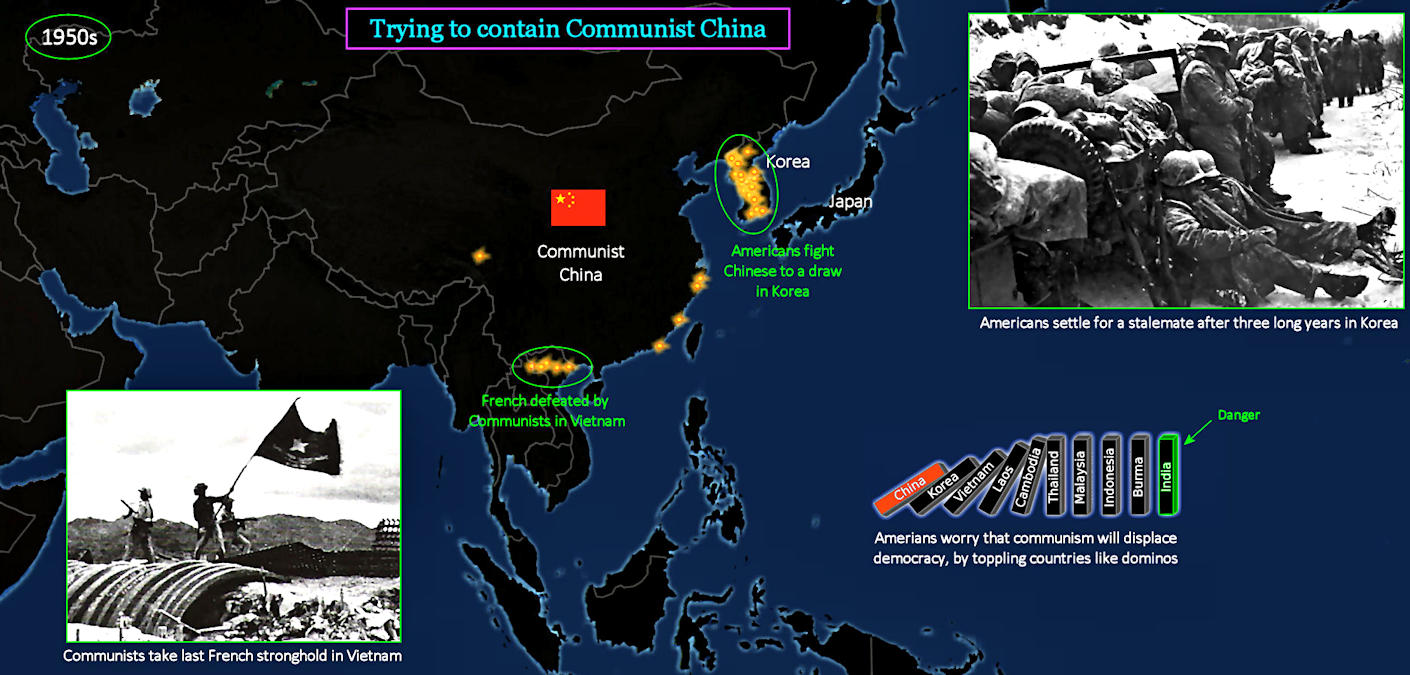
Domino Theory The struggle to contain communism consumes American policy for the next 40 years, beginning with Korea. The communists in Northern Korea are not particularly dangerous, but China and Russia both support the invasion of South Korea by the North. America takes the other side, backed by the United Nations. China warns against US involvement, but is not taken seriously until 200,000 Chinese troops come flooding across the border into Korea. It takes three years for the Americans to stabilize the situation, effectively ending the war with a stalemate, which leaves the border essentially unchanged. Meanwhile, communist forces are able to drive the French out of North Vietnam, which they had controlled as a 'protectorate' for a century. | |||||||||
| |||||||||
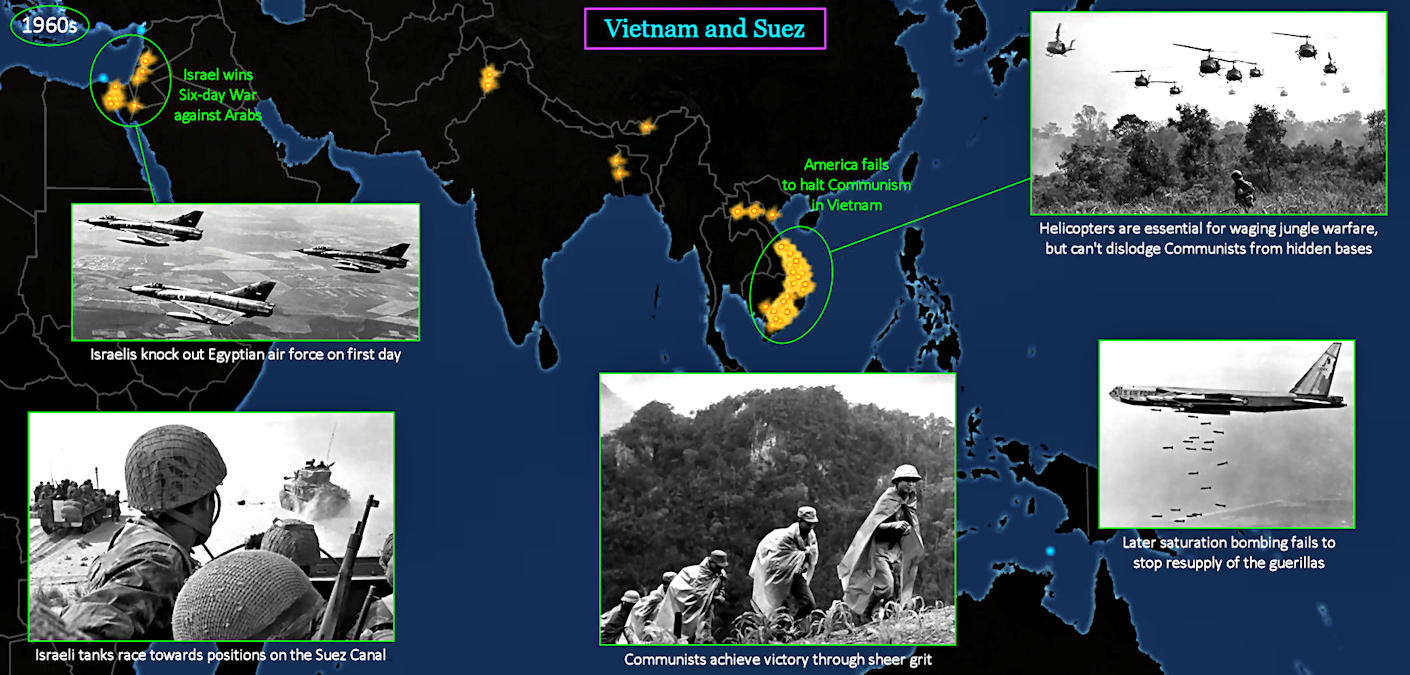
Escalating Friction When the French finally give up and go home, America takes over responsibility for keeping communism out of the region, arriving first in South Vietnam. The communists retain their stronghold in the North, receiving constant military support from China via jungle trails winding down through neighboring Laos. Five different American Presidents participate in the continually escalating war effort, but all the helicopters, napalm and Agent Orange are not enough. America eventually resorts to a secret bombing campaign of the communist supply routes in Laos, from airfields in Cambodia. A greater tonnage of bombs is dropped than in all of World War II. Still, the communists persist, wearing down American resolve until the US finally withdraws. | |||||||||
| |||||||||
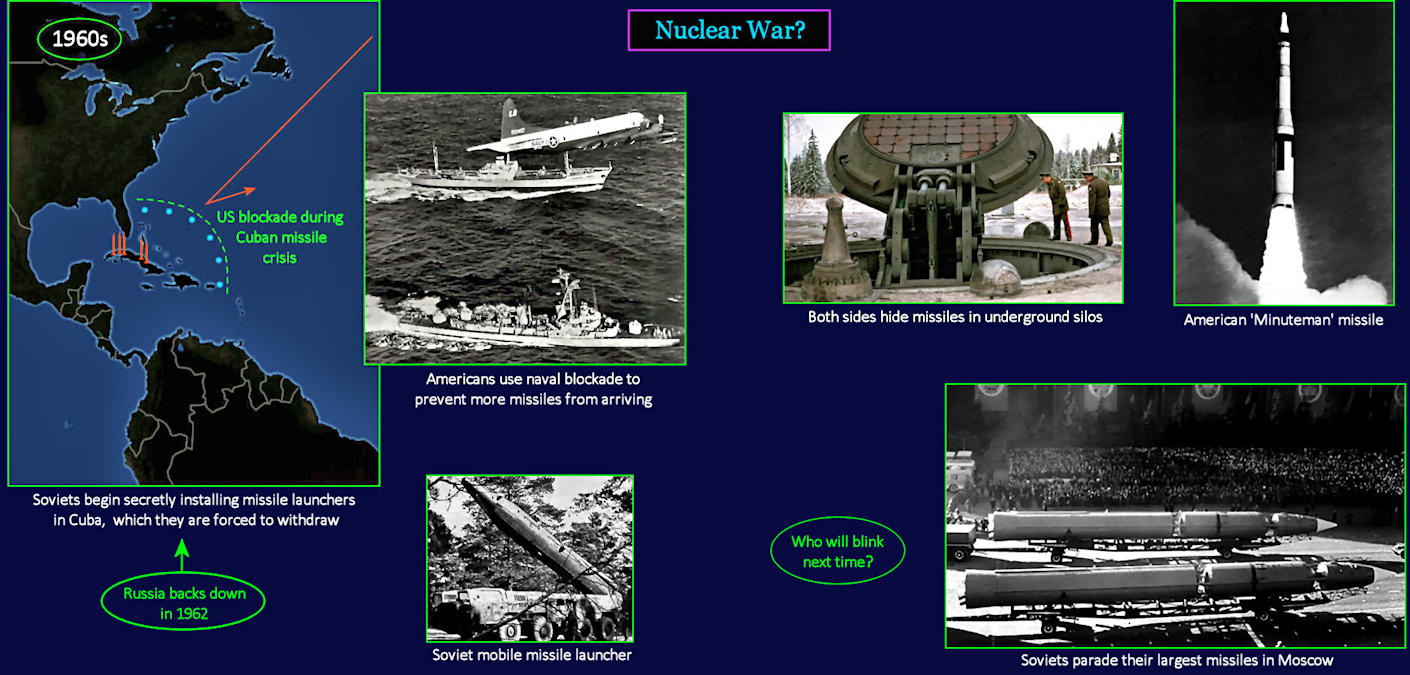
Cuban Missile Crisis The Soviets stun the world by beating the US into space, launching the world's first satellite in 1957. Ever after, the world's two superpowers are locked in a contest of wills, to decide who has the military advantage. America has a head start, having developed the first Atomic bomb during World War II, but the Soviets are right behind. Thanks to a British spy, they gain access to technical details, and are able to detonate their own A-bomb just four years later. Next comes the hydrogen bomb, and nuclear-tipped missiles. The US has a five-fold advantage in missiles in 1965, but the Soviets manage to pull ahead in just ten years. After pulling still further ahead, however, the growing financial strain sets the stage for the looming breakup of the Soviet Union itself. | |||||||||
| |||||||||
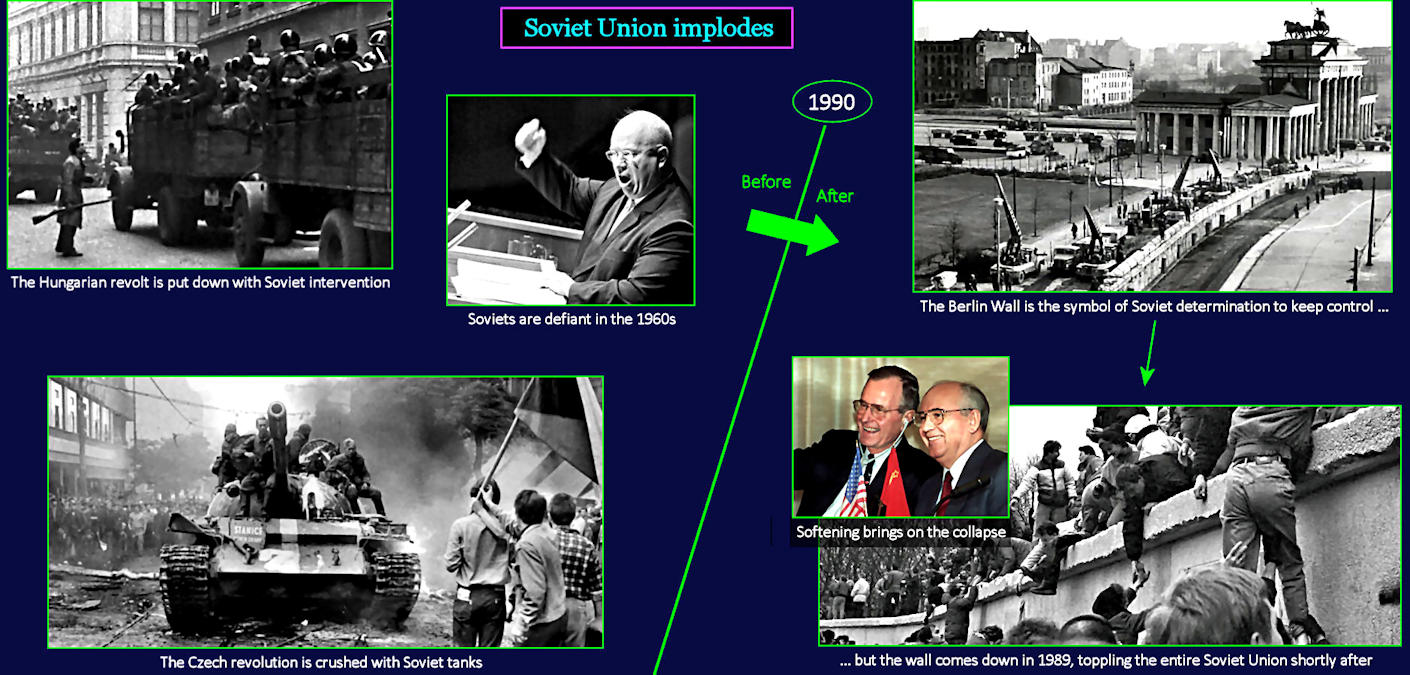
Surprise Collapse Throughout the 1970s, the Soviets project an image of boundless strength and determination, with a new willingness to learn from previous mistakes. Nikita Khrushchev (above left) boldly denounces excesses of his predecessor, Stalin, and rattles American nerves with a forceful speech at the United Nations. Khrushchev continues to threaten until his bluff is called during the Cuban Missile Crisis. The Soviets eventually adopt a less confrontational posture under Gorbachev, but finally collapse from economic weakness and financial exhaustion. The opening of the Berlin Wall is an apparent mistake, which the regime is no longer willing to correct with another military crackdown. As local federations withdrew from the Soviet Union, it simply rolls over and dies. | |||||||||