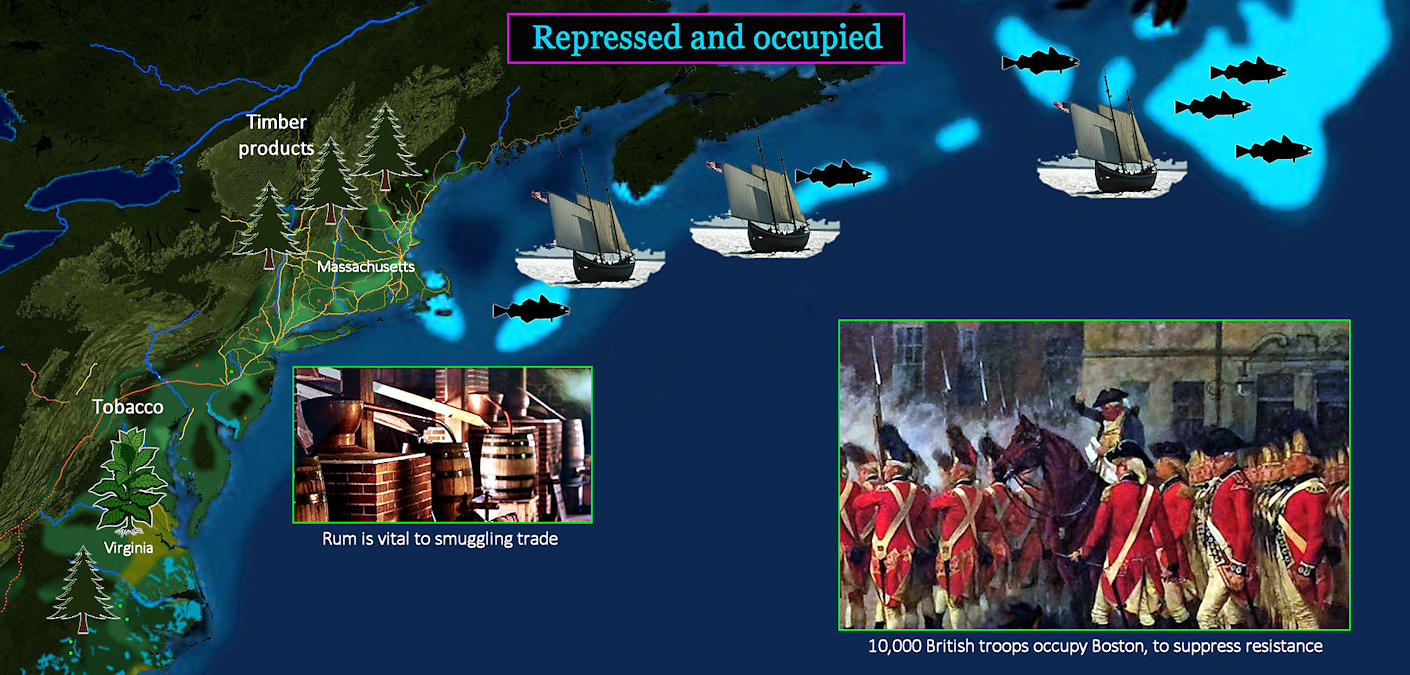
Breaking FreeAll shipping from the American colonies must now make London their first destination, effectively stripping the New England colonies of the profits they have slowly developed in trade with France and the Caribbean. Boston merchants are increasingly driven to smuggling, to skirt British controls. But they continue falling into deeper debt to their London bankers, who maintain a stranglehold on most imports and exports. Newly-imposed British taxes finally drive Bostonians over the edge, rebelling against heavy-handed British rule. They slowly nudge fellow colonists into a war that results in unlikely independence. But this doesn't yet pay the bills. |
| ||||||||||||||||
| |||||||||
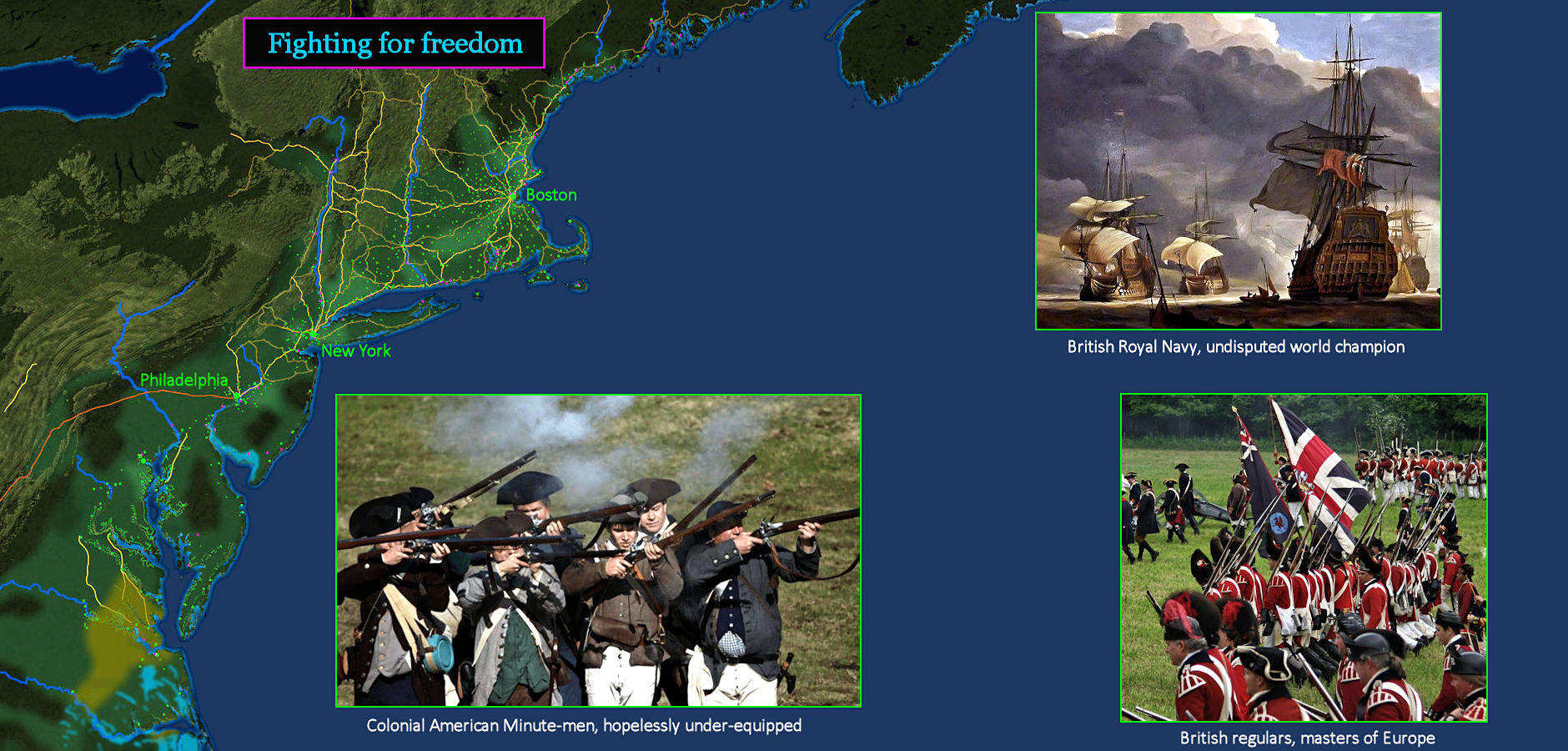
Power Mismatch The map above depicts the American colonies in 1770, just before the start of the War of Independence from Britain. GREEN dots are towns, mostly clustered around Boston. RED dots are shipbuilders, sprinkled all along the coast. The YELLOW lines are mail and stagecoach routes. Boston remains the biggest port, while Philadelphia and New York are roughly tied for second place. The colonists have muskets and a few cannons, but seem hopelessly outmatched by the combined land and sea power of Britain. How the colonists eventually defeat the world's premier military power is a great story, which we will leave to a later chapter. | |||||||||
| |||||||||
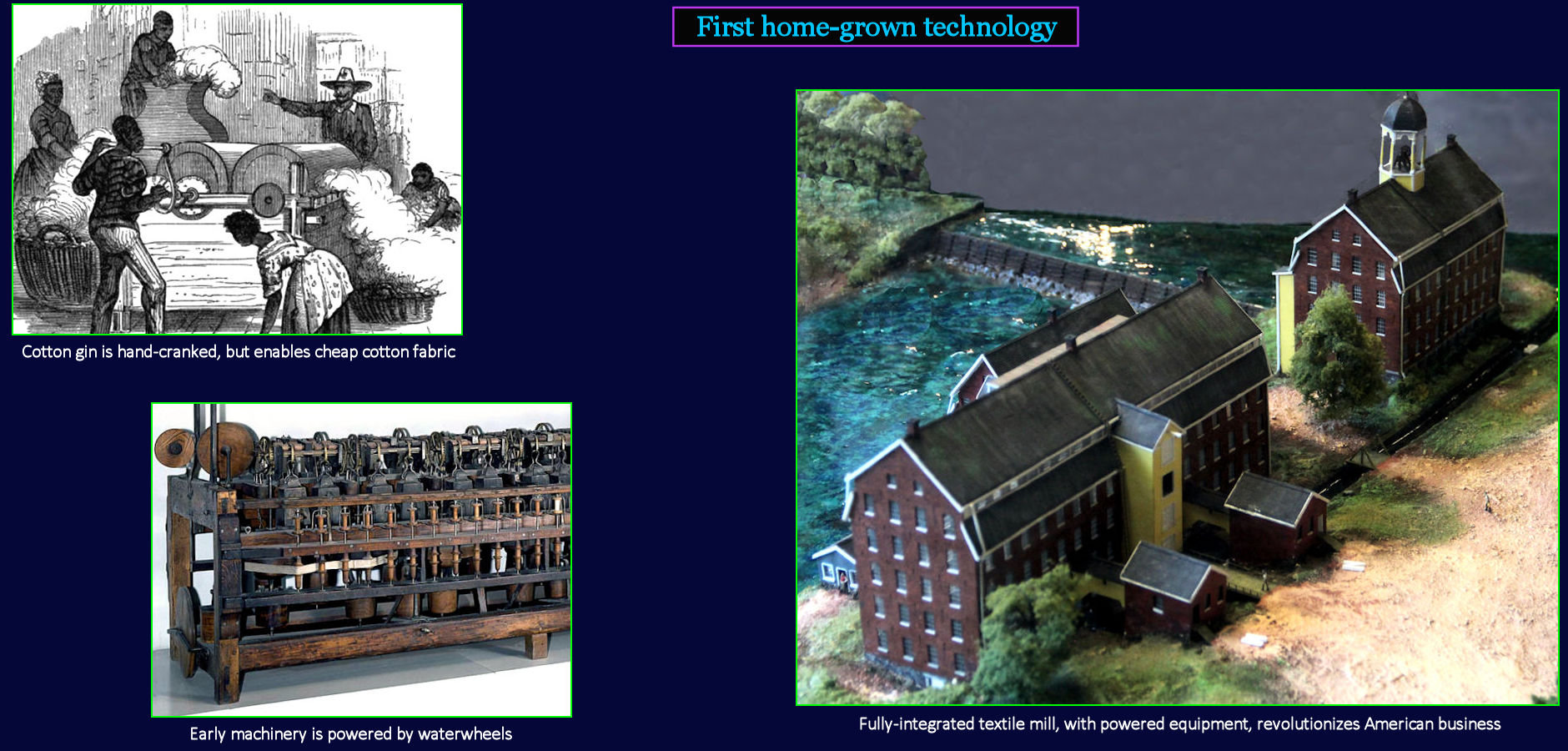
America Unchained After winning independence from Britain, the first item on the agenda for America is fixing its finances. This begins with establishing America's first banks, and soon leads to the emergence of new technology-driven business, for the first time ever. The cotton gin (at top left) is the first home-grown American invention of any real consequence, and sets the stage for the development of textiles (which is woven fabrics) as the country's first industry. In the process, enterprising Americans manage to replicate spinning machinery originally developed in Britain, which they continue to refine in New England (as shown at lower left). | |||||||||
| |||||||||
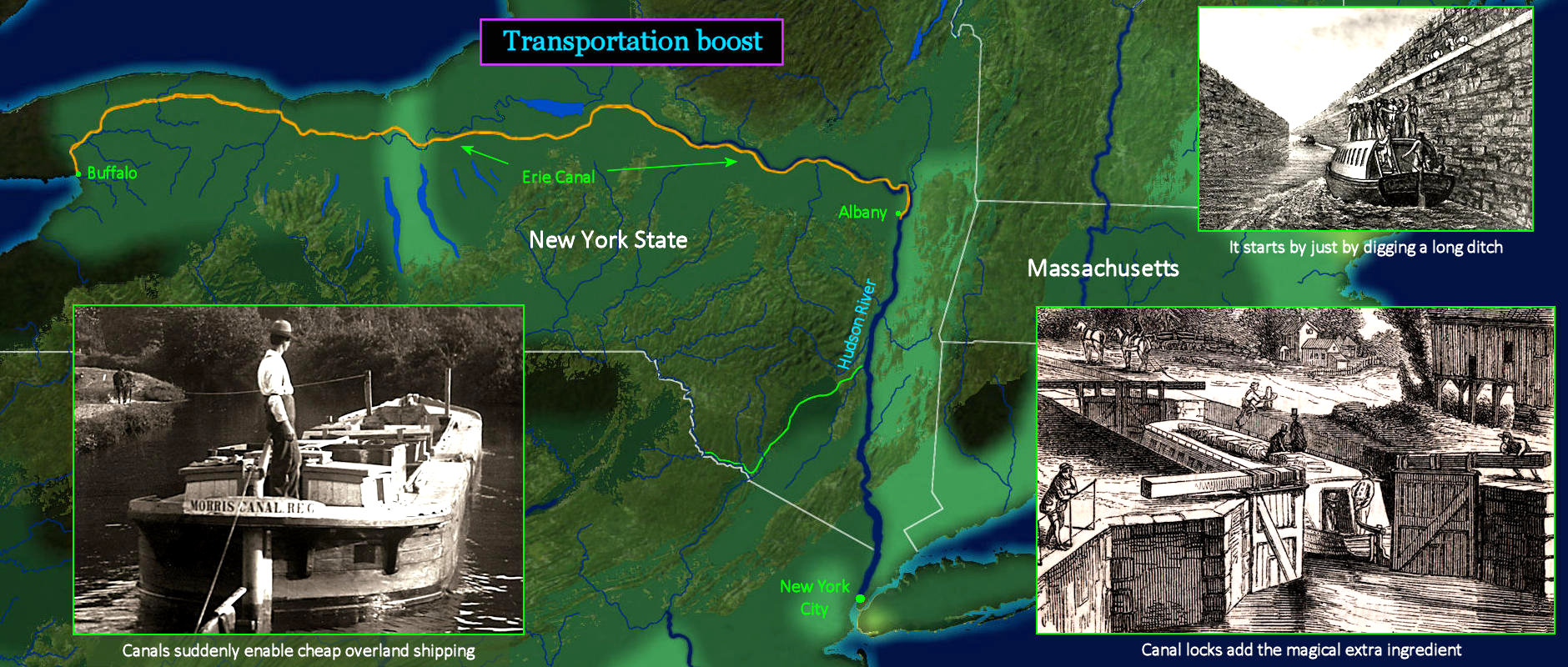
Erie Canal, Game-changer Another important technology upgrade follows soon thereafter. The British have pioneered the use of canals, to improve trading connections between important business centers, but the Americans quickly expand upon the concept. The Erie Canal spans the entire state of New York (as shown above), requiring such a large investment of capital that it can only be financed with government money. A huge gamble at the time, it proves enormously successful almost immediately, slashing shipping costs by an astonishing 95%, while reducing travel time by 70%. It's such a winner that a flurry of similar canals soon follow, triggering a nationwide transportation boom. | |||||||||
| |||||||||
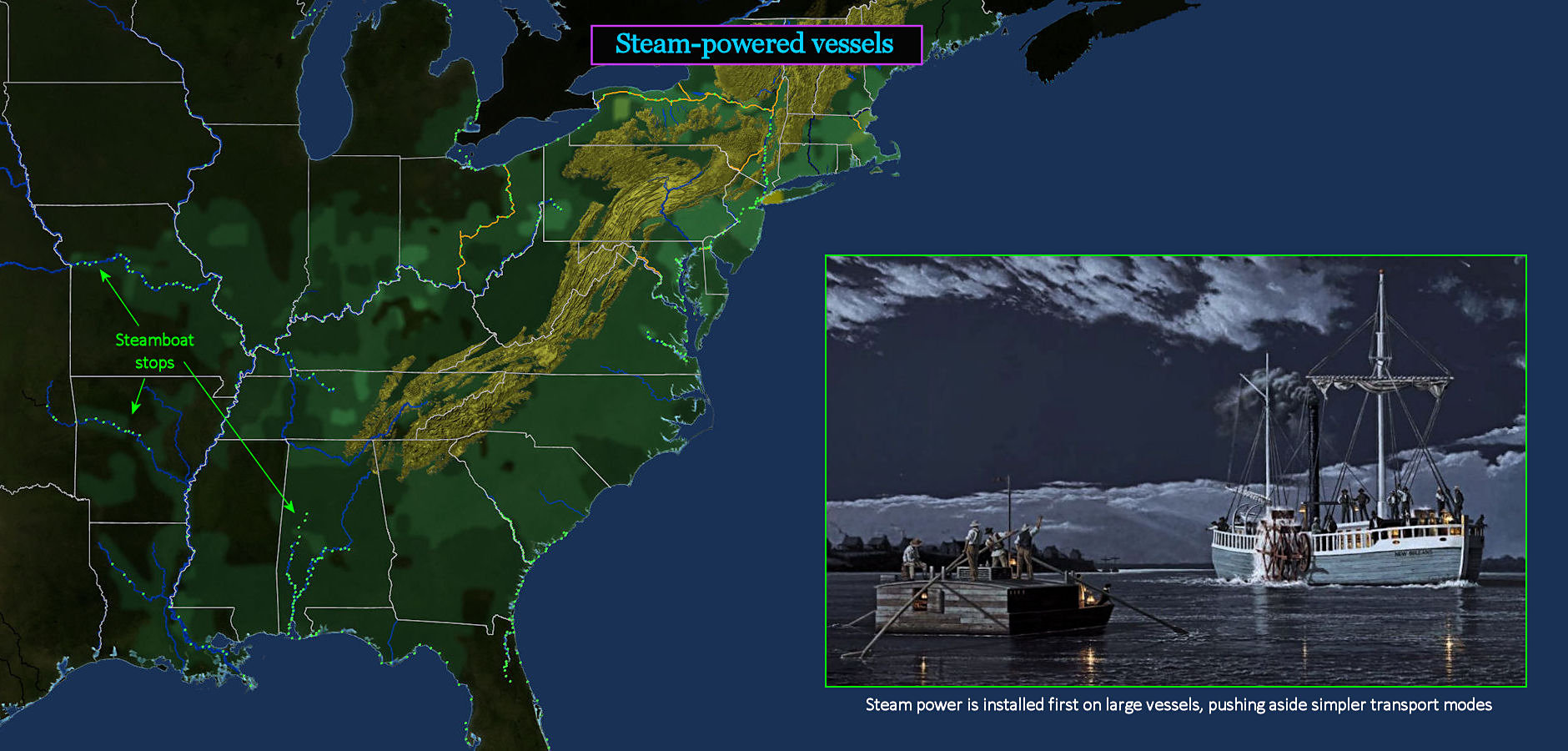
The Next Big Thing At the same time that canals are providing new pathways for commerce, steam-powered vessels add a new dimension of power to economic activity. The first commercial device powered by fuel, steamboats navigate both downriver and upriver with equal ease, burning wood to heat the steam in their boilers. Within 25 years, America has steamboat stops up and down every major river, and running all around the shoreline from New Orleans to South Carolina (see BLUE dots on map). Canals (in ORANGE above) are also used by steamboats, as travel time plummets once again, and commercial traffic increases. The days of floating gently downstream on a home-built raft are numbered, as powered commerce accelerates. | |||||||||
| |||||||||
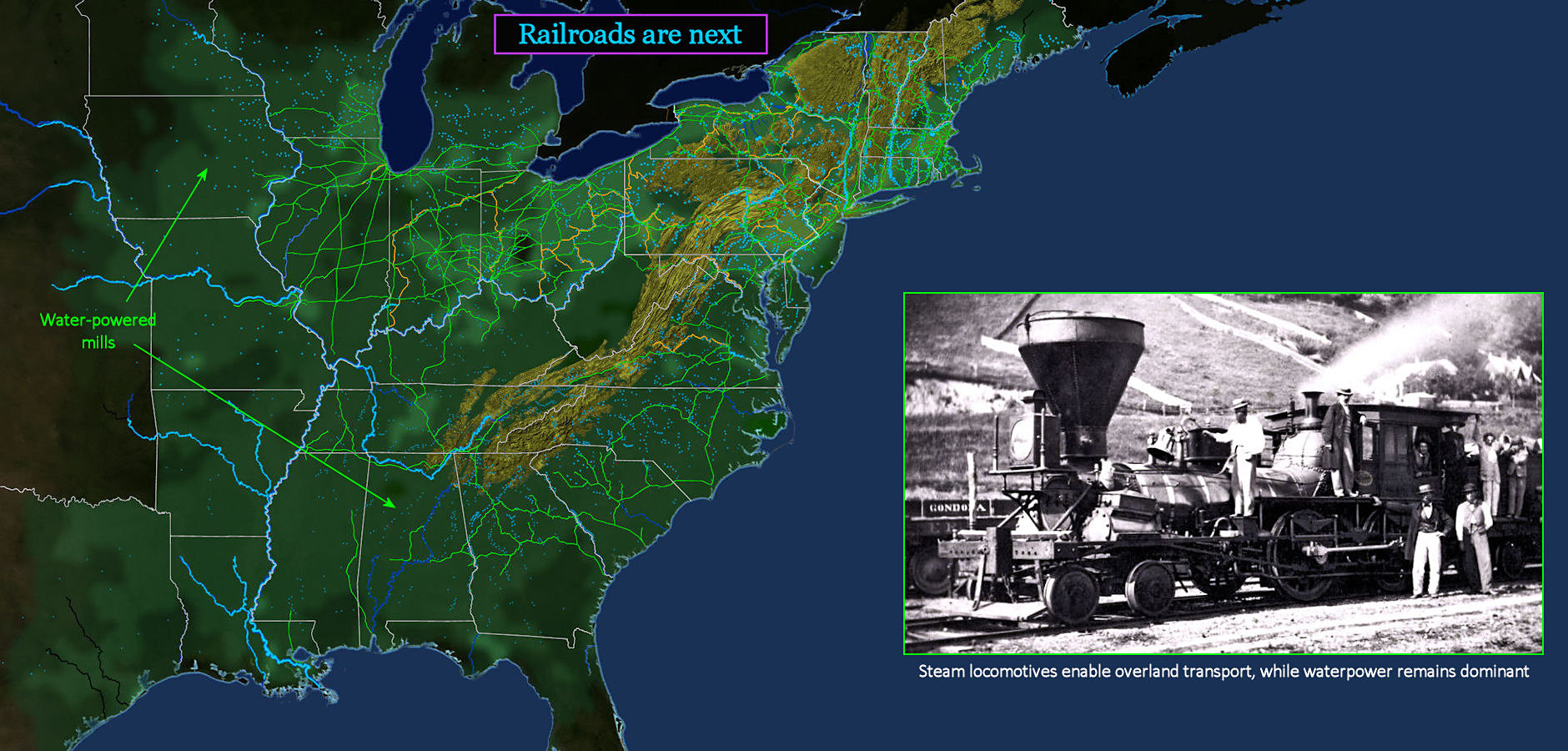
Land Travel Anywhere Engines that burn wood to create steam power are becoming more compact and powerful, and are soon adapted to railroads (see GREEN lines on map). The sheer power of steam-powered equipment removes remaining barriers to land travel everywhere, except in the most difficult mountains. But the industrial revolution is only just beginning. The final ingredient required to allow the revolution to catch fire is an abundant, cheap fuel, to replace firewood in steam boilers. That fuel is coal, and America has plenty. Coal will ignite a sudden increase in iron production, replacing costly charcoal as the fuel for blast furnaces, and allowing America to take its first tentative steps towards eventual global domination. | |||||||||