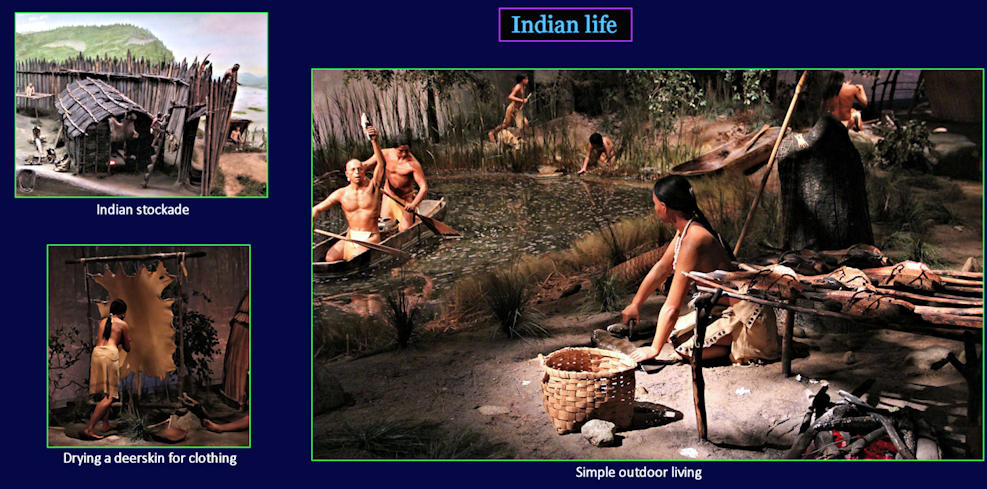
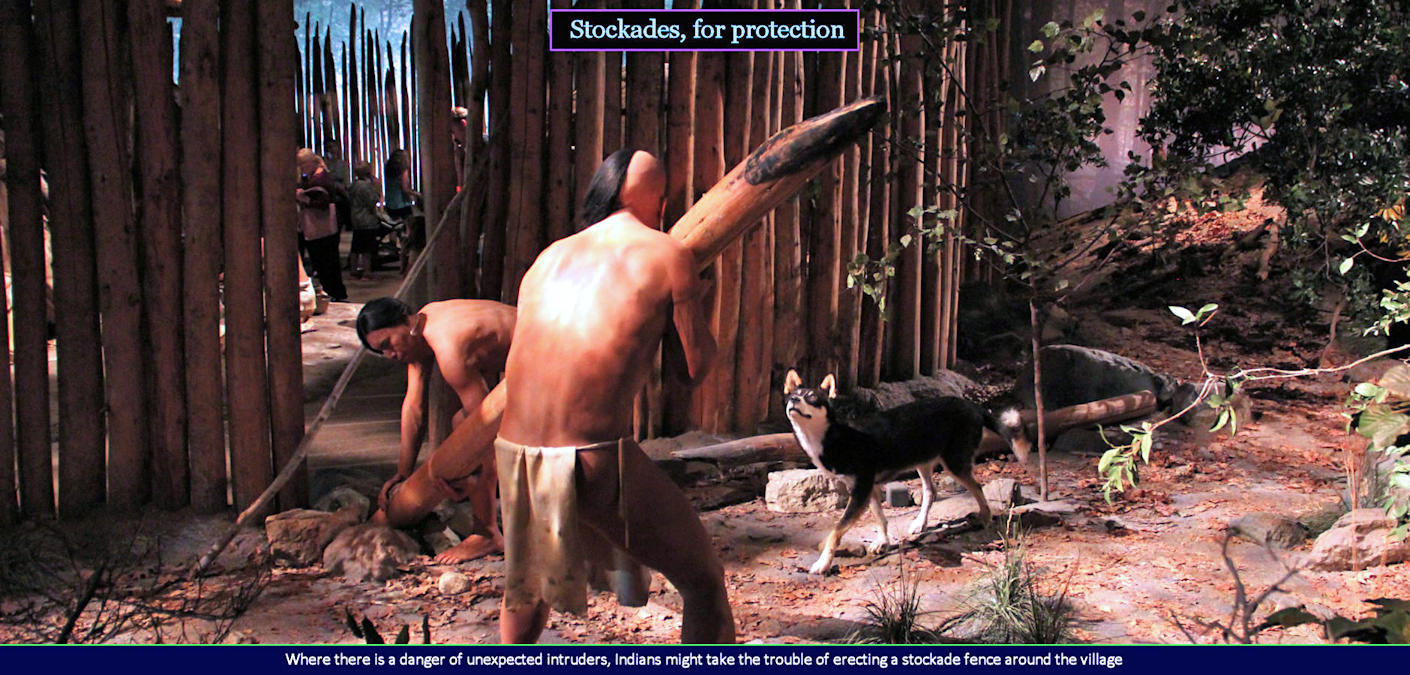
Stone-age livingStockade fences enclose most eastern villages for protection. Building the stockade is a major undertaking, but sometimes necessary. Felling trees without a woodsman's axe is both an art and a chore. Clothing is made almost entirely from animal skins. Indians know how to weave straw into mats on simple looms, but have no way to spin the fine yarn needed to weave fabric. Instead, they tan animal hides. Indians often trade, and take wives from neighboring tribes. But there is nothing you would call business. There are no shops, and there is no need for money. Wealth is measured using natural items, like shells. |
| ||||||||||||||||
| |||||||||
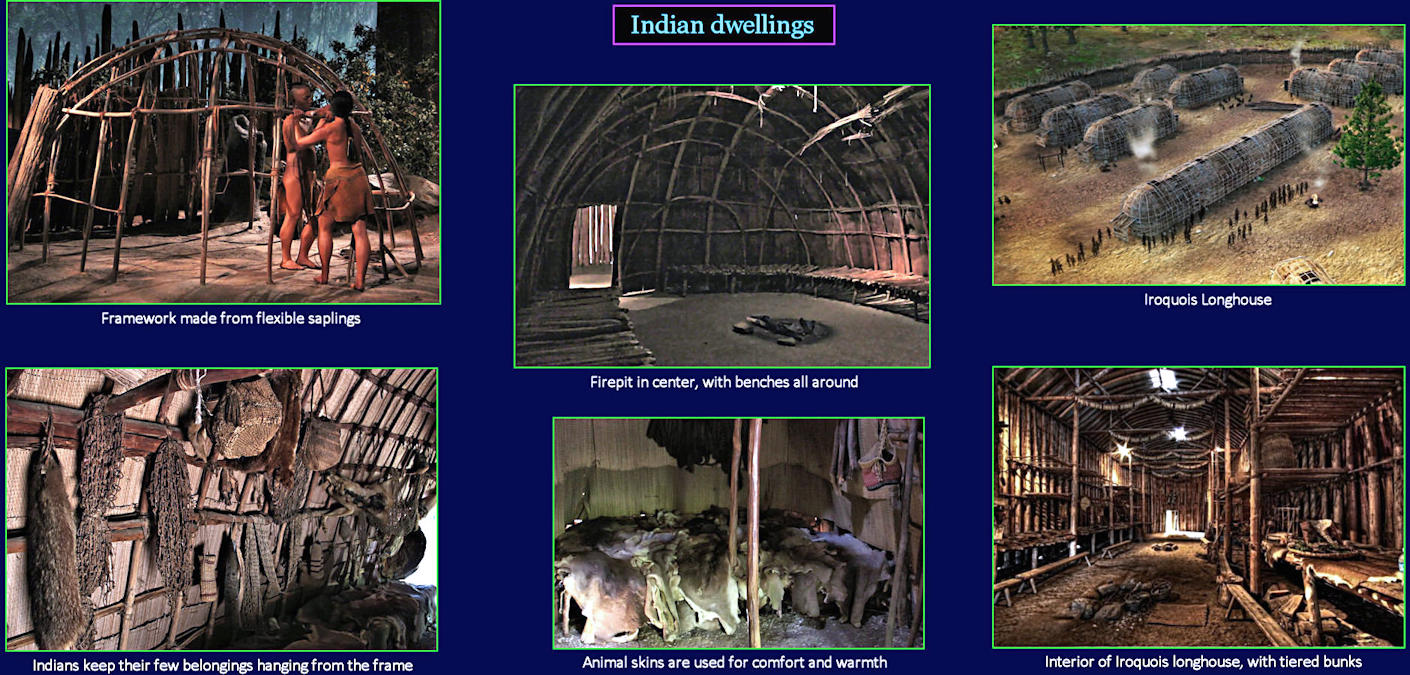
Building Without Lumber Indian dwellings in the eastern woodlands are simple and snug. Woven mats line the inside walls to block drafts, while the firepit in the center allows cooking in bad weather, and heating in cool seasons. Like the western teepees, these huts have openings at the top to draw smoke up and out. | |||||||||
| |||||||||
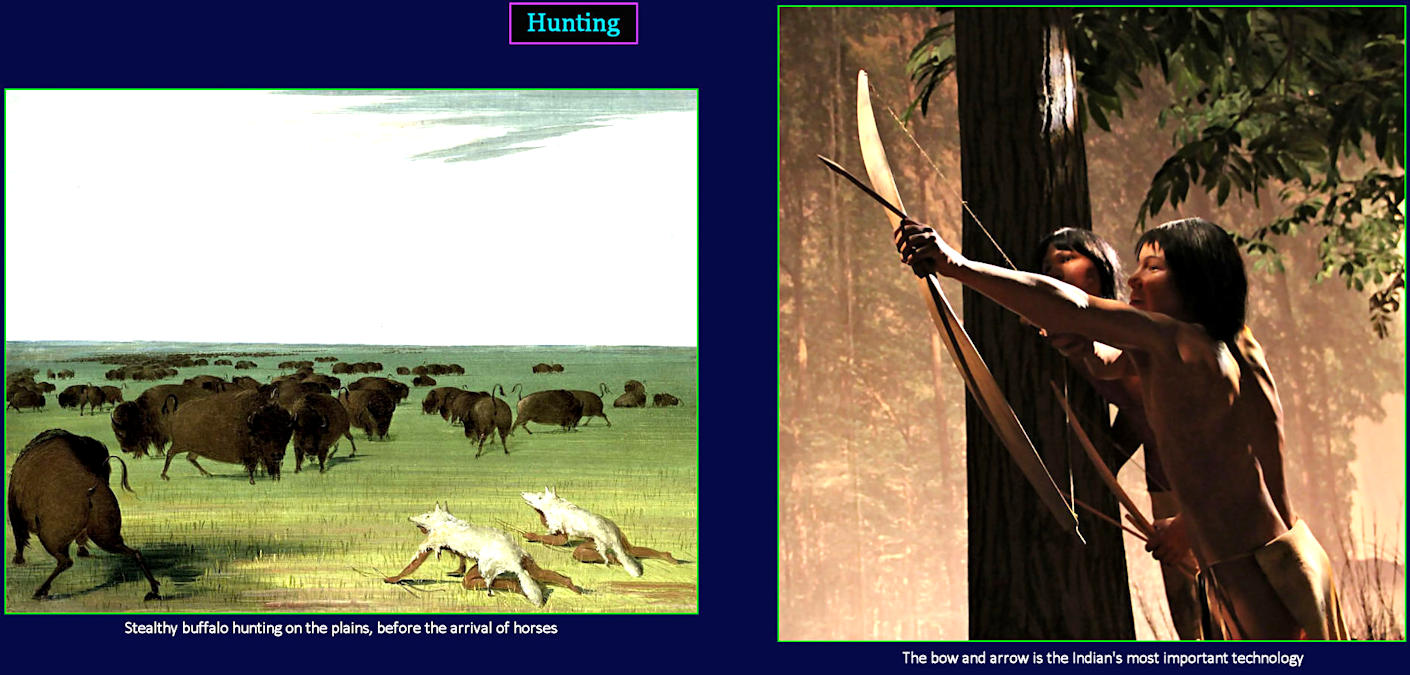
Hunting Wild Game Hunting on open grasslands with only a bow and arrow requires skill and cunning. Until Indians are able to capture and tame horses that escape from the Spanish, bringing down a buffalo is a tricky business. Indian hunters sometimes cover their bodies in animal skins, to allow a closer approach. | |||||||||
| |||||||||
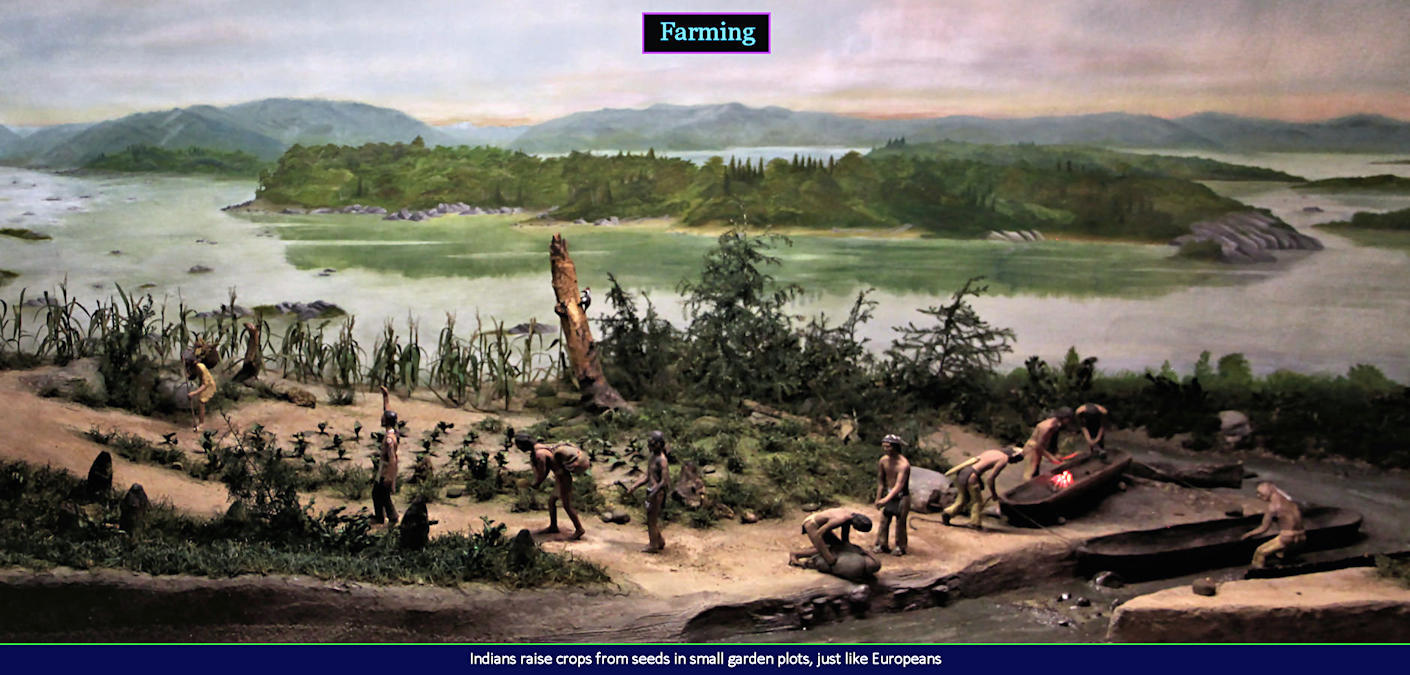
Indian Gardens Corn is the most important Indian crop. It is sometimes planted in a little mound, with a fish buried in the dirt to act as fertilizer. Other crops include squash, beans, pumpkins, cotton, sunflowers and potatoes. Indians in Virginia plant tobacco, which will become an important export crop for early white settlers. Indians make their canoes by hollowing out large logs, usually by burning out the interior with small fires (lower right). | |||||||||
| |||||||||
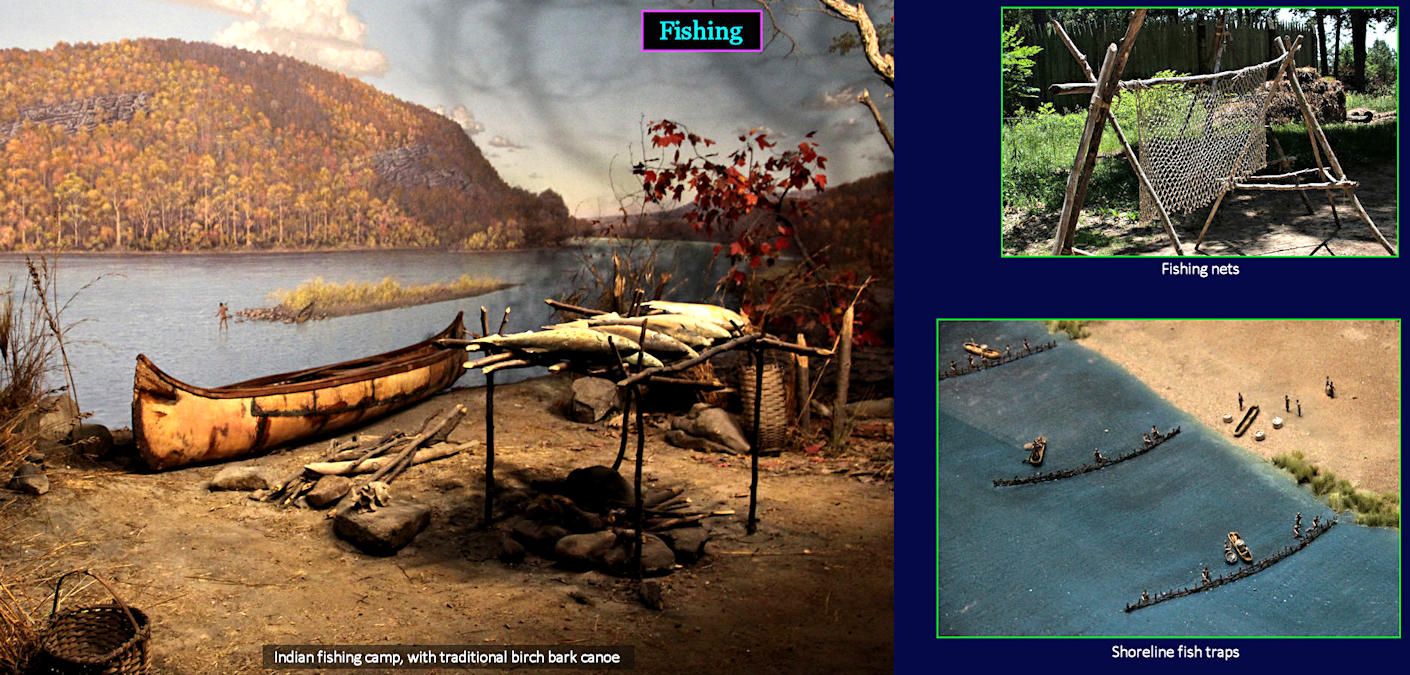
Fishing Without Rods The Indian canoe shown above is made from birch bark attached to a wooden frame. The seams are sewn with leather strips, and made watertight with the sticky sap from pine trees. Nets are also used, worked from shore or a canoe. Another method of fishing is shown at lower right, using partially submerged woven wooden fences. Fish become trapped against the fence by the force of the current or the tide. Indians scoop fish from the fences into baskets. | |||||||||
| |||||||||
Indian Stockades Indians sometimes feared for the safety of their families, building stockade fences quite similar to those erected by white settlers. | |||||||||