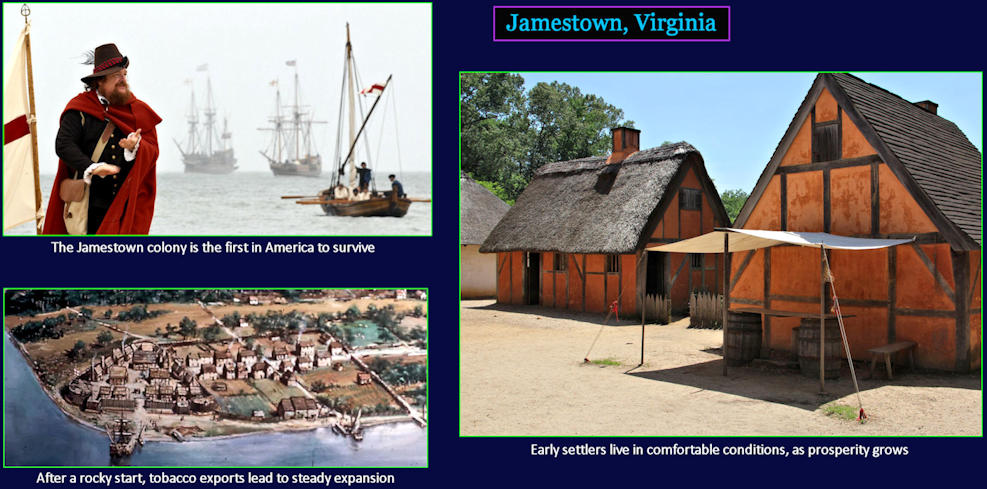
Jamestown SurvivesActually, they try. With death all around, and the stockade in disrepair, the survivors finally abandon Jamestown. But they quickly return, after sighting the long-awaited re-supply fleet arriving from London. The investors who are funding the colony, however, are becoming impatient to get a return on their considerable investment. Up to this point, the colony has failed to send anything of value back to England. Luckily, before investor confidence entirely collapses, the first crop of a special tobacco plant is shipped back to London. It's an immediate success in English smoking clubs, and the colony's future is assured. |
| ||||||||||||||||
| |||||||||
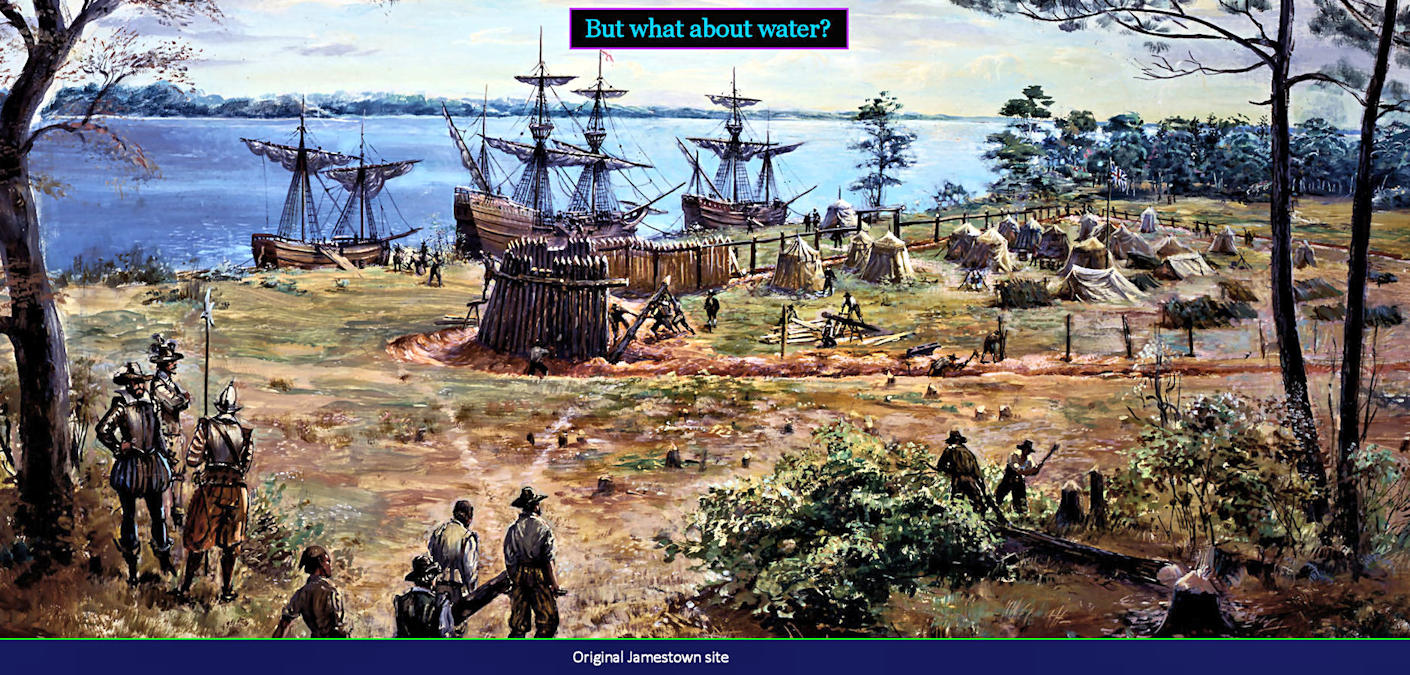
Unhealthy Site Things are looking pretty good going into summer, with little interference from Indians during construction of the main fort. But there is a reason the Indians have never settled this particular location, even though Indian villages are scattered almost everywhere else along the rivers and inlets. The problem is the lack of a reliable source of healthy drinking water. The land itself is swampy and mosquito-infested, and the groundwater near the fort is partially contaminated with salt from the river, which is tidal. This helps explain the persistent health problems of early settlers. When settlers are driven to steal food from surrounding Indian villages, the Indians retaliate by surrounding the fort, cutting it off from all other water sources. | |||||||||
| |||||||||
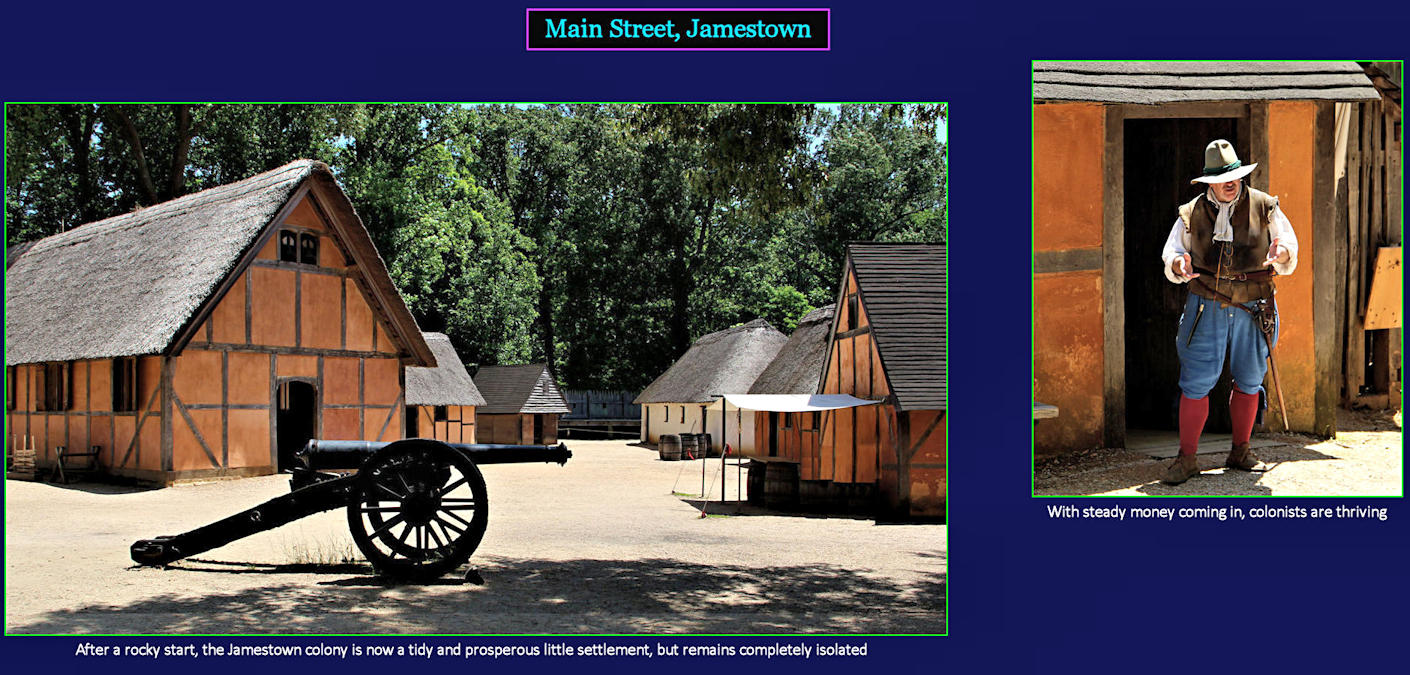
Tobacco-based Prosperity The surging price for Virginia tobacco in London is due to the extremely limited supply. Jamestown flourishes during this brief period, and now boasts an armory, blacksmith forge, spacious warehouse and chapel. With money pouring in, settlers expand their settlement, planting tobacco with determined energy. Everyone is growing as much tobacco as they possibly can. Soon, instead of exporting 2,000 pounds of tobacco a year, Jamestown is exporting a million pounds. Predictably, this floods the market, driving the price down by a heart-stopping 95%. In an effort to reduce supply and restore prices, the Virginia legislature orders half of the crop to be destroyed, but the heyday of tobacco is over. The price never really recovers. | |||||||||
| |||||||||
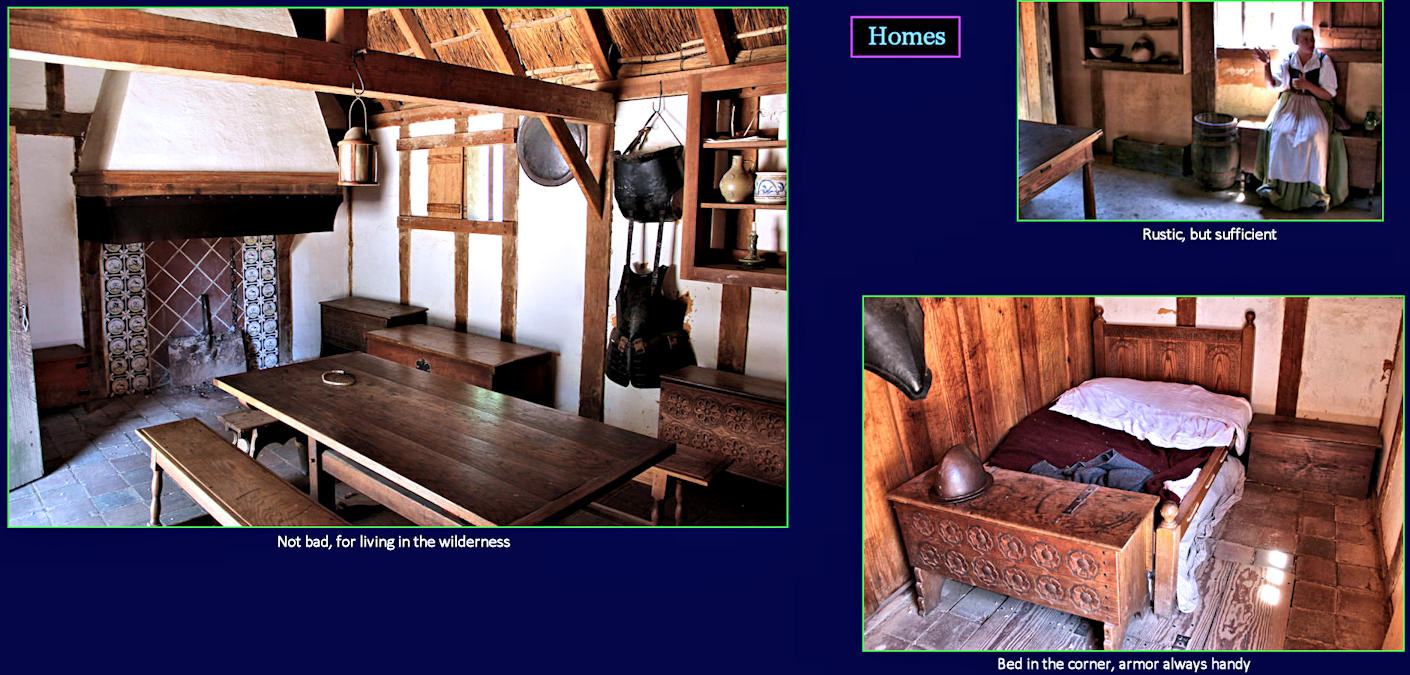
Tidy Homes Homes in Jamestown are small, single-room affairs, but surprisingly snug. Some are grander than others, but each has a set of armor hanging on the wall. Indians might decide at any time to wipe out the troublesome settlement, which keeps expanding into their homeland. Having outgrown the original fort, settlers are clearing land along both sides of the river to plant more tobacco, displacing nearby Indians. Friction continues rising, and soon boils over, sparking a prolonged series of Indian uprisings. | |||||||||
| |||||||||
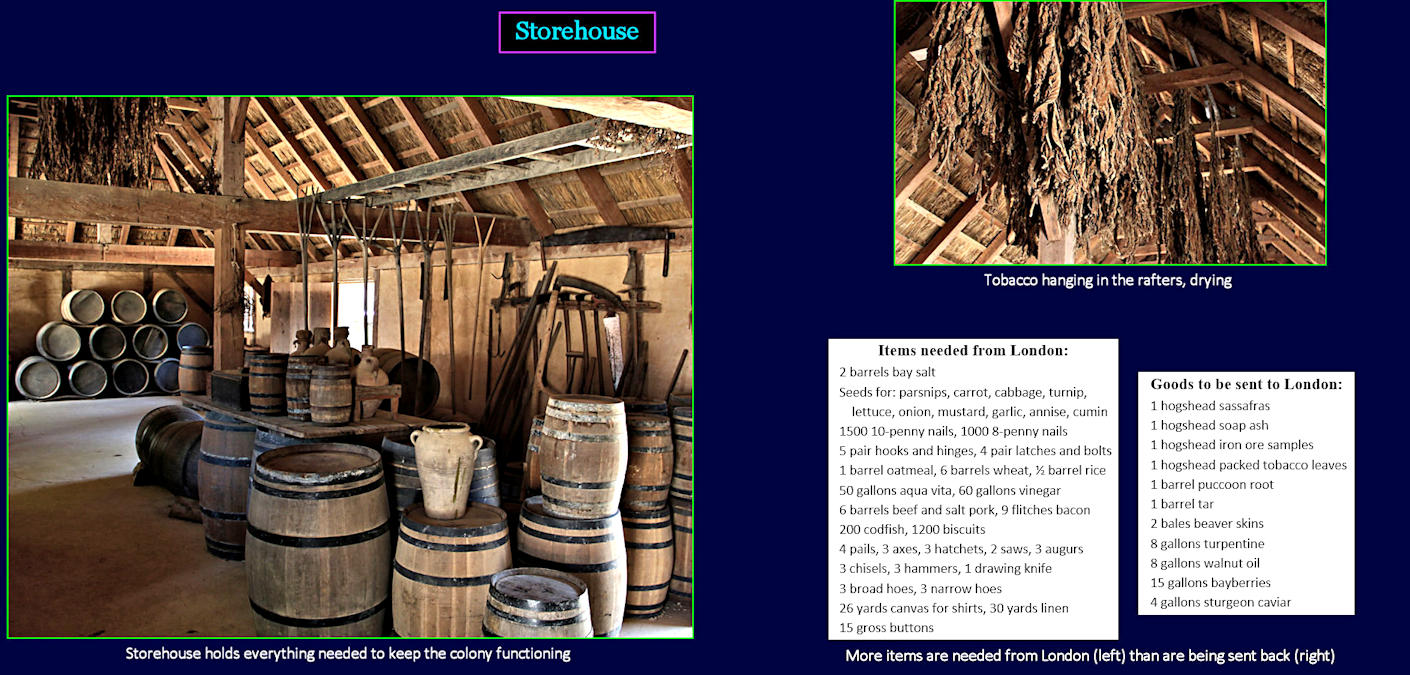
Business Center The storeroom is the center of business activity. The most important items are the barrels of tobacco ready for export, with additional leaves hanging from the roof to dry (top right). The left-hand list (above) shows what settlers need from London. The shorter list next to it is what they are shipping back, in payment. The colony runs a healthy surplus for the first few years, when the price of tobacco is sky-high. But after the price falls, Jamestown is left in much the same position as the colony at Plymouth. The settlers need items from London that cost more than the value of exports they are able to ship back the other way. Jamestown produces only tobacco. Everything else the colonists need has to be imported from England. | |||||||||
| |||||||||
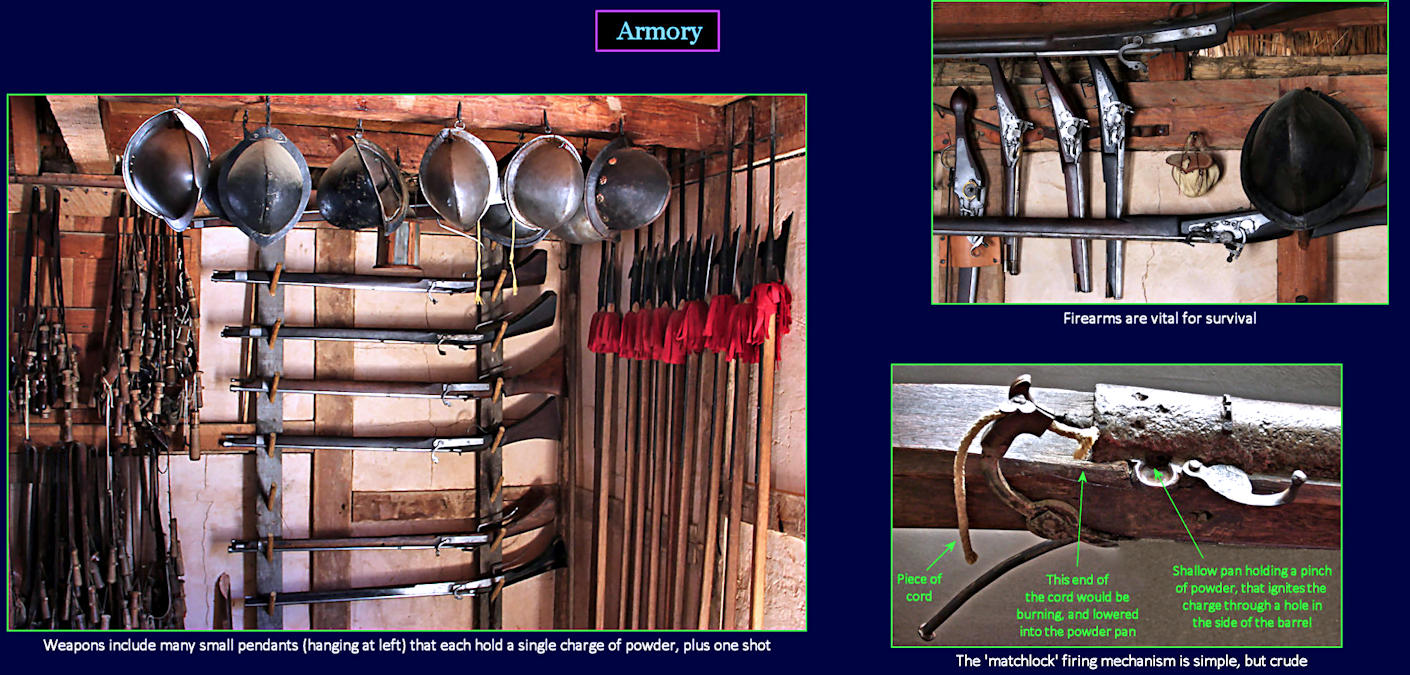
Constant Danger The armory is indispensable, given the hostile environment surrounding the fort. The pistols and muskets of this period are fired using a pivoting lever, which lowers the burning end of a short length of cord, to ignite the powder that fires the shot (lower right). The cord burns slowly while the colonist takes aim, and sometimes has to be re-lit for the next shot, from a nearby fire. Reloading takes between one and two minutes, during which time an Indian might be able to let fly half a dozen arrows. Single shots, and the power necessary to fire them, are contained in small wooden cylinders which hang around the neck, one per shot. Settlers need many such cylinders to keep up sustained fire. | |||||||||